How Township Trustees Open Their Roads to APV Riders
The dream of linking up a few favorite trails, grabbing a bite to eat in town, or simply getting from one section of your property to another without loading your All-Purpose Vehicle (APV) onto a trailer often feels out of reach for Ohio riders. The patchwork of rules regarding where you can and can't legally ride on public roads can be incredibly frustrating. This guide is here to shed light on a crucial part of that puzzle: how Ohio township trustees can actively work to open their local roads to APV riders, offering a clear path to understanding local regulations and how you can be part of the solution.
Understanding the Authority: Why Townships Matter
When you think about where you can ride your ATV or UTV, the landscape of Ohio's public roads can seem incredibly confusing. There are state routes, county roads, and then a whole network of township roads. Knowing which entity has the power to allow or restrict APV use is the first step in making sense of it all. For many riders, the real potential for expanding legal riding opportunities lies squarely within the hands of local township officials.
The Local Control Over Roads
Let's be clear upfront: you can't just hop on your APV and ride down any public road in Ohio. The general rule is that these vehicles are not permitted on public roads unless specific local legislation makes an exception. State routes and interstates are almost universally off-limits, which can be a real bummer when you're trying to connect riding spots or access amenities. However, county and township roads operate under different jurisdictions, and this is where the flexibility for APV use often comes into play. Townships, in particular, manage a vast network of the smaller, less-trafficked roads, backroads, and gravel lanes that are often exactly what riders are hoping to use to expand their adventures.
The power of local governance in Ohio means that decisions about these specific road types are made much closer to home. While the Ohio Revised Code provides the framework, it grants considerable leeway to local authorities to determine how their roads are used. This decentralization of control can feel like a maze sometimes, as rules can literally change from one township line to the next. But it also presents a significant opportunity for communities to tailor regulations to their unique needs and the desires of their residents, including APV riders. It's why focusing your attention on your local township is so critical if you're looking to gain more legal riding access.
The Role of Township Trustees
So, who are these township trustees and what exactly do they do? In Ohio, township trustees are elected officials who form the governing board for the township. They are responsible for a wide range of local services, including maintaining township roads, providing fire and EMS services, managing zoning, and handling various community matters. There are typically three trustees for each township, and they work together, often with a fiscal officer, to make decisions that impact daily life in their community. Their role in road maintenance and regulation gives them direct authority over whether or not APVs can operate on township-controlled roads.
These trustees are essentially the voice of your local community, and their decisions directly reflect what they believe is best for the residents they serve. When it comes to APVs on roads, they weigh factors like public safety, road wear, noise concerns, and the economic or recreational benefits that might come from allowing riders. Because they are elected positions, trustees are generally responsive to their constituents. This means that organized, well-reasoned proposals from APV riders and residents can genuinely influence their deliberations and ultimately lead to a formal resolution or ordinance that opens up local roads. Understanding their responsibilities and how they operate is key to effectively communicating your needs and desires as a rider.
The Process: How Trustees Make It Happen
Getting township roads opened to APVs isn't as simple as a trustee waking up one morning and deciding it's a good idea. There's a formal process, rooted in local governance, that involves community input, careful consideration, and legal steps to ensure any changes are properly implemented and enforceable. Understanding this process is essential for any rider hoping to advocate for more access in their area.
Public Meetings and Community Input
Typically, township trustees don't make significant policy changes in a vacuum. The decision to open roads to APVs usually begins with public discourse. This often means community members or groups of riders bringing the idea forward, often through attending public meetings. These meetings are a vital platform for residents to voice their opinions, present their cases, and engage directly with their elected officials. It's not enough to simply complain; showing up with a clear, respectful, and well-researched proposal is what gets attention.
To participate effectively, you'll need to know when and where these meetings are held. Township websites, local newspapers, and community bulletin boards are usually good places to find schedules. When you attend, be prepared to present your case concisely, highlighting potential benefits like increased tourism, expanded recreational opportunities, or simply better access to private property. Addressing potential concerns proactively, such as safety measures and responsible riding, can go a long way. It's also important to show that there's broad community support, not just from a few individuals. Collective input from an organized group of riders can carry much more weight than isolated complaints or requests, demonstrating a united front for responsible APV use.
Drafting and Passing a Resolution
Once the trustees are convinced that opening certain roads to APVs is in the best interest of the township, the formal legislative process begins. This involves drafting a resolution or an ordinance. These documents are legally binding acts that specify exactly which roads, if any, will be opened to APVs, and under what conditions. It's a precise legal text that leaves no room for ambiguity, as it will be the basis for enforcement. This isn't just a casual agreement; it's a piece of local law.
The drafting process can involve input from the township legal counsel to ensure the resolution complies with state law and is legally sound. It will detail the specific roads or sections of roads where APV use is permitted, the hours of operation, and any unique restrictions that apply. Once drafted, the resolution must be formally presented and voted upon by the board of trustees. This vote usually occurs during a public meeting, and if it passes by a majority, it becomes official. The effective date of the resolution will be noted within the document, and sometimes there's a waiting period before it officially goes into effect to allow for proper signage and public notification.
What an Ordinance or Resolution Includes
When a township passes a resolution to open its roads to APVs, the document itself will be incredibly detailed. It's designed to provide clarity for both riders and law enforcement, outlining the exact parameters for legal operation. You'll typically find several key components within such an ordinance:
- Designated Roads: This is perhaps the most crucial part. The resolution will list the specific township roads, by name and route number, or define a specific area where APVs are permitted. It will often clarify that these permissions do not extend to county roads or state routes within the township's borders, even if they intersect.
- Operating Hours: Many resolutions restrict APV use to specific hours, often from a half-hour before sunrise to a half-hour after sunset, echoing rules found on state forest trails. Some might permit limited night riding if specific lighting requirements are met, though this is less common for general road use. [Ohio Rules for Riding After Dark] are important here.
- Speed Limits: APVs operating on township roads are typically subject to lower speed limits than traditional vehicles. Often, resolutions will specify a maximum speed, such as 35 miles per hour, or state that APVs must adhere to the posted speed limit, whichever is lower. This ensures a safer environment given the nature of these vehicles.
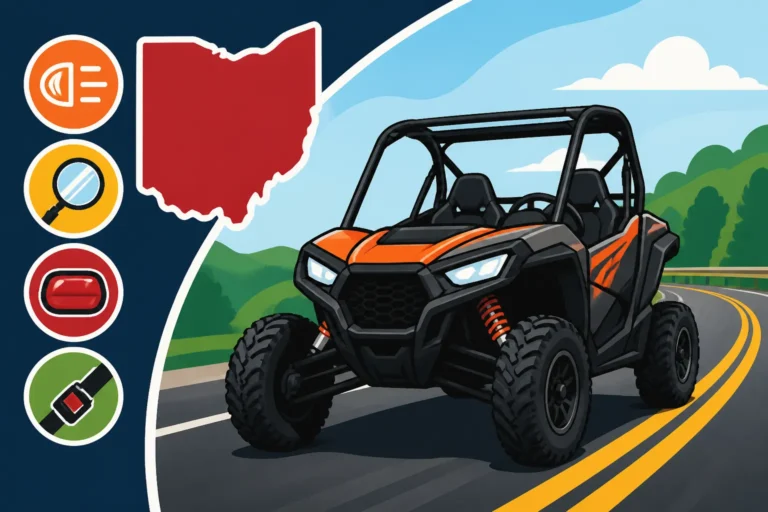
- Equipment Requirements: This is where riders need to pay close attention. Beyond having a valid [Ohio APV Plate and Validation Stickers], townships often mandate additional equipment to make APVs more visible and controllable on roads. This can include:
- Working headlights and taillights
- Brake lights
- Turn signals
- Rearview mirrors (often one on each side, or at least one on the left)
- A horn
- A windshield (especially for UTVs, often requiring safety glass)
- Mufflers and spark arresters to control noise and prevent fires.
Many riders turn to aftermarket suppliers like SuperATV to ensure their machines are properly outfitted with road-legal equipment, from full windshields to DOT-approved lighting kits.
- Driver Licensing and Insurance: Resolutions almost universally require APV operators to possess a valid [Ohio Driver's License Rules for APVs] and proof of adequate [Ohio APV Insurance Requirement]. This ensures that operators are both qualified to drive and financially responsible in the event of an accident.
- Helmet and Eye Protection: While not always explicitly stated in township resolutions (as state law covers some aspects), the importance of DOT-compliant helmets and appropriate eye protection is often reinforced, especially for minors. It's wise to always wear a helmet, as per [Ohio Helmet Law for APV Riders].
- Penalties for Violations: The resolution will also specify the penalties for non-compliance, which can range from fines to impoundment of the vehicle, similar to other traffic infractions. Understanding [Ohio Fines for Illegal APV Road Use] is crucial.
Here's a quick look at common elements you might find in a township resolution:
| Element | Typical Requirement |
|---|---|
| Designated Roads | Specific township roads, clearly named. |
| Operating Hours | Daylight hours (e.g., 30 min before sunrise to 30 min after sunset). |
| Speed Limit | Max 35 MPH, or posted limit, whichever is lower. |
| Driver's License | Valid Ohio driver's license required. |
| Insurance | Proof of liability insurance required. |
| Helmets | DOT-compliant helmets often required, especially for minors. |
| Equipment | Headlights, taillights, brake lights, mirrors, horn, turn signals, spark arrester. |
| UTV Inspection | May require a [The Ohio Inspection a UTV Must Pass] if applicable. |
| Penalties | Fines, possible impoundment for violations. |
Rider Responsibilities and Finding Open Roads
Once a township has opened its roads, the responsibility shifts significantly to the rider. It's not just about having the freedom to ride; it's about doing so safely, legally, and in a way that respects the community. Being a good ambassador for the sport is paramount, especially as more townships consider similar measures.
Equipment and Safety Rules
Even with roads open, simply having an APV and a sense of adventure isn't enough. Riders must adhere to stringent equipment and safety regulations that often go beyond what's required for trail riding. Your machine needs to be road-legal, and this often means more than just a valid [Registering an APV in Ohio] and proper registration. For instance, many townships will require working headlights, taillights, brake lights, turn signals, mirrors, and a horn. These are critical for visibility and communication with other road users, greatly enhancing safety.
For UTVs, in particular, an inspection may be required to ensure all necessary road-legal modifications have been made. Riders often invest in aftermarket parts to meet these requirements, and companies like SuperATV offer a wide range of accessories designed to make your machine compliant and safer for road use. From DOT-approved windshields and wipers to robust signal kits and side mirrors, these upgrades are not just about legality; they're about ensuring you and your passengers are protected. Remember, safety isn't just about what's mandated by law; it's about making smart choices every time you hit the road or trail, especially when riding after dark or in areas with mixed traffic.
How to Find Which Roads Are Open
Here's one of the biggest frustrations for Ohio APV riders: there isn't one single, statewide database listing every township or county road open to APVs. This means that finding out exactly where you can legally ride requires a bit of detective work on your part. Just because your neighboring township has opened its roads doesn't automatically mean yours has too; rules can change literally at the township line, creating a confusing jigsaw puzzle of access.
The most reliable way to determine [Finding Out Which Roads Are Open] is to contact the township clerk directly. They can provide copies of any resolutions or ordinances pertaining to APV use on township roads. Many townships also post this information on their official websites, so a thorough search there is a good starting point. Additionally, keep an eye out for specific signage on roads. While not every open road will be explicitly marked, areas designated for APV use sometimes have signs indicating the permission. Networking with local riding clubs or groups can also be invaluable, as they often stay informed about local regulations and changes. It's a proactive approach that saves you from potential citations when a deputy performs a roadside check and you can't provide the necessary documentation or your machine isn't compliant. Knowing which roads are open and the specific rules for those roads is entirely the rider's responsibility.
Advocacy and Responsible Riding
The ability to ride APVs on township roads is a privilege, not a right, and it can be easily lost if not managed responsibly. For townships that have opened their roads, or those considering it, the behavior of riders directly influences future decisions. This is why advocacy and responsible riding go hand-in-hand. Riders must be good ambassadors for the sport, demonstrating that APVs can coexist safely and respectfully with other road users and residents.
If you want to see more roads open, or ensure current access remains, consider getting involved. Attend those public meetings, and instead of just asking for access, present solutions to potential concerns. Show up prepared to discuss safety, noise mitigation (like proper mufflers and spark arresters), and respect for private property. Remember, the actions of a few irresponsible riders can unfortunately jeopardize access for everyone, making it much harder to convince trustees that it's a good idea for their community. When riders outfit their machines with appropriate safety gear, whether it's the latest in lighting from SuperATV or simply wearing a [Ohio Helmet Law for APV Riders], it sends a clear message of commitment to responsible recreation. By riding respectfully, following all posted rules, and actively engaging with your local community, you can help build a positive reputation for APV riding, encouraging more townships to say "yes" rather than "no" to expanded access.
Disclaimer
This article is for general informational purposes only and does not constitute professional advice. Laws, prices and regulations vary by location and change over time. Consult a qualified professional for guidance on your specific situation.