Ohio Equipment Rules for a UTV on a Road
Navigating the world of UTVs in Ohio can feel like trying to solve a complicated puzzle, especially when you start thinking about taking your machine from the trails to the actual roads. Many of us dream of the convenience of being able to run a quick errand or get to a trailhead without having to load the UTV onto a trailer, but the reality of Ohio's laws often feels like a confusing maze. This guide is here to untangle those specific equipment rules, inspections, and operational requirements you absolutely need to know to make your UTV road-legal in the Buckeye State.
Understanding Ohio's UTV Road-Legal Landscape
The first hurdle many UTV owners face in Ohio is understanding how their machine is classified and what that means for road use. It's not as simple as slapping a license plate on it and going; there's a specific framework that governs these vehicles.
The 'All-Purpose Vehicle' Classification and Its Road Implications
In Ohio, your UTV falls under the broader category of an "All-Purpose Vehicle," or APV. This blanket term covers everything from ATVs (quads) to side-by-sides (UTVs) and even some custom-built buggies. Historically, these machines were seen as strictly off-road vehicles, meant for private land, designated trails, or farm work. The idea of taking them on public roads was, for a long time, unthinkable and illegal.
However, recent shifts in legislation have opened the door, albeit carefully, to allow UTVs on some public roads. This isn't a blanket "street-legal" status like a car, though. Instead, it's a conditional allowance, meaning your UTV has to meet specific equipment standards, be inspected, and then only operate on certain types of roads. It's a significant change that acknowledges the growing popularity and utility of UTVs, moving them beyond just recreational toys, but it comes with a strict set of responsibilities and requirements that can sometimes catch new owners off guard.
The Local Control Dilemma: Why Road Rules Vary So Much
One of the biggest sources of frustration for UTV owners in Ohio is the sheer inconsistency of where you can and cannot ride on public roads. Unlike cars, where the rules are statewide, UTV road access is largely dictated by local control. This means that a county or even individual townships within a county have the authority to pass resolutions that open their roads to APVs, including UTVs.
What this translates to on the ground is a patchwork of regulations. You might be able to legally ride your road-legal UTV on a county road in Washington County, only to cross into an adjacent county or township where such riding is strictly prohibited. It's enough to make your head spin and can lead to accidental violations if you're not diligent. This local control means there's no statewide right to operate your UTV on all roads, leading to a critical need for riders to do their homework on specific local ordinances. It's not uncommon for riders to discover a favorite route is suddenly off-limits because they didn't check the latest local rulings. If you're wondering which specific areas have opened their roads, you might want to check out information on [Ohio Counties That Allow APVs on Roads].
Essential Equipment for Ohio UTV Road Use
So, you've decided to tackle the challenge of making your UTV road-legal. The first major step, and arguably the most involved, is ensuring your machine is properly equipped. This isn't just about what looks good; it's about meeting stringent safety and visibility standards that allow your UTV to share the road safely with other vehicles.
Lighting and Visibility Requirements
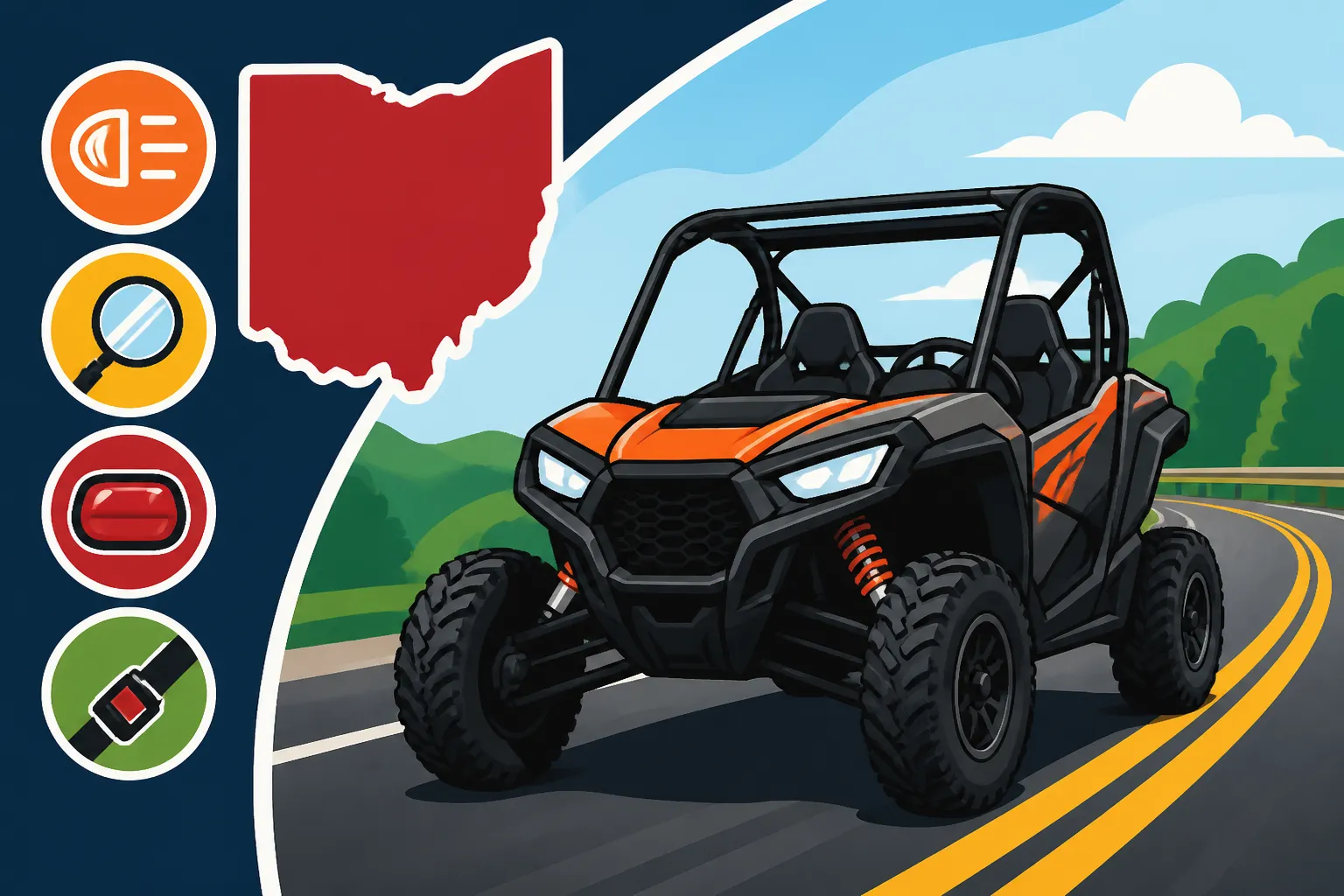
When you're sharing the road, being seen and being able to see are paramount. For UTVs to be road-legal in Ohio, they need a comprehensive lighting system that goes beyond what many off-the-shelf recreational models offer. This includes proper headlights that illuminate the road ahead, tail lights to mark your presence from the rear, and functional brake lights that clearly signal when you're slowing down or stopping. Crucially, your UTV must also be equipped with turn signals, both front and rear, to indicate your intentions to other drivers. These are often a significant upgrade for many UTVs, as they're not always standard on models primarily designed for trail riding.
The key here is not just having lights, but having lights that meet specific standards for brightness, color, and placement. Many manufacturers offer kits to add these components, and aftermarket specialists like SuperATV provide a range of DOT-compliant lighting options, from LED headlights to integrated turn signal kits, to help bridge the gap between trail machine and road warrior. Ensuring your lighting is robust and visible from all angles is essential, especially when riding in varied light conditions or after dark. Understanding all the specific needs for your machine can be found in a detailed look at [Ohio Lighting Requirements for APVs].
Mirrors, Windshields, and Wipers: Seeing and Being Seen
Beyond lights, being able to perceive your surroundings and maintain visibility in all weather conditions is critical for road safety. Ohio law mandates that a road-legal UTV must have a rearview mirror, allowing the operator to see at least 200 feet behind the vehicle. Additionally, side mirrors are often a practical necessity, even if not explicitly required in every instance, to give a full scope of what's happening around you on multi-lane roads or during turns.
Perhaps the most significant equipment requirement for UTVs going on the road is the windshield. It's not enough to have a basic plastic screen; the windshield must be made of safety glass, similar to what you'd find in a passenger car. This is a huge upgrade for many UTVs, which typically come with polycarbonate or acrylic windshields designed for impact resistance off-road, not optical clarity and shatter resistance on the highway. Along with a safety glass windshield, your UTV must also be equipped with a functional wiper system to clear rain, snow, or mud, ensuring continuous visibility. Without these components, your UTV simply won't pass inspection, making this a non-negotiable area for serious road use. Dive deeper into the specifics by reviewing [Wipers and Glass on an Ohio UTV].
Horn, Muffler, and Other Safety Gear
Beyond the major lighting and visibility components, several other pieces of equipment are essential for a UTV to be considered road-legal in Ohio. An audible warning device, like a horn, is mandatory. This isn't just a courtesy; it's a critical safety feature to alert pedestrians or other drivers to your presence in situations where they might not see you immediately. The horn needs to be loud enough to be effective, typically easily heard from at least 200 feet away.
Muffler requirements are also in place to control noise emissions. While off-road machines can sometimes be quite loud, road-legal UTVs must adhere to specific sound limits to minimize disturbance, especially in residential areas. Your muffler must be in good working order and not modified in a way that increases noise levels beyond legal limits. Beyond these, the UTV must be in sound mechanical condition, with properly functioning brakes on all wheels, and tires that are in good shape with adequate tread. Seatbelts for all occupants are also typically required and should be properly maintained and used. These requirements are all designed to ensure that when your UTV is on public roads, it functions as safely and predictably as any other motor vehicle. For more detailed information on sound limits and proper exhaust, check out [Ohio Muffler Requirements for APVs].
Ohio's UTV Inspection: The Gateway to Road Legality
Once you've poured time, effort, and possibly some hard-earned cash into equipping your UTV for road use, the next critical step is getting it officially inspected. This isn't a mere formality; it's a thorough check to ensure every single required component is present and functioning correctly, and that your machine meets all the safety standards for public road operation.
What Triggers the Inspection and Who Conducts It
It’s important to clarify a common point of confusion: not all APVs require this inspection. This specialized road-legal inspection specifically applies to UTVs and similar side-by-side machines when an owner wants to operate them on public roads in counties and townships that allow it. Traditional ATVs (quads) do not typically undergo this specific inspection for their trail-based registration, though they are also APVs. The distinction lies in the intent to operate on public roadways, which brings a whole new layer of safety and equipment requirements into play.
These inspections are generally conducted by the Ohio State Highway Patrol, or in some instances, by certified inspection stations or law enforcement agencies. It’s not something you can just walk into your local BMV branch and ask for at the counter. You'll need to schedule an appointment or find an approved location. This rigorous process is in place to ensure a high standard of safety, guaranteeing that any UTV operating on Ohio roads has been thoroughly vetted. A deeper dive into this process can be found by looking into [The Ohio Inspection a UTV Must Pass].
Key Areas an Inspector Will Scrutinize
When you bring your UTV in for its road-legal inspection, prepare for a comprehensive examination. The inspector isn't just glancing at your turn signals; they're meticulously checking a long list of items to ensure compliance and safety. They will scrutinize your lighting system: headlights, tail lights, brake lights, and turn signals, verifying they are all working correctly, are properly mounted, and emit the correct colors and brightness. Your mirrors will be checked for proper placement and an unobstructed view. The windshield must be safety glass, and the wiper system—if applicable—must be functional.
Beyond these visible components, the inspection delves into the mechanical integrity of your UTV. They'll check your tires for proper tread depth and any damage, and your braking system will be tested to ensure it can stop the vehicle effectively and evenly. Steering components, suspension, and the overall structural integrity of the frame will be examined for any signs of wear, damage, or unauthorized modifications that could compromise safety. Even your VIN (Vehicle Identification Number) will be verified against your ownership documents. This detailed review ensures that your UTV is not just aesthetically pleasing but fundamentally safe for road use.
Preparing Your UTV for a Successful Inspection
Passing the Ohio UTV road-legal inspection often comes down to meticulous preparation. Don't wait until the day before your appointment to start checking things over. It's best to go through a pre-inspection checklist yourself, or even have a trusted mechanic familiar with UTVs give it a once-over. Common reasons for failing include non-functional lights, improper windshield material, worn tires, or inadequate brakes. Even something as simple as a burned-out bulb can result in a failed inspection and the need to reschedule.
Make sure all your documentation is in order, including proof of ownership (title or Manufacturer's Certificate of Origin for new machines), and any receipts for significant upgrades, especially if they relate to safety features. Have your UTV cleaned, as a mud-caked machine might not present well or allow for proper inspection of components. By being proactive and thorough in your preparation, you can significantly increase your chances of passing the inspection on the first attempt, saving you time and frustration. It's all about demonstrating that you've taken the requirements seriously and your UTV is genuinely ready for the road.
Operational Rules and Driver Requirements on Ohio Roads
Even after your UTV has passed inspection and is properly equipped, the journey to full road legality isn't over. There's a whole set of operational rules and driver requirements that you, as the operator, must adhere to whenever you venture onto Ohio's approved public roads. Ignoring these can lead to fines, citations, or even more serious consequences.
Driver's License, Insurance, and Registration Proof
Just like operating any other motor vehicle on public roads in Ohio, you must possess a valid driver's license to operate your road-legal UTV. This isn't a special "APV license"; your standard Class D driver's license (or higher) is what's required. This means you must meet all the age, testing, and other requirements to hold a regular driver's license.
Beyond your license, proof of financial responsibility, typically in the form of motor vehicle insurance, is mandatory. Your UTV must be insured to meet Ohio's minimum liability coverage requirements, just like a car or truck. This insurance protects you and others in the event of an accident. You also need to carry proof of your UTV's registration and title with you whenever you're operating it on public roads. These documents confirm your ownership and that your machine is legally registered with the state. Keeping all this paperwork readily accessible, perhaps in a waterproof pouch in your glove box or under the seat, is a smart practice. For clarity on what's needed for registration and insurance, look into [Ohio APV Registration and Insurance Proof].
Speed Limits and Road Type Restrictions
This is a critical area where UTVs diverge significantly from passenger cars. Ohio law explicitly states that UTVs, even those deemed road-legal, have a maximum speed limit of 35 miles per hour when operating on public roads. This isn't just a suggestion; it's a hard limit that must be respected, regardless of the posted speed limit for other vehicles on that same road. If you're on a road with a 55 mph speed limit, your UTV still cannot exceed 35 mph.
Furthermore, the type of roads your UTV can access is highly restricted. UTVs are generally prohibited from operating on state routes (designated by a numbered shield, like "SR 104") and interstates. These high-speed, high-traffic thoroughfares are considered too dangerous for UTVs due to their lower top speeds and different handling characteristics. The only roads open to UTVs are those specifically designated by local county or township resolutions, and these will almost exclusively be local county roads or township roads. You'll need to know for sure that a specific road has been opened to APVs before you venture onto it. The rationale behind this 35 mph limit and road type restriction is rooted in safety, ensuring UTVs operate in environments where their speed difference poses less risk. More details on the speed limit can be found by researching [Why an Ohio UTV Stops at Thirty-Five].
Helmets, Passengers, and General Conduct
Ohio's helmet laws for APV riders, including those on road-legal UTVs, are important to understand. While adult operators of APVs are not always required to wear a helmet on private land or designated trails, the rules become stricter when operating on public roads. More critically, anyone under the age of 18 operating or riding as a passenger on an APV on public roads must wear a protective helmet. This helmet must be DOT (Department of Transportation) compliant, meaning it meets federal motor vehicle safety standards for motorcycle helmets.
When it comes to passengers, your UTV must be designed and equipped to safely carry them, with proper seating and restraints (seatbelts). Overloading your UTV or allowing passengers to ride in unsafe positions (e.g., standing up, on the cargo rack) is illegal and extremely dangerous. Always adhere to the manufacturer's passenger capacity limits. General conduct on the road also requires following all traffic laws, using appropriate hand signals if your turn signals aren't working (though they should be for road use), and driving defensively. Remember, while you might be excited to show off your road-legal UTV, your primary responsibility is safe operation and adherence to all traffic regulations. For complete helmet guidance, look at [Ohio Helmet Rules for APV Riders].
Common Challenges and Solutions for Road-Legal UTVs in Ohio
Making your UTV road-legal in Ohio, and then actually using it on public roads, comes with its own set of hurdles. From deciphering local laws to making the right modifications, it's not always a straightforward path. But with a bit of insight, these challenges can be overcome.
Navigating the Maze of Local Ordinances
The biggest headache for many Ohio UTV riders is figuring out where they can actually ride legally on the roads. Because APV road access is decided at the county and township level, you can encounter a dizzying array of rules. One township might open all its roads, while the neighboring one keeps them entirely closed. This means planning a route that spans multiple jurisdictions can become a frustrating exercise in mapping and verification.
The solution to this maze is diligent research. Before you even think about hitting a particular road, you need to verify its status. This often involves contacting the county commissioners' office for county roads or the township trustees/clerks for township roads. Many will have resolutions posted online or available upon request. Don't rely on hearsay or what a friend "thinks" is legal; get official confirmation. It's a proactive step that can save you from an embarrassing—and expensive—citation. Knowing how to begin your search for this information is important, so check out [Finding Out Which Roads Are Open].
Upgrading Your UTV to Meet Road Standards
Most UTVs, fresh off the dealership floor, aren't ready for Ohio road duty. They lack key components like turn signals, safety glass windshields, or a functional horn. This means owners often need to invest in aftermarket upgrades to meet the inspection requirements. This can be a significant upfront cost, but it's essential for compliance.
Many reputable aftermarket companies, such as SuperATV, offer comprehensive street-legal kits designed specifically for popular UTV models. These kits often include DOT-compliant turn signals, horn kits, and even safety glass windshields with wiper systems. When choosing upgrades, prioritize quality and ensure they are genuinely compliant with Ohio's laws, rather than opting for the cheapest option. A poorly chosen part might look the part but fail inspection or, worse, compromise your safety. While some people are mechanically inclined and can do these upgrades themselves, others might need professional installation to ensure everything is correctly wired and installed.
Here’s a comparison of typical OEM (Original Equipment Manufacturer) vs. Aftermarket components you might consider for road-legal compliance:
| Component | Typical OEM (Off-Road) | Aftermarket (Road-Legal) | Key Consideration for Road Use |
|---|---|---|---|
| Windshield | Polycarbonate/Acrylic | Laminated Safety Glass | Required: Shatter-resistant, optical clarity. |
| Wipers | Often none, or manual | Electric wiper system | Required: Clear vision in adverse weather. |
| Turn Signals | None or basic hand signals | Front & Rear LED, DOT-compliant | Required: Clear indication of turns to other drivers. |
| Mirrors | None or simple side mirrors | DOT-compliant rearview & side mirrors | Required: Adequate rear and side visibility. |
| Horn | None or basic "toy" horn | Electric horn, audible at 200 ft | Required: Audible warning device. |
| Tires | Aggressive off-road tread | DOT-approved, suitable for road | Must be road-rated and in good condition. |
| Brake Lights | Basic on/off | Brighter, more distinct | Must clearly indicate braking. |
| Headlights | Off-road halogen/LED | DOT-compliant high/low beam | Must provide adequate illumination without blinding others. |
Maintaining Compliance and Avoiding Fines
Once your UTV is road-legal and you're enjoying the freedom it offers, the ongoing challenge is maintaining that compliance and avoiding costly fines. This means more than just keeping your registration current. It involves regular checks of all your road-legal equipment. Are all your lights working? Is your horn still loud and clear? Are your wipers functioning properly? Are your tires still in good shape?
Routine maintenance is crucial. A burned-out bulb or a frayed wiper blade, while seemingly minor, can lead to a roadside stop and a citation for non-compliance. Always carry your driver's license, insurance card, and UTV registration. Be aware of the specific roads you're on, and if there's any doubt about whether a road is open to UTVs, err on the side of caution and avoid it. The penalties for operating an unregistered, unequipped, or improperly operated UTV on Ohio roads can range from significant fines to having your machine impounded. Staying informed and vigilant is your best defense against these unwelcome surprises. For a better understanding of the repercussions, consult [Ohio Fines for Illegal APV Road Use].
Disclaimer
This article is for general informational purposes only and does not constitute professional advice. Laws, prices and regulations vary by location and change over time. Consult a qualified professional for guidance on your specific situation.