When a Licensed Adult Must Ride With a Minor
Navigating the world of ATVs and UTVs in Ohio can be exciting, but when you throw young riders into the mix, it often brings a whole new layer of questions and worries. Many parents struggle to understand exactly when, where, and how their children can safely and legally enjoy these machines, especially concerning the adult supervision required. This comprehensive guide will break down Ohio's rules surrounding minors on all-purpose vehicles, detailing when a licensed adult must be present and what that supervision truly means.
Understanding Ohio's Definition of a Minor Rider
Before we dive into the specifics of supervision, it's crucial to understand how Ohio law categorizes young riders and what general restrictions apply to them. It's not just about age; it's about the type of machine, the location, and whether they're operating or simply riding along. The rules are designed to protect children, recognizing that these powerful machines require a certain level of maturity, judgment, and physical capability. For many parents, the biggest frustration is the patchwork of rules depending on whether you're on private land, state forest trails, or a county road.
What Ohio Law Says About Minors on an APV
Ohio law uses the term "all-purpose vehicle" (APV) to encompass a wide range of off-road machines, including ATVs, UTVs, and even dirt bikes, when they meet certain criteria for registration. When it comes to minors, the law is quite clear that children under a certain age are simply not permitted to operate an APV on public lands or roads, regardless of supervision. This isn't just a suggestion; it's a legal mandate intended to prevent accidents and serious injuries. On private property, the rules are often set by the landowner, but state law still provides guidance regarding parental responsibility.
The intent behind these regulations is to ensure that riders have the necessary developmental skills to handle an APV safely. This includes not just physical strength and coordination, but also the ability to make quick decisions, understand complex trail conditions, and react appropriately to hazards. It's a lot to ask of a young child, and the laws reflect that concern. Understanding these foundational legal definitions is the first step toward responsible riding, ensuring that you're not inadvertently putting your child or yourself at risk of legal repercussions.
Age Restrictions for Operating an APV
Ohio has specific age limits for who can operate an APV. Generally speaking, a child under the age of 12 is prohibited from operating an APV on any public land managed by the Ohio Department of Natural Resources (ODNR), which includes state forests. This means that even if you're standing right next to them, a 10-year-old cannot legally drive an ATV on a designated trail in Perry State Forest or Monday Creek. On county or township roads where APVs are permitted, the rules become even more stringent, often requiring a valid driver's license, which automatically excludes most minors.
These age restrictions are not arbitrary. They are based on safety data and a general understanding of child development. While some children might appear capable, the risks associated with operating an APV are significant. Overturning, collisions, and loss of control are all potential hazards, and the younger the rider, the less likely they are to have the experience or physical stature to recover from a difficult situation. It’s also important to consider the size and power of the machine itself; a youth machine designed for a smaller rider is very different from a full-sized ATV. For more details on these age rules, you might find [Ohio Rules for Riders Under 16] particularly helpful.
Supervision Requirements for Young Riders
The presence of an adult isn't always enough; the adult often needs to be "licensed" and actively "supervising." This distinction is critical, especially when venturing beyond private property. The state wants to ensure that if a minor is riding, there's a responsible, capable adult nearby who can intervene, provide guidance, and has the legal standing to operate a vehicle themselves if needed. This is where many parents get tripped up, thinking that merely being in the vicinity covers them.
When a Licensed Adult Must Ride With a Minor
In Ohio, when a minor is operating an APV on any property administered by the Chief of the Division of Forestry or the Chief of the Division of Parks and Watercraft (like state forests or designated state park trails), a licensed adult must supervise them. The important caveat here is that the minor must be at least 12 years old to operate at all. For a child aged 12 to 15, the supervision rule kicks in: they must be under the direct supervision of a licensed adult. This means the adult needs to be readily able to provide assistance and instruction. They can't just be at the same park; they need to be with the minor on the trail.
When it comes to road use, the situation changes entirely. Most county and township roads that permit APVs require the operator to hold a valid driver's license. This effectively bars most minors from operating an APV on these roads, even with supervision. However, if a minor is a passenger in a street-legal UTV (where permitted), the driver must be a licensed adult. This distinction between operator and passenger is paramount. Always check the specific county or township resolutions, as some local rules may have additional nuances for passengers, especially very young ones. Companies like SuperATV offer excellent safety accessories like harnesses and half windshields that can improve the experience and protection for passengers of all ages.
The Role of a Supervising Adult
A supervising adult isn't just a warm body present at the trailhead. Their role is active and responsible. For riders aged 12 to 15 on state forest trails, the supervising adult must be at least 18 years old and possess a valid driver's license. This adult is responsible for ensuring the minor understands and adheres to all safety rules, operates the APV safely, and respects trail etiquette. They should be riding with the minor, not merely dropping them off and checking in periodically. This "direct supervision" implies proximity and constant oversight.
Think of it like teaching someone to drive a car; you're not just letting them figure it out on their own. You're observing, instructing, and ready to take over if necessary. The same principle applies here. The supervising adult should be familiar with the trails, aware of potential hazards, and capable of handling an emergency. This goes beyond just technical riding skills; it includes demonstrating responsible environmental behavior and respecting other trail users. Neglecting this duty can lead to legal consequences for the adult, as they are ultimately responsible for the minor's actions.
Riding on Public Roads and State Lands
The rules for minors and adult supervision vary dramatically depending on whether you are on a public road or a state-managed trail. This is perhaps the most confusing aspect for many riders, as what's perfectly acceptable in one location can be strictly forbidden just a few miles down the road. It highlights the importance of doing your homework before you load up the trailer.
Ohio Rules for Riding a County Road
Ohio law generally restricts the operation of APVs on county and township roads. While some counties and townships have passed resolutions to open certain roads to APV traffic, these ordinances almost universally require the operator of the APV to possess a valid driver's license. This means that minors, regardless of their age or the presence of a supervising adult, cannot legally operate an APV on these public roads because they don't have a driver's license. This is a crucial point that often gets overlooked.
However, if we are talking about UTVs that meet the specific criteria to be considered street legal in those jurisdictions (which often involves adding lights, mirrors, turn signals, and a windshield), a minor may be permitted to ride as a passenger. In such cases, the driver must be a licensed adult, and all occupants must comply with other road-use regulations, such as wearing seatbelts and helmets where required. This often comes down to local legislation, so always verify with the specific county or township clerk's office. You might want to check out [Ohio Rules for Riding a County Road] for more specific details on road access.
Ohio Helmet Rules on State Forest Trails
When riding on Ohio's state forest trails, such as those in Monday Creek or Hanging Rock, specific helmet rules apply, especially for minors. Anyone under the age of 18 operating or riding as a passenger on an APV must wear a helmet that meets federal safety standards (DOT FMVSS218). This isn't just for operators; it includes passengers too. For minors aged 12 to 15 who are operating an APV on these trails, the requirement of direct supervision by a licensed adult still stands. The adult must also ensure the minor wears appropriate eye protection.
Even if an adult is over 18, wearing a helmet is highly recommended for all riders, regardless of whether it's legally mandated for their age group. The terrain on state forest trails can be challenging, with unexpected obstacles, steep climbs, and descents. A quality helmet is your best defense against head injuries, and ensuring your child wears one correctly is part of responsible supervision. Many riders find that a full-face helmet offers the best protection, and companies like SuperATV can help with finding a suitable fit for various head sizes, including youth. More information on helmet requirements can be found in [Ohio Helmet Rules on State Forest Trails].
Ohio Minimum Age for State Forest Trails
As touched upon earlier, Ohio has a clear minimum age for operating an APV on state forest lands. No person under 12 years of age may operate an APV on these trails. This means that if you have a child younger than 12, they cannot be in the driver's seat on any designated state forest trail. This rule is absolute and applies even with a parent riding alongside or offering instruction.
For those between 12 and 15, they can operate an APV, but only under the direct supervision of a licensed adult. Once a rider turns 16, they are considered an adult operator in the eyes of the ODNR for trail riding purposes and can ride independently without direct adult supervision, though a driver's license is still not required for strictly off-road trail use. However, the helmet rule for under-18s still applies to them. Understanding [Ohio Minimum Age to Ride an APV] is essential for planning family rides.
Equipment and Safety Considerations for Minors
Beyond the legal age and supervision requirements, there's a critical aspect of safety that every parent must consider: the equipment. Providing the right machine and gear for a minor is just as important as knowing the rules. An ill-fitting helmet or an oversized machine can turn a fun outing into a dangerous situation quickly.
Helmets and Eye Protection on Ohio Forest Trails
As mandated by Ohio law, helmets are a must for all APV riders under 18 on state forest trails. But it's not just any helmet; it must be a U.S. DOT-compliant helmet (meeting FMVSS218 standards). This standard ensures the helmet provides adequate protection in a crash. When purchasing a helmet for your child, look for the DOT certification sticker on the back. It's also vital that the helmet fits properly—snug, but not uncomfortably tight, and it shouldn't wobble when your child shakes their head.
In addition to a helmet, appropriate eye protection is required for all riders on state forest trails, regardless of age. Goggles or a face shield on a full-face helmet are essential for protecting against dust, debris, insects, and low-hanging branches. Clear vision is paramount for safe riding, and prescription glasses alone are not sufficient. For further clarification on specific helmet requirements, refer to [DOT FMVSS218 Helmets in Ohio].
Matching a Machine to a Child in Ohio
One of the biggest mistakes parents make is putting a child on a machine that is too large or too powerful for their size and skill level. Ohio law recognizes this by having general guidelines for youth machines, often based on engine size or speed limitations. For younger riders, especially those just starting out, a youth-specific APV is the safest choice. These machines are designed with smaller ergonomics, lower speeds, and often feature remote shut-offs that allow an adult to stop the machine if the child loses control.
When selecting an APV for a minor, consider the following:
- Size: Can the child comfortably reach the handlebars, footpegs, and controls? Can they shift their weight effectively to steer and maintain balance?
- Power: Is the engine size appropriate for their experience level? A small, low-powered machine allows them to learn the basics without being overwhelmed.
- Features: Look for safety features like speed limiters, automatic transmissions (to simplify learning), and parental controls.
- Weight: Can the child manage the weight of the machine if it starts to tip?
A machine that is too big can hinder a child's ability to react quickly and effectively, increasing the risk of an accident. Always remember, a child's physical development and judgment are still maturing, so providing them with a machine scaled to their abilities is key to a safe and enjoyable experience. For insights on appropriate machine sizes, see [Youth Machine Sizes and Ohio Rules].
Common Scenarios and Clarifications
The rules can feel complex, so let's walk through some common questions and scenarios that parents frequently encounter when trying to understand how to keep their minor riders safe and legal in Ohio.
Can a 15-Year-Old Ride With a Parent Alongside?
Yes, a 15-year-old can operate an APV on Ohio state forest trails, provided they are under the direct supervision of a licensed adult. "Alongside" typically means the adult is riding on another APV in close proximity, able to see and communicate with the minor, and prepared to offer immediate assistance. This isn't about the adult riding ahead or behind out of sight; it's about active, present supervision. For example, if you're riding a single-track trail, the parent would ideally be directly in front of or behind the minor, maintaining a safe but close distance.
However, this scenario does not apply to public roads. A 15-year-old, even with a parent riding alongside, cannot legally operate an APV on an open county or township road because they do not possess a valid driver's license. The adult can, however, have a 15-year-old as a passenger in a street-legal UTV on an open road, provided all other road-legal requirements are met. Ensuring the passenger is secured with proper safety harnesses, which can be found through suppliers like SuperATV, is always a good idea.
What If the Supervising Parent Has No Driver's License?
This is a critical distinction that can lead to legal issues. For a minor (ages 12-15) to operate an APV on state forest trails, the supervising adult must possess a valid driver's license. If the parent or guardian supervising the minor does not have a current, valid driver's license, that supervision does not meet Ohio's legal requirements. In such a situation, the minor would be operating illegally, and both the minor and the adult could face citations.
The rationale behind this rule is that the supervising adult is expected to be a competent, licensed driver, indicating they have a basic understanding of traffic laws and responsible vehicle operation. This ensures a baseline level of capability and accountability for the supervisor. This requirement specifically applies to the "licensed adult" clause for supervising minors on state lands. For adults operating their own APV on trails, a driver's license is not required if they are not on public roads. However, if they are supervising a minor on state trails, they must have one. You can read more about this in [Ohio Driver's License Rules for APVs].
Ohio Rules for Riding With a Parent
Riding with a parent generally implies a higher level of safety and supervision, but it doesn't automatically override all legal requirements. On private land with the owner's permission, a parent can typically set their own rules for their child's riding, including age and supervision. However, on public lands and roads, state and local laws take precedence.
The core rules remain:
- State Forest Trails (ages 12-15): Parent must be 18+, hold a valid driver's license, and provide direct supervision. Minors must wear a DOT-compliant helmet and eye protection.
- State Forest Trails (under 12): Cannot operate an APV, even with a parent present.
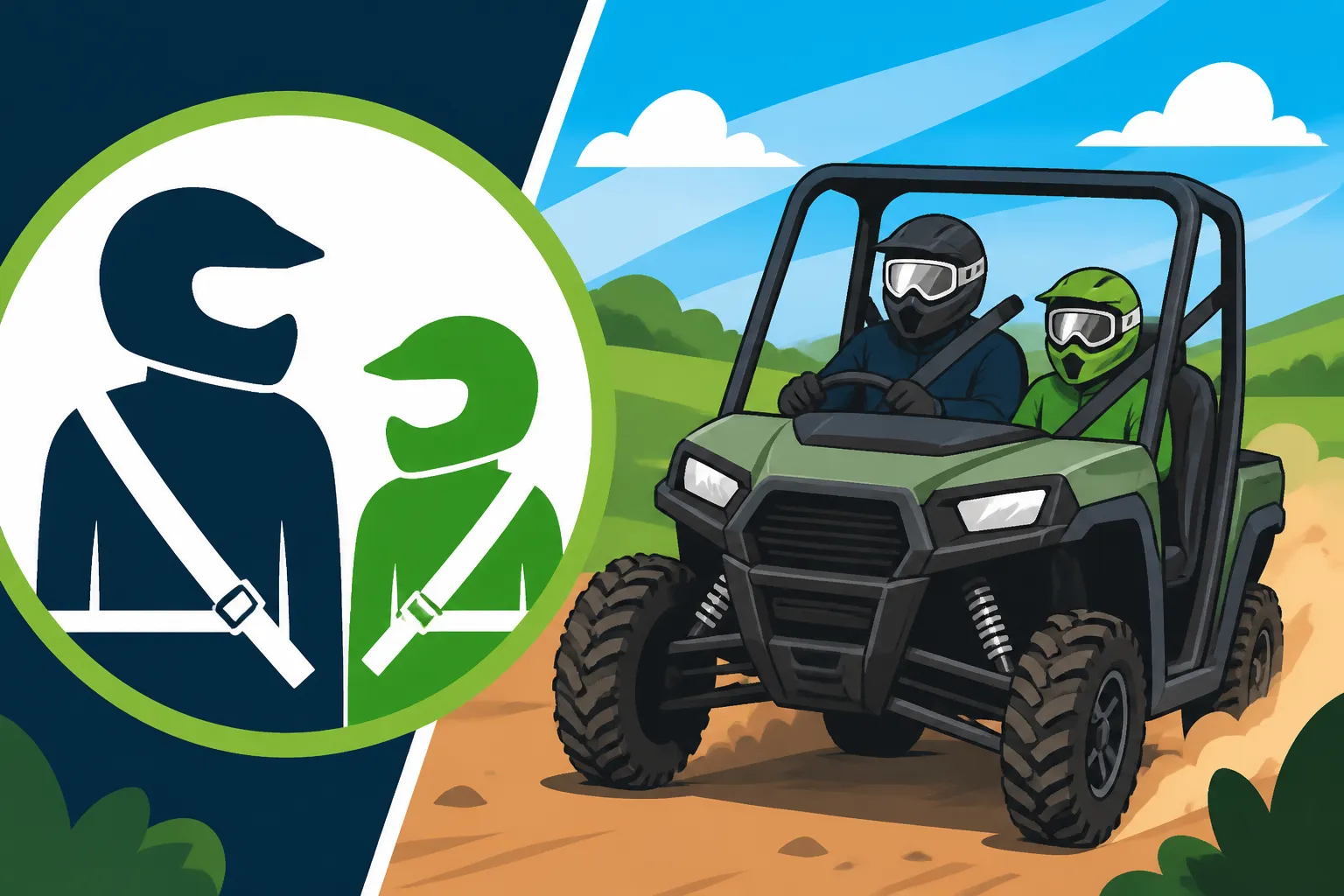
- Public Roads: Minors cannot operate an APV due to driver's license requirements. They can be passengers in a street-legal UTV driven by a licensed adult, adhering to all road-use laws (helmets, seatbelts, etc.).
Essentially, a parent's presence provides the necessary supervision if all other conditions (age of minor, age/licensing of parent, type of land) are met. It's about combining parental guidance with legal compliance to ensure everyone's safety and avoid unnecessary penalties. Understanding these nuances is crucial for enjoying Ohio's diverse riding opportunities responsibly. For further reading on this topic, refer to [Ohio Rules for Riding With a Parent].
Here's a quick reference table to help clarify age and supervision requirements in Ohio:
| Riding Scenario | Minimum Operator Age | Adult Supervision Required? | Supervisor Requirements | Helmet & Eye Protection | Other Key Notes |
|---|---|---|---|---|---|
| State Forest Trails | |||||
| Minor Operator (12-15 years old) | 12 | Yes | 18+ years old, Valid Driver's License, Direct Supervision | Yes (Under 18) | Cannot operate if under 12. |
| Minor Operator (16-17 years old) | 16 | No | N/A | Yes (Under 18) | No driver's license required for trail operation, but helmet still mandatory. |
| Minor Passenger (all ages) | N/A | Yes (by operator) | Operator must be 12+ (if not on state trails) | Yes (Under 18) | Operator must adhere to all rules; passenger must be able to reach footrests and handholds. |
| Public Roads (County/Township) | |||||
| Minor Operator | N/A | N/A | N/A | Varies by local law | Minors cannot operate APVs on public roads due to driver's license requirement. |
| Minor Passenger (in street-legal UTV) | N/A | Yes (by operator) | Operator must be 18+, Valid Driver's License | Varies by local law | UTV must meet all street-legal requirements; local ordinances may have specific passenger rules. |
| Private Land (with permission) | |||||
| Minor Operator or Passenger | None (Parental Discretion) | Varies (Parental Discretion) | N/A (Parental Discretion) | Highly Recommended | Landowner rules and parental discretion apply; state law still covers general safety practices. |
Disclaimer
This article is for general informational purposes only and does not constitute professional advice. Laws, prices and regulations vary by location and change over time. Consult a qualified professional for guidance on your specific situation.