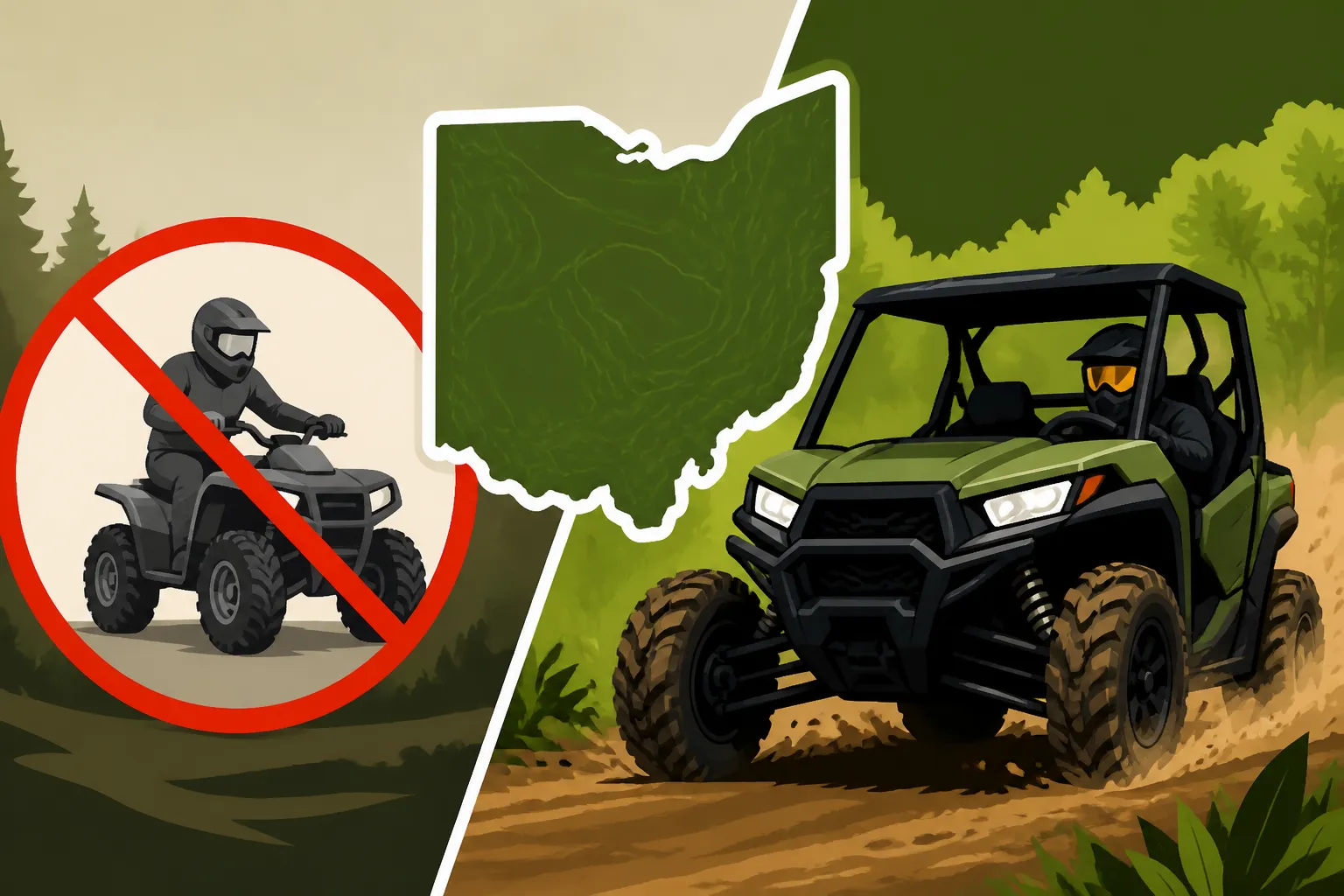
Why Twelve Is the Floor on Ohio Department Land
It can be incredibly confusing to navigate the labyrinth of rules and regulations surrounding ATV and UTV riding in Ohio, especially when you're trying to figure out what's safe and legal for younger riders. One of the most frequently misunderstood aspects is the minimum age for riding on public land. This guide aims to clear up precisely why twelve years old is the baseline age for operating an all-purpose vehicle on Ohio Department of Natural Resources (ODNR) land, and what that means for families who love to hit the trails.
Understanding Ohio's Age Restrictions for APVs
Ohio's approach to all-purpose vehicles (APVs), which include ATVs, UTVs, and side-by-sides, can feel like a patchwork quilt of rules. It often depends on where you're riding, who owns the land, and even the specific type of machine. When it comes to minors, the rules are particularly stringent, and for good reason—safety. The state prioritizes the well-being of its younger riders, leading to specific age floors for public trail systems.
The General Rule for All-Purpose Vehicles
For the most part, Ohio law sets specific requirements for anyone operating an APV, and these become even more defined when the operator is under a certain age. While some private landowners might set their own rules, if you're venturing out onto public trails, specifically those managed by the Ohio Department of Natural Resources, you're going to encounter a hard and fast rule: no rider under the age of twelve can operate an APV on these lands. This isn't just a suggestion; it's a critical safety regulation designed to protect inexperienced riders from environments that might be too challenging or dangerous for their developmental stage. It’s the kind of rule that often catches parents by surprise if they're not fully immersed in the local regulations. You can find more details on general guidelines in [Ohio Rules for Riders Under 16].
Think about a family heading to a state forest for a weekend adventure. They've got a couple of youth ATVs, and their eager 10-year-old is practically bouncing with excitement. However, upon arrival at a designated riding area like Monday Creek, they're met with signage or a ranger explaining that their youngest simply isn't old enough to operate their machine on those trails. It's a tough conversation to have, but it underscores the importance of understanding these regulations before you load up the trailer. This rule is in place to ensure that riders have a certain level of physical coordination, judgment, and the ability to understand complex trail conditions and other traffic, which typically develops around this age.
Defining "All-Purpose Vehicle" in Ohio Law
Before we dive too deep into the age specifics, it's worth taking a moment to clarify what Ohio considers an "All-Purpose Vehicle," or APV. This term is crucial because it's what the state uses to categorize the machines subject to these rules. An APV, under Ohio law, generally refers to any self-propelled vehicle designed primarily to travel on land other than a highway, that is 50 inches or less in width, has an unladen dry weight of 1,200 pounds or less, travels on three or more low-pressure tires, and has a seat designed to be straddled by the operator. This definition specifically covers traditional ATVs, or "quads" as many riders call them.
Now, you might be thinking, "What about my side-by-side or UTV?" That's where it gets a little more nuanced. While many refer to UTVs as APVs informally, Ohio law actually has a separate category for "utility vehicles," which are often wider and heavier. However, for the purpose of the age restrictions on ODNR land, the spirit of the law extends to these vehicles as well, meaning the 12-year-old floor still largely applies to the operator of any off-highway vehicle on these designated public trails. The goal is consistent safety for all motorized off-road recreation. Knowing [How Ohio Law Defines an APV] is key to understanding which rules apply to your machine.
Diving Deeper into Ohio Department of Natural Resources (ODNR) Lands
The Ohio Department of Natural Resources (ODNR) plays a pivotal role in managing many of the state's most popular outdoor recreation areas, including its designated APV trails. These are the places where many families look forward to spending a weekend, but they also come with a clear set of rules designed to keep everyone safe and preserve the natural environment.
What Constitutes ODNR Land for Riders?
When we talk about "ODNR land" in the context of APV riding, we're primarily referring to Ohio's state forests that have designated APV trail systems. The most well-known are Monday Creek in Wayne National Forest (which, while federal, often aligns with state regulations for age restrictions for practical reasons and rider safety), Hanging Rock, Pine Creek, and parts of Maumee, Perry, Pike, and Richland Furnace State Forests. These are the precious few places in Ohio where you can legally ride your ATV or UTV on public land. These areas are specifically designed and maintained for off-road vehicle use, complete with marked trails, staging areas, and often other amenities.
It's vital to understand that not all state parks or forests allow APV riding. In fact, most do not. Simply seeing "State Forest" on a map doesn't automatically mean it's open for your quad or side-by-side. The ODNR meticulously designates specific areas for APV use to prevent environmental damage and ensure rider safety. If you're planning a trip, always check the official ODNR website or contact the specific forest office to confirm trail availability and regulations. [Ohio's Four State Forest APV Areas] provides a great overview of where you can ride. These trails are patrolled by park rangers and law enforcement, who are there to ensure compliance with all state rules, including age requirements for operators.
Specific Age Enforcement on State Forests
The twelve-year-old minimum age for operating an APV is strictly enforced on all ODNR-managed trails. This isn't a negotiable guideline; it's a legal requirement. A child under twelve, regardless of their skill level, their size, or how long they've been riding on private property, cannot legally operate an APV on these state forest trails. This rule applies to both ATVs and the utility vehicles that fit within the broader definition of off-road machines intended for recreation.
Imagine a scenario where a parent brings their experienced 11-year-old to Monday Creek. The child has been riding since they were six on their family farm, handles their machine with confidence, and even has a full set of quality safety gear, perhaps including a helmet and chest protector from a brand like SuperATV. They might feel their child is perfectly capable. However, the law is clear: until that child's twelfth birthday, they cannot be the operator of an APV on that trail system. Rangers and deputies conduct patrols, and if they observe an underage rider, they will intervene. This could result in a citation for the supervising adult and could even lead to the suspension of riding privileges in the state forest. The rule is absolute because it's set by statute, prioritizing a uniform standard of safety across all state-managed riding areas. You can delve into more specifics about [Ohio Rules for Riding State Forest Land].
The "Why" Behind the Twelve-Year-Old Minimum
Many parents wonder about the specific reasoning behind the twelve-year-old minimum. It seems arbitrary to some, especially if they have a highly capable child who has been riding for years. However, this age floor isn't pulled out of thin air; it's the result of extensive research, safety data, and a deep understanding of child development and the specific challenges of operating an APV in a public, often rugged, environment.
Balancing Safety, Skill, and Development
The primary reason for the twelve-year-old minimum on ODNR lands boils down to a balance of safety, skill development, and cognitive abilities. Younger children, generally those under twelve, are still developing crucial physical and mental skills necessary for safe APV operation. These include:
- Physical Coordination: Operating an APV requires a complex interplay of hand-eye coordination, balance, and fine motor skills for throttle, braking, and steering. Younger children often lack the muscle strength and endurance for extended periods of riding on varied terrain.
- Judgment and Decision-Making: Trail riding isn't just about steering; it's about anticipating hazards, reacting quickly to changing conditions, understanding trail markers, and making split-second decisions about speed and trajectory. Children under twelve are often still developing their frontal lobe, which is responsible for impulse control and risk assessment.
- Peripheral Vision and Spatial Awareness: Safely navigating trails requires constant awareness of surroundings, including other riders, natural obstacles, and trail edges. Younger children may have a narrower field of vision and less developed spatial awareness, making them more prone to collisions or inadvertently leaving marked trails.
- Weight and Size for Machine Control: While youth-specific machines are available, even these require a certain body mass and strength to control effectively, especially when encountering bumps, ruts, or inclines. A child who is too light for their machine can be easily thrown off balance.
For these reasons, legislators and safety experts have determined that twelve years old represents a general threshold where most children have developed enough of these critical skills to safely navigate the demands of public APV trails. It's a pragmatic approach to ensure a baseline level of competency for all operators in areas where the state has direct oversight and responsibility. [Ohio Minimum Age to Ride an APV] explains this in further detail.
Legal Precedent and Liability Considerations
Beyond the developmental aspects, the twelve-year-old floor is also heavily influenced by legal precedent and liability concerns for the state. When the ODNR opens land for public recreation, it assumes a certain level of responsibility for the safety of those using its facilities. Allowing very young, typically less capable, operators on trails significantly increases the risk of accidents, injuries, and even fatalities. This, in turn, opens the state up to considerable legal liability.
By setting a clear age minimum, the ODNR establishes a standard that helps mitigate these risks. It's a way to legally define a reasonable level of preparedness expected from riders using state facilities. If an accident were to occur with an underage rider on an ODNR trail, the state would likely face significant scrutiny regarding its safety protocols. This isn't just about protecting the state from lawsuits; it's also about setting a clear expectation for parents and guardians. They are ultimately responsible for ensuring their child meets all legal requirements before heading out. Violating these age restrictions can lead to serious consequences for the adult in charge, including fines and potential legal action if an injury occurs. This emphasizes the need for adherence to rules like [Ohio Rules for Riding With a Parent] when dealing with younger, but legal, riders.
Rules for Younger Riders Off ODNR Property
The strict twelve-year-old rule for ODNR land often leads parents to wonder where, if anywhere, their younger children can ride. The good news is that the rules are generally more flexible when you're not on state-managed recreational trails. However, "flexible" doesn't mean "no rules," and safety should always remain the top priority.
Private Land and Parental Discretion
If you own private property, or have explicit, written permission from a landowner to ride on their property, the rules surrounding age often shift dramatically. On private land, the primary responsibility for safety and supervision falls squarely on the shoulders of the parent or guardian. This means that a child younger than twelve can often ride an APV on private land, provided they are under direct adult supervision and the parent deems them capable and safe. Many families introduce their children to riding on their own property, starting with small, youth-specific machines and gradually teaching them skills in a controlled environment.
However, even on private land, it's crucial to exercise extreme caution. Just because it's legal doesn't mean it's always safe. The same developmental considerations for coordination and judgment still apply. Parents should ensure that:
- The child is riding an appropriately sized machine for their age and weight.
- They are wearing all necessary safety gear, including a DOT-compliant helmet (like those often discussed by brands focused on rider safety, even if they're more known for vehicle parts, the spirit of safety applies to all gear choices).
- Supervision is constant and direct, with the supervising adult actively monitoring the child's riding.
- The terrain is suitable for the child's skill level, avoiding steep inclines, deep water, or large obstacles.
Many experienced riders started their journey on private land under the watchful eye of a parent, gradually building confidence and skill before tackling more challenging public trails once they met the age requirement. This is the ideal environment for a child under twelve to learn.
Supervised Riding on Other Public Lands
While ODNR state forest trails have a hard age floor, other types of public land might have slightly different, though still restrictive, rules. For example, some municipal or county parks might have very limited, if any, allowance for APVs, and if they do, they often defer to state age guidelines or implement their own. The Wayne National Forest, a federal entity within Ohio, also manages APV trails (like Monday Creek). While they issue their own specific permits, the general understanding and enforcement for age limits often mirror those of the state for consistency and safety.
The key takeaway here is that you must verify the rules for any public land before you ride, especially with a minor. Do not assume that because it's "public" or "not an ODNR state forest" the 12-year-old rule doesn't apply. Many public areas simply prohibit APV riding entirely, or if they do allow it, they will often maintain strict age and supervision requirements similar to, or even stricter than, the state's. For riders aged 15, there are still specific [Ohio Rules for a Rider Aged 15] that should be observed, often involving direct supervision, regardless of the property type.
The Importance of Safety Training and Equipment
Regardless of a rider's age or where they're riding, safety should always be the guiding principle. Adhering to legal age requirements is just one piece of the puzzle. Comprehensive safety training and appropriate equipment are equally, if not more, critical for preventing accidents and ensuring a positive riding experience.
Beyond the Legal Minimums: The Value of Training
Ohio does not legally mandate an ATV safety course for all riders. However, that doesn't mean safety training isn't incredibly valuable—it's paramount, especially for young and new riders. An accredited ATV safety course, often offered through organizations like the ATV Safety Institute (ASI), teaches essential riding techniques, risk awareness, environmental responsibility, and proper maintenance. These courses often cover:
- Pre-ride inspections: How to check your machine before every ride.
- Starting and stopping techniques: Proper use of throttle and brakes.
- Turning and balancing: Mastering weight transfer for control.
- Navigating obstacles: Safely approaching and overcoming bumps, logs, and hills.
- Emergency procedures: What to do in case of a breakdown or accident.
For parents teaching younger children on private land, these courses provide a structured curriculum and expert-vetted techniques, ensuring they're not just learning from trial and error. Even for riders who meet the twelve-year-old minimum for ODNR trails, taking a safety course can significantly enhance their skills and confidence, making them safer and more responsible riders. You can explore different [Ohio ATV Safety Course Options] for your family. Investing in knowledge is just as important as investing in a quality machine or aftermarket parts, like those robust skid plates or lift kits you might find from a company like SuperATV.
Essential Gear for Young Riders
Proper safety gear is non-negotiable for any APV rider, but it's especially critical for children, whose bodies are more vulnerable to injury. Equipping a young rider with the right gear can literally be a life-saver. Here's a rundown of essential equipment:
- DOT-Compliant Helmet: This is the single most important piece of safety gear. It must be a helmet specifically designed for motorized recreation and meet DOT FMVSS218 standards. A novelty helmet offers virtually no protection. Remember, [DOT FMVSS218 Helmets in Ohio] are a must.
- Eye Protection: Goggles or a full-face helmet visor are crucial to protect eyes from dust, debris, insects, and branches. A branch to the eye at speed can cause permanent damage. [Eye Protection on an Ohio Trail] is not just a suggestion, it's a critical safety measure.
- Over-the-Ankle Boots: Sturdy boots protect feet and ankles from impacts, hot engine parts, and chain/sprocket injuries.
- Gloves: Gloves improve grip, reduce blisters, and protect hands from scrapes and impacts.
- Long-Sleeved Shirt and Pants: Durable, long-sleeved shirts and pants (jeans or riding pants) protect against abrasions, scrapes, and sun exposure. Avoid shorts and t-shirts, even in hot weather.
- Chest Protector (Optional but Recommended): For aggressive riding or less experienced youngsters, a chest protector offers crucial protection for the torso, shoulders, and spine.
Equipping a young rider with all of this gear can feel like a significant upfront cost, but it's an investment in their safety and well-being. Never cut corners on safety gear, especially for children who are still learning and developing their riding skills. The right gear helps absorb impacts, prevent abrasions, and keeps them comfortable, allowing them to focus on riding safely and enjoying the trails.
Here's a quick comparison of age requirements for APV riding in Ohio:
| Riding Location | Minimum Age to Operate | Supervision Required? | Key Considerations |
|---|---|---|---|
| ODNR State Forest Trails | 12 years old | N/A (operator must be 12+) | Strictly enforced; no exceptions for skill/experience. |
| Private Property | No state minimum | Yes, direct adult supervision | Parental discretion; must be deemed capable and safe. |
| Wayne National Forest Trails | Typically 12 years old | N/A (operator must be 12+) | Federal rules often align with state for practical safety. |
| Other Public Lands | Varies, often prohibited or 12+ | Varies | Always check local ordinances; rarely permits younger riders. |
Understanding these distinctions is paramount for any family in Ohio looking to enjoy APV riding safely and legally. The twelve-year-old floor on ODNR land is there for a reason, rooted in safety and developmental considerations, and respecting it ensures the longevity of these precious riding opportunities for everyone.
Disclaimer
This article is for general informational purposes only and does not constitute professional advice. Laws, prices and regulations vary by location and change over time. Consult a qualified professional for guidance on your specific situation.