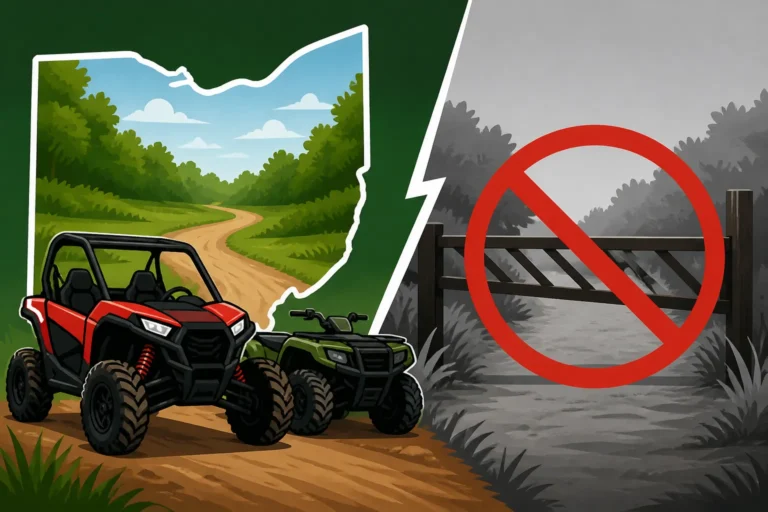
Washington County Opened Every Road It Controls
It can feel incredibly frustrating to sort through Ohio's complex rules about where you can and cannot ride your ATV or UTV on public roads. Many riders dream of simply hopping on their machine and cruising down local streets, only to be met with a confusing patchwork of state laws and local ordinances. This guide will clarify what it truly means when a county, like Washington County, passes a resolution to open "every road it controls" to All-Purpose Vehicles, helping you understand the opportunities and crucial limitations involved.
The Myth and Reality of "Every Road"
When news breaks that a county has opened its roads to ATVs and UTVs, it's easy for excitement to override the fine print. Riders often envision endless miles of open pavement, ready for adventure. However, the phrase "every road it controls" carries a very specific legal meaning that's essential for every Ohio rider to understand, especially when planning a trip to a newly APV-friendly county.
What "Every Road It Controls" Actually Means
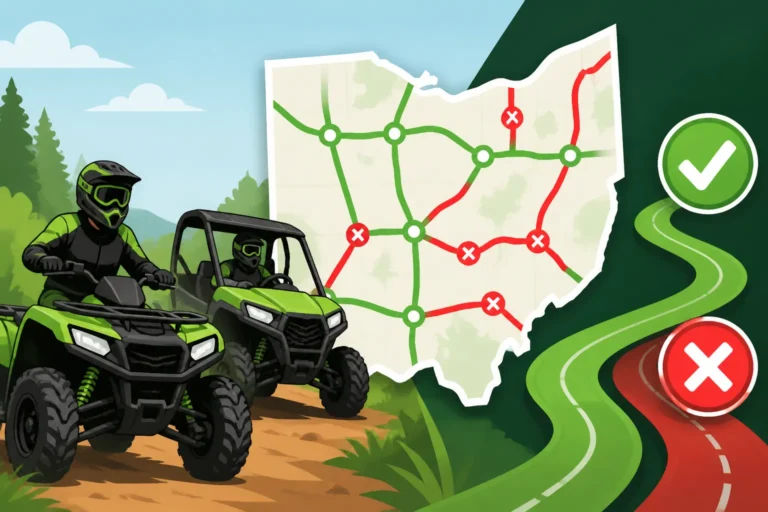
Let's cut through the anticipation: when a county commission, like Washington County's, passes a resolution to open its roads, they are specifically referring to county roads. This is a critical distinction. Ohio's road network is managed by different levels of government: local townships control township roads, counties control county roads, the Ohio Department of Transportation (ODOT) controls state routes (marked with a buckeye shape), and federal authorities control interstates. A county commission's authority extends only to the roads under its own jurisdiction.
Imagine planning a fantastic ride through Washington County. You hear the news, and your mind fills with images of cruising from small town to small town, connecting trails, and exploring. But then you encounter a sign: "State Route 7." This isn't a county road. Even though the county has opened "its" roads, State Route 7 remains under ODOT's authority, and state law regarding APV use on those specific roads still applies. This means that while you might be able to ride legally on a county road leading up to Route 7, you cannot simply merge onto the state route and continue your journey there, unless specifically crossing it at an intersection. It’s a common misconception, leading to potential citations and a lot of disappointment for riders who haven't done their homework.
The Resolution Process for County Roads
So, how does a county get to the point of opening its roads? It's not a snap decision. The process typically involves a formal resolution passed by the county commissioners, often after public hearings and considerable debate. Local residents, riding clubs, and businesses often advocate for these changes, highlighting potential economic benefits from increased tourism and recreational spending. Safety concerns are paramount, and commissioners will usually deliberate over how APVs might interact with existing traffic, school zones, and residential areas. The language of the resolution itself is key, as it defines the scope and limitations of the permitted use.
Consider Washington County, for example. Before its resolution, there would have been discussions about the safety measures riders would need to adhere to, such as equipment requirements for machines, speed limits, and even the types of trails or destinations APVs might access via these roads. Advocates might present data on APV use in other states or counties, emphasizing responsible riding and the economic boost it could bring to local eateries, gas stations, and lodging. The county engineers might weigh in on road conditions, and law enforcement would discuss enforcement challenges and necessary adjustments. It’s a thorough, often lengthy process designed to balance the interests of various stakeholders and ensure public safety while expanding recreational opportunities. For more on the specifics of how this process unfolds, check out [How County Commissioners Vote to Open Roads to APVs].
Riding Within Washington County's APV-Friendly Framework
Even in counties that have embraced APV road use, riders must understand that this freedom comes with clear responsibilities and rules. "Open roads" doesn't mean "no rules," and adhering to all regulations is critical for both safety and maintaining the privilege of riding on public thoroughfares.
Understanding the Rules of the Road in Washington County
When you're out riding your APV on a Washington County road, you're not just off-roading anymore; you're sharing the road with cars, trucks, and other vehicles. This means your machine needs to meet specific equipment requirements mandated by Ohio law for road use. For UTVs, this often includes turn signals, brake lights, headlights, taillights, mirrors, a windshield (often safety glass), and a horn. While ATVs might have slightly different requirements, basic lighting and mirrors are still vital. Brands like SuperATV offer a wide range of road-legal accessory kits that can help ensure your machine complies with these requirements, making it safer and legal for cruising down a county blacktop.
A deputy stopping you in Washington County, even on an open road, will likely check for these essentials. They’ll want to see your headlights on, confirming your brake lights illuminate when you stop, and observe that your turn signals function properly. Beyond equipment, you, as the operator, must have a valid driver's license, and you need to carry proof of insurance for your machine. This isn't optional; it's a fundamental part of responsible road use. Don't forget, helmets and eye protection are also critical, especially for younger riders or when traveling at higher speeds. It’s about being prepared for a road environment, which is different from a trail. For a full list of what your machine might need, refer to [Ohio UTV Road Equipment List] or [Ohio APV Road Equipment List].
Navigating County and Township Roads
So, you're in Washington County, ready to ride. How do you actually know you're on a county road versus a state route or even a municipal street? It's not always obvious. County roads often have signs indicating their numerical designation (e.g., "County Road 35"), but some smaller, less-traveled routes might not be clearly marked. State routes are almost always identified by the distinct buckeye-shaped shields, while township roads might have smaller, less formal signage, or none at all. Local maps, GPS apps that show road classifications, and even a call to the Washington County Engineer's office can be invaluable resources.
Imagine you're on a gravel road, enjoying the scenery, and you come to an intersection. One road has a faded "CR 58" sign, while the crossroad has a prominent "State Route 60" buckeye shield. This is where your knowledge comes into play. You can legally turn onto CR 58 or continue on CR 35, but you cannot make a turn onto State Route 60 and continue down it. You might be able to cross it safely at an intersection if traffic allows, but riding on it is generally prohibited. The excitement of open roads shouldn't lead to careless navigation. Always be vigilant about road signs and your position. Riding an APV on a road where it's not permitted can lead to significant fines and penalties, quickly turning a fun day into a costly mistake.
Limitations Even in an Open County
Even with Washington County's progressive stance, there are still boundaries. Speed limits, for instance, are rarely waived for APVs. You'll need to adhere to the posted limits, which could be 25 mph in a residential area, 35 mph on a rural road, or even 55 mph on some unposted county roads (though this higher speed might not be safe or practical for all APVs). Additionally, while you can ride on county roads, these resolutions typically do not override state law concerning state routes or interstate highways. You might be able to cross a state route at a designated intersection, but riding on a state route is still a no-go. [Crossing a Highway on an APV in Ohio] has more details on this.
Furthermore, city and village limits within Washington County might have their own ordinances. Just because the county has opened its roads doesn't mean the city of Marietta or the village of Beverly automatically follow suit. They may choose to keep their municipal streets closed to APVs, or they might adopt their own, potentially stricter, regulations. A rider from out of town might accidentally roll into a city limit thinking they're still on an open county road, only to find themselves in violation of a local ordinance. It’s crucial to understand that "county roads" are distinct from "municipal streets," and your riding freedom can end abruptly at a city limit sign. Always check local city or village rules before venturing into their jurisdiction on your APV.
Practical Steps for Washington County Riders (and Beyond)
Taking advantage of Washington County's open roads requires more than just knowing where you can ride. It also means preparing yourself and your machine thoroughly to ensure every ride is legal, safe, and enjoyable.
Essential Paperwork and Preparation
Before you even think about hitting those Washington County roads, make sure your APV is properly titled and registered with the state of Ohio. This isn't a suggestion; it's a legal requirement for operating on any public road, even those designated as open for APVs. You'll need to visit an Ohio deputy registrar's office to [Registering an APV in Ohio] and ensure your machine has an official Ohio APV plate and a current validation sticker prominently displayed. Without this, you're looking at a potential citation for operating an unregistered vehicle.
Beyond registration, you must carry proof of financial responsibility (insurance) and a valid driver's license on your person. These documents prove you're legally allowed to operate the machine and are covered in case of an accident. Think of it like driving your car: you wouldn't leave home without your license and insurance card. The same applies to your APV on public roads. Keep your registration card, insurance card, and license in a secure, waterproof location on your machine or yourself. Being prepared with all your paperwork can save you a lot of hassle during any roadside stops. You can learn more about this by reading [Ohio APV Registration and Insurance Proof].
Gear Up for Safe and Legal Riding
While your machine needs to be equipped for road use, so do you! Safety gear is paramount, especially when sharing roads with larger vehicles. Ohio generally requires helmets for riders under 18, but a DOT-compliant helmet is highly recommended for all riders, regardless of age, when operating an APV on public roads. Eye protection is also crucial to shield against wind, dust, and debris. Think about how a pebble kicked up by a passing car could impact your vision.
Consider additional safety accessories for your machine beyond the legal minimums. Bright LED lighting, especially for dusk or dawn rides, can significantly improve your visibility to other motorists. A good set of mirrors isn't just a legal requirement; it's a vital safety tool, allowing you to monitor traffic behind you. High-visibility clothing, especially fluorescent colors, can also make a huge difference in how easily other drivers spot you. Companies like SuperATV offer robust accessory options, from full windshields that meet safety glass standards to durable mirrors, all designed to enhance your road-riding experience. Remember, being seen is being safe.
Staying Informed About Local Ordinances
The landscape of APV road legality can shift. What's allowed today might change tomorrow, or differ significantly in an adjacent county. It's incumbent upon the rider to stay informed about the specific resolutions and ordinances in place for any area they plan to ride. While Washington County might be open, neighboring counties or townships could have entirely different rules. Before embarking on a multi-county ride, make a few phone calls to the county engineers' offices or check the county commissioners' websites.
Local governments sometimes review and update their resolutions based on public feedback, accident statistics, or new state legislation. A quick check of the county website or even a phone call to the County Clerk's office can provide the most up-to-date information. Don't rely solely on word-of-mouth or outdated online forums. Being proactive about understanding the rules ensures that your APV adventures remain fun, legal, and hassle-free, wherever you choose to ride in Ohio.
Here's a quick comparison of road types and their general APV rules in Ohio:
| Road Type | Controlling Authority | APV Road Use (General Ohio Rule) | Washington County Impact (for County Roads) | Key Equipment / Considerations |
|---|---|---|---|---|
| Interstate Highways | ODOT (State/Federal) | Generally prohibited. | No change; still prohibited. | N/A |
| State Routes | ODOT (State) | Generally prohibited; crossing at intersections may be allowed. | No change; generally prohibited, crossing may be allowed. | N/A (unless crossing) |
| County Roads | County Commissioners | Prohibited, unless a county resolution specifically permits it. | Permitted due to resolution. | Full road-legal equipment (lights, mirrors, etc.), driver's license, insurance, registration. |
| Township Roads | Township Trustees | Prohibited, unless a township resolution specifically permits it. | May or may not be open, depending on township trustees' actions. | Full road-legal equipment (lights, mirrors, etc.), driver's license, insurance, registration. |
| Municipal Streets | City/Village Councils | Prohibited, unless a municipal ordinance specifically permits it. | May or may not be open, depending on local ordinance. | Full road-legal equipment (lights, mirrors, etc.), driver's license, insurance, registration. |
Disclaimer
This article is for general informational purposes only and does not constitute professional advice. Laws, prices and regulations vary by location and change over time. Consult a qualified professional for guidance on your specific situation.