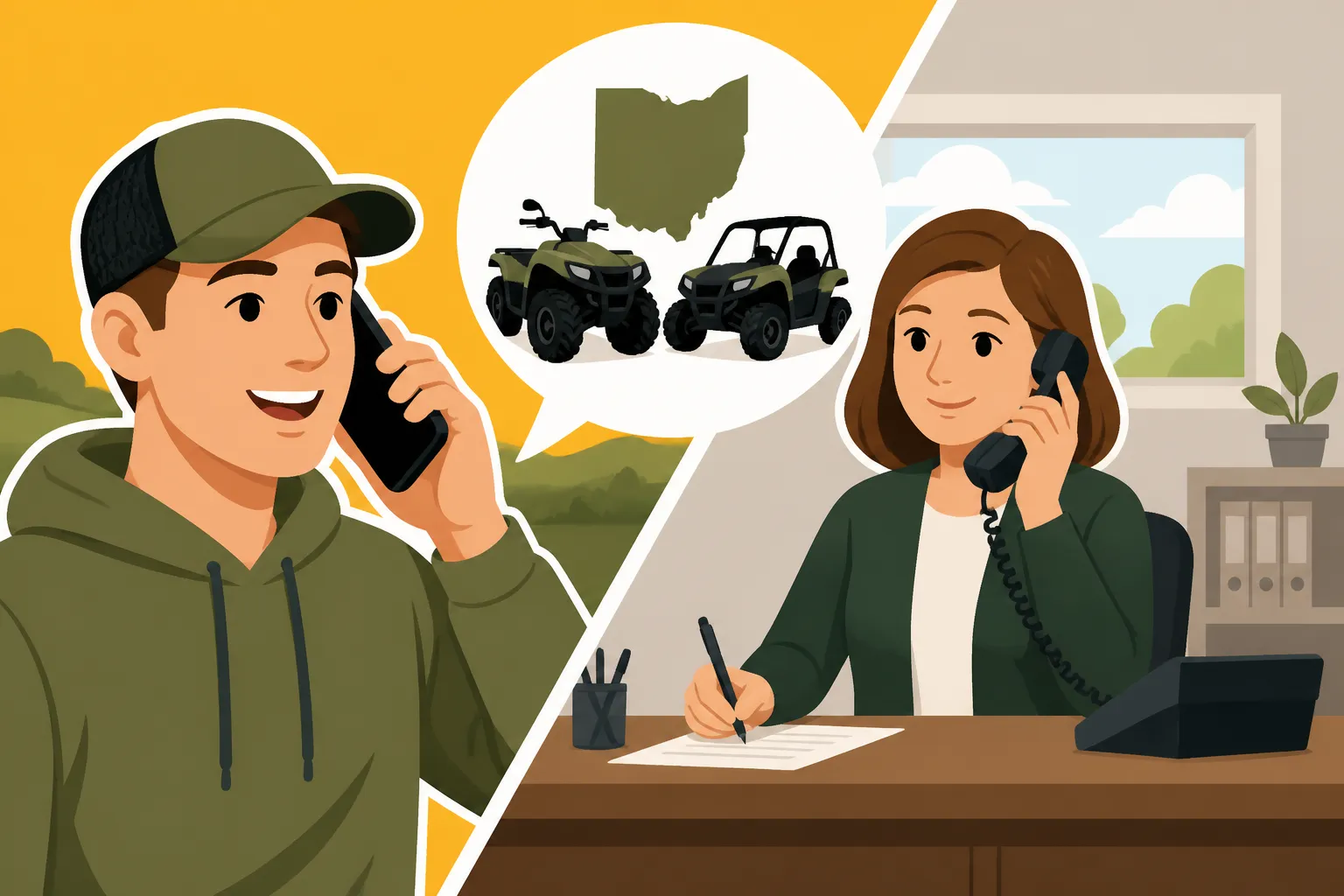
Calling a Township Clerk About APVs
It's incredibly frustrating when you just want to know where you can legally ride your ATV or UTV in Ohio, only to find a confusing maze of ever-changing local rules. The statewide laws give some guidance, but the real permission often comes down to individual townships and counties. This guide is here to cut through that confusion, explaining why and how a simple phone call to your local township clerk can unlock the answers you need to ride with confidence.
Why a Township Clerk Holds the Key to Your Riding Plans
Navigating the rules for riding your All-Purpose Vehicle (APV) on roads in Ohio can feel like trying to solve a riddle wrapped in an enigma. Unlike some states with clear, uniform regulations, Ohio empowers its local jurisdictions – counties and townships – to make their own decisions about opening their roads to APVs. This means that what's perfectly legal in one township might land you a citation just a few miles down the road in the next one. It's a patchwork quilt of ordinances, and understanding it is crucial to avoid fines and ensure safe, legal riding.
The Ohio Revised Code sets the broad framework, but it specifically grants townships the authority to pass resolutions that open their roads to APVs. Without such a resolution, those roads remain closed, except for limited purposes like crossing at intersections. This is where your local township clerk becomes your best friend. They are the official record-keepers for the township, responsible for maintaining all adopted resolutions, including those pertaining to APV use on local roads. Trying to guess, or relying on outdated information from social media, is a recipe for trouble. You need to know for sure, and the clerk's office is the most reliable source.
The Patchwork of Ohio Road Rules for APVs
Ohio's approach to APV road use is decentralized, which can be both a blessing and a curse. It allows local communities to tailor regulations to their specific needs and desires, perhaps opening up access to trails or connecting rural areas. However, for riders, it means you can't assume anything. Just because you rode your side-by-side on township roads in Muskingum Township doesn't mean you can do the same in Newport Township. Each township's board of trustees must formally vote to pass a resolution to open its roads. This resolution will specify which roads, what times, and under what conditions APVs are allowed.
This also means that the official information isn't always easy to find online. While some counties, like Washington County, have made comprehensive efforts to publish their resolutions, many townships might not have their specific APV resolutions readily available on a website. You might find general information about [Ohio Counties That Allow APVs on Roads] or even [Ohio Townships That Allow APVs on Roads] in broader guides, but for definitive, street-level accuracy, a direct inquiry is often the best and only way. This local control means you absolutely have to do your homework for each area you plan to ride.
Why Your Current Plate Isn't Enough for Road Access
It's common for riders to assume that once they have their Ohio APV plate and registration, they're good to go on any public road. Unfortunately, that's a misunderstanding of how the law works. Your APV plate, which also serves as your trail permit for state forests, registers your machine with the state. It allows you to legally operate your APV where it is permitted, like designated trails in Wayne National Forest or Ohio State Forests. However, it does not automatically grant you permission to ride on public roads.
Road use is a completely separate set of rules. The vehicle registration and titling processes are managed by the Ohio BMV and county title offices, respectively. But the decision to open local roads to APVs rests with county commissioners for county roads, and township trustees for township roads. So, even if you have your machine fully titled, registered, and insured (which is often required for road use anyway), you still need to verify the specific local ordinances. This is a common point of confusion and one that often leads to unexpected citations for riders who haven't confirmed the local regulations.
Preparing for Your Call: What to Know and What to Ask
Before you pick up the phone, a little preparation can make your call to the township clerk much more efficient and effective. Knowing what specific information you need and having a clear idea of your questions will help the clerk assist you more quickly, as they often handle a wide variety of inquiries. Remember, their job is to provide public information, but being organized makes it easier for everyone.
Start by identifying the exact township(s) where you intend to ride. Ohio has many townships, and their names can sometimes be similar to nearby villages or cities, so be precise. For instance, "Salem Township" appears in several different counties. Knowing the county is helpful if you’re unsure. Think about the specific roads or areas you’re interested in. Are you looking to connect trails, ride from your cabin to a friend's house, or simply explore the rural lanes? The more specific you can be, the better.
Essential Questions to Ask the Clerk
When you speak with the township clerk, your primary goal is to determine if the township has passed a resolution allowing APV use on its roads, and if so, to understand the details of that resolution. Here are some key questions you should be ready to ask:
- "Has [Township Name] passed a resolution to allow All-Purpose Vehicles (APVs), like ATVs and UTVs, on its township roads?" This is the fundamental question.
- "If so, what is the resolution number and date it was enacted?" Having the resolution number is vital. It's like a specific address for the document you need. This will allow you to reference it accurately and even request a copy.
- "Which specific roads are included or excluded in this resolution?" Sometimes, a resolution might open all township roads, while others might list specific roads or exclude certain ones.
- "Are there any specific restrictions, such as hours of operation, speed limits, or equipment requirements?" The resolution might stipulate riding only during daylight hours, impose a maximum speed (like [Why an Ohio UTV Stops at Thirty-Five]), or require certain [Ohio APV Road Equipment List] or [Ohio UTV Road Equipment List] beyond state minimums.
- "Where can I find a copy of this resolution, or can you send me one?" Ideally, you'll want a physical or digital copy for your records, especially if you ever need to clarify the rules roadside.
It's also a good idea to clarify if there's any distinction between ATVs and UTVs in the resolution, as some older resolutions might predate the common use of the term "UTV" or have different regulations for different vehicle types. Knowing the exact wording of the resolution is your strongest defense against misunderstanding.
What to Do If the Clerk Is Unsure or Unhelpful
While most township clerks are helpful and knowledgeable, you might occasionally encounter someone who is new to the role, unfamiliar with APV laws, or simply too busy to dive deep into old records. Don't get discouraged! Here's how to proceed:
- Be patient and polite: A calm demeanor goes a long way. They are public servants, and approaching them respectfully will yield better results.
- Rephrase your question: If they seem confused by "APV," try using "ATV" and "UTV" explicitly. You can also mention "all-purpose vehicle" as defined in the Ohio Revised Code, which is the legal term.
- Request a specific search: Ask them to look for resolutions related to "all-purpose vehicles," "ATVs," "UTVs," or "off-highway vehicles" within a certain timeframe, if you have any historical context.
- Offer to research specific sections of the Ohio Revised Code: While you don't want to teach them their job, sometimes politely mentioning the section of the ORC that grants townships this authority (e.g., ORC 4519.02) can prompt them to look in the right place.
- Ask to speak with someone else: If the person you're speaking with genuinely can't help, politely ask if there's another clerk or an assistant who might have more familiarity with resolutions or local ordinances.
- Follow up in writing: If you still can't get a definitive answer over the phone, consider sending a polite email or letter formally requesting the information. This creates a paper trail and often gets a more thorough response.
Remember, the goal is to get a clear, verifiable answer. Persistence, coupled with politeness, is usually the most effective strategy.
Understanding the Township's Decision and What It Means for You
Once you get a definitive answer from the township clerk, whether it's a "yes, we have a resolution" or a "no, we don't," it's crucial to understand the implications for your riding. This information directly impacts where and how you can legally operate your machine.
If the township does have a resolution, you'll need to absorb the details. This isn't just a green light to ride anywhere. Pay close attention to any specific road names, time restrictions, or equipment stipulations. Some resolutions are quite detailed, specifying everything from permissible hours to speed limits and even requiring items like turn signals or mirrors that your machine might not have come with from the factory. Companies like SuperATV offer a wide range of aftermarket accessories that can help you meet these local requirements, from full windshields to signal kits. Always ensure your machine is equipped to fully comply with whatever the township's resolution dictates.
If a Township's Roads Are Open to APVs
Congratulations! If the township has indeed passed a resolution, you've found a new area to explore. However, your due diligence isn't over. You need to thoroughly understand the specifics of that resolution. For example, [How an Ohio Township Opens Its Roads] article might detail the process, but the resolution itself contains the actual rules.
Here's what to look for and confirm:
- Effective Date: When did the resolution go into effect? Is it still current?
- Roads Covered: Does it apply to all township roads, or only a designated subset? Many townships might open their entire network of roads, while others might have very specific routes.
- Operating Hours: Are you limited to daylight hours, or can you ride after dark? If so, [Ohio Rules for Riding After Dark] will likely require specific lighting.
- Speed Limits: Is there a special speed limit for APVs on these roads, or do they follow the posted road limits? Often, townships will set a maximum speed below the standard unposted rural road speed of [Why an Unposted Ohio Road Defaults to Fifty-Five].
- Equipment Requirements: Does the resolution require specific equipment like DOT-approved helmets, turn signals, brake lights, mirrors, or a horn? While [Ohio APV Road Equipment List] covers state-level requirements, local rules can add more.
- Proof of Insurance: Is carrying proof of insurance explicitly required for road use under the resolution? This is a common requirement when roads are opened up. [Ohio APV Insurance Requirement] might detail what sort of coverage is expected.
- Driver's License: Do you need a valid driver's license to operate an APV on these township roads? Generally, yes, but it's always good to confirm.
Always carry a copy of the resolution (digital or print) with you when riding in that township, alongside your registration and insurance. It can be invaluable if you're ever stopped by law enforcement who may not be fully up-to-date on every local ordinance.
If a Township's Roads Remain Closed
If the township clerk informs you that no resolution exists, or that it specifically prohibits APVs on its roads, then you must respect that decision. Riding on closed roads can result in fines and other penalties. It's frustrating, I know, especially when you see nearby areas that do allow it. But a "no" means you cannot legally ride your APV on those township roads.
This doesn't mean all hope is lost for future access. Townships are governed by elected trustees, and their decisions can change over time. If you're passionate about opening up access, consider these steps:
- Engage with your local community: Attend township trustee meetings, talk to your neighbors, and understand local sentiment.
- Present your case: If there's support, you and other riders could approach the township trustees with a well-researched proposal, highlighting the economic benefits of trail tourism, safety measures, and responsible riding practices. Organizations like SuperATV, which champion responsible riding and offer products to make machines safer and more road-friendly, could serve as examples of how the industry supports safe use.
- Advocate for change: Show them how other townships and counties have successfully integrated APV road use. Explain the distinction between responsible riding and reckless behavior.
Until a new resolution is passed, however, you must find alternative places to ride, such as designated state forest trails or private riding parks. It's always better to know the rules and abide by them than to risk a citation.
Planning Your Ride with Local Knowledge
Once you've done your homework and gathered the necessary information from township clerks, you can start building your comprehensive riding plan. This local knowledge is your most powerful tool for a worry-free ride. It allows you to stitch together permitted road sections with legal trails, making the most of Ohio's diverse terrain.
Remember, this is about more than just avoiding a ticket; it's about being a responsible rider and respecting the local community. When townships see riders adhering to their rules, it builds trust and may even encourage more areas to open their roads in the future. Conversely, riders who ignore local ordinances can quickly jeopardize access for everyone.
Mapping Your Route and Staying Informed
With the specific resolutions in hand, you can now truly map out your adventures. This means:
- Creating detailed maps: Use physical maps or GPS apps to highlight the specific township roads that are open to APVs. Mark any time restrictions or speed limits directly on your map.
- Identifying connecting trails: Look for ways to link open township roads to official state trails, such as those in [Wayne National Forest's Three Ohio Systems] or [Ohio's Four State Forest APV Areas]. This can create longer, more diverse riding experiences.
- Understanding county roads: Don't forget that county roads fall under the jurisdiction of county commissioners. A separate call to the county engineer's office or checking county websites might be necessary to confirm rules for county roads. [How an Ohio County Opens Its Roads] will give you more context there.
- Checking for updates: Township resolutions can change. It's a good practice to periodically reconfirm the rules, especially if you haven't ridden in a specific township for a while.
Remember that riding on the berm (the shoulder) of a road also has specific rules, even if the road itself is open to APVs. [Riding the Berm Beside an Ohio Lane] is a topic that requires its own understanding, and local resolutions might have additional stipulations. Always ride defensively, adhere to all traffic laws, and be mindful of other vehicles, pedestrians, and property owners. Your responsibility as an APV operator extends beyond just knowing the local rules; it includes safe and courteous operation at all times.
Disclaimer
This article is for general informational purposes only and does not constitute professional advice. Laws, prices and regulations vary by location and change over time. Consult a qualified professional for guidance on your specific situation.