Ohio Open Container Rules on an APV
Alright, let's talk about something that can quickly turn a fun day of riding your all-purpose vehicle into a real headache: Ohio's open container laws. It's a common misconception that these rules only apply to cars on paved roads, but the truth is, they have a significant reach, extending to our beloved ATVs and UTVs. Navigating what's allowed and what's not can be confusing, especially when you're out exploring diverse terrains. This guide is here to clear up that confusion, help you understand the rules, and keep your rides safe and legal.
Understanding Ohio's Open Container Laws Beyond Your Car
When we think of open container laws, most of us immediately picture someone pulled over in a car with a half-empty beer can in the cup holder. And while that's certainly part of it, Ohio's laws are much broader and are designed to prevent impaired driving and maintain public safety across all types of vehicles, including APVs. This can be particularly frustrating for riders who might want to enjoy a cold beverage at a trailhead or during a break, only to realize the law follows them even there.
It's not just about drinking while driving; it's about the mere presence of an open container in certain situations. The state takes a firm stance on this because the line between an open container and impaired operation can blur quickly, especially in the unpredictable environment of off-road riding.
What Exactly Qualifies as an "Open Container" on Your APV?
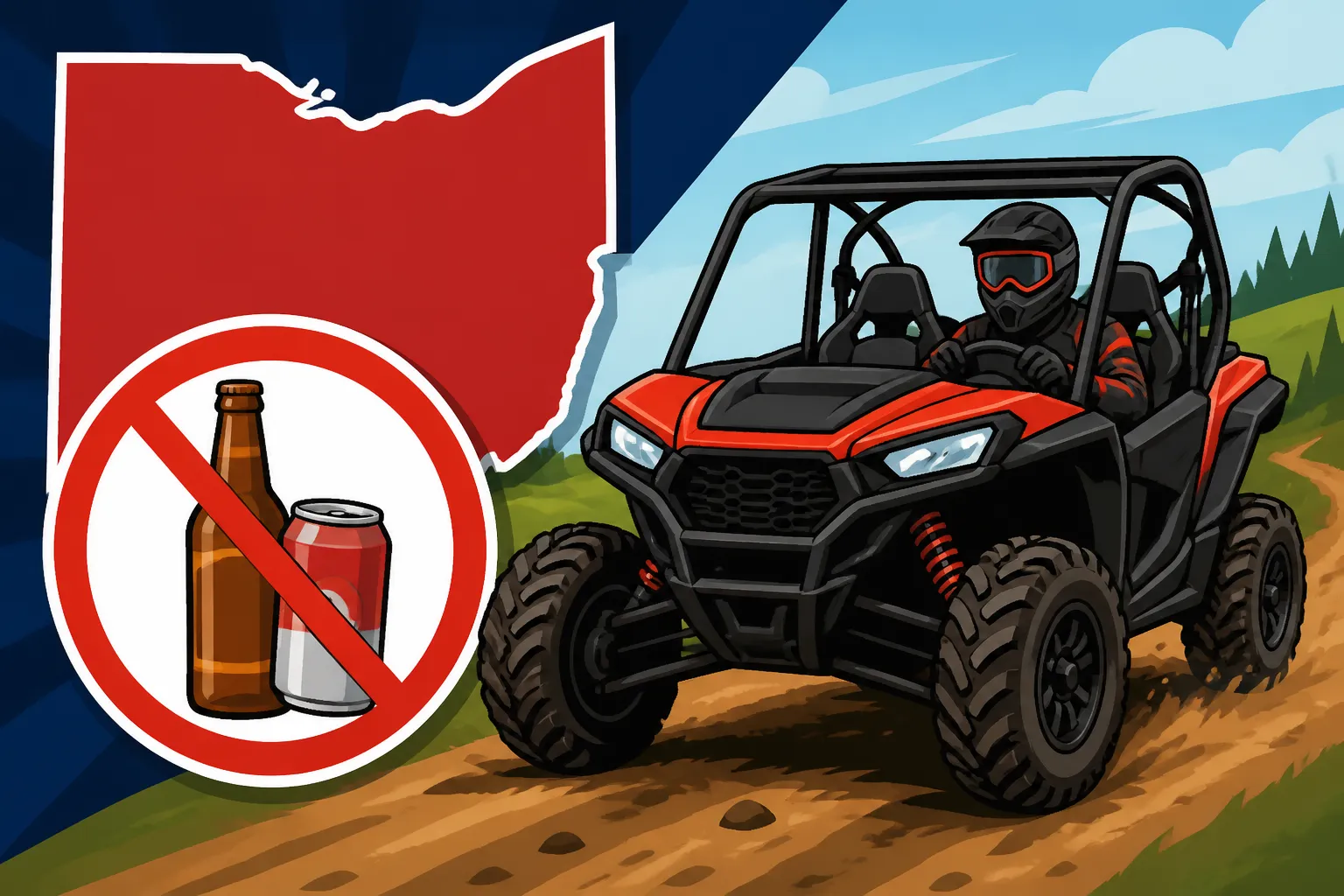
Ohio law is pretty specific about what constitutes an "open container." Essentially, it's any bottle, can, or other receptacle containing an alcoholic beverage that has been opened, has a broken seal, or from which some of the contents have been removed. This means if you pop the top on a beer, twist the cap off a wine cooler, or even break the seal on a liquor bottle, it immediately falls under the "open container" definition if it's within reach of the operator or passengers in certain areas.
Think of it this way: a six-pack of sealed cans in your cooler is generally fine. But if even one of those cans has been opened, even if it's sitting upright and not actively being consumed, it’s considered an open container. The same goes for a bottle of wine that’s been uncorked, even if it’s recorked. The initial act of opening or breaking the seal is the key. This can be tricky when you're packing a cooler for a day out, and it's easy to forget that one opened drink in a mix of sealed ones can change everything. You might be completely sober, but the presence of that open container can still lead to a citation.
The Broad Reach of Ohio's Open Container Statute
The reach of Ohio's open container laws extends well beyond your typical asphalt roads. If you're operating your APV on public roads (where permitted), highways, or any public land such as state forests or national forest areas where APVs are allowed, these laws apply. This means that if you're out on a township road that has been [Ohio Rules for Riding a Township Road], or even just crossing a state route, the open container rules are in effect. It's not just the driver who needs to be mindful; passengers can also be cited if an open container is accessible to them, depending on the specific circumstances and location.
Many riders assume that because they're "off-road," different rules apply, but that's often not the case on publicly accessible trails or paths. The moment you enter property managed by the state or federal government, or if you're using roads open to the public, you're generally subject to the same traffic and alcohol laws as if you were in a car. This can feel like a contradiction, especially when you're deep in the woods, but deputies and rangers are very much aware of these regulations. It's a common frustration for riders who just want to enjoy their pastime, only to find the same rules that govern main streets apply to their off-road adventures. Understanding [What an Ohio Deputy Checks Roadside] often includes looking for these types of violations.
Penalties and Consequences of an Open Container Violation
Getting caught with an open container on your APV in Ohio isn't just a slap on the wrist. While it's typically classified as a minor misdemeanor, the financial and legal repercussions can be surprisingly steep and inconvenient. It's not the kind of memory you want to make during what should be an enjoyable day outdoors. The costs go beyond just a fine; they can involve court appearances, fees, and even potential impacts on your ability to drive.
The authorities, whether it's a local deputy or a state park ranger, are serious about enforcing these laws. They see it as a crucial step in preventing more dangerous situations, like operating while impaired, which carries much heavier penalties. It's always better to understand the potential downsides beforehand than to learn about them the hard way.
The Immediate Aftermath: Roadside Stop and Citation
Imagine you're taking a break on a public trail, cooling down, and you have an open can of soda, but right next to it, an open, half-empty bottle of your favorite hard seltzer. A deputy or ranger pulls up. This simple scenario can quickly escalate. When an officer spots an open container, they will likely stop you. The process involves identifying you, explaining the violation, and then issuing a citation. This isn't just a verbal warning; it's a legal document that requires a response, usually a court appearance or payment of a fine by a certain date.
The immediate inconvenience is undeniable. Your ride might be cut short, you might have to transfer your APV, and you'll certainly be dealing with the stress and frustration of the situation. It's a far cry from the peaceful, enjoyable ride you had planned. This is separate from more serious charges like [Ohio DUI Rules for APV Riders], but often a step toward further investigation if impairment is suspected.
Long-Term Repercussions for Your Record and Wallet
Even though an open container violation is often a minor misdemeanor, it's still a mark on your record. This means if you're ever stopped again, or if there's any other legal issue, this past violation could be brought up. Financially, you're looking at more than just the base fine. There are court costs, processing fees, and potentially other administrative charges that add up quickly. What might seem like a small mistake can easily cost you hundreds of dollars.
Furthermore, depending on how your insurance company views these types of violations, it could potentially impact your insurance premiums, not just for your APV, but possibly for your car as well. Remember, [Ohio APV Insurance Requirements] are crucial, and a history of violations can make things more complicated. While it's not the same as a DUI, consistent disregard for these rules could lead to harsher penalties if you accumulate multiple offenses. It's about protecting both your wallet and your good standing in the community. [What an Ohio APV Ticket on a Township Road Costs] can vary, but it's never a small amount.
Safe and Legal Enjoyment of Your APV
The good news is that avoiding open container violations on your APV is entirely within your control. It comes down to planning, awareness, and making responsible choices. There are plenty of ways to enjoy your APV adventures without risking a citation or, more importantly, compromising safety. It just requires a little foresight and understanding of where and how you can legally consume alcohol.
The key is to separate your riding activities from your desire to enjoy an alcoholic beverage. Think about the environment you're in and the laws that govern it. Prioritizing safety and legality will ensure that your memories of the ride are all positive, not shadowed by a preventable legal problem.
Planning Your Ride: Designated Consumption Areas and Private Land
The absolute safest and most straightforward way to avoid open container issues is to simply not have open alcohol on public trails, roads, or land where APVs are operated. If you plan to consume alcoholic beverages, your best bet is to do so on private land where you have explicit permission from the landowner, and ideally, away from the immediate operating area of your APV. [Ohio Rules for Riding Private Land] generally offer more flexibility, but you must have permission to be there.
For public areas, consider designated camping spots or picnic areas after your ride is over and your machine is parked for the day. Always double-check local regulations for specific state or national forest campgrounds, as rules can vary. The general rule of thumb is: if your APV is operating or easily accessible for operation on public ground, alcohol and open containers should not be part of the picture. This might mean having your beverages at a cabin after the ride, or back at your campsite when you're done with the trails for the day.
Best Practices for Storing Alcohol When Transporting Your APV
Transporting alcohol with your APV can be done legally, provided you follow proper storage guidelines. The main rule of thumb is that any alcoholic beverage must be in its original, sealed container and stored in an area that is not readily accessible to the driver or passengers. For many APVs, this might mean a sealed cooler secured in a cargo box, or perhaps a locked compartment. The goal is to ensure it's not "open" and not "accessible" while the vehicle is in operation.
Avoid having sealed alcoholic beverages loose in cup holders or on seats where they could be mistaken for open containers, or easily opened. If you're using a cooler, make sure all cans and bottles remain unopened until you've reached a private, designated consumption area. Some riders might use robust, secured storage boxes, perhaps from brands like SuperATV, to keep all their gear, including sealed beverages, safely stowed away. This practice helps ensure compliance and reduces any ambiguity during a roadside check, aligning with advice on [What an Ohio Deputy Checks Roadside].
Beyond Open Container: Alcohol and APV Operation
While an open container violation is a nuisance, it's critical to understand that it pales in comparison to the far more serious offense of operating an APV while impaired (OVI). The open container law is often a preliminary step an officer might take before investigating further for signs of impairment. Separating these two concepts is vital for every APV rider in Ohio. Your safety, and the safety of others, hinges on this distinction.
It's a misconception that because an APV isn't a car, the rules for drinking and driving are somehow different. They are not. Ohio takes OVI very seriously, regardless of whether you're behind the wheel of a truck or the handlebars of a quad.
The Critical Difference: Open Container vs. OVI on an APV
The fundamental difference is intent and state of mind. An open container violation is about the possession of an open alcoholic beverage in an inappropriate place. You could be completely sober and still receive an open container citation. Operating a Vehicle while Impaired (OVI), on the other hand, is about operating an APV while under the influence of alcohol or drugs to a degree that impairs your ability to safely control the machine. The penalties for OVI are drastically more severe than an open container violation.
An OVI conviction can lead to significant jail time, hefty fines that can run into thousands of dollars, mandatory license suspension (which impacts your ability to drive any vehicle), and potentially even the impoundment of your APV. There are also court-ordered alcohol education programs and increased insurance costs. [Ohio DUI Rules for APV Riders] are strict and designed to deter impaired operation. The stakes are incredibly high, making an open container violation seem minor by comparison.
Responsible Riding: The Only Way to Ensure Safety and Legality
The safest and most responsible approach to APV riding in Ohio is to completely separate alcohol consumption from operating your machine. If you plan to drink, make sure your APV is parked, turned off, and you are in a legal, private location where consumption is permitted. Consider having a designated driver for your APV if you're riding with a group, or simply wait until your day of riding is completely finished and you're at your camp or lodging for the evening.
Alcohol significantly impairs judgment, reaction time, and coordination – all critical faculties for safely navigating trails, especially in challenging off-road conditions. Even a small amount of alcohol can affect your ability to react to sudden obstacles or changes in terrain. Riding safely also involves other considerations like [Riding Home After Sunset] or navigating shared trails, and alcohol only adds unnecessary risk to these situations. Your APV is a powerful machine, and operating it requires your full attention and capabilities. Prioritizing sobriety while riding ensures you protect yourself, your passengers – if you have any, following [Ohio Rules for Riding With a Passenger] – and others on the trails or roads.
Comparative Overview: Open Container vs. OVI
To help clarify the differences between an open container violation and an OVI charge when it comes to APVs in Ohio, here's a quick comparison:
| Feature | Open Container Violation | Operating While Impaired (OVI) |
|---|---|---|
| Legal Basis | Possession of an open alcoholic beverage. | Operating an APV while impaired by alcohol/drugs. |
| Key Factor | Condition of the container (open, seal broken). | Driver's physical and mental state (impairment). |
| Severity (Typical) | Minor misdemeanor. | Misdemeanor (first offense) to felony (repeat offenses). |
| Fines | Generally lower (hundreds of dollars). | Substantially higher (thousands of dollars). |
| Jail Time | Rare for first offense; usually fine/court costs. | Mandatory for first offense; increases with repeats. |
| Driver's License Impact | Possible, but less common; may impact points. | Mandatory suspension for all driving privileges. |
| APV Impoundment | Unlikely unless related to other issues. | Possible, especially for repeat offenses. |
| Court Appearances | Likely required. | Mandatory, extensive court process. |
| Insurance Impact | Possible increase in premiums. | Significant increase, potentially uninsurable. |
| Legal Record | Stays on record as a misdemeanor. | Stays on record as a serious traffic/criminal offense. |
This article is for general informational purposes only and does not constitute professional advice. Laws, prices and regulations vary by location and change over time. Consult a qualified professional for guidance on your specific situation.