Ohio Rules for Towing With a UTV
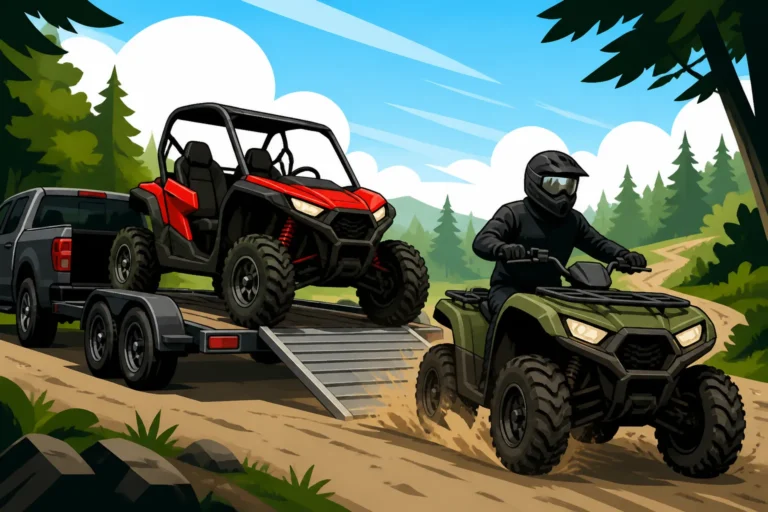
As an Ohio UTV owner, you know these machines are incredibly versatile, practically begging to haul gear, move brush, or tow a small trailer around the property. But the moment you think about hitting a public road with a trailer hooked up, a whole new layer of questions comes to mind. Is it even allowed? What are the rules? This guide will cut through the confusion and help you understand Ohio's specific regulations and best practices for towing with your UTV.
Understanding Ohio's Approach to UTV Towing
The beauty of a UTV is its utility, right? You bought it to work, play, and frankly, make your life a little easier. Whether you're pulling a small sprayer in the garden, moving firewood from the back forty, or just helping a neighbor with some yard waste, a UTV excels at tasks that might otherwise require a tractor or a truck. But when that utility extends to hooking up a trailer and hitting a public road in Ohio, the rules get a bit trickier. It’s not as simple as just having a hitch.
Why Towing Rules Matter for UTVs in Ohio
You’ve likely seen UTVs everywhere – roaring down trails, puttering through fields, and sometimes, even on local roads. The sheer versatility is what draws so many of us to them. But with that capability comes responsibility, especially when it comes to towing. On private land, you pretty much set your own rules, prioritizing common sense and safety. However, the moment your tires touch a public road, Ohio law steps in. It's not just about avoiding a citation; it's about the safety of everyone sharing the road. An improperly hitched or overloaded trailer can become a serious hazard, leading to accidents that no one wants. Understanding these rules ensures you can use your UTV to its full potential legally and safely, without worrying about fines or worse.
The Nuances of "Road-Legal" and Its Impact on Towing
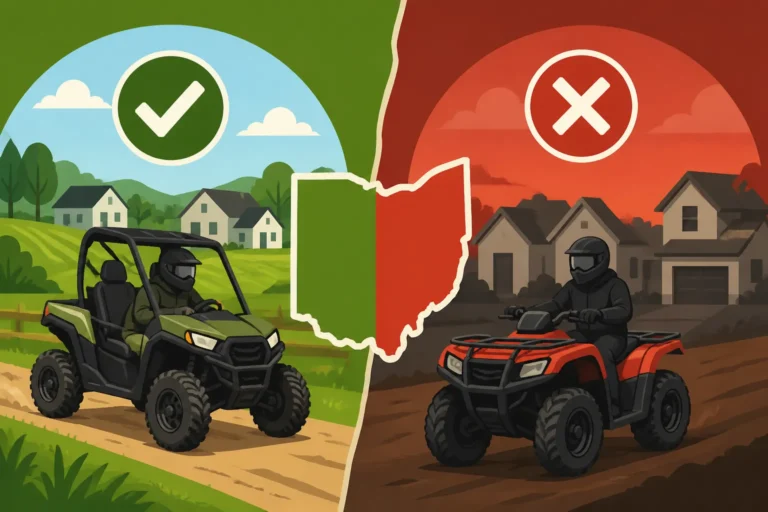
Here’s where it gets a little complicated for Ohio UTV owners: not every UTV can legally drive on public roads, let alone tow a trailer on them. Ohio has specific requirements that your UTV must meet to be considered "road-legal" for use on designated county and township roads. This isn't just a formality; it involves equipping your machine with things like headlights, tail lights, brake lights, turn signals, mirrors, a horn, and often a windshield with wipers, among other things. Your UTV must also pass an inspection by a law enforcement officer, and then be properly titled and registered. You can read more about what's required in [Ohio UTV Inspection Requirements] and [Ohio UTV Road Equipment List]. If your UTV hasn't gone through this process and received its Ohio All-Purpose Vehicle (APV) plate, then taking it onto public roads, especially with a trailer, is a definite no-go. Being truly "road-legal" opens up the possibility of using your UTV for towing on these limited public thoroughfares, but it doesn’t grant you carte blanche to tow anything, anywhere, at any speed. It just means you've met the baseline for the machine itself.
Specific Scenarios for Towing with a UTV in Ohio
Now that we understand the baseline for road legality, let's dive into the practical aspects of towing. The rules and common practices vary significantly depending on where you're doing your towing. The distinction between private land and public roads is paramount, and it shapes everything from the equipment you need to the speeds you can maintain.
Towing on Private Property and Farm Land
This is arguably where your UTV shines brightest when it comes to towing. On your own land, or land where you have explicit permission to operate, the state's stringent road rules typically don't apply. This freedom allows you to fully utilize your UTV’s capabilities for a wide array of tasks. Think about hauling heavy bags of feed to livestock pastures, dragging fallen tree limbs to a burn pile, or pulling a small utility trailer loaded with tools and supplies across a sprawling property. Many farmers use their UTVs to move equipment, deliver water to remote fields, or even tow small implements for light cultivation. For these tasks, the emphasis shifts from legal compliance to common-sense safety. You're still responsible for not overloading your machine, ensuring your hitch is secure, and driving at speeds appropriate for the terrain and load. Even if the law doesn't explicitly regulate these activities on private ground, a healthy respect for your machine's limits and your personal safety is always the best policy. By the way, if you're curious about registration for farm use, check out [Does a Quad Used Only on a Farm Need Registering?].
Towing on Ohio's Permitted Roads
If your UTV is properly titled, registered, and meets all the equipment requirements for road legality in Ohio, you might be able to tow on certain public roads. This is generally limited to township and county roads where local authorities have passed resolutions allowing APV use, and where the posted speed limit is typically 35 mph or less. For details on which roads might be open, you can refer to [Ohio Rules for Riding a Township Road] and [Ohio Rules for Riding a County Road].
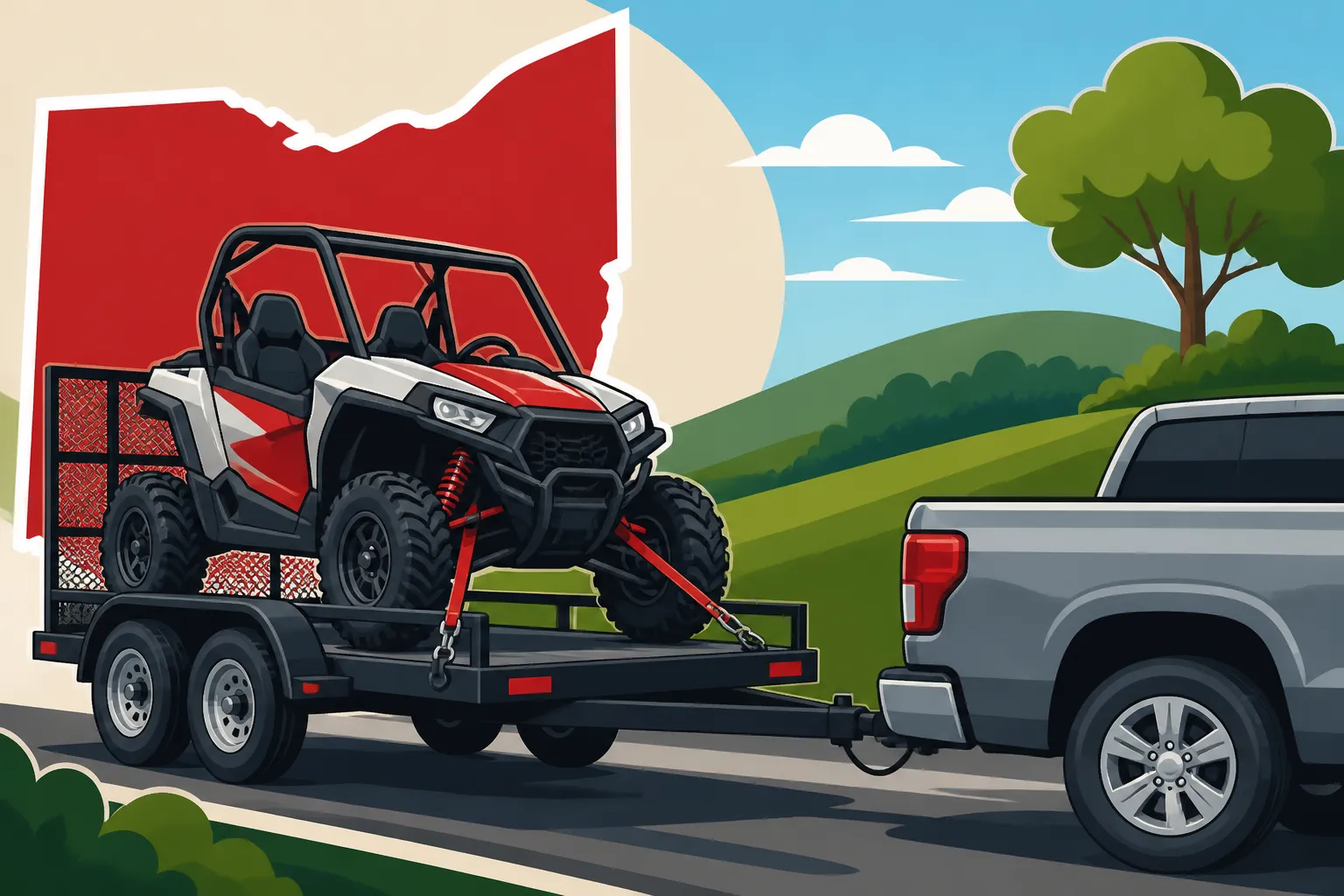
When towing on these roads, the same rules that apply to other vehicles towing trailers kick in. This means your trailer needs to have functional tail lights, brake lights, and turn signals that work in conjunction with your UTV's lighting system. Safety chains are also a must, connecting the trailer securely to your UTV in case of a hitch failure. The type of trailer you can tow is usually limited by its size and weight, matching the UTV's capacity and the low-speed nature of these roads. We're talking about small utility trailers, a landscape trailer with some mulch, or maybe a tiny fishing boat being taken to a nearby pond. You wouldn't be hauling a car hauler or a large camper with a UTV on public roads – that's simply beyond the design and legal scope of these machines. Always keep in mind that even on permitted roads, you must maintain appropriate speeds and exercise extreme caution due to the UTV's lighter weight and different handling characteristics compared to a truck. Any violation of these rules, especially with a trailer, could lead to significant penalties, as discussed in [Ohio Fines for Illegal APV Road Use].
What Ohio Law Says About Towing Capacity
This is a frequently asked question, and the answer can be a bit frustrating: Ohio law doesn't typically specify a maximum towing capacity for UTVs in the same way it does for passenger vehicles or commercial trucks. Instead, the legal framework largely defers to common sense and, more importantly, the manufacturer's recommendations. Every UTV comes with an owner's manual that clearly outlines its maximum towing capacity, tongue weight limits, and often its gross vehicle weight rating (GVWR). These numbers are crucial. Overloading your UTV, even if it feels like it "can handle it," puts immense stress on the engine, transmission, brakes, and suspension. It severely compromises your ability to steer, accelerate, and most critically, stop safely.
While aftermarket accessories like heavy-duty hitches or suspension upgrades from brands like SuperATV can enhance your UTV's robustness and capability, they do not legally increase the manufacturer's stated towing capacity for public road use. These enhancements are fantastic for improving durability and performance on private land or when operating within safe limits, but they don't change the engineering limits or the legal interpretation of what your specific UTV model is rated to tow. Always, always consult your owner's manual before hooking up a trailer, and never exceed those recommendations, regardless of where you're towing. Prioritizing these limits isn't just about avoiding mechanical failure; it’s about ensuring your safety and the safety of those around you.
Equipment and Safety Considerations for UTV Towing
Whether you’re on the farm or a permitted county road, proper equipment and a strong focus on safety are non-negotiable when towing with your UTV. It’s not just about having the right machine; it’s about having the right accessories and adopting the right mindset.
Essential Equipment for Safe Towing
Getting ready to tow goes beyond just finding a hitch. For safe and legal towing, you need a few critical pieces of equipment, especially if you plan to venture onto public roads. First, a sturdy hitch receiver is paramount, correctly installed on your UTV. This will typically accommodate a standard ball mount and hitch ball, which must be rated for the weight you intend to tow. Next, safety chains are absolutely essential. These are typically two chains that cross under the trailer tongue and attach to separate points on your UTV's frame or hitch, providing a backup connection should the primary hitch fail. Beyond the physical connection, your trailer needs to be visible. That means working tail lights, brake lights, and turn signals that mirror your UTV's signals. Many UTVs have wiring harnesses available to connect to a trailer's lighting system. For heavier loads, consider if your trailer has its own braking system and ensure it's functioning correctly. Finally, think about proper tire inflation on both your UTV and the trailer, and always double-check all connections before you set off. Remember, [Ohio APV Road Equipment List] outlines many of the requirements for your UTV itself when on the road, and trailers have their own set of rules.
The Importance of a Proper Trailer
Just as critical as your UTV’s setup is the trailer itself. Not all trailers are created equal, and choosing the right one for your task and your UTV’s capabilities is key. You need to match the trailer’s size and weight to the load you’re carrying and your UTV’s towing capacity. A small, lightweight utility trailer is perfect for hauling yard debris or a few tools. A heavier landscape trailer, however, might push the limits of what your UTV can safely handle, especially on any incline or uneven ground.
Beyond matching the size, the condition of the trailer itself matters immensely. Check the trailer tires for proper inflation and wear, ensure the wheel bearings are greased and in good shape, and verify that all lights are functioning. A trailer with a faulty wiring harness or dim lights can lead to dangerous situations, particularly at dusk or in low visibility. It’s also important to load your trailer correctly, distributing the weight evenly with a slight bias towards the front (the tongue weight). Too much weight at the rear can cause the trailer to sway violently, making it incredibly difficult to control. Whether you’re using a compact utility trailer or a small boat trailer, make sure it's in top condition before you hitch it up.
Safety Practices When Towing with a UTV
Safe towing isn't just about having the right gear; it's about adopting the right habits. When you have a trailer hooked up to your UTV, your machine handles very differently. Always, always go slower than you normally would, especially when turning, going over bumps, or navigating uneven terrain. Braking distances will increase significantly, so give yourself plenty of room to stop. This is true whether you’re on a private trail or a public road.
Before backing up, get out and walk around your trailer to check for any obstacles or hazards. Use a spotter if available. Securing your load properly is also crucial. Use tie-downs, straps, or nets to prevent items from shifting or falling off the trailer during transit. A shifting load can throw off your UTV's balance, and lost items on a public road are a hazard to others. Finally, remain attentive to your surroundings. Listen for unusual noises, feel for erratic trailer behavior, and regularly check your mirrors (if equipped, which they should be for road use) to monitor the trailer's position. Common sense, a conservative approach, and a focus on detail will ensure your towing experience is both productive and safe. Don't forget, if you're on public roads, you also need to carry [Ohio APV Registration and Insurance Proof] with you.
Here’s a quick comparison to help visualize the differences in towing considerations:
| Feature/Aspect | Private Land Towing | Public Road Towing (Permitted Roads Only) |
|---|---|---|
| Legal Requirements | Minimal (landowner's rules & common sense) | Strict (UTV road-legal, registered, plated, insured) |
| Trailer Lights | Optional, but recommended for safety | Required (tail, brake, turn signals synchronized) |
| Safety Chains | Recommended for heavy loads | Required by law |
| Towing Capacity | Manufacturer's recommendations (critical for safety) | Manufacturer's recommendations (critical for safety & legality) |
| Speed Limits | Self-regulated, appropriate for conditions | Posted road limits (often 35 mph or less) |
| Load Security | Essential for safety, preventing spills | Essential for safety, preventing hazards & citations |
| Inspection | Not required | UTV must pass law enforcement inspection |
| Focus | Practical utility, personal safety | Legal compliance, public safety, UTV & trailer integrity |
In Ohio, utilizing your UTV for towing can be incredibly useful, but it demands a clear understanding of where you can tow and what equipment you need. Always prioritize safety and adherence to legal requirements, especially when venturing onto public roads, which are limited in Ohio. By respecting your machine's limits, equipping it properly, and driving cautiously, you can safely tackle countless towing tasks.
Disclaimer
This article is for general informational purposes only and does not constitute professional advice. Laws, prices and regulations vary by location and change over time. Consult a qualified professional for guidance on your specific situation.