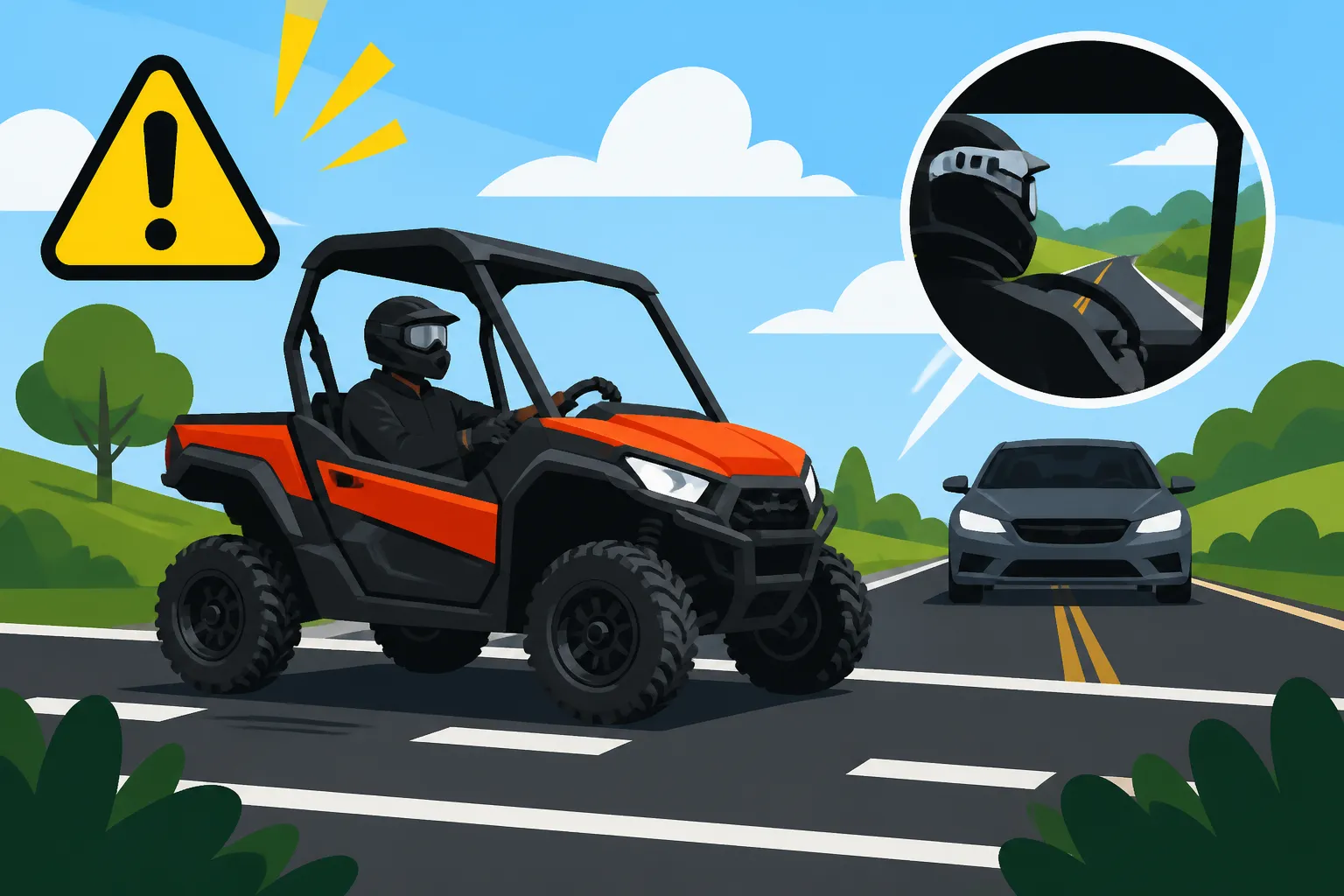
Crossing a Highway on an APV in Ohio
Trying to figure out if you can even touch a major highway with your ATV or UTV in Ohio can feel like navigating a legal minefield. Many riders get frustrated, unsure if a quick hop across a busy road for trail access is allowed, or if they're risking a hefty ticket. This guide breaks down exactly what Ohio law permits when it comes to crossing busy roads with your all-purpose vehicle, helping you understand the rules and ride safely and legally.
The Core Challenge: Why Crossing a Highway Feels Treacherous in Ohio
Let's be real: pulling up to a busy state route or even a multi-lane county highway on your ATV or UTV feels inherently risky. There's a lot of apprehension, and for good reason. These machines aren't designed for highway speeds or for mixing with heavy car and truck traffic, and the laws governing their use on public roads can be incredibly confusing, varying significantly from one jurisdiction to another. It's not just about the physical danger; it's also about the legal tightrope you're walking.
The Legal Gray Area and Rider Anxiety
One of the biggest sources of stress for Ohio riders is the lack of clear, uniform statewide rules regarding APVs on roads. You might hear whispers in your riding group that "some counties allow it," or "you can cross if there's no other way," but getting concrete answers is tough. This ambiguity leads to a lot of rider anxiety. You don't want to get pulled over, face a fine, or worse, have your machine impounded just because you needed to cross a road to get to another section of trail or access a gas station. The fear of inadvertently breaking the law often keeps riders from venturing out, even on legitimate county or township roads, simply because they aren't sure where the boundaries lie.
Imagine you’ve spent all morning planning a fantastic ride through a mix of private land and designated township trails. You’ve got your GPS fired up, your cooler packed, and your buddies ready to roll. Then you see it on the map: a pesky state route that bisects your carefully planned route, forcing a crossing. Suddenly, all that excitement turns into a knot in your stomach. Is this allowed? What if a state patrol car is sitting just around the bend? This is the kind of real-world scenario that highlights the stress this legal gray area causes for dedicated riders across Ohio.
Understanding Ohio's Road System Hierarchy
To truly grasp the rules, you first need to understand that not all roads are created equal in Ohio. The state operates on a hierarchical system when it comes to road jurisdiction, and this hierarchy directly impacts where and how you can operate an all-purpose vehicle. At the top, you have federal interstates and state routes, which are typically under the control of the Ohio Department of Transportation (ODOT) or federal agencies. Below that are county roads, managed by the county engineer's office, and finally, township roads, overseen by local township trustees. Each level of government has different authority over the roads it maintains, and this difference is crucial for APV operators.
This tiered system means that a rule that applies to a quiet township road might be completely invalid on a bustling state highway just a few miles away. It’s like trying to apply the rules of a local park to a national forest – they simply don't translate. For instance, while a township might pass a resolution to open certain local roads to APVs, that resolution has absolutely no bearing on a state route that crosses through that same township. Understanding this fundamental distinction is the first step toward deciphering what's permissible and what's not when you're considering a road crossing with your ATV or UTV in Ohio.
Ohio's Legal Framework for APV Road Use: A Nuanced Approach
Ohio's approach to all-purpose vehicle (APV) use on public roads isn't a simple "yes" or "no." Instead, it's a patchwork of state definitions and significant local control, creating a landscape that requires careful navigation. The state law lays the foundation, but it's the specific actions of county commissioners and township trustees that truly dictate where you can ride. This nuanced framework is precisely why many riders feel lost when trying to determine if they can legally access certain areas or even cross a busy thoroughfare.
The "All-Purpose Vehicle" Definition and Its Implications
First, let's talk about what Ohio law considers an "all-purpose vehicle." An APV, as defined by the state, is any self-propelled vehicle designed primarily for off-highway use, including ATVs, UTVs, side-by-sides, and dirt bikes. The crucial distinction here is "off-highway use." This classification is what prevents these machines from being treated like standard street-legal cars or motorcycles right out of the gate. While your machine might be powerful and well-equipped, its primary design intent under Ohio law guides much of its permissible use on public roads.
Because APVs are defined this way, they aren't automatically granted the same rights as automobiles on the vast majority of Ohio's paved roads. This means you can't just slap a license plate on your quad and expect to cruise down a major highway like it’s another car. Instead, any road use is a specific exception, carved out by either state law for very limited purposes or, more commonly, by local ordinances. This distinction is the bedrock of understanding why [Why Ohio Says All-Purpose Vehicle] in its statutes, and why any road crossing requires a clear understanding of these exceptions.
Local Control: County and Township Authority
This is where things get interesting – and often complicated – for riders. Ohio law grants considerable authority to county commissioners and township trustees to determine if and where APVs can be operated on the roads they maintain. This means that [Ohio Counties That Allow APVs on Roads] and townships have the power to pass resolutions or ordinances specifically opening their county or township roads for APV use. One township might welcome APVs, while an adjacent township strictly prohibits them.
This local control is a double-edged sword. On one hand, it allows local communities to tailor rules to their specific needs, whether it's supporting tourism for a riding destination or providing access for agricultural use. On the other hand, it creates a checkerboard of regulations that can be incredibly difficult for riders to keep track of. You might be legally riding down a county road, turn onto a township road, and suddenly be in violation simply because you crossed an invisible jurisdictional line. This variability means that doing your homework – contacting local county engineers or township clerks – is absolutely essential before you plan any route that involves public roads. [Ohio Rules for Riding a County Road] and [Ohio Rules for Riding a Township Road] are distinct and must be understood before you venture out.
The Strict No-Go Zones: State Routes and Interstates
Despite the local control over county and township roads, there's one universal truth across Ohio: state routes and interstates are almost always off-limits for APVs. Ohio Revised Code generally prohibits APVs from operating on state routes and interstate highways, with very narrow exceptions, such as for emergency services or agricultural purposes under specific conditions. For the average recreational rider, these roads are simply out of bounds. This is a critical point that often causes confusion, especially when riders see a state route as the most direct path to connect two legal riding areas.
This prohibition extends beyond just long-distance travel; it also applies to casual cruising or attempts to ride the berm alongside these major arteries. The speeds, volume of traffic, and design of state routes and interstates make them exceptionally dangerous for APVs, which lack the safety features and performance characteristics of road vehicles. Therefore, when you encounter a state route or interstate on your map, your default assumption should always be that you cannot ride on it, under any circumstances, for recreational purposes. This includes attempts to simply ride a short distance down the shoulder. While local jurisdictions can open their roads, [Why Ohio Has No Statewide Road Right] on these higher-tier routes.
The Art of the Crossing: What Ohio Law Allows (and Requires)
Even though state routes and interstates are generally off-limits for continuous riding, Ohio law does acknowledge the practical need for APV riders to sometimes cross these major arteries to access legal riding areas. However, this isn't a free-for-all. There are very specific, tightly regulated conditions under which a crossing is permitted, and these conditions come with strict safety requirements. It's not about making these crossings convenient; it's about making them as safe and brief as humanly possible.
Direct Crossings: Specific Rules and Safety Measures
Ohio law permits a direct crossing of a state route or highway if certain conditions are met, primarily when the highway intersects with a county or township road that is itself open to APV use. You cannot simply cross a state route from a private driveway or an undesignated point. The crossing must be made at an angle of approximately 90 degrees to the direction of the highway, and you must come to a complete stop before entering the highway, yielding to all traffic. This isn't just common sense; it's explicitly mandated by statute to minimize the time your vehicle is exposed to high-speed traffic.
Furthermore, these direct crossings are only permitted if they are the most direct and safest route between two sections of a trail or between a trail and a legal parking area. You can't use a highway crossing as an excuse for a joyride or to extend your route unnecessarily. It's about necessity and safety. Think of it like crossing a busy railroad track: you stop, look both ways, and proceed quickly and directly, without hesitation or lingering. The goal is to traverse the dangerous zone as swiftly and safely as possible, minimizing risk to yourself and other motorists. This is what [Crossing a Road Where It It Safe] truly means in the context of an Ohio highway.
Riding the Berm: When It's Permissible and When It's Not
The "berm," or shoulder, of a road often looks like a tempting, albeit rough, path for an APV, especially when the main lanes are busy. However, riding the berm along state routes or interstates for any significant distance is generally prohibited in Ohio. The berm on these major highways is considered part of the roadway itself and subject to the same restrictions as the main lanes for APVs. You cannot use the shoulder as a bypass or an alternative route. It's simply not designated for recreational APV travel.
There might be very limited, highly localized exceptions on certain county or township roads where an ordinance explicitly allows [Riding the Berm Beside an Ohio Lane] if the physical conditions of the berm allow for safe passage and it's specifically permitted by local resolution. But this is the exception, not the rule, and it would never apply to a state route or interstate. For state highways, even a brief ride on the berm to reposition for a crossing is typically frowned upon and could lead to a citation. The state's primary concern is ensuring APVs stay off high-speed roadways, and that includes the shoulders of those roads. Always assume the berm of a state route is off-limits unless you have absolute, verifiable proof from local authorities that a specific, non-state road berm is open.
Navigating Intersections: A Different Set of Rules
Intersections can present their own set of challenges and rules. When an APV-legal county or township road intersects with a state route, that intersection becomes the designated, and often only, legal point for a crossing. At these points, APVs must follow all traffic laws applicable to motor vehicles, including obeying traffic signals, stop signs, and yielding rules. You're not special because you're on an APV; you're just another vehicle, temporarily in the flow of traffic.
The key here is that the crossing must be done within the intersection itself, from one designated APV-legal road segment to another. You can't use an intersection as a launching point to ride down the state route for a short distance or turn onto the state route's lanes. The maneuver must be a direct continuation across the highway, connecting two segments of roads where APV use is otherwise legal. This means you must approach from an open county or township road, stop, observe traffic, and then proceed directly across the state route to the continuation of the open road on the other side. This is precisely what [Ohio Rules for Crossing a State Route] cover, emphasizing the need for precision and adherence to standard traffic laws during this brief, critical maneuver.
Equipment and Preparedness: Gearing Up for an Ohio Road Crossing
Making a brief road crossing, even if legally permitted, is not something to take lightly. Your safety, and the safety of others, depends heavily on your machine being properly equipped and you being adequately prepared. Unlike riding purely off-road, mixing with vehicular traffic introduces a whole new set of risks that demand specific precautions. Ignoring these details isn't just irresponsible; it can be incredibly dangerous and lead to severe consequences.
Essential Safety Gear: Helmets and Eye Protection
When operating an APV on any public road in Ohio, even for a quick crossing, wearing an approved helmet is generally a non-negotiable requirement. While [Ohio Helmet Law for APV Riders] may have nuances depending on age and specific location (e.g., state forest trails versus public roads), the safest and most legally sound approach for any road interaction is to wear a DOT-compliant helmet. This isn't just about compliance; it's about protecting your most vital asset in the event of an unforeseen incident. Even a low-speed impact or a minor spill can result in serious head injuries if you're unprotected.
Beyond the helmet, proper eye protection is equally critical. Dust, debris, insects, or even small rocks kicked up by passing vehicles can impair your vision instantly, leading to a loss of control. Whether it's goggles that seal tightly to your face or a full-face helmet with a visor, ensure your eyes are completely shielded. The moment you enter the flow of road traffic, even briefly, you are exposed to elements that are far different from a secluded trail. Investing in high-quality, comfortable safety gear isn't an expense; it's an investment in your well-being.
Machine Readiness: Lighting, Mirrors, and More
Before attempting any road crossing, your APV needs to be in tip-top shape and equipped with specific features designed for road visibility and safety. This is especially true for UTVs, which may be subject to more stringent requirements if local ordinances allow them on roads. At a minimum, your machine must have functional headlights, taillights, and brake lights. These aren't just for riding [Ohio Rules for Riding After Dark]; they are essential for visibility in broad daylight, especially when you're momentarily sharing a road with larger, faster vehicles. Your taillights make you visible from behind, and brake lights clearly signal your intentions to traffic.
Furthermore, mirrors are often a requirement, particularly for UTVs attempting any road use. Side mirrors, and often a rearview mirror, provide crucial awareness of traffic approaching from behind or on your flanks, allowing you to make safer crossing decisions. Some riders also opt for additional visibility enhancements like bright flags or reflective decals, especially if they are frequently near public roads. Manufacturers like SuperATV offer a range of aftermarket accessories, from enhanced lighting kits to robust mirror sets, that can significantly boost your machine's road readiness and visibility, making those brief crossings much safer. Always check the [Ohio UTV Road Equipment List] if your machine is a UTV, as these often have more strict requirements.
Documentation on Hand: License, Registration, and Insurance
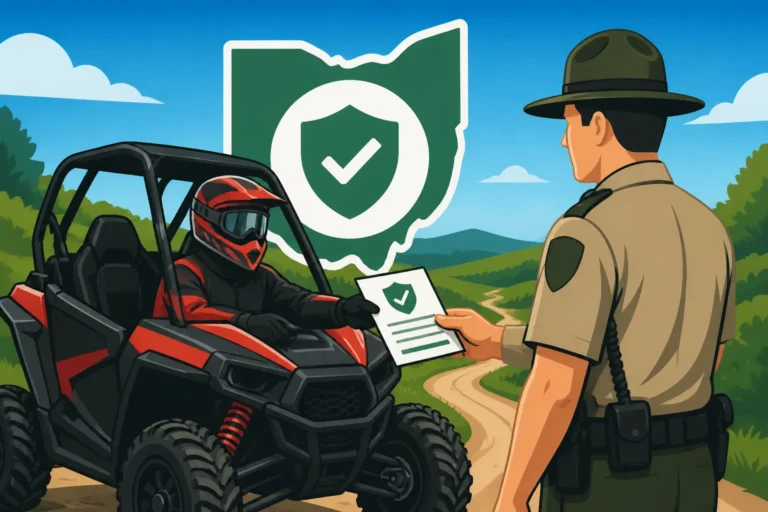
Just like driving a car, operating an APV on any public road, even for a brief crossing, requires you to have the appropriate documentation readily available. This includes proof of registration for your APV, your driver's license, and proof of insurance. Ohio law mandates that all APVs operated on public roads must be registered, and while the physical plate serves as a permit for state forest trails, you also need to carry the registration card itself. [Ohio APV Registration and Insurance Proof] isn't just a good idea; it's legally required.
You, as the operator, must also possess a valid driver's license. You cannot simply operate an APV on public roads with an off-road safety certificate; a standard motor vehicle driver's license is required. [Ohio Driver's License Rules for APVs] are clear on this point. Lastly, while Ohio doesn't require insurance for purely off-road APV use, if you're going to touch any public road, you absolutely need to carry liability insurance. This protects you in case of an accident involving another vehicle or property. Failure to produce any of these documents if stopped by law enforcement can lead to citations, fines, and even the impoundment of your vehicle, turning a quick crossing into a very expensive and frustrating ordeal.
Practical Strategies for a Safe Highway Crossing
Even with all the legal knowledge and proper equipment, actually executing a safe highway crossing requires practical application and a healthy dose of common sense. You can't just rely on the letter of the law; you need to ride defensively, be hyper-aware of your surroundings, and anticipate the actions of other drivers. A successful crossing is a quick, decisive, and smooth maneuver, not a hesitant or prolonged one.
Pre-Ride Planning: Knowing Your Route and Local Ordinances
The best defense against an illegal or unsafe crossing is thorough pre-ride planning. Never assume a road is open or that a crossing is permitted without verifying it beforehand. Before you even load your machine, research the specific county and township ordinances for the area you plan to ride. Many local governments have their resolutions posted online, or you can call the county engineer's office or township clerk directly. This is crucial for understanding [How an Ohio Township Opens Its Roads] or [How an Ohio County Opens Its Roads].
Map out your route carefully, identifying every point where you'll encounter a public road, especially state routes. Pinpoint the exact intersections where legal crossings are allowed. If there's no legal crossing point or if the connecting roads are not open to APVs, then that section of your route is simply impassable for your machine. Don't try to "wing it" or assume you can sneak across. Knowing your route in advance, including all legal access and crossing points, drastically reduces the chances of an unexpected encounter with law enforcement or a dangerous situation with traffic.
Situational Awareness: Reading Traffic and Road Conditions
Once you're at the point of crossing a highway, your situational awareness needs to be at an absolute peak. Don't be distracted by your riding buddies, your phone, or the scenery. Focus entirely on the road and the traffic. Look both ways multiple times, and listen for approaching vehicles that you might not yet see. Remember, your APV is much smaller and less visible than a car or truck, and drivers may not be expecting to see you. Judge the speed and distance of oncoming traffic with extra caution, allowing a much larger gap than you might in a car.
Consider the road conditions as well. Is it raining, making the pavement slippery? Is it a busy time of day with heavy commuter traffic? Are there blind spots or crests that limit visibility for you or other drivers? If conditions feel unsafe, it’s always better to wait for a clearer moment or, if absolutely necessary, find an alternative route, even if it means turning back. A few extra minutes of patience can literally save your life. Never rush a crossing, but once you decide to go, execute the maneuver quickly and decisively, without hesitation.
Riding Etiquette and Visibility: Making Yourself Seen
When you make your move, communicate your intentions clearly to any surrounding traffic. If your machine has turn signals (many UTVs do, and some ATVs can be retrofitted), use them. Even if not legally required, using hand signals to indicate your direction can be invaluable. Your goal is to be as predictable as possible to other drivers. Avoid sudden movements, erratic speeds, or any behavior that might confuse motorists.
Visibility is paramount. Wear bright, high-contrast clothing, especially if you're riding a machine that blends into the background. Some riders even add aftermarket flashing lights to the rear of their machines for increased daytime visibility, especially for highway crossings. Consider using an orange safety flag if your machine isn't equipped with a tall roll cage that makes it more visible. Anything you can do to stand out against the backdrop of traffic and the road will contribute to a safer crossing. Remember, a quick glance from a car driver might miss you entirely; you need to make yourself impossible to overlook in those critical few seconds.
Common Pitfalls and Misconceptions About Ohio Highway Crossings
Despite the specific rules and safety advice, riders often fall victim to common pitfalls and misconceptions when it comes to crossing highways in Ohio. These misunderstandings, whether stemming from anecdotal evidence or wishful thinking, can lead to dangerous situations and legal trouble. It's crucial to dispel these myths and understand the reality of what's allowed and what's not.
The "Quick Dash" Fallacy and Its Dangers
One of the most dangerous misconceptions is the idea that a "quick dash" across a highway is acceptable, even if it's not at a designated intersection or if the connecting roads aren't open. Riders might rationalize, "It's only 20 feet, what's the harm?" The harm is immense. Attempting to cross a high-speed state route from an arbitrary point – perhaps from a ditch line or a private field entrance – is illegal and incredibly perilous. Drivers on highways are traveling at much higher speeds, often 55 mph or more, and have a very limited reaction time to a slow-moving object suddenly appearing in their path.
A "quick dash" mentality leads to poor judgment regarding gaps in traffic and can result in catastrophic collisions. You are not only risking your own life but also putting innocent motorists at severe risk. Ohio law doesn't make exceptions for the "distance" of a crossing; if it's not done at a legal intersection between two APV-approved roads, it's a violation. The danger isn't proportional to the distance traveled on the highway but to the risk of intersecting high-speed traffic. Never fall for the "quick dash" fallacy; if a legal crossing isn't available, find another route or trailer your machine.
Assuming All Roads Are Open Once One Is
Another widespread misconception is that if a county or township has opened some of its roads to APVs, then all roads within that jurisdiction are fair game. This is a critical misunderstanding of how local control works. Resolutions passed by county commissioners or township trustees typically specify which roads are open to APVs, often listing them by name or route number. They do not automatically open every single road under their purview. A common practice is to open roads that connect to established trail systems or offer specific utility access, while leaving busier or more residential roads closed.
Just because you rode legally down County Road A doesn't mean you can turn onto County Road B, even if they're in the same county. You must verify the specific list of approved roads for each jurisdiction. Failing to do so can quickly land you on a closed road, potentially leading to a citation. This is why resources like detailed maps and direct communication with local officials are so vital. Always verify the specific roads, not just the general jurisdiction. [Finding Out Which Roads Are Open] is an essential step that many riders unfortunately skip, leading to trouble.
Penalties for Improper Highway Crossing
The consequences of an improper or illegal highway crossing in Ohio can be severe and far-reaching. It's not just a slap on the wrist. If you're caught operating an APV illegally on a state route, an interstate, or attempting an improper crossing, you could face significant fines, court costs, and potentially the impoundment of your vehicle. Law enforcement takes these violations seriously due to the inherent danger to public safety. [Ohio Fines for Illegal APV Road Use] can quickly add up, turning a fun day into a financial headache.
Beyond the immediate penalties, there could be long-term ramifications. An illegal operation citation might impact your driving record, and if an accident occurs, you could be held liable for damages, potentially facing civil lawsuits that far exceed the cost of any fine. Your insurance company might also deny coverage if you were operating the vehicle illegally. The risk simply isn't worth it. Understanding the potential legal and financial repercussions should reinforce the importance of meticulous planning and strict adherence to the law whenever your APV approaches a highway in Ohio.
Beyond the Crossing: Considerations for APV Road Use in Ohio
While the immediate focus is on safely and legally crossing highways, it's important to view this within the broader context of APV road use in Ohio. The challenges and frustrations riders face aren't isolated incidents but part of a larger ongoing discussion about integrating off-road vehicles into the public road network. Looking ahead, there are resources for finding more places to ride legally and avenues for advocating for future access.
Finding Open Roads: Resources and Research
One of the ongoing struggles for Ohio APV riders is simply knowing where they can legally ride on roads. As discussed, it's a patchwork of local ordinances. Fortunately, there are resources to help. The Ohio Department of Natural Resources (ODNR) provides information on state forest APV areas, and sometimes their websites or ranger district offices can offer guidance on local road access in proximity to trails. Additionally, contacting the county engineer's office or township clerk directly is always the most reliable way to get up-to-date information on which specific county or township roads are open to APVs.
Rider groups and online forums can also be valuable sources of information, though always cross-reference anything you hear with official sources. Some private riding parks or trail systems will also have information about connecting roads. The key is proactive research. Don't wait until you're at the end of a trail looking at a closed road to figure out your options. Take the time to build a comprehensive map of legal APV roads in your preferred riding areas. This knowledge empowers you to plan longer, safer, and more enjoyable rides without the constant worry of legal pitfalls.
Advocating for More APV Access
Many riders feel that the current road access for APVs in Ohio is too restrictive, particularly the blanket prohibition on state routes, even for short connecting segments. If you believe there should be more opportunities for safe and legal APV road use, consider getting involved in advocacy efforts. Local APV clubs and statewide organizations often work with legislators and local officials to promote responsible riding and advocate for policy changes that would expand access. These efforts can range from supporting bills that propose limited road access to specific types of APVs (like UTVs that meet certain safety standards) to working with county and township officials to open more local roads.
Remember, advocacy is most effective when it's responsible and well-informed. Presenting clear arguments about economic benefits (tourism for local businesses), practical necessity (connecting trail systems), and safety protocols can be much more persuasive than simply demanding more access. Showing a commitment to safety and environmental responsibility is key. Organizations like SuperATV, which produces a vast array of parts and accessories for APVs, also often support initiatives that promote responsible and legal riding access, understanding that a vibrant riding community benefits everyone involved in the sport.
The Future of APV Road Use in Ohio
The landscape of APV road use in Ohio is not static; it's an evolving discussion. As ATVs and UTVs become more popular, and as UTVs, in particular, become more sophisticated with features that mimic road-legal vehicles, the pressure for increased road access will likely continue to grow. There have been legislative efforts in the past, and will likely be more in the future, to revisit Ohio's APV laws and consider broader road access for certain types of machines or under specific conditions. These discussions often balance the desire for rider access with concerns about public safety and the unique characteristics of Ohio's diverse road network.
It's important for riders to stay informed about potential legislative changes and local initiatives. What's true today regarding highway crossings might be slightly different a few years down the line, although major state routes and interstates will likely remain largely off-limits due to their design and traffic volume. By understanding the current laws, practicing safe and responsible riding, and engaging in constructive dialogue, APV riders can play a role in shaping the future of off-road vehicle access and ensure that the sport remains enjoyable and sustainable in the Buckeye State.
| Road Type | APV Legal Status (Generally) | Crossing a Highway | Berm/Shoulder Use |
|---|---|---|---|
| Interstate Highways | Prohibited | Prohibited | Prohibited |
| State Routes | Prohibited | Permitted (Limited) | Prohibited |
| County Roads | Permitted (Local Ordinance) | Permitted (Local Ordinance) | Permitted (Local Ordinance) |
| Township Roads | Permitted (Local Ordinance) | Permitted (Local Ordinance) | Permitted (Local Ordinance) |
Note: "Permitted (Limited)" for State Routes refers strictly to direct crossings at designated intersections where two APV-legal local roads connect, not continuous travel.
Disclaimer
This article is for general informational purposes only and does not constitute professional advice. Laws, prices and regulations vary by location and change over time. Consult a qualified professional for guidance on your specific situation.