Why a UTV Needs an Inspection Before Its Plate
It can be incredibly frustrating to navigate the world of off-road vehicle registration in Ohio, especially when you hear different rules apply to different machines. You might have a friend with an ATV that sails through registration without a hitch, while you're told your UTV needs an entirely separate inspection before it can even get a plate. This guide will cut through the confusion and explain exactly why a UTV in Ohio requires a specific inspection before it can be legally plated, especially if you have any thoughts of taking it on a public road.
The Distinctive Categories: Why Ohio Treats UTVs Differently Than ATVs
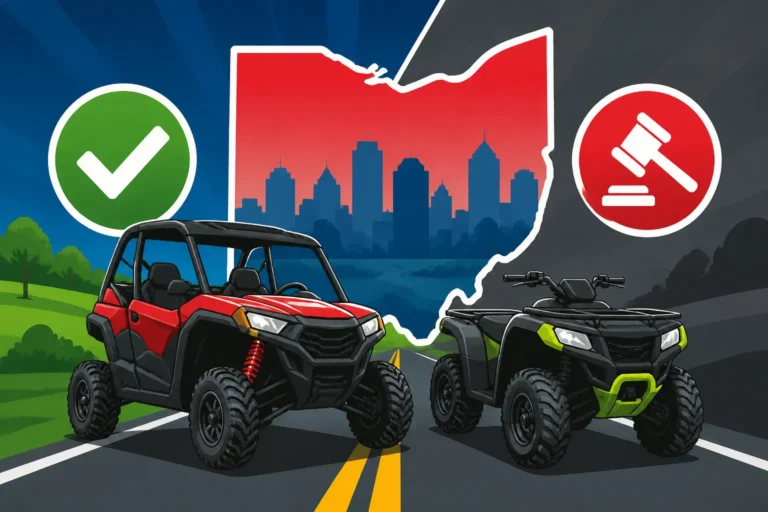
The first step to understanding the UTV inspection requirement in Ohio is grasping how the state's laws classify these machines. While both ATVs and UTVs fall under the broader umbrella of "all-purpose vehicles" (APVs) for general registration purposes, the state makes crucial distinctions when it comes to road use. An ATV, often called a quad, is generally designed solely for off-road recreation. It's built to be nimble, to handle varied terrain, and typically isn't configured with road-specific safety features. Because of this, Ohio law largely views ATVs as off-road recreational vehicles, and they don't undergo a road-worthiness inspection to get their APV plate. You can read more about [Why an APV Needs No Inspection in Ohio].
UTVs, on the other hand, often known as side-by-sides, are a different beast. Many models come with features like steering wheels, bucket seats, and often, the potential for a full cab, making them look and feel more like small cars or trucks. This design lends itself more readily to modifications for limited street use. Because UTVs have this capacity, and because local jurisdictions in Ohio can open roads to them under specific conditions, the state mandates an inspection to ensure they meet minimum safety standards for operating alongside other vehicles on public roads. It's a way to ensure that if a UTV is going to share the road, even briefly or in specific areas, it's equipped to do so safely.
This distinction is key because the inspection isn't about whether your UTV is safe for the trail – that's often assumed by its design and manufacturer. Instead, it's about making sure it's safe for environments it wasn't originally intended for, but can be adapted to: public roads. The rules are in place to protect not only the UTV operator but also other drivers and pedestrians when these machines venture off the dirt.
What Ohio's Inspection Looks For: The Essential Road Equipment
When you bring your UTV in for an inspection to get its plate in Ohio, especially if you intend to ever use it on public roads, the inspectors aren't just giving it a quick once-over. They are looking for a specific set of equipment that ensures the machine can operate safely and predictably in traffic. Think of it like a mini-vehicle inspection for a compact car, but tailored to the unique nature of a UTV. This comprehensive check is detailed in [The Ohio Inspection a UTV Must Pass].
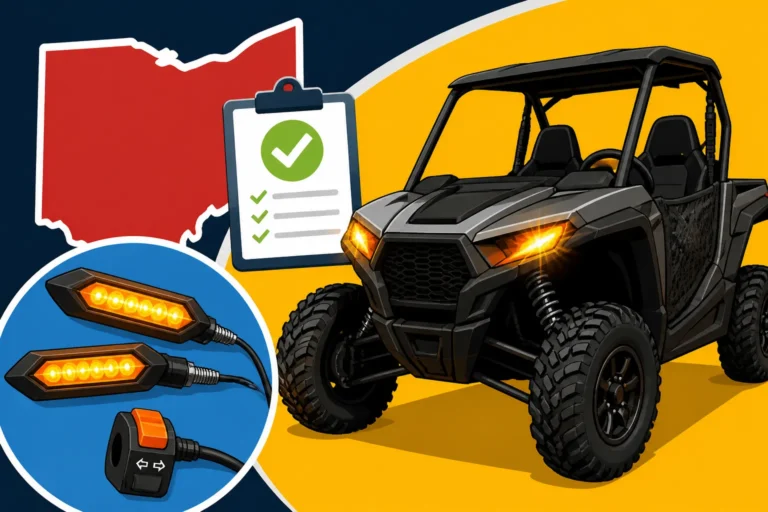
One of the first things they'll check for is proper lighting. This means headlights that work, taillights, brake lights, and crucially, turn signals. While many UTVs come with basic headlights and taillights for trail use, factory turn signals are less common. You might find yourself needing to install an aftermarket kit from a company like SuperATV to meet this requirement. Reflectors are also part of the lighting package, ensuring your UTV is visible from all angles, especially at night or in low-light conditions.
Beyond lighting, mirrors are a must. A rearview mirror and at least one side-view mirror are typically required, allowing the driver to see traffic approaching from behind and to the sides. Horns are another often-overlooked item on many off-road machines, but absolutely critical for signaling intent or warning others on public roads.
Braking systems are also under scrutiny. The inspection will verify that your UTV's brakes are in good working order, capable of bringing the vehicle to a safe stop. This includes checking brake pads, fluid levels, and overall system integrity.
Then there's the windshield. If your UTV has a windshield, and especially if you plan to use it on the road, it must be made of safety glass. This isn't just about keeping mud out of your face; it's about protecting occupants in the event of an impact or rollover. Many factory UTV windshields are polycarbonate, which is durable for off-road but not considered safety glass for road use. This is a common modification point, and you can explore options to get the correct type of glass, perhaps even from a reputable aftermarket provider like SuperATV, to ensure it meets the standard outlined in [Why a Road-Legal UTV Windshield Must Be Safety Glass].
Lastly, the inspection will typically verify that your UTV has working wipers if it has a windshield, seatbelts for all occupants, and a proper muffler to keep noise levels within legal limits. It's quite a list, and it’s all aimed at bringing your UTV closer to the safety standards expected of other vehicles on Ohio's roads. You can find a comprehensive breakdown of what's expected in the [Ohio UTV Road Equipment List].
Here's a quick overview of common items an Ohio UTV inspection looks for:
| Equipment Category | Specific Requirement | Why It's Needed on Roads |
|---|---|---|
| Visibility & Signaling | Headlights (high/low beam) | See and be seen, especially after dark |
| Taillights & Brake Lights | Indicate presence and braking to traffic behind | |
| Turn Signals (front & rear) | Communicate lane changes and turns safely | |
| Reflectors (front, rear, side) | Enhance visibility from all angles | |
| Horn | Alert other drivers or pedestrians | |
| Driver Awareness | Rearview Mirror | See traffic approaching from behind |
| Side-View Mirror (at least one) | Monitor blind spots and adjacent lanes | |
| Safety & Control | Functioning Brake System (foot & parking) | Stop safely and prevent unintended movement |
| Windshield (if equipped, must be safety glass) | Protect occupants from debris, clear visibility | |
| Windshield Wipers (if equipped) | Maintain visibility in rain or snow | |
| Seatbelts/Restraints (for all seating positions) | Secure occupants in case of sudden stops or collisions | |
| Muffler & Exhaust System | Control noise emissions to legal limits | |
| Tires in good condition | Maintain traction and control |
Navigating the Inspection Process and Beyond
So, you've got your UTV, you understand why it needs an inspection, and you're ready to get it plated. The actual process of getting the inspection done is pretty straightforward, but it does require a bit of planning. In Ohio, UTV inspections for road-legal purposes are typically performed by an authorized inspection station, which could be a licensed repair shop, a dealership, or in some cases, a local law enforcement agency. It's always a good idea to call ahead and confirm they offer UTV inspections and to schedule an appointment.
Before you even head to the inspection station, go through the checklist yourself. This is where those aftermarket parts from companies like SuperATV might come in handy. Did you remember to install those [Turn Signals and Mirrors on an Ohio UTV]? Is your windshield truly safety glass, or does it need to be replaced as discussed in [Wipers and Glass on an Ohio UTV]? Double-check every item on the [Ohio UTV Road Equipment List] to save yourself a trip. Make sure all your lights work, your horn honks, your brakes are responsive, and your tires have adequate tread.
Once your UTV passes the inspection, you'll receive a certificate or form that verifies it meets the necessary road-legal equipment standards. This document is crucial because it's what you'll take to the Clerk of Courts title office to get your UTV titled, and then to the Deputy Registrar to get your plate and complete the registration process. It's a two-step dance, but that inspection certificate is your ticket to getting that coveted plate.
Remember, even with a plate and the ability to ride on certain public roads, you still need to adhere to specific rules. For instance, you'll need a valid [A Driver's License on an Ohio Road] and [Proof of Insurance on an Ohio Road]. Always check local ordinances, as not all roads are open to UTVs, and rules can vary by county and township. Understanding [Ohio Rules for Riding a County Road] and [Ohio Rules for Riding a Township Road] is paramount before you ever hit the pavement.
Why This Inspection Matters (And The Consequences If You Skip It)
It might seem like an extra hoop to jump through, but the UTV inspection in Ohio serves a very practical purpose: safety. By ensuring these machines are equipped with basic road-worthiness features, the state is trying to prevent accidents and create a safer environment for everyone sharing the road. Imagine driving your UTV on a county road at dusk without working brake lights or turn signals – it's a recipe for disaster. The inspection helps to mitigate these risks.
For you, the UTV owner, passing this inspection means the freedom to legally operate your machine on designated roads within Ohio. Without it, even if you manage to get a plate (which is unlikely without the inspection for road-intended UTVs), you could face serious consequences if you're caught riding on public roads. These consequences can range from fines for illegal road use to having your machine impounded. More importantly, you'd be putting yourself and others at unnecessary risk.
Beyond the legal ramifications, think about the practical benefits. Having a properly equipped and inspected UTV means you can confidently ride it from your home to a nearby trailhead, cross a road to get to another section of your property, or explore the open county roads where local resolutions permit. It expands your riding opportunities and allows you to integrate your UTV more seamlessly into your daily life and recreational activities.
While it adds an extra step to the registration process compared to a purely off-road ATV, the UTV inspection for plating in Ohio is a necessary measure to bridge the gap between trail machine and limited-road-use vehicle. It ensures that when your UTV eventually rolls onto a public thoroughfare, it does so with the basic safety features that drivers of other vehicles have come to expect.
Disclaimer
This article is for general informational purposes only and does not constitute professional advice. Laws, prices and regulations vary by location and change over time. Consult a qualified professional for guidance on your specific situation.