Ohio Counties That Allow APVs on Roads
One of the biggest head-scratchers for APV riders in Ohio is figuring out where you can actually legally ride your machine on public roads. It's not a simple 'yes' or 'no' from the state, which can be incredibly frustrating when all you want to do is get from point A to point B or link up trails. This guide dives deep into the specific ways Ohio counties and townships decide to open their roads to APVs, helping you understand the local landscape and ride responsibly.
The Nuance of Ohio's APV Road Rules: It's Not a Simple Yes or No
When you're out there enjoying the trails or even just trying to get across town on your ATV or side-by-side, the question of whether you can legally ride on public roads in Ohio often comes up. And believe me, it's not a simple answer. Many riders get confused, frustrated, or even cited because they assume a blanket rule applies across the entire state. But that's just not how it works here. Ohio law has a unique approach, putting a lot of the decision-making power in the hands of local governments. This means that what's perfectly legal in one county or township could land you a ticket just a few miles down the road. It’s a patchwork, and understanding that patchwork is your first step to staying out of trouble.
Why the State Doesn't Have a Blanket Law
Ohio's approach to All-Purpose Vehicles, or APVs, on public roads is intentionally decentralized. Unlike some other states that might have a statewide "street legal" designation for certain machines, Ohio doesn't. The state legislature, in its wisdom, decided that local communities are best equipped to determine what makes sense for their specific roads, traffic patterns, and community needs. This can feel like a bureaucratic headache for riders, but the rationale is rooted in local control. A bustling suburban township might have very different concerns about APVs sharing the road than a rural, agricultural county with minimal traffic. This is also why you'll rarely hear about a bill passing that creates a statewide road-use privilege for APVs; it's just not how the current system is set up. Knowing [Why Ohio Has No Statewide Road Right] is crucial before you even think about hitting the pavement.
For instance, imagine you're riding your side-by-side that you’ve equipped with all the bells and whistles from SuperATV, like a full windshield, turn signals, and mirrors. You feel totally road-ready. But if you're in a county that hasn't passed the necessary legislation, those great modifications won't matter one bit if you get pulled over. The state defines what an APV is for registration purposes, but it largely leaves the "where you can ride it" question to the local folks. This means your research into local ordinances is just as important as the mods you put on your machine.
The Local Control Dilemma for Riders
This emphasis on local control presents a significant dilemma for riders. It means you can't just assume that because your buddy rides his UTV on the roads in Muskingum County, you can do the same in Delaware County. Each county, and even individual townships within those counties, has the authority to make its own rules. This creates a challenging situation where riders must be diligent in their research, contacting local authorities or checking official websites before venturing onto any paved road. It’s not just about knowing [How Ohio Law Defines an APV], but also about understanding how local jurisdictions interpret and apply those definitions.
Think about planning a multi-county ride. What happens when your carefully planned route crosses a county line where the rules abruptly change? Suddenly, you're either forced to trailer your machine, take a significant detour, or risk breaking the law. This can be a real buzzkill for a weekend adventure. This fragmentation means the burden of proof is always on the rider to know the local regulations. It truly makes you appreciate the simplicity of a dedicated trail system when you don't have to worry about crossing a legal boundary every few miles.
How Counties (and Townships) Actually Open Their Roads
So, if the state isn't opening roads for APVs, how do these local permissions actually come into being? It's all about local government bodies – specifically, county commissioners and township trustees. They are the ones with the power to pass resolutions or ordinances that permit the use of APVs on certain public roads within their jurisdiction. This isn't a quick process, and it often involves public hearings, community input, and careful consideration of safety and traffic flow. It's a localized, democratic process that ultimately shapes where you can or cannot ride.
The Role of County Commissioners and Township Trustees
County Commissioners are the elected officials who govern the county. When it comes to opening roads to APVs, they have the authority to pass a [A County Commissioners' Resolution in Ohio] that allows APVs on county-maintained roads. These are typically the numbered or named roads that connect different parts of the county, but are not state routes or interstates. Similarly, [A Township Trustees' Resolution in Ohio] empowers elected township trustees to pass ordinances for roads under their control. Townships often manage many of the smaller, rural roads, providing crucial local access for residents.
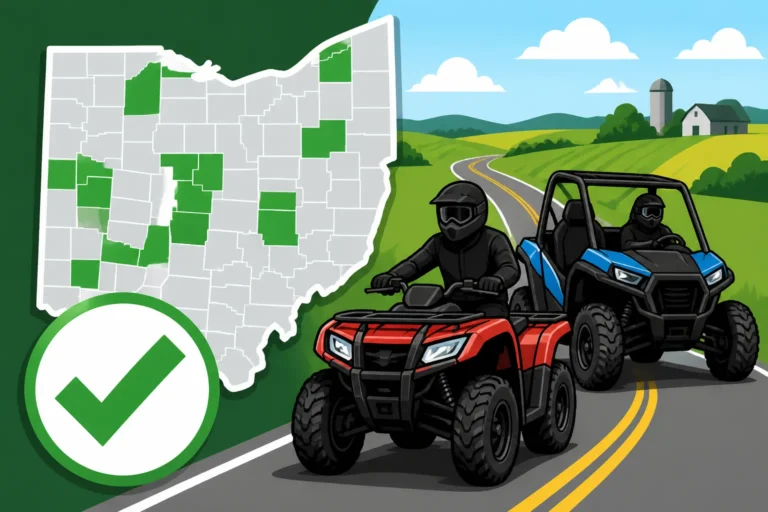
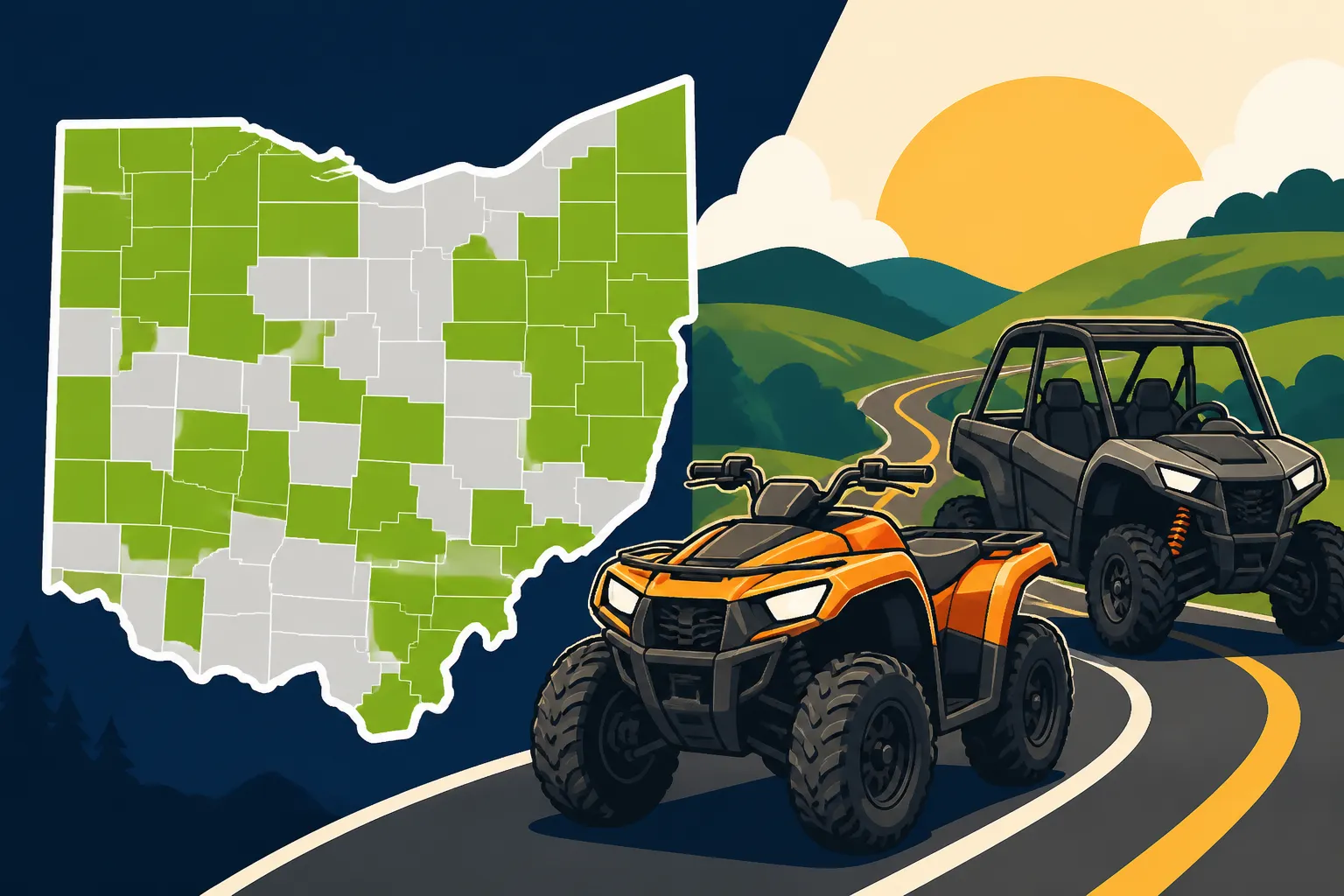
These resolutions aren't just arbitrary decisions. They often come after a lot of discussion, considering things like road conditions, traffic volume, existing infrastructure, and public safety concerns. A good example of this is Washington County, which notably passed a resolution opening every county road it controls to APVs. This was a significant move that provided a lot of clarity and opportunity for riders in that specific area. When these resolutions are passed, they usually specify conditions for road use, such as equipment requirements, speed limits, and specific hours of operation. Sometimes, they might even require certain safety features, perhaps even an aftermarket turn signal kit from SuperATV, to ensure machines are ready for shared road use.
How to Find Out Which Roads Are Open
This is perhaps the most critical piece of information for any rider considering road use: how do you actually find out where you can legally ride? It requires proactive research, and it’s not always as straightforward as checking a single map. The most reliable way is to contact the county engineer's office, the county sheriff's department, or the township clerk for the specific area you plan to ride in. They can provide information on any resolutions or ordinances that have been passed. Many counties and townships also publish this information on their official government websites, often in the form of meeting minutes or codified ordinances. Looking for [How to Find an Ohio Township Resolution] is a great starting point for local inquiries.
Some dedicated riding groups or local APV clubs might also compile maps or lists of open roads, but always double-check these against official sources. Things can change, and you don't want to rely on outdated information. It's also wise to understand that even if a county opens its roads, state routes (those "SR-" designated roads) and interstate highways remain off-limits, no matter what local resolution is in place. Keep in mind that ignorance of the law is not an excuse if you're cited for riding illegally. Take the time to make those calls or dig through those websites before you load up your machine.
Table: Examples of Local Government Bodies and Their Road Responsibilities
| Government Body | Road Responsibility (General) | Power Regarding APV Road Access |
|---|---|---|
| Ohio Department of Transportation (ODOT) | State Routes, Interstates, U.S. Routes | No APV Road Access (State Law) |
| County Commissioners | County Roads (e.g., County Road 15) | Can pass resolutions to open roads |
| Township Trustees | Township Roads (e.g., Township Road 234) | Can pass resolutions to open roads |
| Municipal Governments | City/Village Streets | Can pass ordinances to open roads |
What to Expect When Riding Open Roads (and Equipment Needs)
Once you've done your homework and confirmed that you're in a county or township that permits APV road use, congratulations! But your journey doesn't end there. Simply having the right to ride on the road doesn't mean you can just hop on your machine as is. There are very specific equipment requirements and safety considerations you need to be aware of to ensure you're not only legal but also safe for yourself and others sharing the road. This isn't just about avoiding a ticket; it's about responsible riding.
Essential Gear and Machine Requirements for Road Use
Even if your local jurisdiction allows APVs on their roads, they almost always come with stipulations about what your machine needs to have. For a UTV, this can often mean a full complement of street-legal equipment. This usually includes:
- Headlights (functioning both high and low beams)
- Taillights and brake lights
- Turn signals (front and rear)
- At least one rearview mirror (often two are required)
- A horn
- A windshield (and often wipers if it's a UTV with a full cab)
- Properly functioning brakes
- Mufflers that keep noise within legal limits
- A spark arrester
For ATVs, the requirements can be slightly less stringent regarding things like windshields and wipers, but you'll definitely need proper lighting, turn signals, mirrors, and a horn. Many riders turn to aftermarket companies like SuperATV for these types of upgrades, ensuring their machines meet the local standards. It's wise to consult the specific county or township resolution to get the exact list of requirements for [Ohio UTV Road Equipment List] or [Ohio APV Road Equipment List]. Don't guess; confirm!
Beyond the machine itself, you, the rider, also have responsibilities. A valid driver's license is almost universally required when operating an APV on a public road. This is not the place for someone without a license to learn to drive. Check out [Ohio Driver's License Rules for APVs] for more details. Furthermore, proof of insurance is typically mandatory, usually requiring liability coverage to protect against accidents. This is a critical safety net for everyone involved, and you'll want to understand [Ohio APV Insurance Requirement] before you leave your driveway. Helmets and eye protection are also usually required, regardless of whether you’re on a trail or an open road.
Safety and Etiquette on Shared Roads
Riding an APV on a public road is a different beast than tackling a muddy trail. You're sharing the space with cars, trucks, and sometimes even commercial vehicles, all of which are much larger and faster. Safety should be your absolute top priority. Always operate at a speed appropriate for road conditions and within any posted limits – many local ordinances will set a maximum speed for APVs, often lower than the typical road speed. For instance, some resolutions might cap APVs at 35 MPH, even on a road where cars can go 55 MPH.
Maintain a safe following distance, use your turn signals, and be hyper-aware of your surroundings. Remember, many drivers might not be expecting to see an APV on the road, so defensive driving is key. When pulling off to the side, do so completely and safely. Riding the berm of the road might be permissible in some areas, but always be cautious about road conditions and debris that could be hidden. Also, understand that roads that are not explicitly opened by resolution remain closed. This includes [Why State Routes Stay Closed in Ohio] and definitely interstates. Even if you're just trying to [Crossing a Highway on an APV in Ohio], there are specific rules to follow, and it's not a free-for-all. Respect the local community and ride courteously, as your actions can influence future decisions about APV road access.
Beyond County Lines: What About State Routes and Interstates?
This is where a lot of riders hit a wall. Even if your county or township has opened its roads to APVs, there are still significant limitations on where you can legally ride. Namely, state routes and interstate highways are generally off-limits. This is not a local decision; it's a matter of state and federal law, and it's crucial to understand why these restrictions exist. Trying to skirt these rules can lead to serious legal consequences, including hefty fines and potential vehicle impoundment.
Understanding State and Federal Road Restrictions
The Ohio Revised Code, which governs state transportation, generally prohibits APVs from operating on state routes (designated "SR-" followed by a number, like SR-7 or SR-550) and federal routes (designated "US-" like US-33 or US-50), and certainly interstate highways (like I-70 or I-77). These roads are designed for higher speeds, heavier traffic volumes, and different vehicle types than most APVs. The safety risks of mixing slow-moving, open-air vehicles with high-speed highway traffic are simply too great. This is why [Why State Routes Stay Closed in Ohio] is a fundamental principle of APV road use in the state.
Even if you have the most robust roll cage, harnesses, and all the street-legal accessories from SuperATV installed, those safety features don't override state law for these specific roads. The only exceptions for crossing a state route are typically at designated intersections, and even then, you must do so safely and directly, not riding alongside the route. [Crossing a Highway on an APV in Ohio] is a specific maneuver, not an invitation to travel down it. This distinction is vital for planning any ride that might involve crossing these major arteries.
The Future of APV Road Access in Ohio
While the current system relies heavily on local control, there's always discussion and debate about potential changes. Riders and advocacy groups often push for broader APV access, citing economic benefits for rural communities, increased recreational opportunities, and the utility of these machines. However, concerns about safety, infrastructure wear, and noise pollution often serve as counterarguments.
It's a dynamic landscape, but for now, the rule of thumb remains: assume roads are closed unless a specific local resolution or ordinance explicitly states they are open. Always do your due diligence, verify information with official sources, and equip your machine appropriately. Ignoring the rules or riding on closed roads can lead to significant penalties, including [Ohio Fines for Illegal APV Road Use]. Staying informed and riding responsibly is the best way to ensure the future of APV riding in Ohio remains bright.
Disclaimer
This article is for general informational purposes only and does not constitute professional advice. Laws, prices and regulations vary by location and change over time. Consult a qualified professional for guidance on your specific situation.