Ohio Helmet Law for APV Riders
Navigating the ins and outs of Ohio's All-Purpose Vehicle (APV) laws can feel like trying to find your way through a dense forest without a map, especially when it comes to something as vital as helmet requirements. Many riders get frustrated, unsure if a helmet is absolutely necessary every time they throw a leg over their quad or hop into their side-by-side. This guide aims to clear up that confusion, breaking down exactly when, where, and for whom helmets are legally required in the Buckeye State, while also offering some plain talk about staying safe out there.
Ohio's Core Helmet Requirements for Off-Road Riding
When you're out on the trails, whether it's on public lands like a state forest or tearing up the dirt on private property, Ohio has a pretty clear stance on helmets, especially concerning younger riders. It's not a blanket "everyone must always wear one" rule for all scenarios, but rather a targeted approach designed to protect those deemed most vulnerable.
Riders Under 18 Must Wear a Helmet
This is the big one, the fundamental rule that every parent, guardian, and young rider in Ohio needs to understand. If you're under the age of 18 and you're operating or riding as a passenger on an APV, you absolutely must wear a helmet. This isn't a suggestion; it's the law. The state of Ohio, through its regulations, makes it mandatory to use head protection for minors on these machines. This applies whether you're ripping around your own sprawling farm fields, exploring designated APV trails within Ohio's state forests, or even just puttering around a friend's property. The intent here is clear: to minimize the risk of serious head injuries for younger, potentially less experienced riders who might not have the same judgment or reaction times as adults.
Think of it this way: a sudden unexpected turn, a hidden root, or a momentary lapse in concentration can happen to anyone, regardless of age or experience. For a developing skull, the consequences of even a minor spill can be far more severe. This law acknowledges that vulnerability and puts a protective measure in place. It's also why you'll find similar age-based restrictions and rules for things like [Ohio Minimum Age to Ride an APV] on public lands.
No General Helmet Mandate for Adults on Trails or Private Land
Now, for those 18 years old and over, the legal landscape shifts a bit when it comes to off-road riding on trails or private property. Ohio law does not currently mandate that adult APV operators or passengers wear a helmet in these specific scenarios. This means if you're an adult rider, cruising the trails at Monday Creek in Wayne National Forest or working on your own land, you are not legally compelled to strap on a helmet by state law.
However, this lack of a legal requirement doesn't diminish the inherent risks involved in off-road riding. Many experienced riders, myself included, will tell you that even if the law doesn't require it, common sense and a strong sense of self-preservation should. A helmet is your primary defense against head injury, and accidents can happen to anyone, anytime, anywhere. While the law grants adults the freedom to choose, it doesn't remove the potential for serious consequences. So, while you might legally be able to ride bareheaded on your back forty, thinking about the worst-case scenario is always a good idea. Consider it part of your personal responsibility checklist, alongside making sure your machine is in good working order and that you're riding within your skill level.
Helmet Requirements for APVs on Ohio Roads
This is where things can get particularly confusing for riders. Unlike the relatively straightforward rules for off-road use, venturing onto public roads in Ohio with your APV introduces a whole new set of regulations, and helmet laws are definitely part of that. The distinction here often comes down to how your machine is classified and equipped for road use, particularly for UTVs.
When Road Use Triggers Helmet Laws
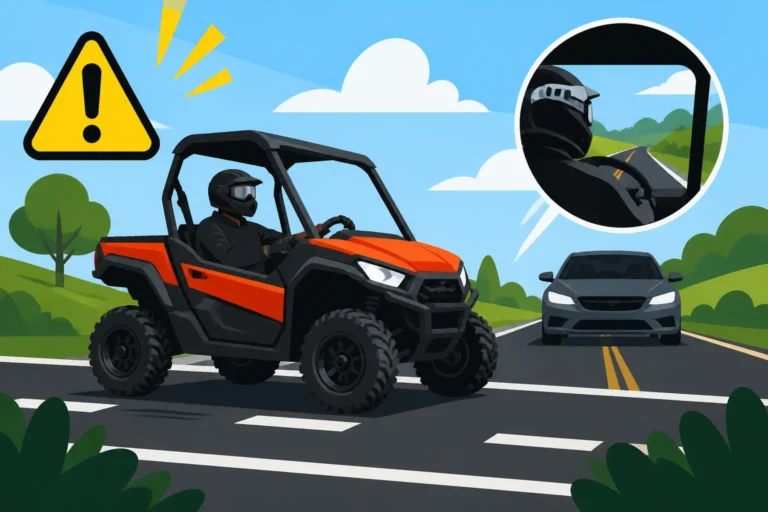
Ohio law generally differentiates between APVs used strictly off-road and those legally permitted to operate on public roads. For any APV, whether it's an ATV or a side-by-side (which Ohio now primarily refers to as APVs), if it's being operated on a public street, road, or highway where such operation is permitted, then specific helmet laws come into play. This is a critical point that many riders overlook, assuming that because they don't always need a helmet off-road, they don't need one on the road either. That assumption can lead to a costly citation or, worse, a preventable injury.
The law regarding road use is often tied into general motor vehicle statutes, which have stricter safety requirements. So, if you're riding your side-by-side on a county road that has been opened for APV use, or crossing a state route where permitted, you are now subject to these specific road-use helmet rules. This also applies to passengers. If you're carrying someone, they too must meet the helmet requirements for road use. For more details on where you can even ride an APV on public thoroughfares, check out articles like [Ohio Counties That Allow APVs on Roads] and [Ohio Townships That Allow APVs on Roads].
The DOT Standard and Driver's License Implications
When helmets are required for APV use on Ohio roads, they must meet the federal safety standard set by the Department of Transportation (DOT). This isn't just any old helmet; it needs to have the proper DOT certification label, indicating it has passed rigorous testing for impact protection. A novelty helmet, while perhaps stylish, simply won't cut it legally or safely. You'll want to look for that "DOT FMVSS218" label, usually found on the back of the helmet. This is an important distinction to grasp, because law enforcement officers are trained to look for this specific certification.
Furthermore, if you're operating an APV on a public road, you generally need to possess a valid driver's license. This ties into the overall responsibility of operating a motor vehicle on public thoroughfares. And for those instances where a helmet is required on the road, it's not just the operator who needs one; any passenger also needs to be wearing a DOT-compliant helmet. This dual requirement for both operator and passenger underscores the state's emphasis on safety when these powerful machines share the road with other vehicles. If you're thinking about outfitting your UTV for road use, companies like SuperATV offer a range of accessories like DOT-compliant windshields and mirrors that might be part of your overall safety and compliance strategy, but remember to always check their product specifications for specific helmet compatibility.
| Rider Age | Riding Location | Helmet Legally Required? | Type of Helmet (If Required) | Key Considerations |
|---|---|---|---|---|
| Under 18 | Private Land / Off-Road Trails | Yes | Any Protective Helmet | Mandatory for all minors. |
| 18 and Over | Private Land / Off-Road Trails | No | N/A (Highly Recommended) | Adult choice, but safety remains paramount. |
| Under 18 | Public Roads | Yes | DOT-Compliant | Mandatory for all minors on public roads. |
| 18 and Over | Public Roads | Yes | DOT-Compliant | Mandatory when operating on public roads. |
Beyond the Law: The Case for Wearing a Helmet Anyway
While it's crucial to understand and abide by the letter of Ohio's APV helmet laws, focusing solely on legal requirements misses a much larger and more important point: your personal safety. The thrill of off-road riding or the convenience of taking your UTV on a local township road comes with inherent risks. Even the most experienced riders can find themselves in an unexpected situation, and a helmet is arguably the most vital piece of safety gear you can wear.
Protecting Your Most Important Asset
Let's be realistic: an APV accident, even a low-speed one, can throw you from the machine, or you might hit your head on a roll bar or the ground. Your head contains your brain, the control center for everything you do. A serious head injury can change your life, and the lives of your loved ones, in an instant. This isn't meant to scare you, but to highlight the undeniable truth. Wearing a helmet, even when not legally required, is the single best thing you can do to protect yourself from traumatic brain injury. It’s an investment in your future and your ability to continue enjoying your passion. Think about all the things you value – your family, your job, your hobbies – a helmet helps ensure you can keep experiencing them.
I've seen firsthand how a seemingly minor tip-over can result in a concussion, or worse, if a helmet wasn't worn. It's easy to think "it won't happen to me," but the trail, like life, is full of surprises. Even when you're just moving your machine a short distance across the yard, you're not immune to unforeseen circumstances. Equipping yourself with a quality helmet, one that fits properly and is designed for the rigors of off-road riding, is a no-brainer for responsible riders. Consider it as essential as fuel in the tank.
Different Helmets for Different Riding Styles
Just as there are different types of APVs, there are different types of helmets designed for various riding conditions. For general trail riding, a full-face off-road helmet provides excellent protection from impacts, roost from other riders, and even low-hanging branches. These often have a prominent visor to block sun and dirt, and good ventilation for comfort during strenuous rides. For those who ride UTVs, particularly if they have a windshield, a dual-sport or even a street-style helmet might be more comfortable and appropriate, still offering that critical DOT protection if needed for road use. Regardless of the style, the key is to ensure it's a well-fitting, reputable helmet.
When you're shopping, make sure the helmet fits snugly but comfortably, without any pressure points. It shouldn't move freely on your head. Many accessory companies, like SuperATV, will offer information on helmet compatibility with their UTV accessories, ensuring your gear works together for maximum safety and comfort. Don't be afraid to try on several different brands and sizes until you find the perfect match. After all, a helmet can only protect you if you wear it, and if it fits correctly. Regular inspections for wear and tear are also important, and remember that helmets have a lifespan – impacts, even minor ones, can compromise their integrity. Replacing an old or damaged helmet is a small price to pay for continued peace of mind and protection on your next Ohio adventure. And don't forget your eyes! [Ohio Eye Protection Requirement] often goes hand-in-hand with helmet use.
Disclaimer
This article is for general informational purposes only and does not constitute professional advice. Laws, prices and regulations vary by location and change over time. Consult a qualified professional for guidance on your specific situation.