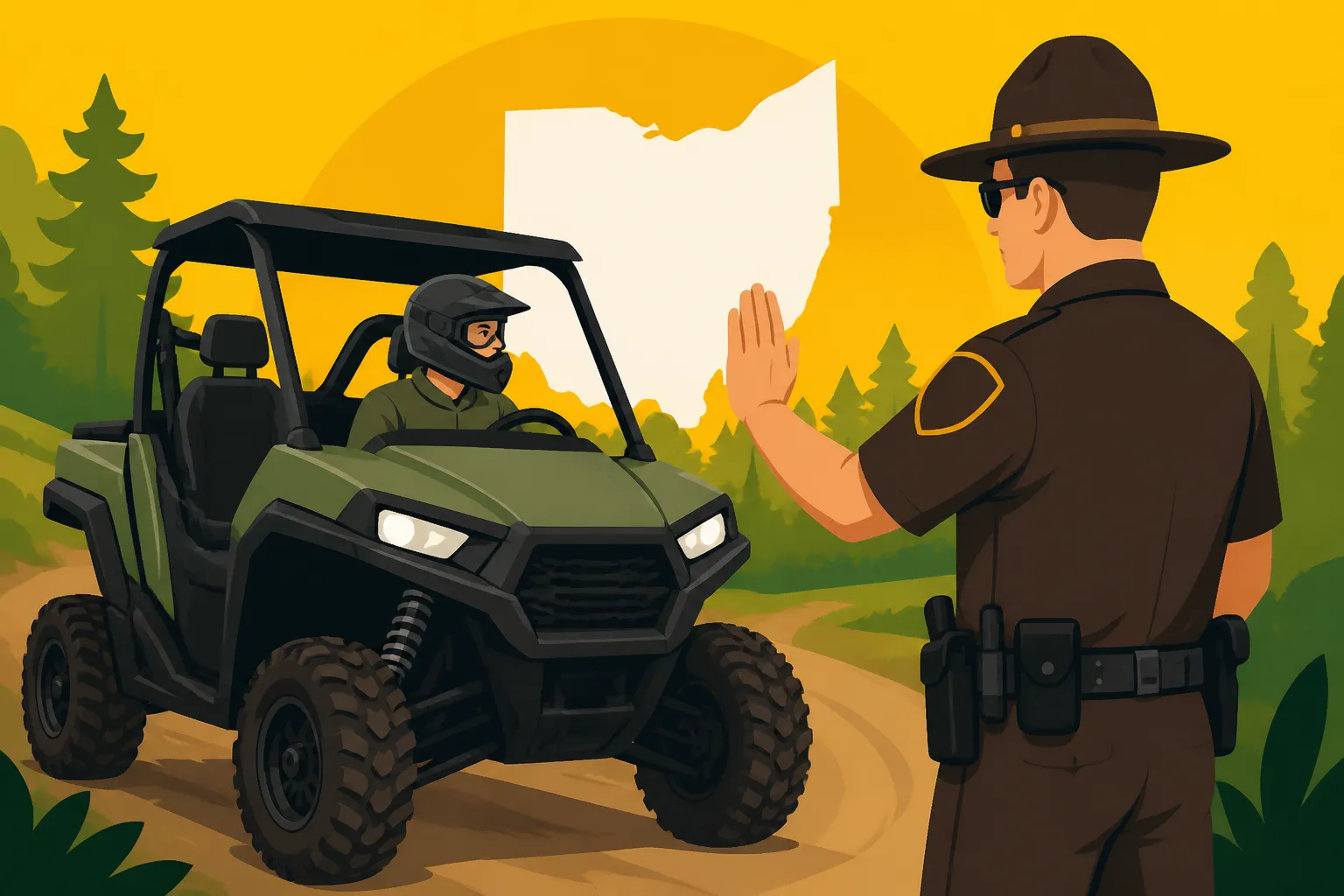
What to Expect When a Deputy Stops Your APV
It's a moment that can send a jolt of anxiety through even the most seasoned rider: seeing those flashing lights in your rearview mirror while you're out on your all-purpose vehicle. Whether you're on a public road, a forest trail, or even a private lane, an encounter with a law enforcement officer can be unsettling if you're not sure what to expect. This guide aims to demystify the process, walking you through what typically happens when an Ohio deputy stops your APV, helping you feel more prepared and less stressed.
The Initial Encounter and What to Do
Being pulled over can be a bit startling, especially when you're on an APV, which isn't always the usual vehicle deputies stop. Your actions in the first few moments can set the tone for the entire interaction, so knowing how to respond is key.
When a Deputy Signals You to Stop
When you see a deputy's lights or hear their siren indicating you should pull over, the first and most important thing is to do so safely and promptly. Don't slam on your brakes, but find a safe place to stop your APV out of the flow of traffic, if possible. If you're on a trail, slowly bring your machine to a halt. If you're on a road, signal your intentions and pull to the right shoulder. Turn off your engine and, if it's dark, turn on any interior lights your machine might have, like a dome light in a UTV cab. This simple act shows immediate cooperation and respect for the officer's authority.
Once stopped, try to keep your hands on the handlebars or steering wheel, or in another visible location. Avoid making any sudden movements, which can be misinterpreted. The goal here is to de-escalate any potential tension and show that you are calm and cooperative. Remember, the officer's primary concern is their safety and yours, so making their job easier by being clear and visible can go a long way.
Even if you believe you haven't done anything wrong, it's crucial to remain polite and cooperative. Arguing or being confrontational from the outset rarely improves the situation and can often make it worse. Answer questions truthfully, but you are not obligated to offer information beyond what is asked. If you're unsure about a question or your rights, you can politely state that you'd prefer not to answer without legal counsel, but always do so respectfully.
Keeping Your Hands Visible and Staying Calm
One of the most crucial things you can do when a deputy approaches your APV is to keep your hands in plain sight. This means no fumbling around in your pockets, reaching under seats, or quickly rummaging through a storage compartment without being asked. Officers are trained to be vigilant for any perceived threats, and unseen movements can create unnecessary alarm. Placing your hands on the steering wheel, handlebars, or even just resting them on your lap where they are clearly visible helps to assure the officer you are not a threat.
Maintaining a calm demeanor is equally important. It's natural to feel a bit nervous, but try to keep your voice level and avoid agitated body language. A deputy is assessing the situation from the moment they approach your vehicle, and your calm, cooperative attitude can significantly impact how the rest of the interaction proceeds. If you're riding with passengers, advise them to do the same – stay still, keep hands visible, and remain quiet unless spoken to directly.
Sometimes, riders carry items in their machine's storage compartments or a backpack, and you might instinctively want to grab your registration from one of those places. Always wait for the officer to instruct you on where they'd like you to retrieve your documents. Politely ask, "Officer, my registration is in my backpack; may I reach for it?" This small courtesy can prevent misunderstandings and helps the interaction proceed smoothly.
What a Deputy Will Typically Ask For
Once you've stopped and the officer approaches, they'll usually start by explaining why they pulled you over and then ask for your essential documents. Having these readily available and in order can expedite the stop significantly.
Your Ohio APV Registration and Plate
One of the first things a deputy will ask for is your APV registration. In Ohio, every all-purpose vehicle (APV) that will be ridden anywhere other than entirely on private property must be registered with the state. This means if you're riding on state forest trails, Wayne National Forest, or any approved township or county roads, you need a current registration. Your machine should also have a clearly displayed [Ohio APV Plates and Validation Stickers] on the rear.
The registration card is proof that your machine is legally allowed on public trails and roads where permitted. Keep this card, or at least a clear photocopy or digital image of it, with you whenever you ride. While a physical card is always best, many officers understand that paper can get damaged on the trail. Just make sure the information is legible if you're showing it on your phone. Without valid registration, you could be facing a citation for an unregistered vehicle.
It's a good practice to ensure your registration is renewed on time. Ohio APV registrations operate on a three-year cycle, expiring on December 31st of the third year. If you've just moved to Ohio or recently bought your APV, make sure you understand the requirements for [Registering an APV in Ohio] to avoid any issues during a stop. A deputy will check the plate number against their system to verify current registration status.
Proof of Ownership and Title
Beyond registration, the deputy might ask for proof of ownership, which is typically your vehicle's title. In Ohio, just like cars, all-purpose vehicles usually require a title. This document proves you are the legal owner of the machine. When you purchased your APV, either new or used, you should have gone through the process of [Titling an APV at an Ohio Clerk of Courts].
The title is especially important if there's any question about the machine's ownership, or if the officer suspects it might be stolen. If you've just bought the machine and haven't had a chance to transfer the title into your name yet, having the notarized title signed over to you, along with a bill of sale, can serve as temporary proof of ownership. However, it's always best to get the title transferred as quickly as possible.
If you bought your APV privately, an [An Ohio Bill of Sale for an APV] is a crucial document to have, especially if there's a delay in getting the title. Some older ATVs might not have been titled if they were purchased before titling requirements were as stringent or if they were solely used on private land. In such cases, a deputy might still ask for proof of purchase, so holding onto old bills of sale or ownership documents is a good idea. However, if you plan to ride on public land or roads, a proper Ohio title is generally required for machines newer than a certain age threshold.
Driver's License and Proof of Insurance
These two documents are often linked to whether you're operating your APV on a public road or highway, rather than exclusively on designated trails or private property. In Ohio, if you are operating an APV on any road that has been legally opened for such use (like some county or township roads), you will absolutely need a valid driver's license. The rules for [Ohio Driver's License Rules for APVs] are pretty clear: if you're on a public road, you need to be a licensed driver.
Furthermore, if you are riding your APV on a public road, you'll also need to have proof of liability insurance. Ohio law requires [Ohio APV Insurance Requirement] for any APV operating on public roads. This is critical for protecting yourself and others in case of an accident. While insurance might not be strictly mandated for riding solely on private land or within state forest APV areas, it's always a smart idea to carry it. However, for road use, it's non-negotiable.
Make sure your insurance card is current and accessible. Just like your registration, a clear digital image on your phone might be accepted, but a physical card is always more straightforward. An officer stopping you on an open township road will definitely be looking for both your license and proof of insurance, as these are fundamental requirements for operating any motor vehicle on public thoroughfares in Ohio. If your machine has aftermarket accessories, perhaps from SuperATV, that make it more road-ready, ensure all your documentation aligns with those capabilities.
Common Reasons for an APV Stop and What Comes Next
Deputies don't stop APVs just for the fun of it. There are specific reasons they might initiate a stop, often related to safety, compliance with regulations, or observed behavior. Understanding these common reasons can help you avoid a stop in the first place, or at least be better prepared for one.
Road Legality and Equipment Checks
One of the most frequent reasons for an APV stop, especially for UTVs, revolves around road legality. Ohio has specific, and sometimes complex, rules about where APVs can be ridden on public roads. Many county and township roads can be opened to APV use via local resolution, but state routes and interstates are generally off-limits. If a deputy sees you riding an APV on a road that isn't designated for such use, they will likely pull you over. It's crucial to know [Ohio Rules for Riding a County Road] or a township road before you venture out.
Beyond the "where," there's the "how" – meaning your machine's equipment. While ATVs typically don't need a pre-registration inspection, UTVs do if you intend to ride them on public roads. This [Ohio UTV Inspection Requirements] ensures they meet certain safety standards, such as having proper lighting, turn signals, mirrors, and a horn. Many riders upgrade their UTVs with high-quality aftermarket parts from companies like SuperATV to enhance performance and safety, but these upgrades also need to meet road-legal specifications if you plan to hit the pavement. A deputy might stop you if your UTV appears to be on a road without the necessary equipment, such as missing turn signals or insufficient lighting, or if your machine exceeds the 62-inch width limit for state forest trails.
The officer will be checking to see if your machine complies with [Ohio Equipment Rules for an APV on a Road]. This could include functional headlights, taillights, brake lights, and a proper exhaust system (with a spark arrester). If your machine doesn't meet these requirements for road use, even if you're on an open road, you could face a citation. Ignorance of the law is generally not considered an excuse, so doing your homework on local ordinances and state statutes before you ride is paramount.
Age Restrictions and Passenger Rules
Ohio has clear guidelines regarding the age of APV riders, especially for minors. If a deputy observes a young rider, they might stop the APV to verify their age and supervision status. Generally, riders under a certain age are restricted from operating APVs on public lands or roads, or require direct supervision from a licensed adult. Understanding [Ohio Rules for Riders Under 16] is essential, whether you're the parent supervising or the young rider themselves. For instance, children under 12 are generally prohibited from riding on state forest APV trails, and specific supervision rules apply to those between 12 and 16.
Beyond age, there are also rules about passengers. Some ATVs are designed for only one rider, while others, like many UTVs, are built to carry multiple passengers safely. If a deputy sees too many people on an ATV designed for one, or passengers riding in an unsafe manner (e.g., standing up in a UTV), they may initiate a stop. These rules are in place for safety, to prevent accidents and serious injuries.
The deputy will want to ensure that all riders are appropriately seated, wearing helmets where required (such as on state forest trails or for minors), and that the machine isn't overloaded beyond its manufacturer's specifications. Even if you've installed a roll cage and harnesses from a reputable brand like SuperATV, you still need to adhere to the basic passenger capacity and safety rules. Fines can be issued for violations related to age restrictions, helmet laws, and unsafe passenger transport, all of which prioritize the well-being of everyone on the machine.
Riding Conduct and Impairment
Law enforcement officers are also on the lookout for unsafe or reckless riding behavior, which is a common reason for an APV stop. This can include excessive speed, riding erratically, performing stunts, or riding in a manner that endangers others. Even on trails, deputies patrol to ensure that riders are respecting trail rules, speed limits, and other users, like hikers or mountain bikers.
One of the most serious reasons for a stop is suspicion of impairment. Just like operating a car, operating an APV under the influence of alcohol or drugs is illegal and extremely dangerous. Ohio's [Ohio DUI Rules for APV Riders] are strict, and a DUI on an APV carries the same severe penalties as a DUI in a car, including fines, license suspension, and potential jail time. If a deputy observes signs of intoxication, such as slurred speech, unsteady movements, or the smell of alcohol, they will likely conduct a field sobriety test.
Beyond DUI, there are also "open container" laws that apply to APVs. Consuming alcoholic beverages or having open containers of alcohol on an APV in public areas is generally prohibited. A deputy might stop you if they see open alcoholic beverages on your machine. The bottom line is to ride sober, ride safely, and ride responsibly, both for your own well-being and the safety of everyone else on the trails or roads.
Potential Outcomes and Your Rights
No one wants a citation, but it's important to understand the range of outcomes from an APV stop and what your rights are should you receive one. Being informed can help you navigate the process more effectively.
Warnings, Citations, and Fines
Depending on the nature of the stop and the deputy's discretion, the outcome can vary. Sometimes, if it's a minor infraction and you've been cooperative, the officer might issue a verbal warning. This is often the case for small technicalities or if you genuinely made an honest mistake and there's no immediate danger. They might give you instructions on how to correct the issue, like advising you to get your registration renewed or to avoid a specific road.
However, for more significant violations—such as riding on a closed road, operating an unregistered APV, failing to have required insurance, or violations of age restrictions—you are likely to receive a citation. A citation is a legal document, essentially a ticket, that requires you to pay a fine or appear in court. Fines for APV violations can vary widely depending on the specific offense and local ordinances. For example, [Ohio Fines for an Unregistered APV] can be substantial, as can penalties for [Ohio Fines for Illegal APV Road Use]. Each citation will list the specific statute you allegedly violated and the associated penalty or court date.
If you receive a citation, read it carefully. It will typically outline your options: either pay the fine by a certain date or contest it in court. It's important to understand the seriousness of the citation and to take appropriate action, whether that's paying the fine, correcting the issue, or preparing to present your case.
What If You Disagree?
If you genuinely believe you were unjustly stopped or cited, you have the right to contest the citation in court. It's crucial to remember that disagreeing with an officer at the scene of the stop is generally not the time or place for a heated debate. Remain polite, accept the citation, and state that you understand your right to dispute it. Your calm demeanor in that moment will serve you better than an argument.
When you decide to contest a citation, you will typically need to appear in the municipal or county court specified on your ticket. This is your opportunity to present your side of the story, provide any evidence you have (like valid registration you couldn't locate at the time, or maps showing the road was open), and challenge the officer's findings. You may want to consult with an attorney specializing in traffic or recreational vehicle law, especially if the charges are serious or carry significant penalties. They can guide you through the process of [Appealing an Ohio APV Citation] and represent your interests.
Preparing for court means gathering all relevant documents, possibly taking photos of the location where you were stopped, and having a clear, concise explanation of why you believe the citation is unwarranted. Even if you're representing yourself, dressing appropriately and speaking respectfully to the judge and prosecuting attorney can make a positive impression. While challenging a ticket can be a hassle, it's an important right that ensures fairness in the legal system.
Here's a quick look at common documents you might need for various riding scenarios:
| Riding Scenario | Required Documents (Ohio) | Typically Not Required (But Recommended) |
|---|---|---|
| Private Land (Your Own) | Proof of ownership (Title or Bill of Sale) | Registration, License, Insurance (unless using roads) |
| Private Land (With Permission) | Proof of ownership, Written landowner permission | Registration, License, Insurance (unless using roads) |
| Ohio State Forest Trails | Ohio APV Registration, Proof of ownership, Helmet (if under 18 or on certain trails) | Driver's License (for operator), Insurance (for operator) |
| Wayne National Forest Trails | Ohio APV Registration (or valid out-of-state), Wayne NF OHV Permit, Driver's License (for operator) | Ohio Title (often needed for registration) |
| Approved County/Township Roads | Ohio APV Registration, Driver's License, Proof of Insurance, Ohio APV Title | Trail permits |
[Titling an APV at an Ohio Clerk of Courts]
[What an Ohio APV Title Costs]
[Why Ohio Bills Registration in Three-Year Blocks]
[Ohio Fines for Illegal APV Road Use]
[Ohio Equipment Rules for a UTV on a Road]
[Ohio Helmet Rules for APV Riders]
[Ohio Minimum Age to Ride an APV]
[Ohio DUI Rules for APV Riders]
[Ohio APV Registration and Sales Tax]
[Ohio APV Insurance Requirements]
[Ohio APV Registration Lookup]
[Ohio APV Registration Early Renewal]
Disclaimer
This article is for general informational purposes only and does not constitute professional advice. Laws, prices and regulations vary by location and change over time. Consult a qualified professional for guidance on your specific situation.