Riding a Reclaimed Strip Mine Road
The call of an open trail is strong for any APV rider in Ohio, but there’s a distinct draw to the roads less traveled – specifically, those winding paths through former strip mining areas. These aren't your typical groomed forest trails; they're remnants of a bygone industrial era, now slowly being reclaimed by nature, offering a uniquely rugged and often challenging experience. If you’ve ever found yourself wondering about the legality, the dangers, or just the sheer possibility of riding your quad or side-by-side on these intriguing landscapes, you're in the right place. This guide will delve deep into what you need to know about responsibly and safely navigating Ohio's reclaimed strip mine roads.
What Exactly Is a Reclaimed Strip Mine Road in Ohio?
When we talk about "reclaimed strip mine roads" in Ohio, we're not just discussing any old dirt track. We're talking about a very specific type of landscape, born from the state's industrial past, particularly in the hilly, coal-rich regions of southeastern Ohio. These areas hold a unique allure for off-road enthusiasts because of their distinctive topography and the sense of history embedded in the very ground beneath your tires.
The Landscape of Ohio's Mining History
Ohio has a long and storied history of coal mining, especially surface mining or "strip mining," which was a dominant practice for decades. This method involved removing layers of earth and rock, known as overburden, to expose coal seams. Once the coal was extracted, the land was often left scarred with massive pits, steep spoil piles (the earth removed and dumped back), and the network of roads used to transport equipment and coal.
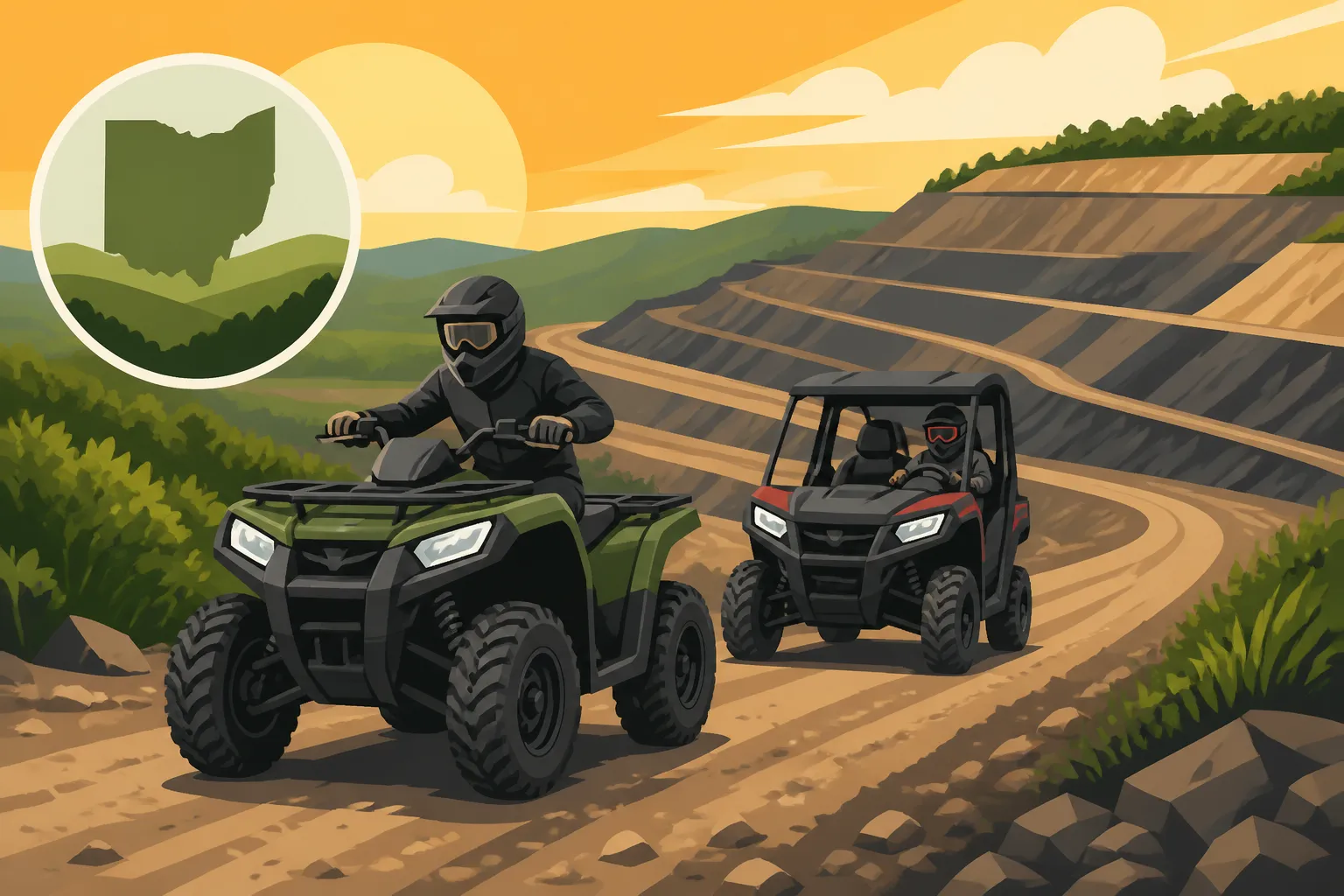
"Reclaimed" land refers to areas where, after mining ceased, efforts were made to restore the land to a more natural or productive state. This typically involves grading the spoil piles to reduce steepness, spreading topsoil, and planting vegetation. However, "reclaimed" doesn't mean "returned to pristine forest." Instead, it creates a unique, often stark, landscape. You'll find a mix of exposed rock faces, deep valleys, re-forested hills, and, crucially for riders, the remnants of those original haul roads. These old haul roads, once vital arteries for heavy machinery, now offer challenging and diverse routes for ATVs and UTVs. They can vary from wide, relatively flat benches to narrow, winding paths that hug the contours of the land, providing a stark contrast to the purpose-built trails you might find in a state forest.
Why These Roads Attract APV Riders
There’s something undeniably captivating about riding on reclaimed strip mine land. For many APV enthusiasts, it’s about the sheer challenge and variety that these unique landscapes present. Unlike the sometimes predictable loops of managed trail systems, reclaimed mine roads often offer a more raw, exploratory experience.
Imagine navigating a path that suddenly opens up to panoramic views from a high ridgeline, then plunges into a valley only to climb steeply up a loose shale grade. You might encounter deep mud holes, rocky descents, or even old concrete foundations that hint at the industrial activity that once dominated the area. This unpredictable, ever-changing terrain is a huge draw. It tests both rider skill and machine capability in ways that flatter, less technical trails might not. There’s a thrill in conquering a particularly challenging climb or navigating a tricky water crossing, all while surrounded by a landscape that tells a story of transformation. It’s not just riding; it’s an adventure into a unique ecosystem where nature is slowly but surely taking back what was once altered by human hands. This sense of exploration, combined with the challenging conditions, makes these areas a magnet for riders seeking more than just a casual spin.
Navigating the Legality of Riding Reclaimed Mine Land
This is where things get really important, and often, a little confusing. The appeal of these unique landscapes is undeniable, but it's absolutely crucial to understand that simply because a piece of land looks abandoned or "reclaimed" doesn't mean it's open for public riding. Ignoring ownership and legal access can lead to serious legal trouble, not to mention environmental damage.
Public vs. Private Ownership
Here's the stark reality: the vast majority of reclaimed strip mine land in Ohio is privately owned. When a mining company finishes its work and completes the reclamation process, the land typically reverts to private ownership, or it may have been privately owned throughout the mining operation. This means that, unless you have explicit permission from the landowner, riding on these properties constitutes trespassing.
Many riders, eager to explore, sometimes operate under the mistaken belief that if land isn't fenced or clearly marked "No Trespassing," it's fair game. This is a dangerous assumption. Ohio's [Ohio Trespass Law and Off-Road Riders] is clear: you need permission. Imagine if someone decided to ride their machine through your backyard just because it wasn't fenced – it's the same principle. Landowners have legal rights, and they can, and often will, press charges against trespassers. Not only can this result in fines, but it can also lead to your machine being impounded, and it damages the reputation of responsible riders everywhere. Always, always seek [Ohio Landowner Permission Requirements] before venturing onto any private property. A simple conversation, a phone call, or a written agreement can save you a lot of headache and keep your riding experience positive.
Club Trails and Leased Land
Given the complexities of private ownership, how do riders access these incredible landscapes legally? One of the most common and effective ways is through organized ATV clubs or private riding parks. Many of these groups recognize the immense potential of reclaimed mining land for off-road recreation.
What often happens is that an ATV club or a commercial riding park will negotiate a lease agreement directly with the private landowner. This agreement grants the club or park permission to develop, maintain, and manage trails on the reclaimed land for their members or paying customers. This model offers significant benefits:
- Sanctioned Trails: These trails are usually marked, often maintained by volunteers or staff, and designed with safety in mind.
- Community: You become part of a community of riders who share the same passion and respect for the land.
- Legal Access: You have clear, undeniable permission to be there. This eliminates the stress and risk of trespassing.
Ohio is home to several such [Ohio Private Trail Parks] that have leveraged these unique landscapes, creating fantastic riding opportunities. Places like these are a fantastic option if you’re looking for a legitimate place to ride on reclaimed ground. You often pay a day-use fee or an annual membership, which goes towards lease payments, trail maintenance, and other operational costs. This structured approach allows riders to enjoy the challenging terrain without fear of legal repercussions. It's a win-win: landowners get compensation, and riders get legal, safe access to some of Ohio's most exciting terrain. If you're serious about exploring these areas, researching local clubs or private parks is often your best bet for [Getting Permission to Ride a Privately Owned Reclaimed Mine]. Many clubs are dedicated to showing [How ATV Clubs Lease Private Ground for Trails] for their members.
Are There Public Options?
While private ownership dominates the reclaimed strip mine landscape, it's a valid question to ask if any of these unique areas fall under public management. The short answer is: rarely, in the traditional sense of a dedicated "public strip mine riding park" managed by the state or federal government.
Most of Ohio's designated public APV riding areas are located within state forests or national forests, such as the Wayne National Forest or various Ohio Department of Natural Resources (ODNR) state forest trails. These areas have specific regulations, trail systems, and permitting requirements. While some of these larger forest systems might encompass areas that were historically mined and have undergone some level of reclamation, they are generally managed as forest land, not specifically as "reclaimed strip mine parks." The trail experience in these public forests, while excellent, tends to be different from the raw, often unmanicured feel of privately managed reclaimed mine sites.
So, while you might find sections of trail in a state forest that pass through old mining areas, don't expect vast, open, free-to-access strip mine complexes under public control. For the quintessential reclaimed mine riding experience, the best and most legal avenues remain private parks or club-leased lands. Always check with the managing authority (ODNR, Wayne National Forest, or the specific private park/club) before you load up your machine and head out.
Essential Gear and Safety Considerations for Reclaimed Roads
Riding reclaimed strip mine roads isn't like cruising a manicured gravel path. The terrain is unforgiving, constantly changing, and often throws unexpected challenges your way. This means your machine needs to be up to the task, and you, as the rider, need to be prepared with the right gear and a solid understanding of safety.
Machine Preparedness for Demanding Terrain
When you're tackling the rugged landscape of a reclaimed mine, your standard trail setup might not cut it. These roads are notorious for their steep grades, loose rock, deep ruts, and thick mud, which can put immense stress on your machine.
First, let's talk about tires. The stock tires that come on many ATVs and UTVs are often a compromise designed for general use. For reclaimed mine roads, you'll want something much more aggressive. Look for tires with deep, widely spaced lugs that can dig into loose shale, claw through thick mud, and provide traction on steep, uneven surfaces. Think about [Ohio ATV Tire Replacement Cost] as an investment in safety and capability, not just an expense. A good set of mud-specific or all-terrain tires designed for challenging conditions can make a world of difference.
Next, consider a winch. This isn't just a luxury; it's practically a necessity. Getting stuck in deep mud or finding yourself in a precarious position on a steep incline is a real possibility. A reliable winch can pull you out of trouble, or help a buddy who's in a jam. When budgeting for your setup, factor in [Ohio ATV Winch Costs]. Brands like SuperATV offer robust winch options designed for heavy-duty recovery, which are perfect for the unpredictable nature of mine roads.
Finally, undercarriage protection is paramount. Reclaimed areas often have sharp rocks, stumps, and even hidden pieces of old mining debris. Skid plates, especially full-belly and A-arm guards, protect vital components like your oil pan, driveshafts, and suspension from expensive damage. Investigating [Ohio ATV Skid Plate Costs] and installing them before your first ride on these challenging trails is a smart move. Without them, one unfortunate scrape could end your day (and empty your wallet) prematurely. Always ensure your machine is in top mechanical condition, with strong brakes and a well-functioning suspension, as these will be tested to their limits.
Personal Safety Equipment
Your personal safety is just as important as your machine's preparedness, if not more so. The challenging conditions of reclaimed mine roads increase the risk of falls or impacts, so don't skimp on protection.
A DOT-compliant helmet is non-negotiable. [Ohio Helmet Law for APV Riders] requires helmets for anyone under 18, but for adult riders, it's simply common sense, especially on technical terrain. A full-face helmet offers the best protection against impacts and keeps dust and debris out of your face. Pair it with proper eye protection – goggles or a helmet with a face shield – to shield your eyes from flying debris, dust, and branches. This is crucial for visibility and preventing serious injury. Even if you're riding in a public forest, remember [Ohio Helmet Rules on State Forest Trails].
Beyond the helmet, think about full-body protection. Long sleeves and pants, even in warmer weather, offer protection against scrapes, branches, and sun exposure. Consider padded riding jackets and pants, chest protectors, knee pads, and sturdy over-the-ankle boots. Gloves are also essential for grip, comfort, and protecting your hands from blisters and impacts.
Finally, always carry a first-aid kit, plenty of water, and navigation tools (GPS, paper map, compass). Cell service can be spotty in remote, hilly areas, so don't rely solely on your phone. Riding with a buddy or in a group is always recommended, as help is usually closer at hand if something goes wrong.
Environmental and Trail Etiquette
Riding on reclaimed land carries a special responsibility. While it's a testament to nature's resilience, it's also a delicate ecosystem still very much in recovery. Respecting the environment and adhering to proper trail etiquette is crucial for ensuring these unique riding opportunities continue to exist.
First and foremost, stay on established trails. Even if a trail isn't formally "marked" in the way a state forest trail might be, stick to the paths that are clearly used. Going off-trail can damage newly revegetated areas, disturb wildlife, and contribute to erosion. This land has already been significantly disturbed once; our goal as riders should be to minimize further impact.
Be mindful of water features. Reclaimed mine sites often have unique hydrology, sometimes with [Acid Drainage and Orange Water] (though the focus is on rider awareness, not a chemistry lesson) or sensitive wetlands forming in low-lying areas. Avoid creating deep ruts or churning up stream beds, which can contribute to erosion and pollute water sources. If you encounter a large mud hole, assess if you can safely ride through without excessive damage, or if there's a responsible bypass.
"Pack it in, pack it out" is another golden rule. Whatever you bring onto the trail – food wrappers, drink containers, broken parts – must leave with you. Litter not only detracts from the natural beauty but can also harm wildlife and be an eyesore for landowners. Treat the land as if it were your own cherished property, or even better, as if you're a guest in someone else's pristine backyard. Responsible riding ensures that these fascinating, rugged landscapes remain accessible and enjoyable for future generations of riders.
The Unique Challenges and Rewards of Riding Reclaimed Land
Riding a reclaimed strip mine road isn't just about the physical act of operating an APV; it's an immersive experience that presents both significant challenges and deeply satisfying rewards. These aren't rides for the faint of heart, but for those prepared, they offer an unparalleled sense of adventure.
Navigating Unpredictable Conditions
The very nature of reclaimed land means you'll face conditions that are constantly in flux, often making for a much more demanding ride than you might find elsewhere.
Weather, for instance, plays a huge role. [Ohio Trails After Heavy Rain] can transform from dusty paths into treacherous, slick clay bogs. The clay found in many of these areas can turn into a greasy, unforgiving surface when wet, making climbs nearly impossible and descents perilous. Deep ruts, left by previous riders or even residual mining equipment, can become filled with water, creating hidden obstacles that can swallow a wheel. Conversely, during dry spells, the fine dust can be intense, reducing visibility to near zero for riders following closely.
The terrain variability is another significant challenge. You’ll encounter steep, loose shale grades where traction is at a premium, followed by rocky sections that demand careful line choice. Some areas might feature long, flat benches perfect for catching your breath, only to lead into a series of sharp, off-camber turns or unexpected drops. These environments can also harbor hidden hazards that demand constant vigilance. Old mining areas might still have rebar sticking out of the ground, abandoned pipes, or even areas of ground subsidence that could create sudden, deep holes. It's crucial to ride within your limits, constantly scan the trail ahead, and ideally, never ride alone. Having a riding partner or a group significantly increases safety, especially when navigating these unpredictable conditions.
The Thrill of Exploration and History
Despite the challenges, the rewards of riding reclaimed mine land are truly unique and deeply satisfying. These areas offer an unparalleled sense of exploration and a tangible connection to Ohio's industrial past.
The scenery is often dramatically different from typical forested trails. You'll encounter exposed rock formations, vast panoramic views from high vantage points, and a fascinating mix of pioneering plants and wildlife slowly recolonizing the disturbed earth. It's a landscape of contrast, where the stark remnants of human endeavor meet the slow, inexorable march of nature. This makes for incredible photography opportunities and a unique backdrop for your ride.
Beyond the visual, there’s an almost archaeological thrill to riding through these areas. You’re traversing paths once used by massive earth-moving equipment, exploring a landscape shaped by human ingenuity and labor. Discovering old haul roads, forgotten concrete pads, or even remnants of mining structures provides a powerful connection to history. It's not just a trail; it's a living museum where you're actively engaging with the past. The combination of challenging terrain, breathtaking views, and the opportunity to explore a historically significant landscape makes riding reclaimed strip mine roads an unforgettable and deeply rewarding experience for any APV enthusiast looking for something a little different.
Comparing Riding Experiences: State Forests vs. Reclaimed Mine Land
To give you a clearer picture of what to expect, let's look at how riding on reclaimed mine land often stacks up against the more commonly known state forest trails.
| Feature | Ohio State Forest APV Trails | Reclaimed Strip Mine Roads (Private Parks/Clubs) |
|---|---|---|
| Ownership/Access | Public land (ODNR, US Forest Service). Requires state registration/Wayne NF pass. | Mostly private land. Requires landowner permission, club membership, or day-use fee at private parks. |
| Trail Management | Clearly marked, often one-way loops. Regular maintenance. Rules strictly enforced. | Varies widely. Can be well-marked and maintained by clubs, or less formal. |
| Terrain | Mix of wooded trails, some hills, varying surfaces. Generally less extreme. | Highly varied: steep climbs, loose shale, deep mud, exposed rock, panoramic views. More extreme. |
| Permits/Fees | Ohio APV registration plate serves as permit for state forests. Wayne NF requires separate pass. | Varies by club/park; typically day-use fee or annual membership. |
| Regulations | Strict rules on width limits (e.g., Ohio's 62-Inch State Forest Width Limit), hours, passenger age, equipment. | Rules set by landowner/club/park; generally less restrictive on width, but still emphasize safety. |
| Environmental Context | Managed forests, emphasis on conservation and multi-use. | Unique industrial history, natural reclamation in progress. |
| Experience | Structured, predictable loops, often busy. Focus on forest riding. | More adventurous, exploratory, potentially more isolated. Focus on challenging terrain. |
| Hazards | Natural hazards (trees, rocks), other trail users. | Natural hazards, plus potential hidden debris from mining, unstable ground. |
As you can see, while both offer incredible riding, the experience, challenges, and legalities are quite different. It's important to choose the right location based on your experience level, machine, and desire for a more structured or adventurous ride.
Conclusion
Riding reclaimed strip mine roads in Ohio offers an undeniably thrilling and unique off-road experience, a true departure from the more structured environments of state forest trails. These landscapes, etched with history and slowly being rewilded, present a raw and challenging adventure that appeals to many APV enthusiasts. From the steep, loose shale climbs to the panoramic views across vast, open stretches, the terrain demands skill, preparedness, and a healthy respect for the land.
However, the allure of these roads comes with a crucial responsibility. Understanding the predominantly private ownership of these lands and securing proper permission – whether through a private riding park, an ATV club, or direct landowner contact – is not just about avoiding legal trouble; it's about being a responsible ambassador for the entire off-road community. Furthermore, ensuring your machine is adequately equipped with aggressive tires, a reliable winch, and robust skid plates (like those from SuperATV) is vital for tackling the unpredictable conditions, and personal safety gear is non-negotiable. By approaching these incredible landscapes with preparation, respect, and a commitment to responsible riding, you can unlock an unforgettable chapter in your Ohio APV adventures, exploring a unique blend of industrial heritage and natural reclamation.
Disclaimer
This article is for general informational purposes only and does not constitute professional advice. Laws, prices and regulations vary by location and change over time. Consult a qualified professional for guidance on your specific situation.