Ohio Rules for Crossing a State Route
There's nothing quite as frustrating as planning an awesome ATV or UTV ride, mapping out your trails, only to realize that a pesky state route stands between you and the next stretch of adventure. You know local roads might be open, but state routes? That feels like a whole different ballgame, and the fear of getting a citation for a simple cross can really put a damper on your plans. This guide is here to untangle those rules, explaining exactly when and how you can legally cross an Ohio State Route on your all-purpose vehicle or utility vehicle, so you can ride with confidence, not confusion.
Understanding Ohio's Approach to APVs on Roads
Ohio's laws regarding All-Purpose Vehicles (APVs), which include ATVs and UTVs, on public roads can feel like a tangled mess. It’s easy to get discouraged when you hear that generally, these machines aren't "street legal" in the same way a car is. This broad stance often leads riders to believe they can't even touch a paved road, let alone a major state route. But let's break down the nuance, because understanding the bigger picture helps clarify the specific rules for crossing.
The General Rule: No Statewide Road Riding
Ohio law, in its general form, prohibits the operation of APVs on most public roads, especially state highways and interstates. The intention behind this is primarily safety; these machines are designed for off-road environments, and their characteristics (like speed, braking, and visibility) don't always mesh well with standard vehicular traffic. For many riders, this blanket prohibition can feel incredibly limiting, especially when their favorite trails are fragmented by these very roads. You might find yourself saying, "I just need to get across!" and that frustration is completely valid. It’s not about joyriding on the asphalt; it’s about connecting the dots to keep your off-road experience continuous.
This general rule is a significant hurdle for many, but it's important to remember that it sets the stage for exceptions. While you can't cruise down a state route, the law does recognize the practical need for riders to occasionally traverse these arteries, bridging gaps between legitimate riding areas or accessing property.
The Role of Local Jurisdictions
Here's where things get a little more interesting, and often, more confusing. While the state maintains its general prohibition on APVs riding on state routes, it has delegated authority to local governments to open certain roads within their purview. This means that a township's trustees or a county's commissioners can pass resolutions allowing APVs on specified county or township roads. [How an Ohio Township Opens Its Roads] and [How an Ohio County Opens Its Roads] can give you more insight into this process.
However, and this is a crucial distinction, these local resolutions do not apply to state routes. Even if your entire township has opened all its county and township roads to APVs, the state routes that run through or intersect that township are still under state jurisdiction. This means you can't simply assume that because local roads are open, you can now ride freely on a state route within that same area. State routes operate under a separate set of rules, and understanding this separation is key to avoiding an unwelcome conversation with law enforcement.
Specific Rules for Crossing a State Route
So, if you generally can't ride on a state route, what about just getting from one side to the other? This is where Ohio law provides a specific, albeit narrow, allowance. It’s not about convenience for long stretches, but about necessity for short, direct transitions.
When Crossing Is Permitted and What It Means
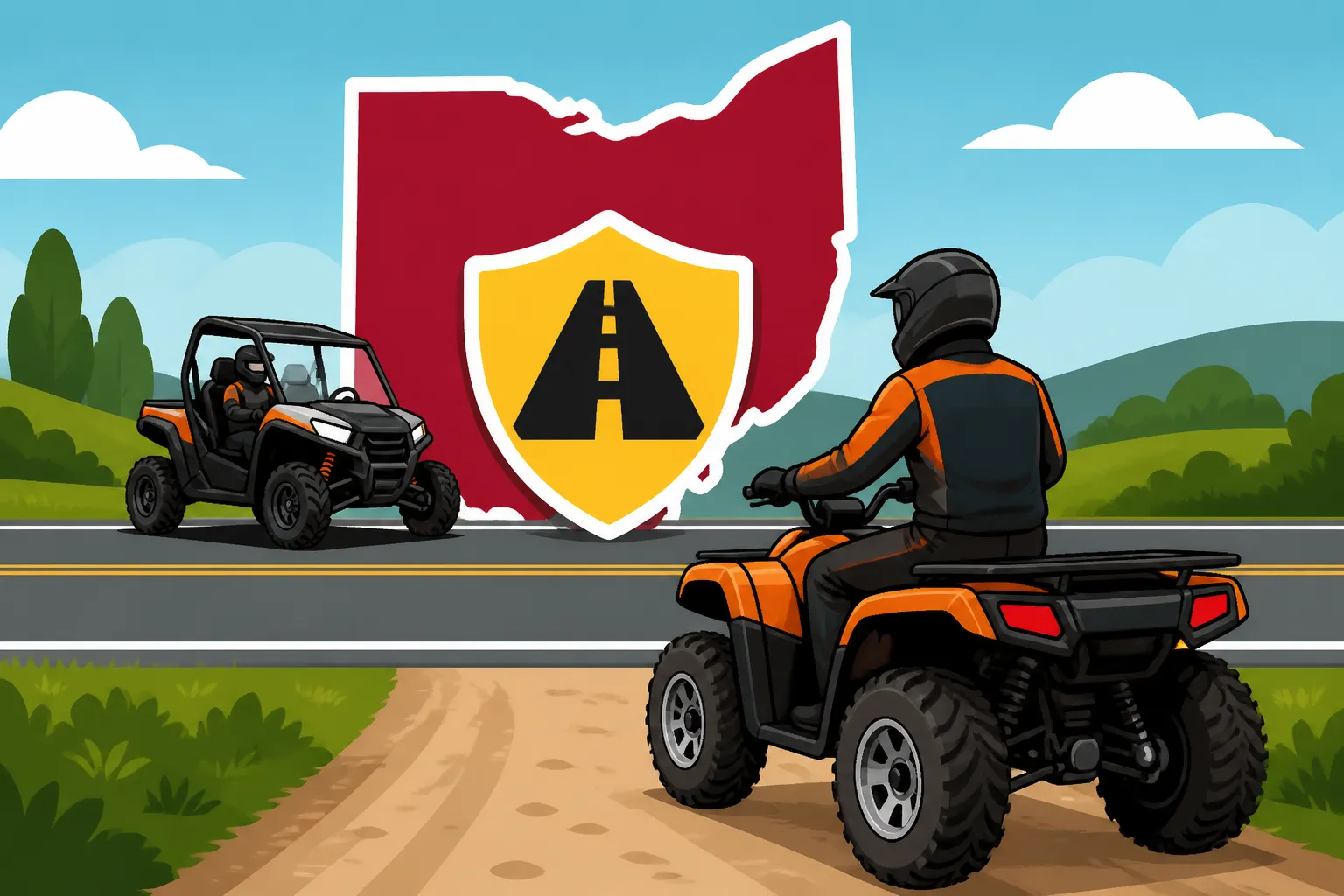
Good news, fellow riders! Ohio law does permit you to cross a state route on an APV or UTV, but under very strict conditions. This isn't an invitation to ride parallel to the highway for a mile; it's specifically for traversing the roadway in the most direct manner possible. Think of it as a quick, perpendicular movement from one side of the road to the other, solely for the purpose of getting to an adjacent trail, private property, or another legally open road. The intent is to allow for continuity of your off-road journey without putting you in a position to mingle extensively with high-speed traffic.
The key word here is "crossing." You must cross the state route by the most direct route substantially perpendicular to the roadway. This means no zig-zagging, no riding down the berm for a hundred yards, and certainly no treating it like another open local road. It's a precise maneuver, not an extended ride. For instance, if you're on a county road that suddenly turns into a state route for a short stretch, you can't simply continue on it. You'd need to cross it at the first safe opportunity to resume your ride on another legally accessible path.
Safety Precautions and Legal Requirements During a Crossing
Even though it’s a quick dash, a state route crossing requires the utmost caution and adherence to specific rules to ensure everyone's safety and to stay on the right side of the law. Think of it like crossing a busy street on foot – you wouldn't just dart out.
First and foremost, yield to all traffic on the state route. You are the one entering their flow, so their right-of-way is absolute. You must stop, look carefully in both directions, and ensure the way is clear before proceeding. This isn't just a suggestion; it's a legal obligation.
Secondly, your machine needs to be in good working order and have the proper equipment. While full "street legal" equipment might not be necessary just for crossing, basic visibility is paramount. This includes functional headlights and taillights, especially if visibility is low or if you're crossing during dawn, dusk, or night. Many riders opt to enhance their visibility with aftermarket lighting from brands like SuperATV, which can make a huge difference in being seen by fast-moving traffic. You should also ensure you have a working horn to alert others if necessary. For UTVs, [Ohio UTV Road Equipment List] outlines requirements that would certainly apply to any road interaction, even a crossing. ATVs might have slightly less stringent requirements, but basic safety equipment like working brakes is non-negotiable.
Lastly, you must cross at an intersection whenever possible. Crossing mid-block, especially on a curved or hilly section of a state route, significantly increases the risk of an accident and could lead to a citation for unsafe operation. Use common sense: choose a spot where you have clear sightlines in both directions and where approaching drivers can easily see you.
What an Ohio Deputy Checks During a Crossing
It's a common fear: that moment a deputy sees you on your APV anywhere near a paved road. Even if you're simply making a legal crossing, an officer might still pull you over to verify you're doing so legally and safely. Knowing what they'll be looking for can help you be prepared and make the interaction smooth.
Proof of Registration and Insurance
Just because you're only crossing a state route doesn't mean you're exempt from basic legal requirements. In Ohio, every APV needs to be registered with the state, and that means you need to carry your current registration card with you. This also applies to visitors, who might need an [Ohio's Nonresident Temporary Permit] if their home state doesn't require registration or doesn't have reciprocity with Ohio. Furthermore, if the county or township roads you were just riding on, or are about to ride on, require insurance for APV use (which many do if they’ve been opened to road riding), you’ll need proof of insurance. Even for a momentary crossing, an officer can ask for [Ohio APV Registration and Insurance Proof]. Make sure you have these documents readily accessible, perhaps in a waterproof bag in your toolbox or cargo box.
Driver's License and Helmet Laws
Operating any motor vehicle on a public roadway in Ohio, even briefly, generally requires a valid driver's license. While you don't need a special "APV license," your standard driver's license is what allows you to legally control the machine in this context.
Ohio's helmet laws are also crucial to remember. While they vary slightly depending on the age of the rider and the type of land, if you are crossing a state route, you are subject to the same helmet requirements as if you were riding on an open county or township road. For riders under 18, a helmet is almost always mandatory. For all riders, especially when interacting with vehicular traffic, a DOT-compliant helmet is simply good common sense and often legally required. You can learn more about [Ohio Helmet Law for APV Riders] to ensure you're always compliant. An officer will likely check for both your license and appropriate head protection during any stop related to road use.
Navigating the "Where" of State Route Crossings
The biggest challenge for many riders isn't how to cross, but where it makes sense to cross. It requires a bit of pre-ride planning and an understanding of the local road network.
Identifying Open Local Roads That Intersect State Routes
This is the detective work part of planning your ride! You can't just cross a state route into someone's private field without permission. Your crossing has to lead you to another legally accessible riding area or private property. This usually means crossing from one open county or township road directly to another open county or township road.
To figure this out, you'll need to research local ordinances for the areas you plan to ride. [Finding Out Which Roads Are Open] usually involves checking county commissioner websites, township trustee meeting minutes, or even calling the local clerk's office. Once you've identified a network of open local roads, you can then see where these roads are intersected by state routes. These intersections become your designated, legal crossing points. For example, if Muskingum Township has opened its roads and a State Route runs through it, you'd look for an intersection where two open Muskingum Township roads meet the State Route, creating a legal "bridge" for your ride.
Crossing at Intersections Versus Mid-Block
Let's be absolutely clear: Always strive to cross a state route at an intersection. This is not only the safest option but also the most legally defensible. Intersections are designed for traffic to merge and cross, offering clearer sightlines, often having traffic control devices (stop signs, lights), and generally being where drivers expect cross-traffic. Trying to cross a state route mid-block, between intersections, is incredibly dangerous and likely illegal. There are no provisions in Ohio law that allow for mid-block crossings of state routes for APVs. This is where an officer would likely cite you for unsafe operation or riding where prohibited, even if your ultimate goal was to get to a legal trail. Always plan your route to utilize marked intersections for your state route crossings.
Here’s a quick overview to help distinguish these crucial points:
| Feature | Open County/Township Roads (by local resolution) | Ohio State Routes (for APV use) |
|---|---|---|
| General Riding | Permitted (if opened by local resolution) | Generally Prohibited |
| Crossing | Allowed (for traffic flow) | Permitted (under strict conditions) |
| Purpose of Crossing | Connects points on the local road network | Connects legally open APV areas/trails |
| Crossing Method | Standard traffic flow | Direct, perpendicular movement only |
| Yield to Traffic | Yes | Absolutely Yes (APV always yields) |
| Driver's License Needed | Yes | Yes |
| Registration Needed | Yes | Yes |
| Insurance Needed | Yes (if required by local ordinance) | Yes (if required by local ordinance) |
| Helmet Rules | Apply as per Ohio law | Apply as per Ohio law |
Remember, the goal is to enjoy the trails and stay safe. Understanding these rules for [Crossing a Road Where It Is Safe] will prevent unwanted fines and keep you riding for many seasons to come.
Disclaimer
This article is for general informational purposes only and does not constitute professional advice. Laws, prices and regulations vary by location and change over time. Consult a qualified professional for guidance on your specific situation.