Does a Road-Legal APV Need a Horn?
There’s a common frustration among off-road enthusiasts in Ohio: you’ve invested in an all-purpose vehicle (APV) — perhaps a capable ATV or a versatile side-by-side — and you’re navigating the sometimes confusing path of making it road-legal. One question that often pops up, especially if your machine came straight from the factory primarily for trail use, is about the little things, like "Does it need a horn?" This guide will clear up the confusion about horn requirements for road-legal APVs in the Buckeye State, helping you understand exactly what’s expected to keep your machine compliant and safe on public roads.
The Core Question: Horns on Ohio Road-Legal APVs
So, let's cut to the chase: if you plan to ride your all-purpose vehicle on public roads in Ohio, does it need a horn? The simple answer is yes, absolutely. Ohio law is quite clear on this, specifying that any vehicle operated on public roads must be equipped with a functional horn. This isn't just a suggestion; it's a mandatory safety feature designed to protect you and others sharing the roadway.
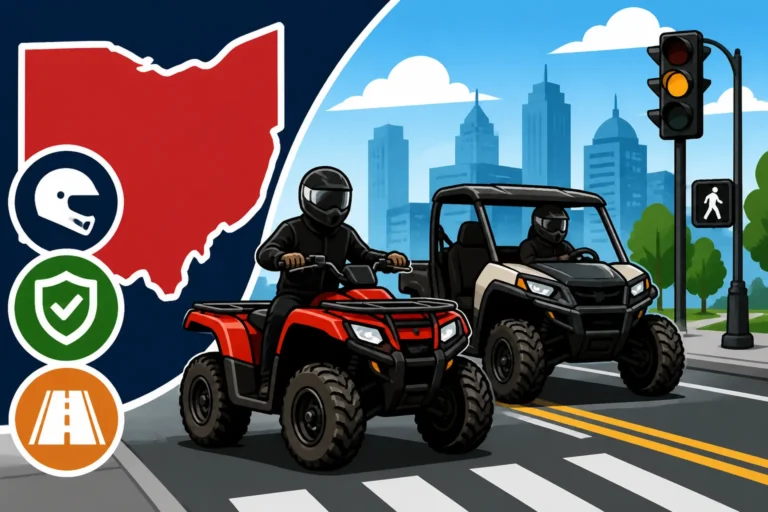
The legal framework for APVs in Ohio, which covers everything from quads (ATVs) to side-by-sides (UTVs), requires these machines to meet certain equipment standards if they are going to leave the dirt trails and venture onto paved surfaces. While many factory ATVs or even some utility-focused UTVs might not come standard with a horn, the moment you decide to operate them on a county or township road that has been opened to APV traffic, that horn becomes a non-negotiable item. It’s part of a broader set of requirements that aims to ensure APVs, when used on roads, can interact safely with other vehicles and pedestrians.
It's important to remember that the definition of an "all-purpose vehicle" in Ohio law is broad, encompassing various types of off-road machines. Whether you're riding a nimble dirt bike or a robust four-seat side-by-side, if it's hitting the pavement, it needs a way to audibly signal its presence. This requirement is consistent across the board for all APVs intending to operate legally on roads, making the horn a universal piece of equipment you’ll need to consider.
Digging Deeper: Ohio's Equipment Requirements for Road Use
The horn isn't the only piece of the puzzle when it comes to making your APV road-legal in Ohio. Think of it like this: when you drive your car, it has a whole suite of safety features and equipment designed for road use. An APV, when venturing onto the same roads, needs to meet a comparable (though not identical) standard. Ohio Revised Code outlines these specific requirements to ensure that when an APV shares the road, it does so in a predictable and safe manner.
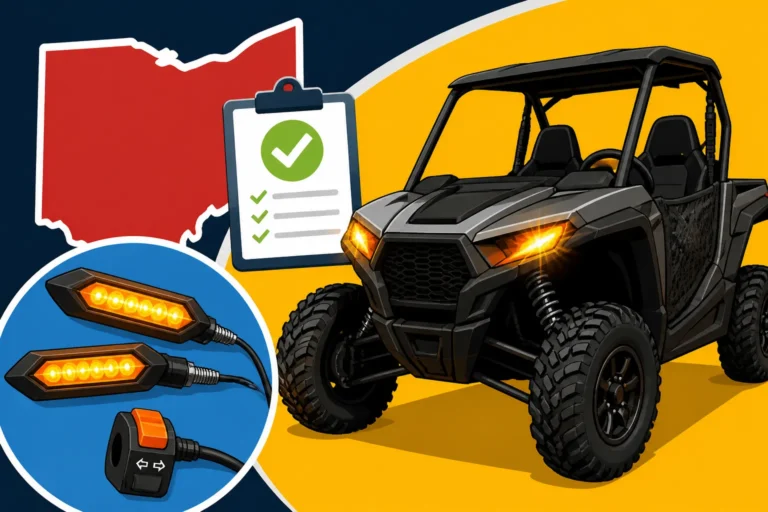
For instance, beyond the horn, you'll need proper lighting. This means headlights, taillights, and brake lights that are fully functional and visible. If you're riding after dark, these become even more critical. Your APV will also need proper reflective elements, often built into the machine, to enhance visibility from all angles. For side-by-sides (which fall under the UTV category within the APV definition), the requirements can be even more extensive, often including [Ohio UTV Road Equipment List] like turn signals, rearview mirrors, and a windshield. These items are inspected for UTVs before they can even be titled and registered for road use, highlighting the state's emphasis on safety.
Regarding the horn itself, Ohio law specifies that it must be capable of emitting a sound audible under normal conditions from a distance of not less than 200 feet. This isn't just any little "beep-beep"; it needs to be a clear, distinct sound that can effectively alert other drivers, cyclists, or pedestrians to your presence. A polite tap of the horn can prevent an accident, especially on winding rural roads or when approaching blind intersections where visibility is limited. It's a key tool in your safety arsenal, right alongside your brakes and steering.
Why a Horn Matters on Ohio Roads
You might be thinking, "My machine is loud enough, everyone can hear me coming!" While it's true that many APVs have a distinct engine note, relying solely on engine noise for safety on a public road is a risky gamble. A horn serves a very specific and critical purpose: to provide an immediate, unambiguous warning. Imagine a scenario: you're riding your side-by-side down a quiet township road, approaching a drive with overgrown bushes. Suddenly, a child darts out on a bicycle. Your engine noise might be background sound, but a sharp, clear blast of your horn provides an instant, universal signal of danger.
Horns are also crucial for interacting with other vehicles. On country roads, you might encounter slow-moving farm equipment, delivery trucks pulling over, or even drivers distracted by their phones. A quick tap of the horn can alert them to your presence if they're about to make an unsafe maneuver or simply haven't seen you. It's about proactive safety and clear communication, minimizing the element of surprise that can lead to accidents. Whether you're trying to pass another vehicle safely (where permitted) or simply making your presence known in traffic, the horn is your voice on the road.
Furthermore, consider the varying speeds. While APVs are often restricted to [Why an Ohio UTV Stops at Thirty-Five] miles per hour on roads, other vehicles can be traveling much faster. The ability to quickly and effectively signal is paramount. It allows you to be an active participant in road safety, not just a passive observer. This is why the state requires it, even for vehicles that spend most of their lives off-pavement. It bridges the gap between the raw power of an off-road machine and the structured environment of public thoroughfares.
What If My APV Doesn't Have a Horn?
It’s a common situation: you've got an ATV or UTV that’s perfectly capable on the trails, but it simply wasn’t built with a horn in mind. Don't worry, you're not out of luck. The good news is that adding a horn to your APV is typically a straightforward process, thanks to the robust aftermarket industry. You don't need to be an electrical engineer to get this done, though some basic wiring knowledge certainly helps.
Many aftermarket companies offer kits specifically designed for ATVs and UTVs. These kits often include the horn itself, a mounting bracket, a wiring harness, and a handlebar-mounted button or switch. You can find everything from simple electric horns that produce a distinct "beep" to more robust air horns for a louder, more commanding sound. Retailers like SuperATV, for instance, offer a variety of universal and vehicle-specific horn kits, making it easier to find a solution that fits your machine and your budget. When choosing, just make sure the horn meets the Ohio legal requirement of being audible from at least 200 feet away.
Installation usually involves connecting the horn to your vehicle’s 12-volt power system, mounting it in a location where it’s protected from mud and water but still audible, and running the wires to a convenient switch on your handlebars or dash. If you're not comfortable with electrical work, any reputable ATV or UTV shop can handle the installation for you. It’s a small investment that ensures you comply with the law and, more importantly, enhances your safety on public roads. Failing to have a required horn could lead to a citation if you're stopped by an Ohio deputy, so it's much better to address it proactively.
The Nuance of County and Township Roads
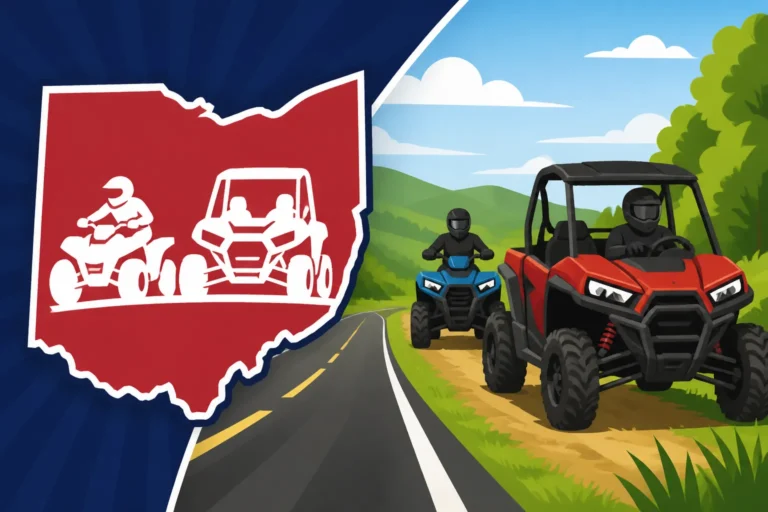
While we’ve established that a horn is a must for road-legal APVs, it's worth briefly touching on where you can even ride these machines on public roads in Ohio. Unlike some states, Ohio doesn't have a blanket "street legal" status for APVs. Instead, the authority to open roads to APV traffic rests primarily with local governments – specifically, county commissioners and township trustees. This means you might find that [How an Ohio Township Opens Its Roads] to APVs in one area, while the adjacent township keeps its roads closed.
However, even on these locally designated open roads, the state's equipment requirements, including the horn, still apply. A resolution passed by county commissioners or township trustees might open specific roads, but it doesn't waive the statewide safety equipment mandates. So, if you're exploring the scenic byways of, say, Washington County, which has opened many of its roads, your APV still needs to adhere to all the standard Ohio equipment regulations. A local deputy patrolling those roads will be checking for things like proper lighting, a visible [Ohio APV Plates and Validation Stickers], and, yes, that functional horn.
It's a critical distinction because while the decision to open roads is local, the rules for operating on those opened roads are largely state-driven. This ensures a consistent baseline of safety regardless of which county or township you're riding through. Always check with the local county or township clerk's office, or their official websites, to confirm which roads are open and what the specific local nuances might be. But rest assured, the horn requirement will remain constant wherever you choose to ride on public roads.
Essential Equipment for Ohio Road-Legal APVs
To help you keep track of the main equipment requirements for an all-purpose vehicle operating on Ohio public roads, here’s a quick overview. Remember, these are general guidelines, and specific situations (like UTVs vs. ATVs) might have additional or slightly different requirements. Always double-check the latest Ohio Revised Code for the most precise details, especially if you're uncertain.
| Equipment Item | Requirement for Road-Legal APV in Ohio | Notes
The Living Blog post "Does a Road-Legal APV Need a Horn?" focuses on the clear requirement for a horn on any APV (ATV or UTV) that operates on Ohio roads, emphasizing its role as a critical safety feature. It covers general equipment requirements, the practical importance of a horn for warning and communication, solutions for adding a horn to a machine that lacks one from the factory, and how state equipment rules apply even on locally opened roads. The article aims to demystify this specific aspect of making an APV road-compliant in Ohio.
Does an Ohio Road-Legal APV Need a Horn? Yes, and Here's Why
Navigating the rules for riding your all-purpose vehicle (APV) on Ohio's public roads can feel like a maze sometimes. You’re thrilled about the freedom of connecting trails or running a quick errand on a county road, but suddenly, you're faced with a checklist of requirements your machine might not meet right off the showroom floor. One of the most common questions, and sometimes overlooked, concerns a seemingly small detail: the horn. Does that sturdy ATV or comfortable side-by-side really need a horn to be road-legal in Ohio? The unequivocal answer is yes, it absolutely does.
Ohio law is quite clear: any motor vehicle operated on public roads must be equipped with a working horn or other warning device. This isn’t a suggestion; it’s a non-negotiable safety mandate that applies to APVs just as it does to cars, trucks, and motorcycles. The intention behind this rule is simple yet profound: to ensure that every vehicle, regardless of its primary design, has a means to audibly alert others to its presence or to warn of potential danger. For many ATVs, which are often built with pure off-road adventure in mind, a horn might not be a standard feature. But for those moments you transition from the forest trails to the paved county roads, that horn becomes essential.
This requirement stems from the need for APVs to integrate safely into the existing traffic ecosystem when they venture onto public thoroughfares. Drivers expect certain signals and warnings from other vehicles, and a horn is a fundamental part of that communication. Without it, you’re missing a critical tool for preventing accidents and ensuring mutual awareness with other road users. So, before you consider your machine "road-legal" for Ohio's open county or township roads, take a moment to ensure that horn is not only present but fully functional and capable of meeting the legal standard for audibility.
Understanding Ohio's Specific Horn Mandate
It's one thing to know you need a horn, and another to understand what kind of horn Ohio law actually requires. This isn't just about having any noisemaker; there's a specific performance standard that your APV's horn must meet. According to Ohio Revised Code, any motor vehicle, including APVs, must be equipped with a horn that is capable of emitting sound audible under normal conditions from a distance of not less than 200 feet. This detail is crucial because it differentiates a proper safety device from a mere novelty or a sound that could easily be drowned out by traffic noise or the engine of a larger vehicle.
What does "audible from 200 feet" really mean in practice? It means your horn needs to project a clear, unmistakable sound that can cut through ambient noise and grab the attention of a pedestrian, another driver, or a cyclist who might not see you immediately. A small, tinny bicycle bell simply won’t cut it. You need a horn with enough volume and a distinct tone to serve as an effective warning device. This standard applies uniformly, whether you're riding a single-seat ATV or a spacious side-by-side with a full cab. For [Ohio APV Road Equipment List] compliance, the horn is just as important as your headlights or taillights.
For side-by-sides, which often have more features and are designed to be more versatile, many modern units might come with a horn already integrated. However, even with these machines, it's wise to test the horn's audibility. Some factory horns can be a bit weak, especially if the vehicle is older or the horn unit has deteriorated. The responsibility falls on you, the operator, to ensure all equipment, including the horn, meets the state's legal specifications before you hit those open roads. This legal requirement is foundational to the concept of [Ohio UTV Road Equipment List] and similar stipulations for other APVs.
The Indispensable Role of a Horn in Road Safety
You might be accustomed to riding your APV on private land or dedicated trails where a horn isn't a primary concern. Out there, hand signals, shouts, or even engine noise might suffice to alert fellow riders. But the dynamics change dramatically when you move onto public roads. On roads, you're sharing space with a diverse range of users—drivers in enclosed vehicles, pedestrians, children, cyclists, and even domestic animals. Many of these road users might not expect an APV to be present, and they certainly won't always hear your engine over their radio or conversation. This is where the horn becomes an indispensable safety tool.
Consider these everyday scenarios on an open Ohio township road:
- Blind Driveways and Corners: You’re navigating a winding rural road with numerous hidden driveways or tight, tree-lined corners. A quick, preemptive tap of your horn as you approach these blind spots can alert a vehicle pulling out or a pedestrian walking their dog just around the bend, potentially preventing a collision.
- Pedestrians and Cyclists: You spot a group of walkers or cyclists ahead, and they seem unaware of your approach, perhaps due to headphones or simply facing away. A polite, short horn blast is the universally understood signal to say, "I'm here, please be aware." It's far more effective and safer than trying to rev your engine or yell.
- Distracted Drivers: Unfortunately, distracted driving is a reality. If you see another driver drifting into your lane, about to make an unsafe turn, or failing to yield, your horn is your immediate warning system. That quick burst of sound can cut through their distraction and bring their attention back to the road, giving them precious moments to correct their course.
- Unexpected Obstacles: Sometimes, an animal darts into the road, or debris suddenly appears. While your primary reaction will be to brake or steer, a horn can simultaneously alert drivers behind you to the sudden hazard, preventing a rear-end collision.
These aren't hypothetical, far-fetched situations; they are common occurrences on any public road. The horn isn't just for emergencies; it's a vital communication tool that helps you proactively manage risks and contribute to a safer environment for everyone. It bridges the communication gap that might exist between an APV and other road users, making your presence clear and your intentions known. This active form of communication is a cornerstone of safe driving and is why the state of Ohio mandates it for all vehicles on its public roads. Without it, you're significantly increasing your risk of an incident.
Equipping Your APV with a Road-Legal Horn
Perhaps your ATV or UTV came from the factory without a horn, or maybe the existing one is just a sad little squeak that wouldn't scare a squirrel. Don't let that deter you from making your machine road-legal in Ohio. The good news is that equipping your APV with a proper horn is usually a straightforward and relatively inexpensive upgrade. The aftermarket is brimming with solutions designed specifically for off-road vehicles, making compliance accessible for almost any machine.
When you're looking for an aftermarket horn, you'll find a range of options. Simple electric disc horns are very common; they’re compact, easy to install, and produce a clear, loud tone that meets the 200-foot audibility requirement. For those who want a more commanding sound, air horns are also available, though they might require a bit more space for an air compressor and reservoir. Many of these kits are universal, meaning they can be adapted to various makes and models of ATVs and UTVs. You can find these kits at most powersports retailers, or from online accessory providers such as SuperATV, which offers a selection of universal horn kits and related wiring components.
Installation typically involves a few key steps:
- Mounting the Horn: Choose a location on your APV that is protected from direct impacts and excessive mud/water, but also allows the sound to project effectively. Under the hood or behind a front fender are common spots.
- Wiring: The horn will need to be wired into your APV's 12-volt electrical system. Most kits come with a wiring harness that includes an inline fuse for protection, a relay (if needed for higher amperage horns), and wiring for a switch. You'll connect to a switched power source, meaning the horn only has power when your ignition is on.
- Installing the Switch: A button or toggle switch will need to be mounted in an easily accessible location, often on the handlebars for ATVs or on the dash for UTVs. This allows you to activate the horn quickly and instinctively.
If you’re not comfortable with electrical work, it’s always best to have a professional powersports mechanic handle the installation. They can ensure proper wiring, secure mounting, and verify that the horn functions correctly and meets the audibility standards. This small investment in time and money is not just about avoiding a potential citation for [Ohio Fines for Illegal APV Road Use]; it's about making your road excursions genuinely safer for yourself and everyone else. Don't forget, an APV's road readiness is more than just about having the right plate; it's about being properly equipped for the specific environment of public roads.
Navigating Local Road Access While Meeting State Equipment Rules
One of the unique aspects of APV road legality in Ohio is the fragmented nature of road access. Unlike many states where "street legal" is a statewide designation, in Ohio, the power to open public roads to APVs largely resides with local authorities—county commissioners and township trustees. This means that while [Washington County Opened Every Road It Controls] to APVs, a neighboring county or even the very next township might have completely different rules, or no open roads at all. It's a patchwork that requires local knowledge and diligence to navigate effectively.
However, a crucial point to understand is that even when a county or township passes a resolution to open its roads for APV use, this local decision does not override the statewide equipment requirements. The moment your wheels touch those public paved surfaces, whether it's a bustling main thoroughfare in a small town or a quiet gravel lane in a rural township, your APV must adhere to Ohio's uniform safety equipment standards. This includes, of course, the horn, but also functional headlights, taillights, brake lights, and proper registration and [Ohio APV Plates and Validation Stickers]. For UTVs, additional requirements like [Turn Signals and Mirrors on an Ohio UTV] and an inspection further underscore this.
So, while you might spend time researching [How an Ohio County Opens Its Roads] or [How an Ohio Township Opens Its Roads], it’s equally important to ensure your machine is physically prepared to meet the state’s mandates. A county sheriff or state highway patrol officer enforcing traffic laws on an open township road will be checking for all of these state-mandated items, regardless of the local resolution that permits APV travel. Neglecting any of these safety features, including the horn, could lead to a citation for non-compliance. This dual layer of regulation—local for access, state for equipment—is a cornerstone of Ohio's approach to APV road use and something every rider must be aware of to ride legally and safely.
Disclaimer
This article is for general informational purposes only and does not constitute professional advice. Laws, prices and regulations vary by location and change over time. Consult a qualified professional for guidance on your specific situation.