Carrying an Insurance Card
Let's face it, navigating the world of ATVs and UTVs in Ohio can sometimes feel like trying to read a treasure map written in disappearing ink. One minute you're legally tearing up a trail in Wayne National Forest, the next you're crossing a township road, and suddenly you're wondering if you have all the right paperwork on hand. A common worry that keeps many riders up at night is, "What happens if I get stopped by a deputy and don't have my insurance card?" This guide is here to untangle that knot, walking you through exactly why and when you need your insurance card when riding your all-purpose vehicle (APV) on Ohio's roads, and what details that card absolutely must display.
The Basics: Why Ohio Demands Insurance for Road Use
It's a common misconception that because your ATV or UTV is an "off-road" vehicle, it escapes the standard rules of the road. But the moment those knobby tires touch a public thoroughfare in Ohio, your machine transforms, in the eyes of the law, into a motor vehicle that needs to adhere to the same basic safety and financial responsibility principles as any car or truck. This isn't about penalizing off-road enthusiasts; it's about protecting everyone.
Think about it: when you're riding exclusively on private land, any incident is typically confined to that property and the parties involved. However, when you enter a county or township road, you're interacting with public infrastructure, other drivers, pedestrians, and potentially causing property damage to someone else's vehicle or land. The state of Ohio, like every other state, has a vested interest in ensuring that if an accident happens on public roads, the innocent parties aren't left holding the bag for medical bills or vehicle repairs. That's where insurance comes in. It's the safety net that covers potential liabilities, ensuring financial accountability. Without it, the burden of an accident could fall entirely on the other driver or public services. [Ohio APV Insurance Requirements] are quite clear on this: if you're on a public road, you need to be insured.
What "Proof of Financial Responsibility" Actually Means
The legal term you'll often hear is "proof of financial responsibility." While this might sound intimidatingly official, for most of us, it boils down to one thing: a valid insurance card. However, it's worth understanding what this concept truly encompasses beyond just the physical card. In essence, it means you have the means to cover damages and injuries you might cause in an accident up to certain minimum amounts. Ohio law sets these minimums for bodily injury and property damage, ensuring there's a baseline level of protection for everyone on the road.
Your insurance card serves as easily verifiable evidence that you meet these financial responsibility requirements. It's your quick, tangible proof that you're not an uninsured risk to others. While alternative forms of financial responsibility exist (like posting a bond or depositing securities with the state), these are incredibly rare for individual ATV or UTV owners and not practical for roadside verification. So, when a law enforcement officer asks for proof of financial responsibility, they expect to see an insurance card. Failure to produce one can lead to citations, fines, and even a loss of driving privileges in certain situations, depending on whether it's your first offense. This is why it’s not just a good idea, but a critical necessity, to have that card handy every time your wheels touch a public road, whether it's a short hop across a paved lane or a longer cruise on an opened [Ohio Rules for Riding a Township Road].
Your Insurance Card: What It Needs to Show
Alright, so you know you need an insurance card, but what exactly should be on it? Not just any old piece of paper will do. When a deputy or highway patrol officer pulls you over on a county or township road, they're not just checking if you have insurance; they're verifying that it's valid and covers that specific vehicle. This is crucial for your peace of mind and to avoid any unnecessary hassle.
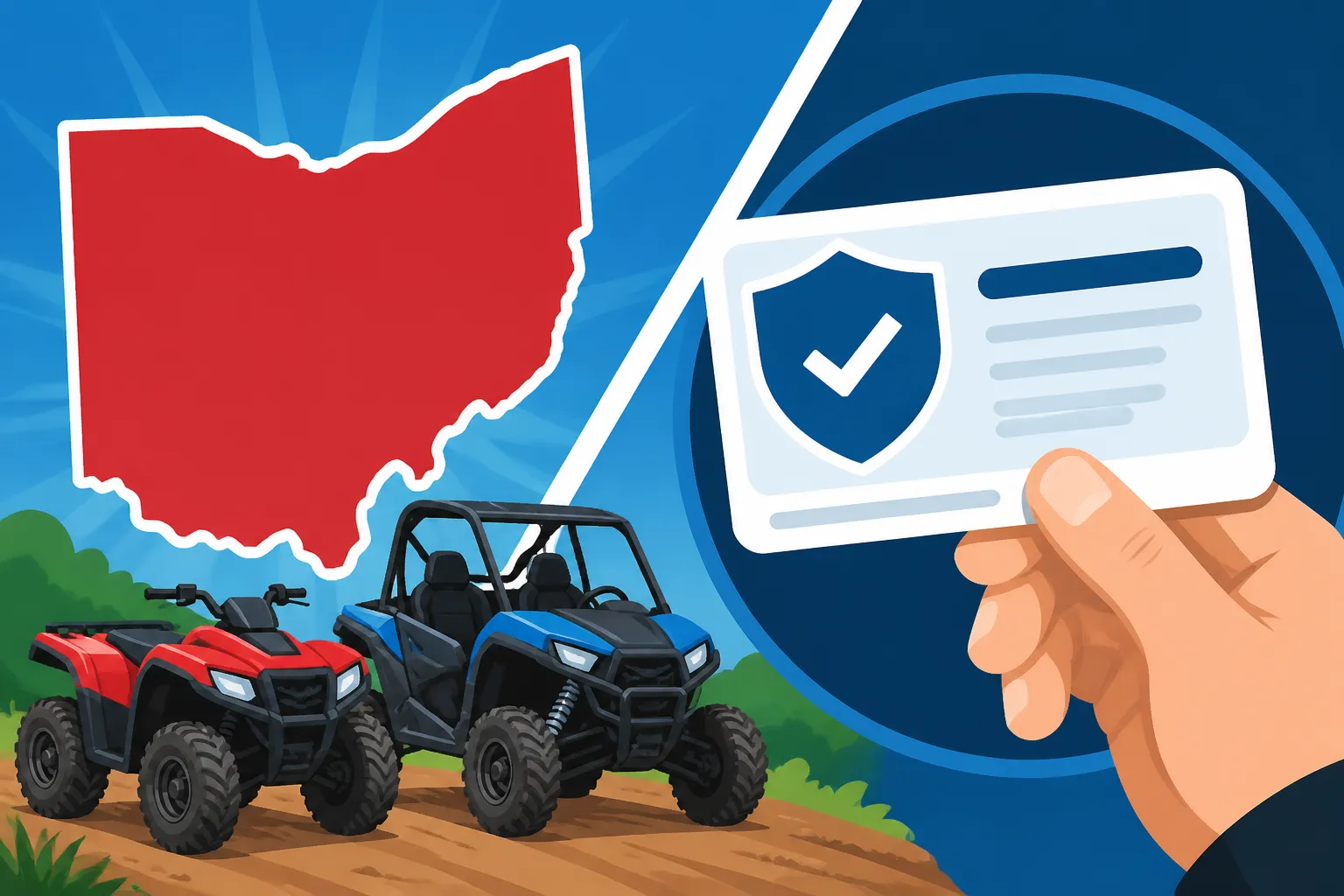
A valid Ohio insurance card for your APV needs to clearly display several key pieces of information:
- Policy Number: This identifies your specific insurance contract.
- Effective Dates: This shows when your coverage begins and, most importantly, when it expires. An expired card means expired coverage, which is just as bad as having no card at all. Always double-check these dates!
- Insured's Name: Your name (or the name of the policyholder) should be clearly listed.
- Vehicle Description: This is super important. The card needs to identify the specific ATV or UTV you're riding. This is typically done with the Vehicle Identification Number (VIN), but might also include the make, model, and year. For those who frequently customize their machines with accessories from companies like SuperATV, ensuring the policy accurately reflects your vehicle details, including any modifications that might affect its value, is a smart move.
- Insurer's Name: The name of the insurance company providing the coverage.
Now, about carrying the card itself: in today's digital age, many states, including Ohio, generally accept digital proof of insurance displayed on a smartphone or other electronic device. This is a huge convenience! Just make sure your phone is charged, and you can easily access the digital card without fumbling through too many apps. However, it's always wise to have a physical copy tucked away as a backup, especially if you ride in areas with spotty cell service. Imagine being stopped in a rural part of Washington County, where cell signal is weak, and you can't load your digital card—a printed copy would be a lifesaver. This simple preparation can prevent a minor stop from escalating into a frustrating ordeal. [Proof of Insurance on an Ohio Road] isn't just about having the policy, it's about being able to show it.
Common Scenarios and What to Carry
Knowing the rules is one thing, but applying them in real-world riding scenarios can sometimes be a bit of a gray area. Let's break down some common situations Ohio riders find themselves in and what paperwork, specifically that insurance card, you should always have at the ready.
Riding Legally on an Open Township or County Road
This is arguably the most common scenario where your insurance card is absolutely non-negotiable. Many Ohio townships and counties have passed resolutions to open their roads to APVs, allowing riders to connect trails, access services, or simply enjoy a scenic ride. If you're on one of these designated [Ohio Counties That Allow APVs on Roads] or [Ohio Townships That Allow APVs on Roads], you are operating your APV as a legitimate motor vehicle.
What to Carry:
- Valid Driver's License: This is a must for any licensed operator on public roads. [Ohio Driver's License Rules for APVs] are clear on this.
- APV Registration Card: Your proof that your machine is properly registered with the state.
- Proof of Insurance Card: The subject of our discussion, showing current coverage for this specific machine.
- Optional (but recommended): A copy of the specific county or township resolution that opens the roads you're riding on. While not legally required to carry, having it can be incredibly helpful if you encounter a law enforcement officer who might not be fully aware of a new local ordinance. You can often find these by calling the township clerk's office.
Think of it this way: just as you wouldn't head out on a new trail without checking your machine for any upgrades from SuperATV, you shouldn't hit the road without confirming your insurance. It's about being prepared, from your SuperATV winch to your insurance card.
Trail Riding at Wayne National Forest or Ohio State Forests
Ohio's state forests and the Wayne National Forest offer incredible riding opportunities, but even within these designated areas, you might encounter situations where public road rules apply. For instance, you might use a paved or gravel county road to get to a trailhead, or connect different trail sections. While the Wayne National Forest has its own [Wayne National Forest OHV Permit Cost] for trail access, that permit doesn't exempt you from state laws regarding road use.
What to Carry (for road portions):
- Valid Driver's License.
- APV Registration Card.
- Proof of Insurance Card: Again, the moment you're on a public access road, whether inside or outside the forest boundary, this is required.
- Wayne National Forest OHV Permit: If applicable, for the trails themselves. [Ohio Rules for Riding a National Forest] highlight the dual responsibilities.
Even if you’re riding trails all day, having your paperwork in order, including that insurance card, is just as crucial as having the right tires or suspension from SuperATV for navigating challenging terrain.
Crossing a State Route or Connecting Roads
Sometimes, a quick crossing of a state route is necessary to get from one section of an opened township road to another. Or maybe you're just using a short stretch of a public road to reach a friend's property. Even for these brief moments, the requirement for insurance holds true. [Crossing a Highway on an APV in Ohio] is permitted in very specific circumstances, and regardless of how short the distance, you're still on a public thoroughfare.
What to Carry:
- Valid Driver's License.
- APV Registration Card.
- Proof of Insurance Card: Every single time.
There are no "short trip" exceptions when it comes to financial responsibility on public roads. Ensuring your machine is properly equipped for road use, perhaps with quality mirrors or turn signals from SuperATV, goes hand-in-hand with having the correct insurance documentation.
Riding Exclusively on Private Land with Permission
This is the one scenario where the legal requirement to carry your insurance card (from the state's perspective) generally doesn't apply. If you are riding solely on private property and have obtained [Ohio Landowner Permission Requirements], you are not subject to the same public road laws regarding financial responsibility.
What to Carry:
- Absolutely none of the above are legally required by the state on private land, for the act of riding itself.
- However, it is always, always a smart idea to have liability insurance coverage for your APV, even for private land use. Accidents can happen anywhere, and personal liability protection can save you from significant financial hardship if you accidentally cause damage or injury on someone else's property, even with permission.
This comprehensive approach ensures you're prepared for any situation Ohio riding throws your way.
Disclaimer
This article is for general informational purposes only and does not constitute professional advice. Laws, prices and regulations vary by location and change over time. Consult a qualified professional for guidance on your specific situation.