Why Interstates Stay Closed in Ohio
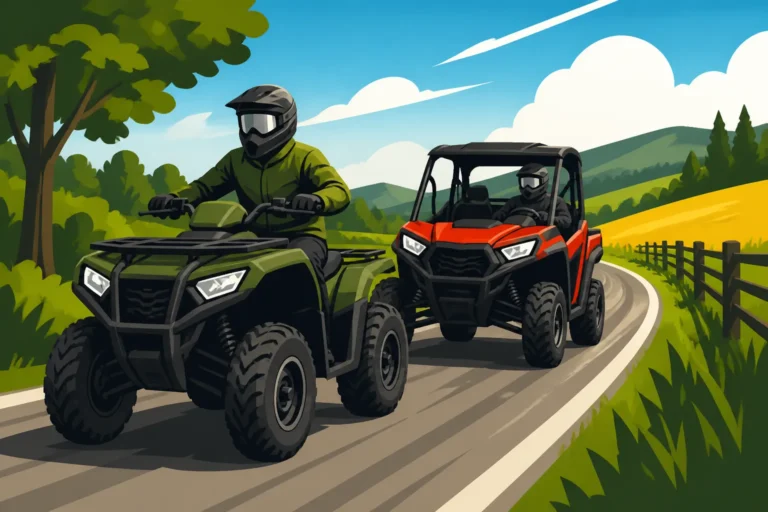
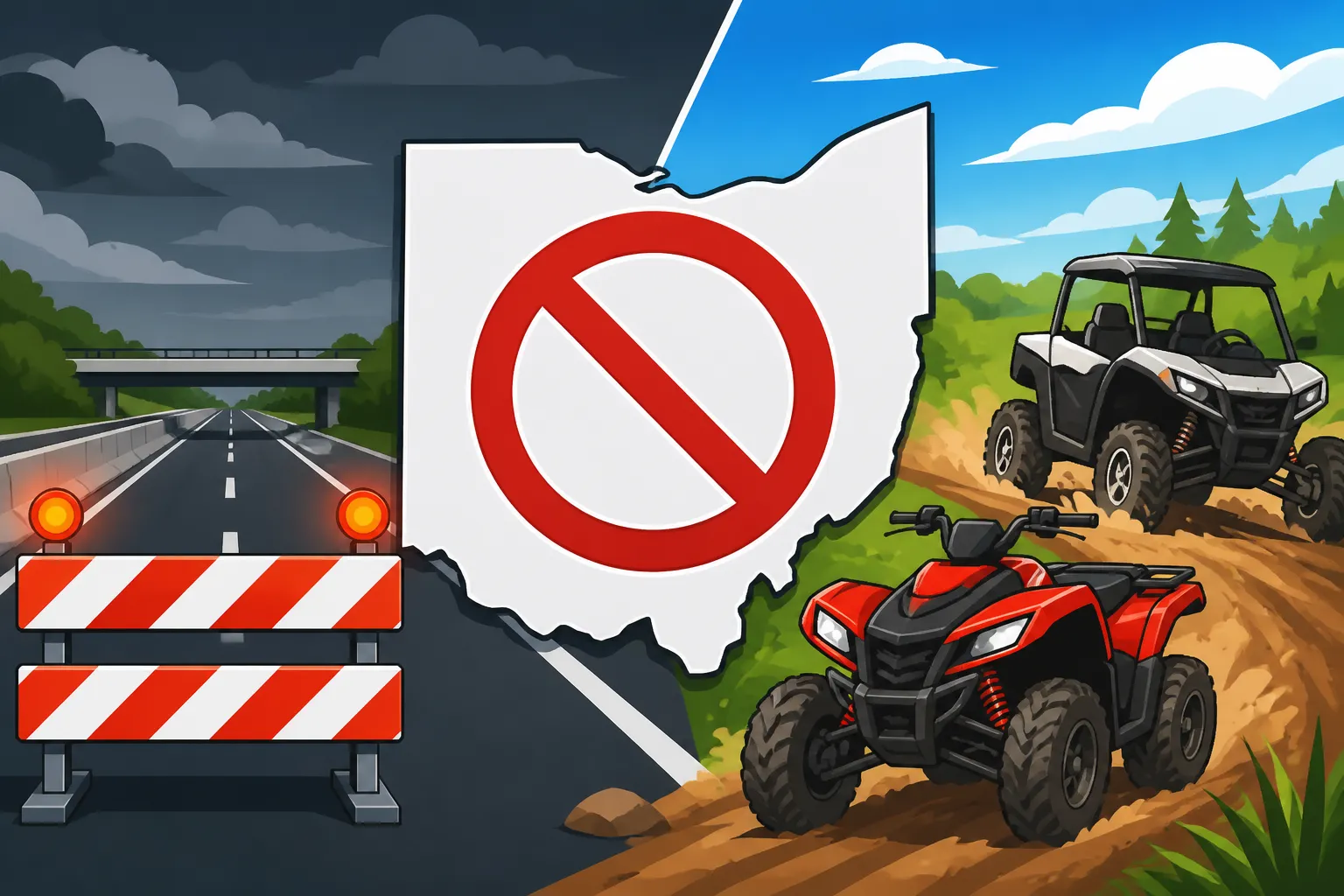
It can be incredibly frustrating to look at your powerful all-purpose vehicle (APV) or side-by-side, knowing it can handle challenging terrain, only to hit a wall when you consider riding it on Ohio's major highways. Many riders wonder why, if some counties and townships allow limited road use, they can't simply take their machine on the interstate to get to a trail or across a long distance. This guide will thoroughly explain why Ohio's interstates and state routes remain strictly off-limits to APVs, focusing on the critical safety, design, and legal realities that dictate these rules.
The Fundamental Purpose of Interstates
Interstate highways and major state routes in Ohio are designed for high-speed, high-volume traffic. They are the backbone of commerce and long-distance travel, built with specific engineering standards and safety considerations for vehicles capable of maintaining speeds well over 50 miles per hour for extended periods. This fundamental purpose creates an immediate conflict with the design and intended use of most APVs, even those that might be considered for limited road use elsewhere.
High-Speed Traffic and Design Disparity
Imagine driving your regular car on an interstate where traffic is flowing at 70 mph or more. Now, picture an APV, designed for off-road performance and generally having a lower top speed and less robust suspension for sustained high-speed pavement travel, trying to merge into that stream. The speed disparity alone creates an enormous safety hazard. Interstates are not designed for vehicles that cannot easily keep pace with the flow, which includes the vast majority of ATVs and UTVs. The sudden deceleration required to accommodate a slower vehicle can lead to dangerous situations, multi-vehicle pileups, and severe accidents.
Furthermore, the design of APVs, while excellent for tearing up trails, is simply not suited for interstate conditions. They often have knobby tires, which handle poorly on pavement at high speeds, limited braking capabilities compared to cars, and a higher center of gravity that can make them unstable when maneuvering quickly at highway speeds. A small bump or sudden crosswind that a passenger car barely registers could cause a rider on an APV to lose control.
Lack of Crash Protection and Occupant Safety
Another critical factor that keeps APVs off interstates is the profound difference in occupant protection. Traditional passenger vehicles, like cars and trucks, are engineered with numerous safety features designed to protect occupants in a high-speed collision. We're talking about crumple zones, airbags, seatbelts that are an integral part of an enclosed cabin, and reinforced frames. These are all elements specifically designed to absorb impact energy and keep passengers safe during a crash.
APVs, on the other hand, offer minimal crash protection. While UTVs might have roll cages and seatbelts, and ATVs rely on the rider's active control and body positioning, these features are primarily designed for rollovers at lower speeds or impacts with natural obstacles on trails, not for head-on or side-impact collisions with a 4,000-pound vehicle traveling at 70 mph. The open nature of many APVs, especially ATVs, leaves riders completely exposed. Even with a helmet and other protective gear, the forces involved in an interstate collision would be catastrophic. The risk of severe injury or fatality for an APV rider on an interstate is simply too high, making their presence an unacceptable liability from a public safety standpoint.
Legal Classifications and Federal Regulations
The legal framework surrounding interstates and APVs is complex, involving both state and federal regulations. While Ohio state law might make provisions for APV use on certain local roads, these allowances do not extend to the vast network of interstates and major state routes, which operate under a different set of rules and classifications.
Federal Funding and Design Standards
Interstate highways, by their very definition and funding structure, are subject to federal regulations and design standards. The federal government invests billions of dollars into their construction and maintenance, and with that funding comes a requirement for adherence to specific safety and operational parameters. These standards are developed with the assumption that only certain types of vehicles – those meeting specific motor vehicle safety standards (FMVSS) – will operate on them.
APVs, including ATVs and UTVs, are generally classified as off-highway vehicles (OHVs) or all-purpose vehicles (APVs) under state law, but they do not typically meet the FMVSS requirements for on-road vehicles, especially for high-speed interstate travel. This isn't just a matter of having turn signals or a horn; it involves everything from brake performance and lighting systems to structural integrity and emissions controls. Because APVs are not manufactured to meet these stringent federal road-legal standards, they are effectively barred from federally regulated highways and interstates. It's a fundamental mismatch between vehicle type and the intended operational environment.
Ohio Law and the Exclusion of APVs from Major Roads
While Ohio has its own laws governing APV registration and, in some cases, limited road use, these laws explicitly prohibit APVs from operating on interstates and most state routes. For instance, [How Ohio Law Defines an APV] clearly sets boundaries for where these machines can and cannot go. When a county or township passes a resolution to open certain roads to APVs, they are typically limited to roads under their jurisdiction, usually those with lower speed limits and less traffic. [How an Ohio Township Opens Its Roads] or [How an Ohio County Opens Its Roads] details this process, highlighting that these resolutions specifically exclude state and federal highways.
The reasoning is straightforward: allowing APVs on such major thoroughfares would create an unacceptable risk for both APV riders and other motorists. Even if an APV were modified with aftermarket parts from a company like SuperATV to enhance its visibility or durability for general road use, these modifications would still not overcome the fundamental design and classification hurdles for interstate travel. The state legislature maintains a clear distinction to safeguard public safety across all vehicle categories and road types.
Operational Safety and Enforcement Realities
Beyond the legal definitions and design differences, the practical realities of operating an APV on an interstate pose significant operational safety challenges and create enforcement nightmares for law enforcement. These considerations further cement the decision to keep APVs off these major arteries.
Speed Differentials and Accident Risk
One of the most immediate and glaring safety concerns on interstates is the vast speed differential between APVs and typical highway traffic. Most ATVs and many UTVs are simply not designed to sustain speeds of 65-70 mph or more that are common on Ohio interstates. Trying to do so would not only push the machine beyond its safe operating parameters but also create an incredibly dangerous obstacle for other vehicles. A car traveling at 70 mph coming upon an APV moving at 40 mph has a significantly reduced reaction time, increasing the likelihood of rear-end collisions, sudden lane changes, and multi-vehicle pileups. This danger is amplified by the fact that many APVs are less visible than cars or trucks, particularly at highway speeds and during adverse weather conditions.
| Vehicle Type | Typical Top Speed (MPH) | Interstate Suitability | Primary Use | Crash Protection Features |
|---|---|---|---|---|
| Passenger Car | 90-120+ | Excellent | Commuting, long-distance travel, general transport | Airbags, crumple zones, enclosed cabin, ABS |
| Motorcycle | 100-150+ | Good | Commuting, recreational riding | Rider gear (helmet, jacket), ABS |
| All-Purpose Vehicle | 30-70 | Poor | Off-road recreation, utility, farm work | Roll cage (UTV), rider skill (ATV) |
| Commercial Truck | 70-85 | Excellent | Freight transport, heavy hauling | Reinforced cabin, multiple braking systems |
This table clearly illustrates the fundamental differences, especially regarding speed and safety, that make APVs unsuitable for interstates.
The Problem of Visibility and Handling
Interstates require vehicles to be highly visible and capable of predictable handling at high speeds. APVs, by their nature, often fall short on both counts when compared to traditional road vehicles. Their smaller profiles, particularly ATVs, can make them difficult to spot in rearview mirrors or quickly appearing in a driver's peripheral vision, especially when surrounded by larger vehicles like semi-trucks. [Ohio Equipment Rules for an APV on a Road] outlines some of the requirements for road-legal operation on approved roads, but these are often insufficient for the demands of an interstate.
Furthermore, the handling characteristics of an APV, designed for uneven terrain, are compromised on smooth pavement at high speeds. Knobby tires, soft suspensions, and a higher center of gravity can lead to unstable steering, increased braking distances, and a heightened risk of rollover or loss of control during emergency maneuvers. A sudden gust of wind, a small pothole, or the turbulent air from a passing truck could have much more severe consequences for an APV than for a car, making them inherently unsafe for sustained interstate travel. Even with aftermarket accessories designed for road use, like those offered by SuperATV for other vehicle types, these machines are still fundamentally engineered for different environments.
Law Enforcement and Public Safety
From the perspective of law enforcement, allowing APVs on interstates would create a significant enforcement challenge and compromise public safety. Ohio State Highway Patrol troopers are focused on maintaining the safe and efficient flow of traffic. Introducing a category of vehicles that are inherently slower, less visible, and more vulnerable would divert resources, increase accident response times, and complicate traffic management.
The consequences for illegally riding an APV on an interstate can be severe, including significant fines and potential impoundment of the vehicle, as detailed in [Ohio Fines for Illegal APV Road Use]. This isn't just about handing out tickets; it's about preventing potentially fatal accidents. The uniform prohibition across all interstates simplifies enforcement and ensures a consistent safety standard for one of the most dangerous driving environments. The goal is to avoid situations where an APV could become a hazardous obstruction or a primary factor in a major incident.
Alternative Travel for APVs in Ohio
While interstates are definitively off-limits for APVs in Ohio, that doesn't mean riders are completely without options for getting to and from their favorite trails. It just requires a different approach, prioritizing safety and legality.
Trailering Your Machine
By far the safest, most legal, and most practical method for transporting your APV over long distances, especially if using interstates, is to trailer it. This completely removes the APV from the high-speed traffic environment, protecting both the machine and other motorists. Ohio has a vast network of interstates and state routes that are perfectly suitable for trucks and trailers, allowing riders to transport their machines to trailheads like those in the Wayne National Forest or state forests such as Perry, Pike, and Richland Furnace.
Many riders invest in a dedicated trailer for their APV, ranging from small single-axle trailers for one ATV to larger multi-purpose trailers capable of hauling several machines or a large side-by-side. This not only keeps the APV off roads where it doesn't belong but also protects it from wear and tear that can occur from riding on pavement, preserving its knobby tires and off-road suspension for where they're truly needed. It's an investment in both safety and the longevity of your machine.
Utilizing Permitted Local Roads
For shorter distances or to connect between specific points, APV riders in Ohio can sometimes utilize local county and township roads, but only where explicitly permitted by local ordinance. It's crucial to understand that this is not a blanket allowance across the state. Each county and township makes its own decision, and the rules can vary significantly. Some townships, like Muskingum or Newport Townships in Washington County, have opened all their township roads to APVs, while others have not. [Ohio Counties That Allow APVs on Roads] and [Ohio Townships That Allow APVs on Roads] can provide more information on how to research these specific areas.
Even on these approved local roads, there are typically restrictions. These often include lower speed limits, requirements for proper lighting, mirrors, and sometimes even a driver's license and insurance, depending on the specific local resolution. Before planning any ride on public roads, it is absolutely essential to confirm the legality with the specific local authorities, such as the township clerk, and to adhere to all posted regulations and speed limits. Riding on an unapproved road, even a seemingly quiet country lane, can lead to citations and fines.
Respecting the Rules of the Road
The core message here is respect for the rules of the road and the specific design of your machine. While the desire to ride your APV wherever you want is understandable, the distinct environments of an interstate and an off-road trail demand different vehicles and different approaches. Ohio's legal framework for APVs, including the prohibition on interstates, is built on a foundation of public safety and practical considerations for all road users. Understanding these distinctions helps riders plan their adventures responsibly and ensures everyone's safety on Ohio's diverse network of roads and trails.
Disclaimer
This article is for general informational purposes only and does not constitute professional advice. Laws, prices and regulations vary by location and change over time. Consult a qualified professional for guidance on your specific situation.