What a Forest Officer Checks on Your Helmet
A helmet can look sturdy and still fail a trail-side check if it is not certified for road-vehicle use, does not fit, or has damaged retention straps. On Ohio forest trails, riders should know what an officer may inspect and how helmet rules differ by riding area. A few checks before loading can prevent a needless stop from becoming a safety problem.
What a Forest Officer May Look For
A forest officer may check whether riders are wearing the required protective gear and whether a helmet appears to meet the applicable rules. The exact requirements depend on where you ride and who is riding, so do not assume that the rules for a state forest trail automatically match those for Wayne National Forest or a public road. Check the current rules for your riding area before heading out. Helmets and Eye Protection on Ohio Forest Trails
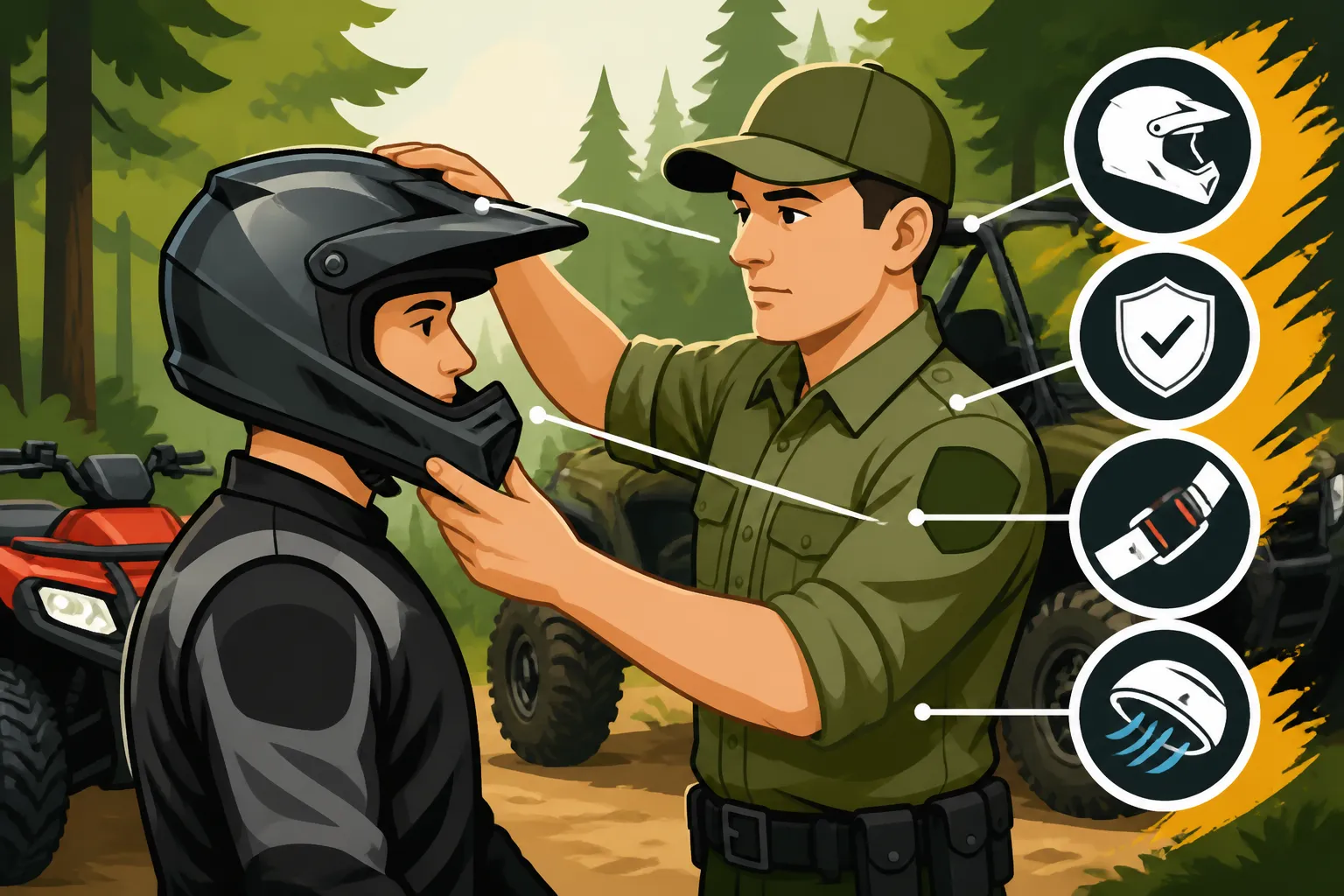
When an officer looks at a helmet, the first practical question is often whether it is a proper protective helmet rather than a decorative or novelty item. A helmet made for riding an ATV or motorcycle should have a secure chin strap and a certification label identifying compliance with the applicable federal motorcycle helmet standard, FMVSS No. 218.
The officer may look for visible signs of that certification, but a quick roadside or trailhead check is not a laboratory test. An officer can assess what is visible: the label, the helmet’s general condition, whether it is being worn correctly, and whether the strap is fastened. A helmet that appears compliant is not automatically safe if it is damaged, poorly fitted, or altered.
| What may be checked | What a rider should verify before leaving |
|---|---|
| Certification label | Look for the manufacturer’s certification to FMVSS No. 218, not just a claim that the helmet is “DOT approved.” |
| Fit | The helmet should sit level and feel snug without painful pressure or excessive movement. |
| Chin strap | Fasten it securely, and check that the buckle and strap are in working condition. |
| Shell and liner | Look for cracks, crushed areas, missing padding, loose parts, or other damage. |
| Eye protection | Carry and wear suitable eye protection when required by the land’s rules. |
| Rider-specific requirements | Check whether age, supervision, passenger, or machine rules apply to your group. |
The wording on the label matters. In the United States, helmet manufacturers certify their helmets to FMVSS No. 218. A seller’s description or a product’s appearance is not a substitute for the manufacturer’s compliance label. A novelty helmet may have a hard shell and a chin strap but still lack the protective construction and certification required by the applicable rules. Why a Novelty Helmet Does Not Meet DOT Rules
A helmet check is also not a promise that the helmet will protect you in every crash. Certification is a baseline, not a guarantee of a particular result. Condition, fit, and correct use still matter. If the helmet has been in a significant impact, has a cracked shell, or has a damaged retention system, replace it rather than relying on its appearance.
Rules may apply differently to children, teens, adults, drivers, and passengers. Before a ride with a younger person, check the age and supervision requirements for the specific land. Ohio Minimum Age for State Forest Trails and Ohio Forest Access for Riders Under 16 cover related questions, but confirm the current rules with the land manager before you ride.
How to Check Your Helmet Before the Ride
A quick inspection at home is easier than trying to interpret a label at a trailhead. Check the helmet before the season, after a hard impact, and whenever it has been stored where heat, sunlight, chemicals, or heavy objects could damage it.
-
Find the certification information. Look inside the helmet and around its exterior for the manufacturer’s label. It should identify the helmet and state that the manufacturer certifies it to FMVSS No. 218. The layout and label location can vary. If you cannot find certification information, ask the manufacturer or choose a helmet whose documentation clearly identifies its standard. How to Spot a DOT Label on a Helmet
-
Do not rely on vague marketing language. Phrases such as “DOT style,” “for off-road use,” or “meets DOT standards” in a store listing do not necessarily show that the helmet carries the manufacturer’s required certification. Check the label on the actual helmet and the maker’s documentation. If shopping on Amazon, treat the listing as a starting point, not proof: verify the certification details on the helmet when it arrives and return it if the information is missing or inconsistent.
-
Check the fit. Put the helmet on with the front edge level and not tilted far back. It should feel evenly snug around your head. Gently try to move it from side to side and front to back; the helmet should move your skin rather than slide freely over your head. A loose fit can reduce protection and may make the helmet unstable on rough terrain.
-
Fasten the chin strap. A helmet that is not secured can come off during a crash. Check that the strap, buckle, and fastening system are intact, then close the strap each time you ride. If the buckle will not stay shut or the strap is frayed, repair or replace the helmet according to the manufacturer’s instructions.
-
Inspect the shell and interior. Look for cracks, dents, deep gouges, loose components, or compressed and missing padding. A helmet can be compromised even if the outside damage is not dramatic. Follow the manufacturer’s replacement guidance after an impact; do not assume that a helmet is safe simply because it looks normal.
-
Bring appropriate eye protection. A helmet does not keep dust, grit, branches, or insects out of your eyes. Some helmets have a face shield; others require goggles or other suitable protection. Check that the eye protection is compatible with the helmet and stays in place while riding. Ohio Eye Protection Requirement
A common mistake is to buy a helmet based on a low price or a broad “ATV helmet” description without checking its standard. Another is to borrow a helmet that is the wrong size or has unknown impact history. If you are buying for several riders, check each helmet separately; one model or size will not necessarily fit everyone.
Different Places Can Mean Different Rules
Ohio riding areas do not all operate under one identical helmet rule. State forests, Wayne National Forest, roads, private parks, and other public lands can have distinct requirements. A helmet that satisfies one location’s rule does not settle what is required at another. Before you ride, identify the land manager and read its current regulations, posted notices, and trailhead information.
A forest officer’s check may also take place alongside other checks, such as whether the machine is allowed on the route, whether riders meet age requirements, and whether required permits or passes are in order. Helmet compliance does not make an otherwise closed or unauthorized route legal. For related preparation, see Ohio Rules for Riding a State Forest and What the Trailhead Board Tells You Before a Ride.
Do not confuse a helmet requirement on a trail with rules for riding on a road. Road use can bring additional requirements, including separate equipment, licensing, or insurance rules. If your plan includes a road segment, review Ohio Helmet Law for APV Riders and the relevant road-use guidance, including Ohio Driver’s License Rules for APVs.
| Riding situation | Practical approach |
|---|---|
| Ohio state forest trail | Check the current state forest rules and any posted requirements for helmets, eye protection, age, and supervision. |
| Wayne National Forest route | Confirm the current forest-specific rules before the trip; do not assume state forest requirements are identical. |
| Public road | Check the road-use rules separately from trail requirements. |
| Private riding park | Review that park’s entry rules, which may require protective gear beyond the minimum legal standard. |
| Riding with a child or teen | Verify age, supervision, passenger, and helmet requirements for the particular land and machine. |
If an officer asks about your helmet, remain calm and make it easy to inspect. Keep the helmet accessible, show its certification label if requested, and answer questions directly. If you believe a requirement is being applied incorrectly, avoid arguing on the trail; note the officer’s explanation and the location, then follow up with the land manager through its official process.
Before departure, make a simple gear check part of loading the machine: each rider has a correctly fitting helmet, the strap works, the helmet is not damaged, and eye protection is ready. Then check the riding area’s rules and any trail closures. That takes little time and reduces the chance of arriving at a gate with gear that cannot be used.
Disclaimer
This article is for general informational purposes only and does not constitute professional advice. Laws, prices and regulations vary by location and change over time. Consult a qualified professional for guidance on your specific situation.