How to Spot a DOT Label on a Helmet
Alright, let's talk helmets, folks. If you're anything like me, you've probably stared at a shelf full of helmets, trying to figure out which one is actually going to keep you safe out there on the trails or the open Ohio township roads. It's confusing, right? With so many options, and all the chatter about what's "legal," it's easy to feel lost. This guide is all about cutting through that confusion, specifically showing you how to confidently spot a genuine DOT-approved helmet, so you know you're making a smart, safe, and legal choice for your Ohio ATV or UTV adventures.
Why the DOT Label Matters for Ohio Riders
Navigating the world of off-road and on-road riding in Ohio means understanding a few key safety rules, and your helmet is right at the top of that list. It's not just about looking cool or protecting your head from a low-hanging branch; it's about meeting a crucial standard that could literally save your life and keep you out of legal trouble. Many riders, especially those new to hitting the open township roads with their side-by-sides, don't realize just how critical that little DOT sticker is until it's too late. It's a foundational piece of your riding safety gear, and without it, you're exposing yourself to unnecessary risks and potential fines.
For us here in Ohio, riding an ATV or UTV on any public road, even if it's just a short stretch of a county road or a specially designated township route, comes with specific helmet requirements. The Ohio Revised Code is pretty clear about the standards, and ignoring them isn't just a gamble with your safety, but with your wallet and riding privileges too. Think of that DOT label as your helmet's passport to safety and legality. It's proof that the helmet has undergone rigorous testing to meet specific impact and penetration standards set by the U.S. Department of Transportation, ensuring it offers a minimum level of protection in a crash. Without this, you're essentially wearing a hat with good intentions, not a piece of life-saving equipment.
Understanding the "Department of Transportation" Standard
The "DOT" in DOT label stands for the U.S. Department of Transportation. When you see that label, it signifies that the helmet manufacturer certifies their product meets the requirements of Federal Motor Vehicle Safety Standard (FMVSS) 218. Now, that might sound like a lot of government jargon, but what it boils down to is a set of tough tests designed to ensure your helmet can actually perform when you need it most. These tests evaluate things like impact absorption, penetration resistance, chin strap strength, and peripheral vision. It's not a voluntary suggestion; it's a mandatory standard for any helmet intended for use on public roads in the U.S.
Many riders, myself included when I was first starting out, often wonder if all helmets are created equal. The reality is, there's a huge difference between a helmet that merely looks sturdy and one that has actually been engineered and tested to absorb energy from a significant impact. Helmets that meet the [DOT FMVSS218 Helmets in Ohio] standard are built with specific materials and designs to dissipate forces, protecting your skull and brain. This standard is what separates genuine protective gear from novelty items or helmets designed for less demanding activities. It's about a commitment to safety from the manufacturer, backed by government regulation. When you're considering your gear, particularly if you're outfitting a new UTV with some cool SuperATV accessories, don't forget the most important accessory of all: a certified helmet.
The Legal Ramifications in Ohio for Uncertified Helmets
Let's get real about the legal side of things here in Ohio. When you're riding your ATV or UTV on public roads—whether it's a county road, a township road opened by resolution, or even just crossing a state route—[Ohio Helmet Rules for APV Riders] are in effect. And those rules explicitly call for a helmet that meets federal motor vehicle safety standards, meaning it must be DOT-certified. If you're pulled over by a deputy or a state patrol officer and your helmet doesn't have that crucial DOT marking, you could be facing a citation. It's not just a warning; it's a fine for violating equipment laws, and nobody wants that to put a damper on their riding day.
Beyond the immediate fine, there are more serious implications. Imagine being involved in an accident while wearing a non-DOT helmet. Your insurance company might challenge your claim, arguing that you weren't wearing legally compliant safety gear, which could leave you holding a hefty bill for medical expenses or machine repairs. Furthermore, if you sustained a head injury, the lack of proper certification could be used against you in a legal proceeding, potentially diminishing your ability to recover damages. It sounds heavy, but it's the realistic scenario. That little DOT sticker isn't just a stamp; it's a shield, both for your head and your legal standing. Understanding [Ohio Equipment Rules for an APV on a Road] is crucial, and the helmet is a big part of that.
Where to Find the All-Important DOT Sticker
Finding the DOT label isn't like hunting for a hidden treasure, but you do need to know where to look. Many riders assume it's always prominently displayed, but that's not always the case, especially with some helmet designs. It's often on the back of the helmet, but sometimes it can be tucked away a bit. Knowing exactly what to look for, and where, is your first line of defense against accidentally purchasing a helmet that doesn't meet the necessary safety standards for riding your ATV or UTV in Ohio. Don't just glance; actively search for this critical marking before you make a purchase.
You'll usually find two types of labels: an exterior decal and an interior sewn-in label. Both are important for verifying authenticity. Always check for both if possible, as a helmet missing one or the other might be a red flag. It’s important to take your time during this inspection. A quick check can sometimes miss subtle clues that differentiate a legitimate certification from a counterfeit. This due diligence ensures that the helmet you choose offers the protection it promises, especially when you're geared up with your SuperATV winch and ready for some serious off-road action.
The Exterior Decal: What It Looks Like and Where It Should Be
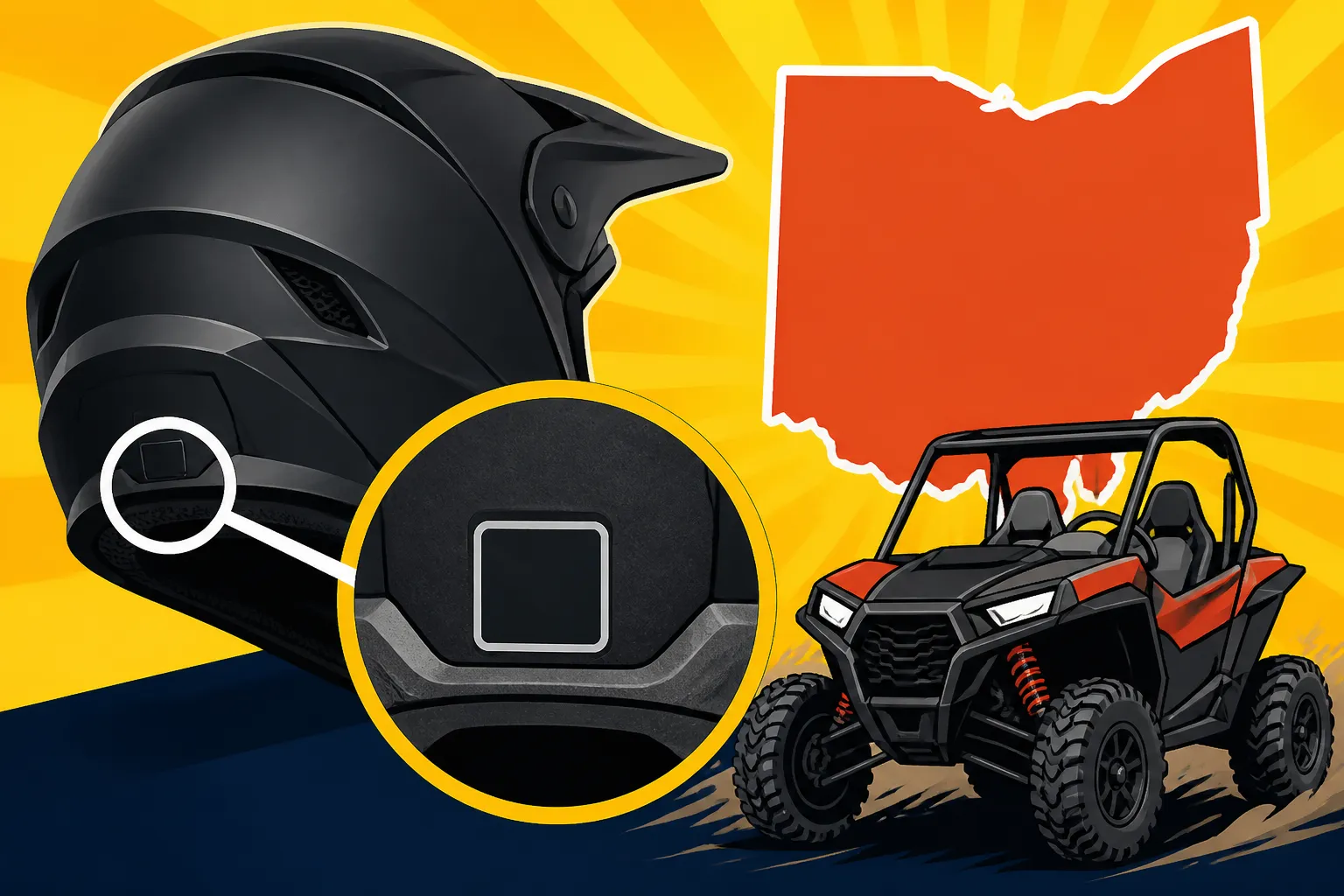
The most common place to spot the DOT certification is on an exterior decal, usually located on the back of the helmet, sometimes near the bottom edge. This decal is typically square or rectangular, often in black and white, and it will prominently feature the letters "DOT." Below or around these letters, you'll also see some additional information, including the manufacturer's name or brand, the model name, and the certification standard "FMVSS 218." It's generally a permanently affixed sticker, not something that looks like it could peel off easily. If it looks flimsy, like a cheap sticker, that could be a warning sign.
A genuine DOT decal will also typically include the letters "DOT" followed by "FMVSS 218," then "CERTIFIED." You might also see a number that indicates the specific year of manufacture or compliance. If the decal is missing altogether, or if it's simply a small, generic-looking "DOT" without any other information, you should be very suspicious. This is where [Why a Novelty Helmet Does Not Meet DOT Rules] really comes into play. Many novelty helmets might try to mimic the look, but they rarely have the full, detailed information required by the standard. Always be thorough when inspecting this exterior mark.
The Interior Label: A Crucial Backup Check
While the exterior decal is the most visible sign, a truly certified helmet will also have an interior label. This is usually a sewn-in fabric label, similar to what you'd find in clothing, and it's typically located on the chin strap or inside the helmet's comfort liner, often at the base of the crown or near the neck roll. This interior label provides much of the same information as the exterior decal: the manufacturer's name, the model name, the size, and importantly, the "FMVSS 218" certification. It also often includes care instructions and materials used.
This interior label is a vital backup. Sometimes, over years of use and exposure to the elements, an exterior decal can fade, become scratched, or even peel off. The interior label, being protected from the elements, tends to last longer and provides a more permanent record of the helmet's certification. If you're buying a used helmet, or if you're simply trying to verify an older helmet's compliance, checking this interior label is absolutely essential. If a helmet has an exterior DOT sticker but no corresponding interior label, or if the information on the two doesn't match up, that's a serious red flag. Always cross-reference the information you find on both.
Decoding the Information on the DOT Label
Once you've located the DOT label, whether it's the exterior decal or the interior fabric tag, it's not enough to just see the letters "DOT." There's specific information encoded in that label that verifies its authenticity and compliance with federal standards. Understanding what each part means can help you further confirm that you're looking at a legitimate, protective helmet. This is where your attention to detail really pays off, ensuring that your safety equipment is truly up to par for any [Ohio Trails That Suit a Dirt Bike] or a relaxed ride down a township road.
This is more than just academic knowledge; it's practical safety. Riders often quickly eyeball the "DOT" and move on, but taking a moment to fully read and understand the entire label provides a much stronger assurance of safety. Especially when you're outfitting yourself and perhaps younger riders, knowing what the full label means helps you make informed decisions. Consider all the information it provides as an additional layer of protection and verification.
Manufacturer, Model, and Certification Number
A legitimate DOT label will clearly state the name of the manufacturer or the brand of the helmet. This seems obvious, but some counterfeit labels might omit this or use a generic "Helmet Mfg." type of listing. Following the manufacturer's name, you should see the helmet's model designation. This is important because manufacturers often produce several different models, and each model has its own specific testing and certification. If you're ever in doubt, knowing the manufacturer and model number allows you to look up that specific helmet on the manufacturer's website for further verification.
Perhaps the most crucial part of this section is the certification number or code, which will typically appear after the "FMVSS 218" designation. This alphanumeric code is unique to the specific production run or batch of helmets and allows for traceability. While you might not memorize these codes, their presence signifies that the manufacturer has indeed submitted this helmet for compliance testing and has taken the steps to certify it. If this information is missing or seems incomplete, it's a strong indicator that the helmet may not be genuinely DOT-certified.
The "FMVSS 218" Standard Explained
As we touched on earlier, "FMVSS 218" stands for Federal Motor Vehicle Safety Standard 218. This is the specific regulation that motorcycle and ATV/UTV helmets must meet for street-legal use in the United States. When you see this designation on the label, it's the manufacturer's declaration that the helmet complies with these stringent federal requirements. This isn't just about impact protection; it's a holistic standard that covers various aspects of helmet performance.
The FMVSS 218 standard specifies minimum requirements for components like the shell, the impact-absorbing liner, the retention system (chin strap), and the overall design. For instance, it requires a certain minimum field of vision and outlines specific performance criteria for how much force the helmet can absorb in a simulated crash. If your helmet is going to be used on public roads in Ohio, this "FMVSS 218" marking is non-negotiable. It’s a core piece of information on the label that directly addresses the legal requirements for [Ohio Helmet Law on State Forest Trails] and public road use alike.
Beware of Counterfeits and "Novelty" Helmets
Okay, let's talk about the elephants in the room: counterfeit helmets and those often-misunderstood "novelty" helmets. It's a real issue out there, and it's easy for an unsuspecting buyer to get fooled. You might see a helmet that looks the part, feels substantial, and even has some kind of "DOT" sticker, but if it's not genuine, you're not getting the protection you think you are. This isn't just about saving a few bucks; it's about your head, your brain, and your future. As riders, we owe it to ourselves and our families to prioritize genuine safety equipment.
The market for ATVs and UTVs, and the accessories that go with them, is huge. And with companies like SuperATV offering so many ways to customize and enhance your ride, it's easy to get caught up in the excitement. But remember, no matter how cool your machine is or how many [Ohio ATV Gear Costs for a Family] you're budgeting for, the most critical piece of gear is the one protecting your head. Don't compromise there. Always be a discerning buyer, and if something seems too good to be true, it probably is.
The Dangers of Helmets Without Proper Certification
The biggest danger of an uncertified or counterfeit helmet is, quite simply, that it won't protect you when you need it most. While a novelty helmet might look like a legitimate one, its construction materials, inner liner, and shell strength are typically vastly inferior. They haven't been subjected to the rigorous impact, penetration, and retention system tests mandated by FMVSS 218. In a real-world crash, these helmets can shatter, offer minimal energy absorption, or simply come off your head. The consequences of such a failure can be catastrophic, leading to severe head injuries or worse.
Think about it: you invest in a robust machine, maybe even adding a full cab or a lift kit from SuperATV, all for better performance and safety. It makes no sense to skimp on the most critical piece of safety gear. Beyond the personal injury risk, using an uncertified helmet on public roads in Ohio can also lead to legal issues. As mentioned, law enforcement officers are trained to spot non-compliant helmets, and an accident involving an uncertified helmet could also lead to insurance complications. It's a risk that simply isn't worth taking for any rider, especially when considering [Ohio Rules for Riding a Township Road] or any public access.
What to Look for When a Helmet Doesn't Seem Right
So, how do you tell if a helmet isn't quite right? First, always check for the full, detailed DOT label, both exterior and interior, as we discussed. If it's just a simple "DOT" sticker with no other information, be very wary. Second, consider the weight and feel. Genuine DOT helmets have a substantial feel to them due to the layers of protective materials. Novelty helmets are often much lighter, feeling almost flimsy, and lack the dense EPS (expanded polystyrene) foam liner inside. You can often feel a significant difference just by holding it.
Another red flag is the chin strap. DOT-certified helmets will have a sturdy, well-anchored chin strap system, usually with a D-ring closure, designed to keep the helmet securely on your head during an impact. Novelty helmets might have weaker straps or simpler, less secure buckle systems. Finally, be suspicious of unusually low prices, especially for what appears to be a brand-new helmet. While everyone loves a good deal, a price that seems too good to be true often indicates a compromise on safety and certification. When you're outfitting your rig with top-quality parts, such as those from SuperATV, extend that same commitment to quality to your personal safety gear.
Here's a quick comparison to help you distinguish between a genuine DOT helmet and a novelty one:
| Feature | DOT Certified Helmet | Novelty Helmet (Not DOT Certified) |
|---|---|---|
| Exterior Label | Clearly states "DOT FMVSS 218," manufacturer, model, and sometimes a certification number. | Often just a small, simple "DOT" sticker, or no label at all. May lack additional info. |
| Interior Label | Sewn-in fabric tag with manufacturer, model, size, and FMVSS 218. | Usually missing, or contains generic/incomplete information. |
| Weight | Substantial; engineered with multiple layers for protection and impact absorption. | Lighter, often feels flimsy; less material for safety. |
| Liner Thickness | Dense, thick (often 1 inch or more) EPS foam liner designed to absorb impact. | Very thin or soft foam, or sometimes no substantial liner at all. |
| Shell Material | Made from durable, impact-resistant materials (fiberglass, polycarbonate, composites). | Thin plastic, often brittle and easily cracked. |
| Chin Strap | Strong, wide, securely anchored, often D-ring closure; designed for retention. | Flimsy, narrow, weak attachment points, simple buckles; easily comes loose. |
| Purpose | Designed to protect against impacts in a crash, meets safety standards for road use. | Designed for aesthetics, costume, or very low-speed, low-risk activities; offers minimal protection. |
This article is for general informational purposes only and does not constitute professional advice. Laws, prices and regulations vary by location and change over time. Consult a qualified professional for guidance on your specific situation.