Helmets and Eye Protection on Ohio Forest Trails
Helmet and eye protection are easy to overlook when you are loading an ATV or UTV for an Ohio forest ride, especially if your machine has a cab or windshield. But trail dust, branches, gravel, and changing light can turn an unprotected ride into a painful one. Here’s how to choose protective gear, check that it fits, and confirm which rules apply where you plan to ride.
Know which land rules apply
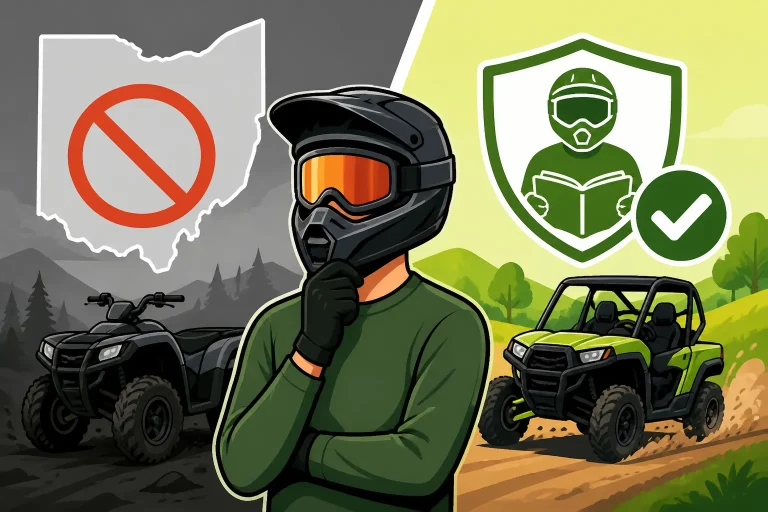
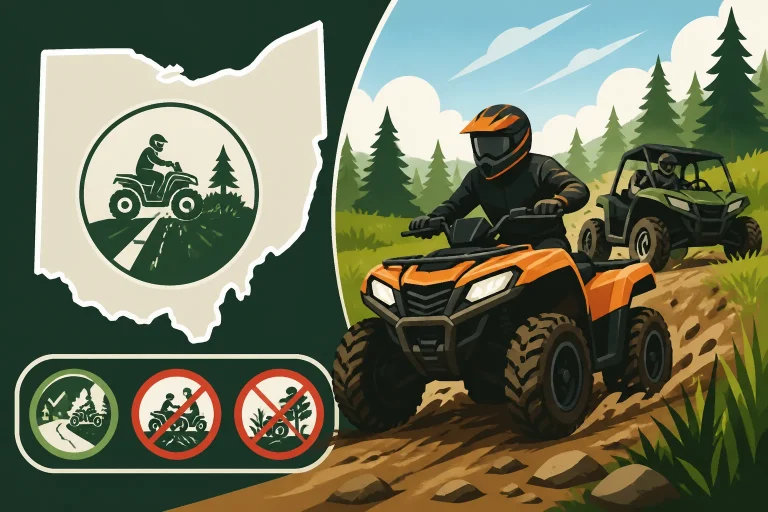
“Ohio forest trails” can mean different places with different managers. Ohio state forest riding areas and Wayne National Forest are not the same property, and rules for one should not automatically be assumed to apply to the other. Private parks and other public lands may set their own requirements, too.
For riding on Ohio state forest trails, plan to wear both a helmet and eye protection. Check the current rules for the specific riding area before you unload, and follow any additional signs or directions from the land manager. A general overview of [Ohio Rules for Riding a State Forest] can help you understand the setting, while Ohio Rules for Riding a National Forest covers a different land type.
The distinction matters even if the gear you need ends up being the same. A helmet that satisfies a trail rule is not a substitute for a required forest pass, registration, or other access condition. Likewise, having the right pass does not mean you can skip protective equipment. For more on what serves as access authorization, see Why Your APV Plate Is Also Your Trail Permit and How the Wayne National Forest OHV Permit Works.
Before each trip, verify the rules with the relevant land manager. Look for current information on the official trail or forest page, and check trailhead notices when you arrive. Closures, local directions, and seasonal conditions can affect where and how you ride. For help planning around access and changing conditions, see Ohio Trail Conditions Before You Ride.
A useful rule of thumb is to prepare for the stricter requirement rather than trying to interpret a minimum at the trailhead. Bring a correctly fitted helmet and eye protection for every rider, including passengers, and make sure each person can wear the equipment properly. If you are riding with a child, check the age and supervision requirements separately; gear does not replace those rules. See Ohio Forest Access for Riders Under 16 for that separate issue.
Choose a helmet that fits and meets the standard
A helmet can look substantial and still be the wrong choice for a motorized trail ride. For Ohio forest riding, choose a helmet designed for motorized use and check that it meets the applicable safety standard. A bicycle helmet, novelty helmet, or casual open-face helmet should not be treated as equivalent to a compliant off-road helmet.
Check the DOT certification label
When a helmet is represented as meeting U.S. Department of Transportation requirements, inspect its certification label rather than relying on appearance, a product title, or a seller’s description. Helmets certified to Federal Motor Vehicle Safety Standard 218 are commonly referred to as DOT-compliant helmets. The label and manufacturer information should be on the helmet, not merely printed on a hangtag or shown in an online listing.
Use DOT FMVSS218 Helmets in Ohio for a closer look at what the standard means and how to check the helmet. If buying online, including through Amazon, read the product details carefully and inspect the actual helmet when it arrives. A listing that says “DOT style” or “DOT approved” is not enough by itself to establish that the helmet meets the standard. If certification is unclear or the product lacks the expected labeling, choose another helmet.
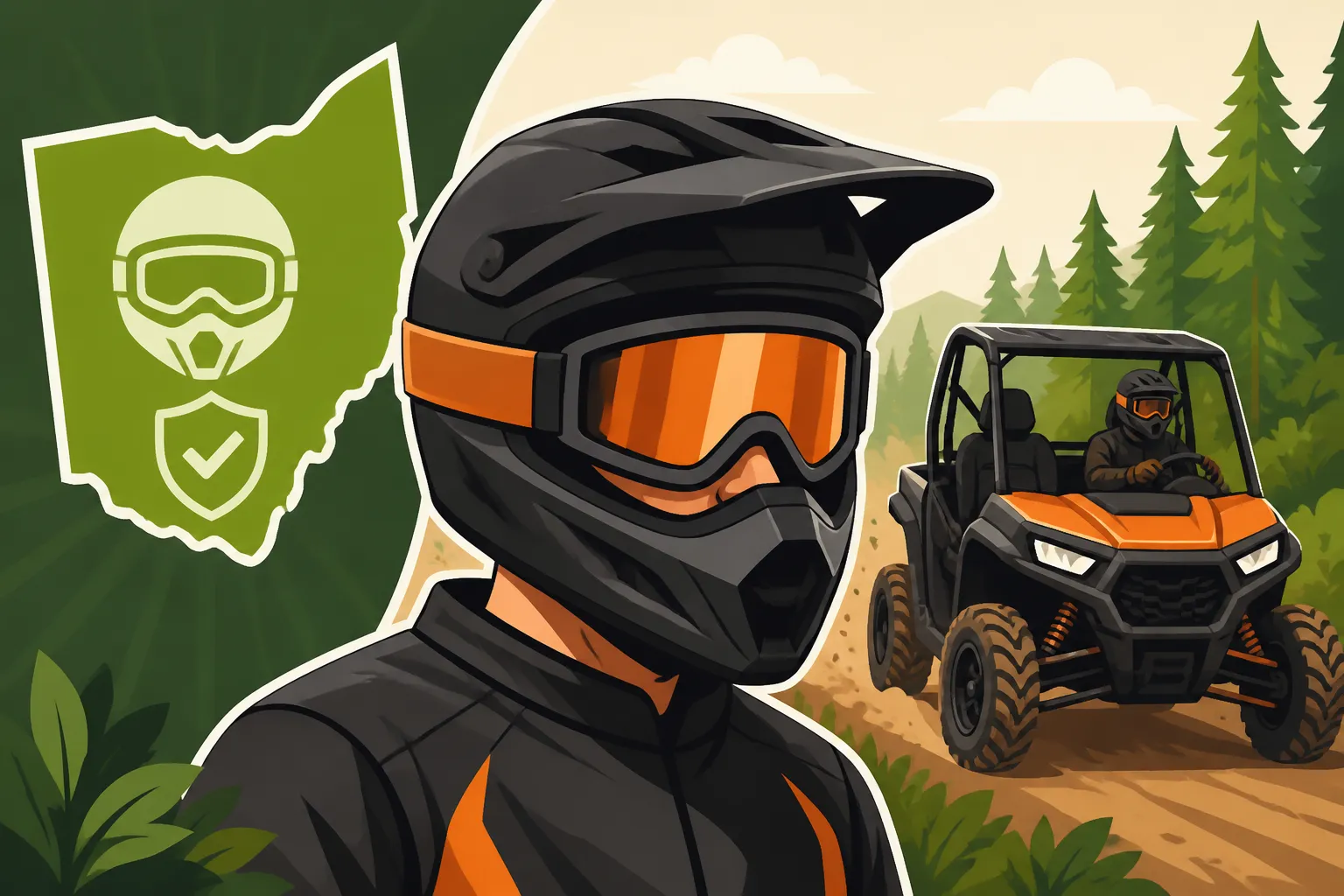
A full-face helmet gives the chin and face more coverage than an open-face design. That can be useful on narrow, brushy trails or when riding behind another machine, where branches and debris may strike from the front. A properly designed off-road helmet may have a projecting peak and space for goggles. A full-face street helmet can also provide substantial coverage, though its shape and ventilation may be less comfortable for some off-road riders. The best choice is the one that meets the applicable rule, fits securely, and works with your eye protection.
Fit matters as much as the label
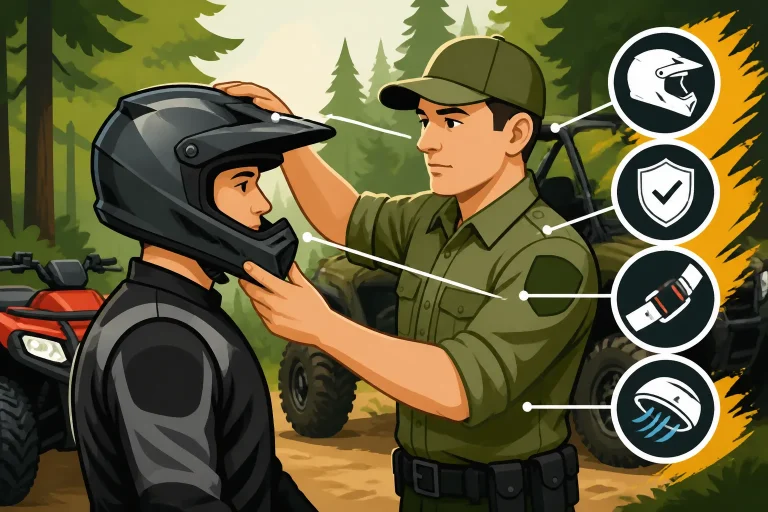
A compliant helmet that shifts around is a poor fit. Try it on with the chin strap open. It should sit level on your head, with the front positioned above your eyebrows rather than tilted far back. The fit should be snug all around without causing sharp pressure or pain.
Fasten the strap and test the fit by moving the helmet gently from side to side and front to back. Your scalp should move with the helmet rather than allowing it to slide freely. The strap should hold the helmet securely under your chin. If it is loose, twisted, damaged, or difficult to buckle, fix the problem before riding.
Helmets vary in shape, so the size printed on the label is only a starting point. If possible, try several models, and wear the same balaclava or thin liner you expect to use on the trail. Avoid thick liners that interfere with the fit or weaken the strap’s hold. A helmet that feels fine in a shop may become uncomfortable after a long, bumpy ride, so check for pressure points before committing to it.
Inspect and replace damaged gear
Before each outing, look over the shell, lining, strap, buckle, and any removable components. Watch for cracks, dents, loose padding, frayed straps, broken fasteners, or signs that the helmet has taken a hard impact. Do not use a helmet with damage that could compromise how it protects your head. Follow the manufacturer’s care and replacement instructions, and do not modify the shell or drill holes in it.
A used helmet deserves extra caution. Its history may be unknown, and visible condition does not prove that it has never been in a crash or suffered damage. If you cannot establish its condition and history, buying a new helmet is the more dependable option. For a field-focused inspection checklist, see What a Forest Officer Checks on Your Helmet.
Protect your eyes from dust, branches, and wind
Eye protection is not just a comfort item. Trail surfaces can throw dust, grit, small stones, and debris into your face, while branches can catch a rider who is looking down at a rut or turning through brush. Wind and insects can also make it difficult to keep your eyes open and maintain a clear view.
Wear protection that covers your eyes securely and stays in place when you turn your head or hit bumps. Depending on your helmet, that may mean goggles or a suitable face shield. Regular sunglasses may reduce glare, but they generally do not seal around the eyes or offer the same coverage against dust and debris. Check the specific trail rules as well as the equipment maker’s guidance; the style you prefer should still meet the applicable requirement. See Eye Protection on an Ohio Trail and Goggles Required Alongside a Helmet for more detail.
Match the eye protection to the helmet
Goggles are commonly used with off-road helmets that have an open eye port. Choose a pair that fits the helmet opening without leaving large gaps around the edges. The strap should sit securely and should not be trapped under a loose helmet component. Try the goggles on with your helmet before the trip; some combinations can press against your face, fog quickly, or leave a gap near the temples.
A face shield can be convenient when it fits the helmet properly and stays clear. Check whether it closes securely and whether the helmet manufacturer designed the two pieces to work together. A windshield or cab windshield on a UTV should not be assumed to replace personal eye protection. The windshield may not block dust, side-entering debris, wind, or particles stirred up inside the cab. Follow the land manager’s requirement and use personal protection that gives you a clear, reliable view.
Prescription eyewear may correct your vision but may not provide the coverage or impact protection needed for trail riding. If you wear glasses, look for goggles designed to fit over them or another suitable option that keeps your vision clear without pressing painfully against your frames. Avoid arrangements that make your glasses slide, fog, or sit at an angle.
Keep lenses clear and usable
A smudged or fogged lens can be as distracting as no eye protection. Clean lenses with products and materials approved by the manufacturer; rough cloths or unsuitable cleaners can scratch coatings. Carry a soft cleaning cloth in a protected pocket or case, and check that the lens is seated properly before riding.
Fogging often happens when warm breath or sweat meets a cooler lens. Ventilated goggles, anti-fog products made for the lens material, or a lens designed to reduce fogging may help. Follow product directions, and avoid improvised coatings that can damage the lens or blur your vision. If fogging begins while moving, slow down and stop somewhere safe before cleaning or adjusting your gear.
Consider the light and weather expected on the route. A tint that works in bright sun may make it harder to see in tree cover, at dusk, or in heavy cloud. If the light could change, bring a clear lens or another suitable option. Do not wear a dark tint that leaves you struggling to distinguish ruts, roots, branches, or trail markers.
Prepare your gear before you reach the trail
A short check at home or at the staging area can prevent a frustrating trip back to the truck. Use this process for each rider:
- Confirm the riding area and its current rules. Identify whether the route is on state forest land, national forest land, a private park, or another property. Check for current helmet and eye-protection requirements, notices, and closures.
- Check the helmet label and condition. Make sure the helmet is appropriate for motorized riding, has the expected certification information, and has no damage or loose parts.
- Test the fit with the strap fastened. Confirm that the helmet sits level, stays put when moved by hand, and does not have a loose or damaged strap.
- Try the eye protection with the helmet. Check that it covers the eyes, fits without painful pressure, and allows a broad, clear view.
- Check the lens and visibility. Clean it, make sure it is not scratched or fogged, and choose a tint suited to the expected light.
- Repeat the check for every rider. Do not assume that one spare helmet or pair of goggles will fit everyone. Passengers need equipment that fits them, too.
- Pack a simple backup. A spare clear lens, cleaning cloth, or replacement strap may help resolve a minor issue, but damaged safety equipment should be replaced rather than improvised.
| Item | What to check | Why it matters |
|---|---|---|
| Helmet | Certification label, sound condition, secure strap | The helmet must be suitable for the riding rules and stay in place |
| Fit | Level position, snug contact, little movement | A loose or poorly positioned helmet may not protect as intended |
| Goggles or face shield | Secure fit, good coverage, clear lens | Dust, wind, debris, and fog can interfere with seeing the trail |
| Prescription eyewear | Stable fit with protective equipment | Glasses should not slide, press painfully, or narrow vision |
| Trail information | Land manager, current rules, closures | Different properties can have different requirements |
If the helmet or goggles need adjustment, handle it before the group starts moving. Do not loosen the chin strap because it feels uncomfortable; refit the helmet or choose a better-fitting model. If eye protection fogs or slips, stop in a safe place and correct it rather than continuing with impaired vision.
A helmet and eye protection are only part of a safe ride. Check that your machine is suitable for the route and that the trail is open. Stay alert for changing surfaces and other trail users, and avoid riding at a speed that exceeds what you can see and control. Forest roads and narrow trails can bring you around a blind turn toward another rider, a tree limb, or a washout.
Rules may also differ between forest trails and roads. Do not assume that equipment rules for a forest ride establish whether a machine may use a nearby public road. For that separate question, read Where Ohio Law Allows APVs on Roads.
Frequently Asked Questions
Do I need a helmet on Ohio forest trails?
Plan to wear a properly fitted helmet that meets the applicable standard. Check the current rules for the specific land you are riding, since Ohio state forest trails, Wayne National Forest, private parks, and other locations may have separate directions.
Is a UTV windshield a replacement for goggles or a face shield?
Do not assume it is. A windshield may not keep dust and debris from reaching the driver or passengers, particularly from the sides or inside the cab. Follow the land manager’s rule and wear personal eye protection that fits and gives you a clear view.
Can I use sunglasses as trail eye protection?
Sunglasses can reduce glare but may leave gaps around the eyes and may not provide suitable coverage from dust or debris. Use eye protection that is appropriate for motorized trail riding and meets the requirement for the land you are using.
What should I do if my goggles fog while riding?
Slow down and stop somewhere safe before adjusting or cleaning them. Use a lens and anti-fog products intended for your equipment, and make sure the goggles fit properly with your helmet. Do not continue at speed if you cannot see the trail clearly.
Disclaimer
This article is for general informational purposes only and does not constitute professional advice. Laws, prices and regulations vary by location and change over time. Consult a qualified professional for guidance on your specific situation.