Ohio Reciprocity With Michigan
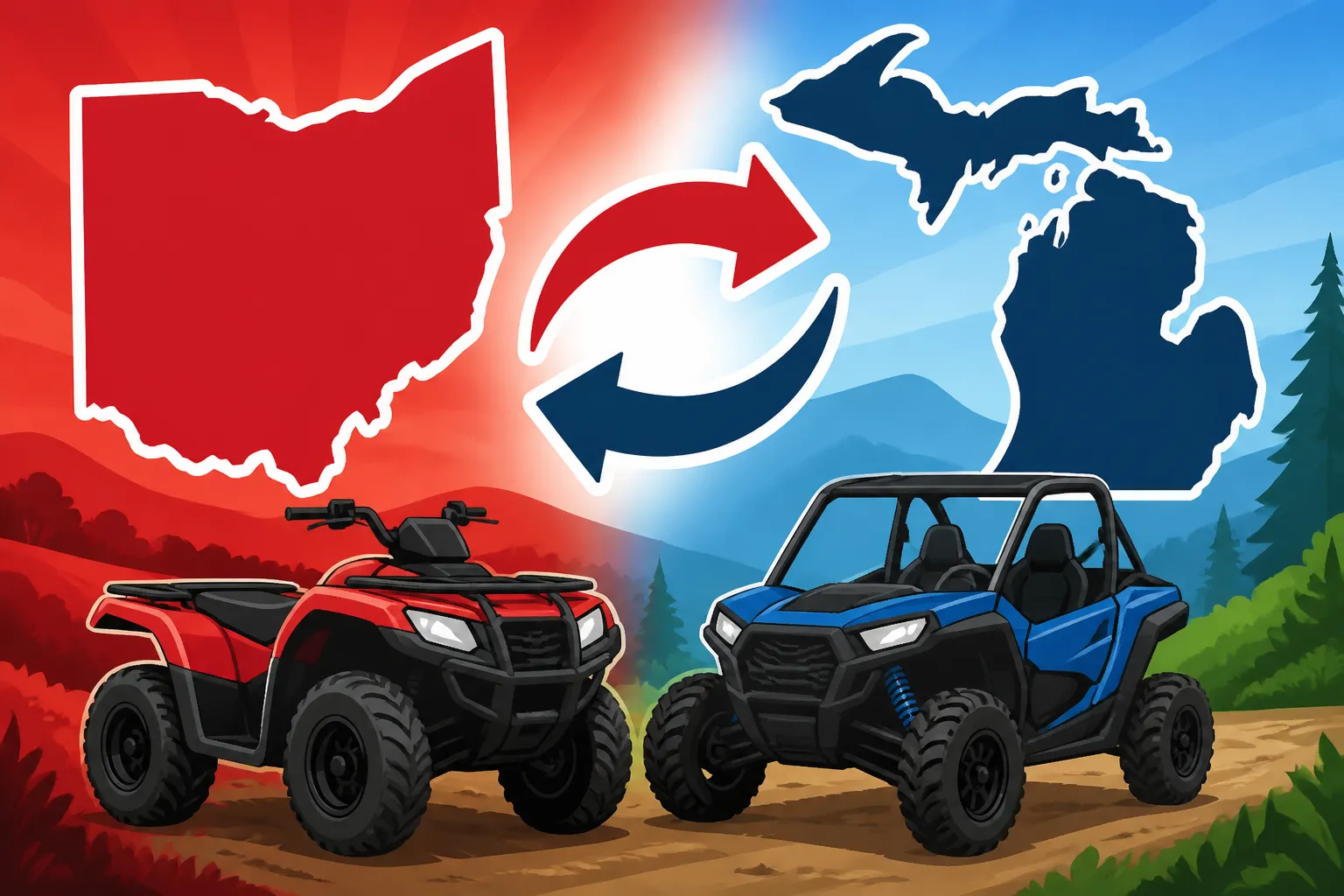
A Michigan ORV license does not automatically answer whether your machine can ride Ohio trails. Ohio reciprocity depends on what documentation the state accepts, and access rules differ between Ohio state forests and Wayne National Forest. Check the status of your machine before loading up, so you know whether your Michigan paperwork is enough or an Ohio permit is needed.
What Ohio reciprocity means for a Michigan machine
Reciprocity generally lets a visitor use a machine registered in their home state without getting a second state’s registration, when the states recognize each other’s requirements. It does not mean every sticker, license, or trail pass from Michigan works as an Ohio registration.
Ohio’s rules focus on whether your machine has valid registration from another state and whether the applicable reciprocity conditions are met. That distinction matters for Michigan riders because Michigan uses an ORV license for certain off-road riding, while a license sticker may not be the same document as a vehicle registration. A sticker by itself may not establish that your machine qualifies for Ohio’s registration exemption.
Before traveling, confirm what Ohio accepts for a Michigan machine. Check current guidance from the Ohio BMV or Ohio Department of Natural Resources, and be ready to describe the document you have: for example, a Michigan ORV license, a registration certificate, or both. If the agency cannot confirm that your paperwork qualifies, ask what Ohio permit is required for a nonresident visitor. The topic of Ohio Reciprocity for Out-of-State Machines offers more context on how Ohio treats visiting machines.
| What you have | What it may show | What to confirm before riding |
|---|---|---|
| Michigan ORV license sticker | The machine has a Michigan off-road license for eligible use | Whether Ohio accepts it as proof for reciprocity |
| Michigan registration document | The machine is registered under a Michigan process | Whether that registration meets Ohio’s reciprocity conditions |
| Proof of ownership only | You own the machine | Whether Ohio registration or a visitor permit is required |
| Ohio nonresident permit | Ohio authorization for a visiting machine, if applicable | The permit’s validity period, display rules, and riding areas |
The practical takeaway is simple: do not assume that “legal in Michigan” automatically means “covered by reciprocity in Ohio.” Ohio’s rules and Michigan’s document names may not line up exactly. If Ohio says your Michigan paperwork does not qualify, a temporary permit may be the appropriate route. See The Ohio Temporary Permit for Visitors for more on that option.
What Michigan paperwork to check before you leave
Start with the machine, not the trail map. Identify the machine’s make, model, vehicle identification number, and the documents Michigan issued for it. Then compare those records with what Ohio says it recognizes. A quick call or message to the relevant Ohio office can prevent a long drive ending at a trailhead with paperwork that does not qualify.
Gather these items before asking:
- The Michigan ORV license document or license information, if applicable
- Any Michigan registration certificate or title for the machine
- The machine’s VIN
- The name of the person who owns or will operate it
- The Ohio riding area you plan to visit
Ask specifically whether the Michigan document qualifies as out-of-state registration for Ohio reciprocity, whether the machine needs an Ohio visitor permit, and what you must carry or display while riding. If you have more than one machine, ask about each one separately. A document that covers one vehicle may not automatically cover another.
Keep the answer practical. Find out whether Ohio requires the original document, whether a readable copy is acceptable, and whether a number, plate, or sticker must be mounted on the machine. Carry paperwork in a dry place, and keep a copy on your phone as a backup. A phone photo can help if a paper copy is misplaced, but it should not be treated as a substitute unless the relevant office confirms that is acceptable. What a Visitor From a Registering State Must Show explains the documentation question more generally.
If Ohio tells you to obtain a nonresident permit, ask where to get it and when it must be purchased. Confirm the permit’s term and whether it applies to the specific riding area you intend to use. Do not confuse an Ohio permit for a machine with a separate pass that may be required for a particular riding area. The terms and purchase process can change, so verify current details with the issuing office before your trip.
Where a Michigan machine can ride in Ohio
Being properly registered or permitted is only one part of access. Ohio does not make every public road or public property open to ATVs and UTVs. The rules depend on the land manager and the type of route, so a machine that qualifies for reciprocity still must stay on an area where its use is allowed.
Ohio state forest trails have their own requirements for machines and riders. Check that the specific forest is open to motorized riding, that your machine meets applicable limits, and that your documents meet Ohio’s registration rules. Ohio’s APV plate functions as the state’s trail authorization for eligible Ohio machines; visitors should confirm how Ohio treats their out-of-state documentation rather than assume their Michigan sticker serves the same purpose. More detail is available in Do You Need a Permit for Ohio State Forest Trails? and Ohio Rules for Riding State Forest Land.
Wayne National Forest is a separate case. It is federal land, and a federal OHV permit may be required even when your machine has valid registration or another state’s authorization. Ohio registration reciprocity does not replace a Wayne National Forest permit. Check which trails your pass covers, whether each rider needs an individual pass, and what documents riders must carry. Start with How the Wayne National Forest OHV Permit Works and confirm current requirements with the forest before you go.
Private riding parks set their own entry requirements. A park may ask for proof of registration, a waiver, insurance, or a park-specific pass. Do not assume an Ohio state forest rule or a Wayne permit applies at a private facility. Check the park’s rules directly before setting out.
Road use is another separate issue. Reciprocity for off-road registration does not make a machine street legal, and it does not grant permission to ride any Ohio road. Road access depends on state law and, in some cases, local decisions about which roads are open. For the bigger picture, see Street Legal APVs in Ohio: The Short Answer.
A pre-trip checklist for Michigan riders
Use this sequence before you load the machine:
- Identify your documents. Separate a Michigan ORV license from any registration certificate, title, or proof of ownership. Note the VIN and which machine each document covers.
- Ask Ohio whether the documents qualify. Explain that the machine is from Michigan and ask whether its specific paperwork meets Ohio’s reciprocity rules. Do not rely on a general answer about out-of-state machines if it does not address the Michigan document you hold.
- Get an Ohio permit if required. Ask where to obtain it, how long it is valid, how it must be displayed, and whether it is valid for your planned riding area.
- Check the land manager’s rules. Confirm the trail is open, the machine is allowed, and any separate pass or permit is in hand. This is especially important when comparing Ohio state forest routes with Wayne National Forest trails.
- Carry proof while riding. Bring the documents Ohio requires and keep them protected from water and mud. A backup photo is useful, but verify whether it can stand in for an original.
- Recheck close to departure. Trail closures, permit processes, and administrative requirements can change. Confirm the details with the agency or property manager responsible for the place you plan to ride.
If you get conflicting answers, ask the agency to clarify the exact document it expects and the rule that applies to your situation. Keep a note of the office you contacted and the date of the confirmation. That will not replace the required paperwork, but it can help you resolve confusion before you arrive.
The safest planning rule is to treat Michigan and Ohio requirements as separate until Ohio confirms that your Michigan paperwork qualifies. A Michigan ORV license may be important for riding at home, but it should not be mistaken for automatic permission to ride every Ohio trail. Confirm reciprocity, obtain any Ohio permit or federal pass that applies, and check access rules for the specific riding area.
Disclaimer
This article is for general informational purposes only and does not constitute professional advice. Laws, prices and regulations vary by location and change over time. Consult a qualified professional for guidance on your specific situation.