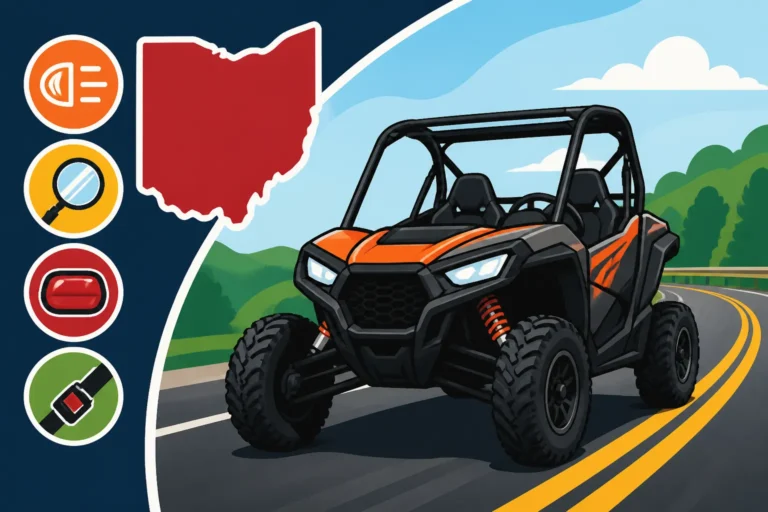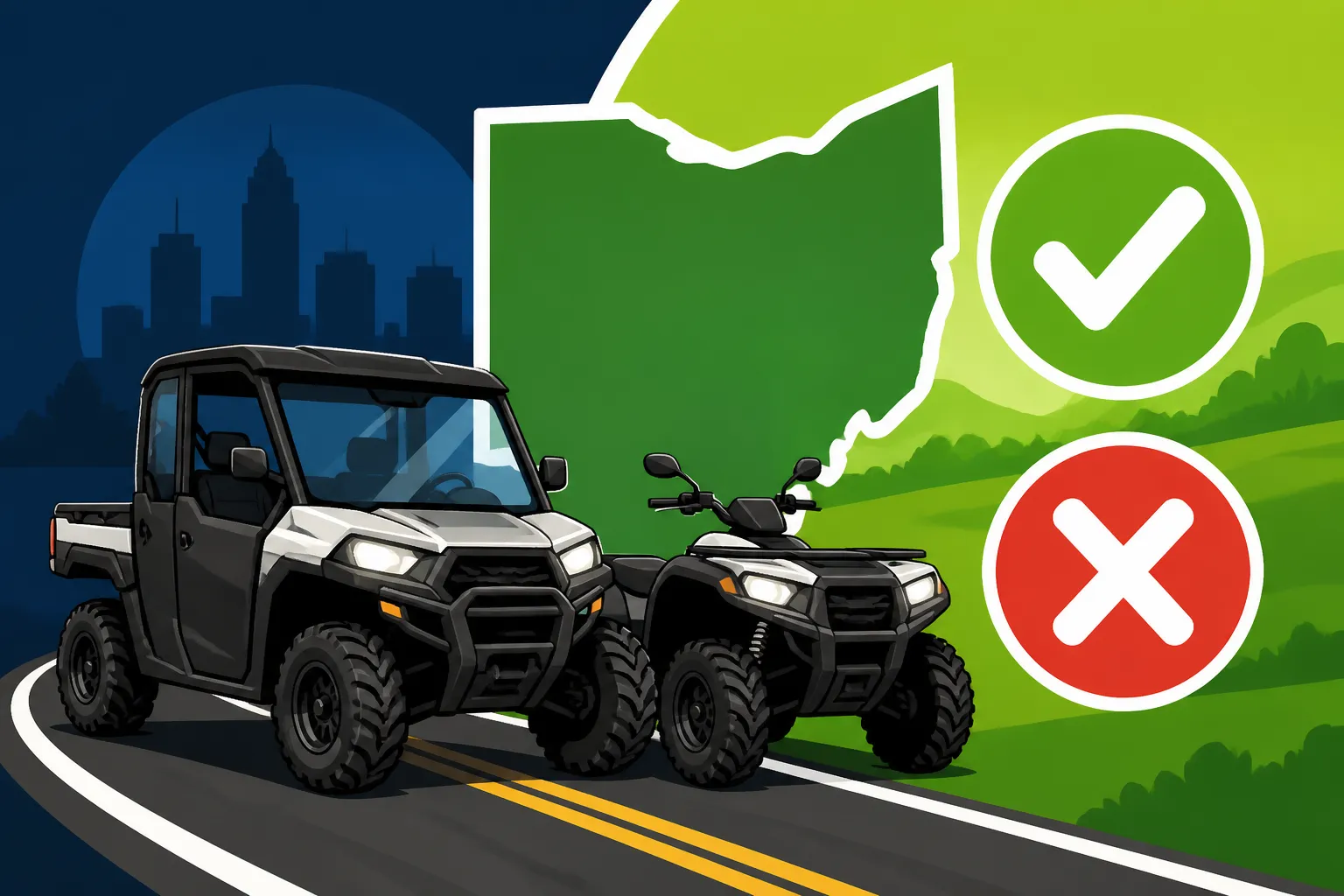
Street Legal APVs in Ohio: The Short Answer
One of the biggest head-scratchers for folks who own ATVs and UTVs in Ohio is whether they can legally take their machines on public roads. It's a question fraught with confusion, misinformation, and a patchwork of local rules that can make your head spin. You've likely heard everything from "never" to "always," leaving you more bewildered than when you started. This comprehensive guide is here to untangle the complexities of Ohio's laws, explain the specific requirements, and help you understand exactly where and how you might be able to ride your all-purpose vehicle on the state's roadways.
The Core Question: Are APVs Street Legal in Ohio?
Let's get right to it, because this is usually the first thing people want to know, and honestly, it's not a simple "yes" or "no" answer. When you pull your shiny new quad or your rugged side-by-side off the trailer, the thought of cruising down a country lane to get to the trailhead, or even to a friend's house, is incredibly appealing. The frustration often sets in when you realize the rules aren't uniform across the entire state. Ohio's approach to all-purpose vehicles (APVs) on roads is less like a clear highway and more like a maze of backroads with different signage at every turn.
The Nuance of "Street Legal" in Ohio
The term "street legal" can be a bit of a misnomer when it comes to APVs in Ohio. Unlike a car, which is designed and manufactured to meet federal highway standards and is automatically street legal everywhere, an APV starts as an off-road vehicle. Ohio law doesn't provide a blanket "street legal" status for all ATVs and UTVs statewide. Instead, it offers a conditional, localized approach. This means that while your machine might be perfectly acceptable on roads in one township or county, it could be entirely illegal just across the border in the next. This regional variation is the source of endless confusion for riders, and it's why you can't just assume what applies to your buddy's ride down in Muskingum County will apply to yours up near Lake Erie.
It's not just about getting a license plate; that's only one piece of the puzzle. Even with a plate, your machine isn't automatically given free rein on all public thoroughfares. You still need to meet specific equipment requirements, adhere to local ordinances, and understand where your type of APV is permitted. Many riders feel that if they've gone through the hassle of getting a title and a registration plate, they should be able to ride anywhere. However, the state differentiates between merely registering a machine for identification and permitting it for general road use. The registration process itself doesn't confer road-legal status; it simply makes your machine a recognized vehicle in the state's database, often for the purpose of trail access and ownership tracking. For more on this, you might find [Registering an APV in Ohio] helpful.
This distinction is crucial, because failing to understand it can lead to citations, fines, and even having your machine impounded. Imagine buying a set of high-performance tires or a lift kit from a company like SuperATV, getting your machine looking just right, and then finding out you can't even ride it on the road to show it off without risking a ticket. It's a disappointing reality for many who invest heavily in their machines. The Ohio Revised Code lays out the framework, but it then delegates a significant amount of authority to local governments to make the final call on their own roads. This is a common point of frustration, as it puts the onus on the rider to navigate a complex web of rules rather than a single, clear statewide policy.
Why There's No Statewide Green Light
The primary reason Ohio lacks a statewide "street legal" designation for APVs boils down to how these vehicles are fundamentally classified and their intended use. By design, ATVs and UTVs are built for off-road conditions—rugged terrain, dirt, mud, and trails—not the smooth, paved surfaces and traffic dynamics of public roads. State legislators, recognizing the varied nature of Ohio's landscape and communities, have opted for a more decentralized approach. This allows individual counties and townships to assess their own unique needs, road conditions, and public safety concerns. A rural township with miles of gravel roads and little traffic might have different needs and tolerances than a densely populated suburban county.
This approach means that while the Ohio Bureau of Motor Vehicles (BMV) handles the titling and registration of APVs, they don't simultaneously grant permission for road use. The BMV's role is administrative, ensuring proper ownership records and collecting fees that often go towards recreational vehicle funds, as discussed in [Where Ohio APV Registration Money Goes]. The actual decision-making power for road access rests with local elected officials. This prevents a one-size-fits-all mandate that might be unsuitable for certain areas. Think about a quiet farming community where a UTV is a common sight running between fields—their needs are vastly different from a bustling town where such vehicles might pose a greater traffic hazard.
The absence of a statewide green light also reflects concerns about vehicle design, safety, and infrastructure. Most APVs lack certain safety features common in street-legal vehicles, like crumple zones, advanced braking systems for high speeds, or extensive lighting for complex traffic situations. While many aftermarket companies, including SuperATV, offer fantastic products to enhance APV performance and utility off-road, transforming them into truly street-legal machines that meet all federal highway safety standards is a different undertaking entirely, often requiring significant modifications and inspections. Without a unified regulatory framework, Ohio has avoided pushing all APVs onto public roads, instead allowing communities to make the call based on their local context and ability to manage potential risks.
How Ohio Law Defines "All-Purpose Vehicle"
Before we dive deeper into road rules, it's essential to understand what Ohio law actually considers an "All-Purpose Vehicle," or APV. This isn't just bureaucratic jargon; it's the foundation upon which all other regulations, including those for road use, are built. The legal definition helps distinguish these machines from motorcycles, traditional cars, or even golf carts, each of which has its own set of rules. Getting this wrong can mean misunderstanding the entire framework, which is why it's worth taking a moment to clarify what the state sees when you register your off-road machine.
What an APV Is and Isn't
Under Ohio Revised Code, an APV is broadly defined as a self-propelled vehicle, other than a manufactured home, that is not an all-terrain vehicle, as defined in section 4519.01 of the Revised Code. Wait, what? Yes, the definition can be a bit circular if you don't look closely. Essentially, it covers a wide array of off-highway vehicles that aren't strictly classified as ATVs, but also not traditional motor vehicles. In practice, this means it primarily encompasses what most of us know as utility vehicles (UTVs) or side-by-sides. These are typically larger, often have a steering wheel, foot pedals, and side-by-side seating, resembling a miniature car more than a traditional quad. The law has evolved to specifically capture these popular machines that didn't quite fit old classifications. You can get a deeper dive into [How Ohio Law Defines an APV] if you're really interested in the legal specifics.
Now, what an APV isn't is just as important. It's not a regular automobile, obviously. It's also distinct from a motorcycle, even though some dirt bikes might share characteristics. Crucially, the law used to include all-terrain vehicles (ATVs) under the broader APV umbrella for registration purposes, but a legislative change clarified this, giving ATVs their own distinct category, even though they are still titled and registered under similar processes. So, your quad, with its straddle seating and handlebar steering, falls under the ATV definition, not the APV one for statutory purposes, even though for conversational ease, many people still refer to them all as APVs. This distinction, while seemingly minor, can impact specific equipment requirements for road use, which we'll explore shortly.
Furthermore, an APV is not generally considered a "golf cart" or "low-speed vehicle," which have their own, much more limited, road-use provisions. Those vehicles are subject to different rules regarding speed, road types, and equipment. The Ohio General Assembly created the APV classification specifically to address the growing popularity and capabilities of UTVs that were becoming more common for both recreation and utility work. This specialized category means that if you own a side-by-side, you'll be looking at the APV rules, whereas if you have a traditional quad, you'll consult the ATV regulations. Understanding which category your machine falls into is the first critical step toward knowing what's required for any potential road use.
The Distinction for UTVs Versus ATVs
The subtle but significant distinction between UTVs and ATVs in Ohio law plays a critical role in determining their road-use capabilities and requirements. While both require registration and titling, the equipment rules for riding on permitted roads can differ considerably, especially for UTVs. A UTV, or side-by-side, typically features a roll cage, seatbelts, and a steering wheel, making it look more like a compact, rugged car. ATVs, or quads, are designed with straddle seating, handlebars, and typically no roll cage beyond rollover protection for the rider.
Because UTVs more closely resemble traditional vehicles, Ohio law imposes stricter equipment requirements on them if they are to be operated on public roads. These requirements are intended to bring UTVs closer to the safety standards expected of other vehicles sharing the road, even if only on a local level. For example, a UTV might be required to pass a safety inspection that includes functional turn signals, brake lights, headlights, taillights, a horn, a windshield with wipers, and even safety glass in some cases. It's a significant checklist that often requires riders to add aftermarket parts and modify their machines. Companies like SuperATV offer a range of products that can help UTV owners meet these demanding requirements, from DOT-approved windshields to full turn signal kits.
Conversely, ATVs (quads) generally face a much shorter, if any, list of additional equipment requirements for road use in the limited areas where they are permitted. This is largely because their design makes it more difficult to integrate features like windshields and wipers, and the expectation isn't to convert them into mini-cars. Their road use is often limited to very specific, low-speed scenarios, such as crossing a road or traveling short distances on designated township roads. The distinction means that if you own a UTV and plan to ride it on any public road, you need to pay very close attention to the specific [Ohio UTV Inspection Requirements] and [Ohio UTV Road Equipment List]. For ATVs, the rules are less about an "inspection" and more about basic visibility and safety, such as functional headlights and taillights. This difference highlights the state's recognition that while both are off-road machines, their inherent designs lead to different considerations when contemplating road access.
The Local Control: County and Township Roads
This is where the rubber meets the road, quite literally, for APV owners in Ohio. While there's no statewide permit for APVs on all roads, Ohio law grants significant power to local governments—specifically county commissioners and township trustees—to open their own roads to these machines. This decentralized approach means that your ability to ride on public roads is entirely dependent on where you live or where you plan to ride. It’s a classic example of local rule, which can be both a blessing and a curse for riders seeking consistency.
The Power of Local Resolutions
The Ohio Revised Code empowers county commissioners to pass resolutions and township trustees to pass resolutions that permit the operation of APVs on roads under their jurisdiction. This is a critical piece of legislation for riders because it means that a simple vote by local officials can open up miles of roadway. These resolutions are not taken lightly; they involve public hearings, discussions about safety, traffic patterns, and the needs of the local community. For example, a rural township heavily reliant on agriculture might see UTVs as essential farm vehicles and thus be more inclined to open their roads, whereas a more residential township might be hesitant due to noise or safety concerns.
Once a resolution is passed, it typically specifies which roads are open, any time restrictions, and what equipment is required beyond the state's baseline registration. This is why it's so important not to assume that just because one township allows APVs, the neighboring one does too. Each local government acts independently. Riders who push for these resolutions often highlight the economic benefits from tourism, the convenience for landowners, and the recreational opportunities it provides. However, the process can be slow, requiring advocacy from the riding community to educate local officials on the benefits and safety measures in place. Learning [How County Commissioners Vote to Open Roads to APVs] or [How Township Trustees Open Their Roads to APV Riders] can provide valuable insight if you're looking to get involved in your area.
For a local resolution to be effective, it usually needs to be clearly communicated to the public. Signs might be posted on affected roads, or information published on the county or township website. Without this clarity, riders are left guessing, which can lead to accidental violations. The intent behind this local control is to allow communities to tailor their laws to their specific environments, ensuring that decisions about road use are made by those who best understand the local conditions and sentiment. This also means that riders have a direct avenue to advocate for changes or express concerns to their local elected representatives.
Finding Out Which Roads Are Open
This is often the most challenging part for riders: how do you actually know which roads are open to APVs? Since there's no central, statewide database listing every county and township resolution, the burden falls on the rider to do their homework. Relying on hearsay or outdated information from a forum can lead to a costly ticket. The most reliable way to find out is to contact the county engineer's office for county roads or the township fiscal officer for township roads. These offices maintain official records of resolutions and ordinances. They can tell you definitively if a road is open and what the specific requirements are.
Another valuable resource can be the local sheriff's department or police department. While their primary role is enforcement, they are usually aware of local ordinances regarding APV use and can offer guidance. Some counties or townships might even publish maps or lists of open roads on their official websites, but these can be harder to find. It's also wise to check with local riding clubs or groups, as they are often the most informed about local rules and may have advocated for these resolutions themselves. However, always double-check any information from unofficial sources with the official county or township office. You wouldn't want to get caught riding on a closed road just because someone on a message board said it was okay!
Keep in mind that even if a road is "open," there might be specific stipulations. For instance, some resolutions might only allow APVs during daylight hours, or they might impose a lower speed limit than for regular vehicles. Always look for the fine print. [How to Find an Ohio Township Resolution] offers more detailed steps on navigating this process. The key takeaway here is diligence. A quick phone call or email before you load up your machine can save you a lot of grief and expense. Never assume, and always verify with the authoritative local source.
Examples of Local Ordinances
To illustrate the variety in local control, let's consider real-world examples in Ohio. Washington County is a great case study because it has taken a proactive approach, with its County Commissioners passing Resolution 2024-1114. This resolution, for instance, opened every road under the county's control to APV traffic. This is a significant step, as it creates a much larger and more consistent riding network for enthusiasts within that county. However, even with such a broad resolution, riders still need to be aware of state routes or municipal roads that might intersect or pass through the county, as these fall under different jurisdictions and are generally not covered by a county-level resolution.
Contrast this with individual townships. Some townships, like Muskingum, Newport, Salem, and Warren Townships in various parts of the state, have also passed their own resolutions to allow APV use on township roads. The specifics of these resolutions can vary widely. One township might allow all APVs, including ATVs and UTVs, while another might limit it to UTVs only due to safety concerns. Some might have strict speed limits, while others might defer to the standard posted speed. This creates a patchwork: you might be able to ride your [Ohio Registration for a Side-by-Side] on a township road in one area, but not your [Ohio Registration for a Dirt Bike] in another, even if both are otherwise street-legal machines by equipment standards.
This regional variation means that if you're planning a multi-county or multi-township ride, you need to understand the rules for each segment of your journey. An APV that is perfectly legal on a Washington County road might become illegal the moment it crosses into a neighboring county that hasn't passed a similar resolution. This complex environment underscores why it's so important for riders to engage with their local officials and stay informed about the specific ordinances in their riding areas. The positive side is that where resolutions exist, they open up fantastic opportunities for riding, linking trails, or simply making it easier for landowners to move around their property.
Riding on Ohio Roads: Equipment Requirements
Once you've confirmed that a specific road is open to APVs through a local resolution, the next crucial step is ensuring your machine is properly equipped. Just because a road is open doesn't mean you can just hop on and go. Ohio law, through its various sections addressing APVs and ATVs, outlines specific equipment mandates designed to promote safety when these machines share the road with traditional vehicles. These requirements can differ significantly between ATVs and UTVs, reflecting their distinct designs and capabilities.
What an APV Needs for Road Use (Quads)
For ATVs (what many people commonly still refer to as quads under the broader APV umbrella for registration), the equipment requirements for permissible road use are generally more basic than for UTVs. The intent isn't to make an ATV mimic a car, but rather to ensure it's visible and safe enough for limited road exposure. Typically, an ATV operating on a sanctioned public road in Ohio must be equipped with working headlights and taillights. These aren't just for seeing where you're going; they're crucial for other motorists to see you, especially during dusk, dawn, or in inclement weather. The lights must be visible from a certain distance, ensuring adequate warning for approaching traffic.
Beyond lighting, an ATV also needs proper braking equipment. This goes without saying for safe operation in any environment, but it's especially important on public roads where sudden stops might be necessary to avoid hazards or obey traffic signals. A functional horn is also usually required. This is a simple but effective safety device, allowing the rider to alert pedestrians, cyclists, or other drivers to their presence. While these machines have mufflers for noise reduction, a spark arrester is typically mandatory for fire prevention, especially in wooded or grassy areas adjacent to roads. It's a key piece of equipment that many riders may already have for trail riding, but it's equally important for road segments.
It's also generally understood that your ATV needs its official Ohio registration plate clearly displayed and securely attached, along with a current validation sticker. This is your proof that the machine is legally registered in the state. [Ohio APV Plates and Validation Stickers] goes into more detail about how these should be affixed. While ATVs don't undergo the same rigorous inspection as UTVs, a law enforcement officer can still pull you over and check for these basic equipment requirements. Riding a machine that lacks these fundamental safety features, even on an open road, could lead to a citation for non-compliance, so a thorough pre-ride check is always a smart move.
The Stricter Rules for UTVs on Roads (Inspection)
When it comes to UTVs (side-by-sides), Ohio law imposes a much more stringent set of equipment requirements for road use, often necessitating a specific inspection process. This reflects the UTV's design, which, with its roll cage and seating, can more closely approximate a small car or utility truck. The state expects UTVs to meet a higher standard of safety when they share the road with other vehicles. To be eligible for road use where permitted by local resolution, a UTV typically needs to have:
- Headlights and Taillights: Just like ATVs, but often with specific lumen or visibility requirements.
- Brake Lights: Clear and functional, signaling when the vehicle is slowing or stopping.
- Turn Signals: Both front and rear, to clearly indicate changes in direction. This is a common aftermarket addition for many UTV owners.
- Rearview Mirrors: At least one, but often both a left-side mirror and a rearview mirror, to provide adequate visibility of traffic behind and to the sides.
- Horn: A working horn is essential for alerts.
- Windshield: Often required to be made of safety glass, and may need wipers to ensure visibility in all weather conditions. This is a significant upgrade for many stock UTVs.
- Seatbelts: Functional seatbelts for all occupants, aligning with basic vehicle safety standards.
These requirements often mean that a UTV must pass a specialized inspection before it can be legally operated on permitted roads. This inspection, which can be detailed in [Ohio UTV Inspection Requirements], verifies that all the necessary safety equipment is present and functioning correctly. It's not uncommon for UTV owners to invest in a "street legal kit" from manufacturers, which bundle many of these required components. SuperATV, for example, is well-known for offering comprehensive kits that include items like turn signals, horns, mirrors, and DOT-approved windshields, making it easier for owners to bring their machines into compliance. Passing this inspection is a prerequisite for getting the necessary documentation that allows legal road operation in areas where it's permitted.
Essential Safety Gear for All Riders
Beyond the equipment affixed to your APV, Ohio law also has clear mandates for the personal safety gear that riders and passengers must use, particularly when operating on public roads or even on state forest trails. These rules are in place for a very good reason: to protect riders from injury in the event of an accident. Ignoring these personal safety requirements can lead to citations, regardless of whether your machine is otherwise compliant.
First and foremost, a DOT-compliant helmet is generally required for any rider and passenger on an APV when on a public road where permitted, or on designated state trails. "DOT-compliant" means the helmet meets the safety standards set by the U.S. Department of Transportation. This isn't just any helmet; it needs to have the DOT certification sticker on the back. Novelty helmets, while they might look cool, typically do not offer adequate protection and are not considered compliant. [Ohio Helmet Law for APV Riders] delves deeper into these specifics. This rule is non-negotiable for rider safety and legal compliance.
In addition to a helmet, eye protection is also a critical requirement. This can include goggles, a face shield integrated into a full-face helmet, or safety glasses. The purpose is to protect your eyes from debris, dust, insects, and other hazards that can impair vision and cause accidents, especially at speed. Even a small stone kicked up by another vehicle can cause significant eye injury. The combination of a DOT helmet and proper eye protection forms the basic safety foundation for anyone operating or riding on an APV on Ohio's roads or trails. These aren't just suggestions; they are legal mandates designed to keep you safe.
Driver, Passenger, and Insurance Requirements
Operating an APV on any public road, even those opened by local resolution, isn't just about the machine's equipment; it's also about the person behind the handlebars or steering wheel, and any passengers they might be carrying. Ohio has specific requirements for drivers, passengers, and mandatory insurance coverage, all designed to ensure responsible operation and mitigate risks. These rules are as important as the vehicle's equipment in determining legality.
Who Can Drive an APV on Ohio Roads
First and foremost, if you're planning to operate an APV on any public road in Ohio that has been opened for such use, you must possess a valid driver's license. This isn't a separate "APV license"; it's your standard state-issued driver's license. The rationale is simple: driving an APV on a public road requires the same level of judgment, knowledge of traffic laws, and operational skill as driving any other motor vehicle. A driver's license proves you've met the state's minimum standards for safe operation of a motor vehicle on public thoroughfares.
This requirement also means that those who only have a temporary permit, or who have had their license suspended or revoked, are generally not permitted to operate an APV on public roads. Even on roads where APVs are allowed, law enforcement can and will check for a valid driver's license. For young riders, this is particularly important: if they are not old enough or do not possess a valid driver's license, they cannot legally operate an APV on public roads, even if under adult supervision. This is a common point of confusion, as children may ride off-road on private land or designated trails without a license. However, the moment an APV touches a public road, the driver's license requirement kicks in. You might be interested in [Ohio Driver's License Rules for APVs] for more detailed information.
Furthermore, some local resolutions might impose additional age or experience restrictions, although this is less common than the general driver's license requirement. The underlying principle is that sharing the road with cars, trucks, and other traffic demands a level of maturity and understanding of road rules that comes with being a licensed driver. It also implies accountability; a licensed driver is subject to the same traffic laws and penalties as any other motorist, including those related to reckless driving or operating under the influence.
Rules for Passengers and Minors
Carrying passengers on an APV, whether an ATV or UTV, also comes with specific rules, especially concerning minors. Ohio law is quite clear on these matters to ensure the safety of all occupants. For ATVs, it's generally understood that they are designed for a single operator unless specifically manufactured with a designated passenger seat. Riding "double" on a single-rider ATV is dangerous and often prohibited on public roads and most trails. If an ATV is designed for a passenger, that passenger must also adhere to helmet and eye protection rules.
For UTVs, which are designed to carry multiple occupants side-by-side, each passenger must also have a designated seating position with a functional seatbelt. All passengers, just like the driver, must wear DOT-compliant helmets and appropriate eye protection when operating on public roads or trails where required. The number of passengers cannot exceed the manufacturer's designed seating capacity, and everyone must be properly restrained. Overloading a UTV is not only illegal but extremely dangerous, compromising stability and control.
When it comes to minors, Ohio law specifies age requirements for operating APVs and for being a passenger. Generally, minors operating an APV on private property or designated trails (not public roads) might have different age rules and supervision requirements. However, if a minor is riding as a passenger on an APV on a public road where permitted, they must meet the same helmet and eye protection requirements as adults. Furthermore, specific age restrictions apply to operating APVs in general, with lower age limits often requiring direct adult supervision. For instance, [Ohio Minimum Age to Ride an APV] explains that younger riders have strict guidelines on state lands, and these often extend to public road use if allowed. Parents and guardians must ensure they understand and comply with these rules to protect their children and avoid legal repercussions.
The Mandate for Insurance on Public Roads
Perhaps one of the most critical, and often overlooked, requirements for operating an APV on Ohio's public roads is the need for valid insurance. Just like any other motor vehicle, if your APV is going to share the asphalt with cars and trucks, it must be insured. This isn't optional; it's a legal mandate to protect all parties in the event of an accident.
Ohio law requires minimum liability coverage for all motor vehicles operated on public roads. This means that if you're involved in an accident that is deemed your fault, your insurance policy will cover the damages and injuries to the other party, up to your policy limits. Without this coverage, you could face severe financial penalties, including fines, license suspension, and personal liability for accident costs. Many APV owners might have insurance for theft or damage to their machine, especially if it's financed or a significant investment, but this might not automatically include the necessary liability coverage for road use. It's crucial to verify your policy specifically covers operation on public roads.
When you contact your insurance provider, be very clear about your intent to operate your APV on public roads where legally permitted by local ordinances. Some standard ATV/UTV policies might only cover off-road use or private property. You'll likely need to add specific "street legal" or "on-road" coverage to your policy. Insurers will ask about your machine's make, model, modifications (especially those related to road-legal equipment), and where you intend to ride. While we can't provide specific costs, know that [Ohio APV Insurance Cost per Year] can vary based on your machine, riding habits, and driving record. Always carry proof of insurance with you, just as you would for your car. Law enforcement officers have the right to request proof of insurance, and failure to provide it can result in a citation. This insurance requirement underscores the state's commitment to protecting its citizens and ensuring financial responsibility when APVs are integrated into the public road network.
Understanding Road Classifications and Restrictions
Navigating Ohio's roads with an APV requires more than just knowing if a specific street is open; it demands an understanding of road classifications and the inherent restrictions that apply to certain types of roadways. Not all roads are created equal in the eyes of the law, and where your APV can legally go is heavily influenced by whether it's a township road, a county road, a state route, or an interstate. Misinterpreting these distinctions can quickly lead to legal trouble.
Why State Routes and Interstates Are Off-Limits
This is perhaps the clearest and most universal rule regarding APVs on Ohio roads: state routes and interstates are definitively off-limits. There are no county or township resolutions that can override this state-level prohibition. State routes, which include roads designated by numbers (e.g., State Route 33, State Route 7), and especially interstates (e.g., I-70, I-77), are designed for high-speed, high-volume traffic. The inherent design and operational characteristics of most APVs simply do not make them safe for these environments. The lower top speeds of APVs, their lack of robust crash protection, and their different handling characteristics create a dangerous mismatch with the speed and scale of traffic on these major arteries.
Even if your UTV is fully equipped with turn signals, a windshield, and passes inspection, it still cannot be operated on a state route or interstate. This is a fundamental safety decision made by the state. Attempting to ride on these roads will almost certainly result in a citation, and potentially severe penalties, not to mention the extreme danger it poses to yourself and other motorists. Law enforcement officers are vigilant about keeping slower-moving, less protected vehicles off these major highways. For instance, [Why State Routes Stay Closed in Ohio] and [Why Interstates Stay Closed in Ohio] explain the specific dangers and legal reasoning behind these prohibitions.
Therefore, when you're planning a ride, even if you're traversing a county that has opened its roads, you must always be mindful of state routes. You might be able to ride a county road right up to a state route, but then you'll need to find an alternative, which often means trailering your machine across the prohibited section or taking a detour on other local roads if they are open. There are no exceptions for "just a short hop" or "quick crossing" when it comes to state routes and interstates. Adhering to this rule is paramount for both legal compliance and personal safety.
Crossing Roads and Riding the Berm
While riding along state routes or interstates is strictly forbidden, there are specific, limited circumstances where an APV may be permitted to cross certain roads that are otherwise closed to general APV traffic. This is typically allowed to connect two open sections of trail or two open local roads. The key here is "crossing" – not riding for any sustained distance. When crossing, the APV must do so at approximately a ninety-degree angle to the roadway, yielding to all traffic, and ensuring the crossing is done safely and quickly. This is usually restricted to intersections or designated crossing points where visibility is good. It's a precise maneuver, not an invitation to briefly ride down the road.
Furthermore, in some jurisdictions where APVs are permitted on local roads, there might be provisions for riding the berm or shoulder. The berm is the unpaved or less-developed area alongside the main paved lane of traffic. This practice is sometimes allowed to keep APVs out of the main flow of traffic, especially on narrow roads or those with higher speeds. However, riding the berm is usually conditional: it must be safe to do so, not cause damage to the road shoulder, and must cease where the berm ends or where it becomes unsafe. It's not a universal right and depends entirely on local ordinances and the physical conditions of the road. [Riding the Berm Beside an Ohio Lane] elaborates on the specifics.
It's vital to remember that these allowances for crossing or riding the berm are exceptions, not the rule. They are intended to facilitate access in very specific contexts, not to expand general road use. Riders must exercise extreme caution, prioritize visibility, and always yield to other vehicles and pedestrians. Any ambiguity should be resolved by seeking clarification from local law enforcement or the responsible road authority. The general rule of thumb is: if an APV is not explicitly permitted to ride on a road, then crossing or using the berm should be approached with extreme caution and only if explicitly allowed and safe.
Speed Limits and Posted vs. Unposted Roads
When an APV is legally operated on a county or township road that has been opened by local resolution, it is subject to the same speed limits as any other vehicle on that road. This means adhering to posted speed limits. If a road has a sign indicating "Speed Limit 35 MPH," then that's the maximum speed an APV can legally travel. Failing to observe posted speed limits can result in a traffic citation, just as it would for a car or truck.
The challenge comes with unposted roads. In Ohio, if a road has no posted speed limit sign, there's a default statutory speed limit. For most unposted roads outside of municipalities, this default is 55 miles per hour. However, this is where a critical restriction for APVs comes into play. Ohio law generally states that an APV cannot be operated on any road with a posted speed limit greater than 35 miles per hour, or on any unposted road that would otherwise default to a speed limit greater than 35 miles per hour. This effectively means that even if a county or township opens its roads, if those roads have a default speed limit of 55 mph and no signs lowering it, APVs are still prohibited. [Can You Ride an APV on an Unposted Ohio Road?] explores this in more detail.
This 35 mph rule is a significant limiting factor. Many rural county roads, especially those not passing through populated areas, are unposted and default to 55 mph. This means that even with a local resolution opening roads, many of these faster, unposted routes would still be off-limits to APVs. The rationale is safety: most APVs are not designed for sustained operation at speeds above 35 mph, and mixing slower-moving vehicles with faster traffic creates dangerous conditions. Therefore, when researching open roads, it's not enough to just know if a resolution exists; you also need to confirm the posted speed limits or the default speed limits of those specific roads. This often means APVs are confined to quieter, lower-speed rural roads, neighborhood streets, or specific industrial access roads where the speed limit is 35 mph or less.
Consequences of Illegal Road Use
Riding an APV on roads where it's not permitted, or without meeting the necessary equipment, driver, or insurance requirements, can lead to a host of unpleasant consequences. These aren't minor infractions; Ohio law takes the misuse of these vehicles seriously, and enforcement can be strict. Understanding the potential repercussions is a strong incentive to always ride legally and responsibly.
Potential Fines and Penalties
The penalties for illegal APV road use in Ohio can range from significant fines to more severe consequences, depending on the nature of the violation. For minor infractions, such as not having a required piece of equipment (like a horn or specific lighting) on an otherwise permitted road, you might face a monetary fine, similar to a traffic ticket for a car. These fines can quickly add up, especially if you're cited for multiple violations in a single stop. For example, failing to have a valid registration plate, not having the proper insurance, and lacking required safety equipment could each be separate citations.
More serious offenses, such as operating an APV on a prohibited roadway (like a state route or an interstate), or riding on an open road without a valid driver's license, can lead to much harsher penalties. These might include higher fines, impoundment of your vehicle, and points added to your driver's license. If your APV is impounded, you'll also be responsible for towing and storage fees, which can quickly become very expensive. Furthermore, if you're involved in an accident while operating illegally, the financial and legal consequences can be catastrophic. Your insurance might not cover damages if you were operating outside of legal parameters, leaving you personally liable for thousands of dollars in medical bills and property damage. [Ohio Fines for an Unregistered APV] provides a look at the costs associated with one common violation.
Law enforcement officers, whether local police, county sheriffs, or State Highway Patrol troopers, are authorized to enforce these laws. They are generally well-versed in the specifics of local resolutions and state statutes concerning APVs. Don't assume that just because you're in a rural area, you won't be stopped. Officers often patrol known areas where illegal APV use occurs, and they are quick to intervene when they see a violation. The cost of a few tickets and impoundment can easily exceed the value of the machine itself, making it a very expensive lesson.
The Importance of Knowing Before You Go
Given the complex and localized nature of APV road laws in Ohio, the absolute best defense against penalties is proactive knowledge. As discussed earlier, taking the time to confirm the specific ordinances in your intended riding area before you even load your machine is paramount. This means contacting county and township offices, checking official websites, and understanding the nuances of road classifications and speed limits. Relying on casual advice or outdated information can be a costly mistake.
This diligence isn't just about avoiding tickets; it's also about fostering a positive reputation for the riding community. When riders consistently adhere to the rules, it builds trust with local officials and residents, making it more likely that existing road access will be maintained and potentially expanded in the future. Conversely, widespread illegal riding or disregard for safety rules can lead to stricter enforcement, public outcry, and even the repeal of existing resolutions, closing off roads that were once open. Responsible riding directly contributes to the longevity and expansion of APV access.
Ultimately, "knowing before you go" means prioritizing legal compliance and safety. It reflects respect for the law, other road users, and the communities you're riding through. While the varied laws can be frustrating, especially for riders who want straightforward answers, putting in the effort to understand the rules is a non-negotiable part of being a responsible APV owner in Ohio. It ensures that your adventures stay fun and safe, without the unwelcome interruption of a law enforcement encounter or an expensive citation.
Avoiding Common Mistakes
Many riders fall into common traps when trying to navigate Ohio's APV road laws. Being aware of these pitfalls can help you avoid them. One of the most frequent mistakes is assuming that because you saw another APV on a particular road, it's automatically legal for you to be there. That other rider might have special permission (e.g., a farmer moving between fields, which sometimes has different rules), might be riding illegally, or the rules might have changed since they were last seen. Always verify for yourself.
Another common error is failing to understand the 35 mph speed limit restriction. Many county roads, while seemingly rural and appropriate for APVs, default to a 55 mph speed limit if unposted. Riders might see a county road, know their county has a resolution, and assume they're good to go, not realizing the speed limit restriction still applies. Always check if the road is explicitly posted at 35 mph or less, or if the local resolution specifically addresses unposted roads and their default speed limits. A good rule of thumb is: if the road feels like a 55 mph road, it's likely off-limits for your APV unless specifically posted otherwise by local ordinance.
Finally, some riders neglect to fully equip their UTVs, or ATVs, believing that just having a plate is enough. They might have a basic machine, but they skip adding turn signals, a proper windshield, or the right mirrors. This oversight can quickly lead to a citation during a traffic stop. If you're going to put your machine on the road, ensure it meets all the required equipment standards for its vehicle type. Don't cut corners, as safety equipment is there for a reason and its absence will be noted by law enforcement. Think of it this way: investing in compliance from the start, whether through a SuperATV kit or other modifications, is far less expensive than the cumulative cost of fines and potential accidents.
Equipping Your Machine for Ohio Road Use
Once you understand the local ordinances and the specific requirements for your type of APV, the next step is often to ensure your machine is properly equipped. This might involve adding aftermarket parts, performing a thorough inspection, and generally making sure your quad or side-by-side is ready to safely and legally navigate permitted public roads. It's an investment in both compliance and safety.
Upgrades for Compliance
Bringing your APV into compliance for road use, especially a UTV, frequently requires a series of upgrades. As we discussed, UTVs often need turn signals, a horn, rearview mirrors, and a DOT-approved windshield with wipers. For ATVs, the needs are generally simpler, focusing on adequate lighting and a horn. Many aftermarket companies specialize in providing these "street legal" kits that bundle all the necessary components. These kits are designed to integrate seamlessly with various APV models, making the installation process more manageable for the average owner.
For example, a high-quality turn signal kit will include front and rear lights, a flasher relay, and a switch that mounts conveniently on your handlebars or dash. A horn kit is usually straightforward to install, providing the necessary audible warning. Mirrors are crucial for road safety, allowing you to monitor traffic behind you. A DOT-approved windshield is a significant upgrade for UTVs, ensuring both impact resistance and clear visibility, often complete with a manual or electric wiper system. These upgrades are not just about meeting legal checkboxes; they genuinely enhance the safety of operating your machine on roads where you might encounter other vehicles. They transform your off-road warrior into a more versatile machine capable of handling specific on-road tasks.
Keep in mind that while some riders might try to piece together components from different sources, a dedicated street legal kit from a reputable manufacturer can ensure compatibility and ease of installation. It also often comes with instructions that guide you through the process, helping you avoid common installation mistakes. When it comes to something as important as road safety and legal compliance, investing in reliable, purpose-built upgrades is a wise decision.
Aftermarket Parts Considerations
When considering aftermarket parts for road compliance, it's important to choose products that meet not just functional requirements but also potential regulatory standards. For instance, a windshield for road use on a UTV should ideally be DOT-approved, meaning it meets certain safety and visibility specifications. Many generic plastic windshields, while great for trail dust, might not provide the clarity or impact resistance required for legal road use. Similarly, lighting components should be bright enough to be clearly visible, and turn signals should have amber lenses and flash at the correct rate.
This is where brands like SuperATV come in handy. They are a well-known name in the aftermarket APV industry, offering a wide array of products specifically designed to enhance performance, utility, and yes, compliance. Their product lines often include turn signal kits, DOT-approved glass windshields, mirrors, horns, and other accessories that are directly relevant to making a UTV ready for road use where permitted. Choosing reputable brands ensures that the parts are built to a certain quality standard, which is particularly important when safety and legal adherence are at stake. It means you're less likely to run into issues during a UTV inspection or a roadside stop.
Beyond the specific "street legal" components, riders might also consider other upgrades that enhance road safety and comfort, even if not explicitly required. This could include more robust tires that handle pavement better than aggressive mud tires (which can wear quickly on asphalt), or improved suspension components for a smoother ride on paved surfaces. While not directly related to compliance, these choices can make your limited road excursions more enjoyable and safer. However, always prioritize the mandatory compliance upgrades first, as these are the ones that will keep you on the right side of the law.
Pre-Ride Checks and Maintenance
Even after you've equipped your APV for road use, routine pre-ride checks and ongoing maintenance are absolutely crucial. Road conditions can be much harder on certain APV components than off-road riding, and ensuring everything is in top working order is a key part of responsible operation. Before every ride, especially if you plan to venture onto public roads, perform a quick but thorough inspection.
Check all your lights: headlights, taillights, brake lights, and turn signals. Ensure they are clean, functional, and visible. Test your horn. Verify your rearview mirrors are clean, properly adjusted, and securely mounted. Check your tires for proper inflation and inspect for any damage or excessive wear. Pay attention to your brakes—test both the front and rear to ensure they respond firmly and effectively. Check your fluid levels (oil, coolant, brake fluid) and ensure your battery is fully charged. These simple checks can prevent roadside breakdowns or, more critically, accidents caused by equipment failure.
Regular maintenance is also vital. Road riding, particularly on paved surfaces, can put different stresses on your engine, transmission, and suspension components compared to trail riding. Follow your manufacturer's recommended service intervals for oil changes, filter replacements, and general tune-ups. Keep an eye on your brake pads and rotors, as they may wear differently with more frequent road use. A well-maintained machine is a safer machine, and it's less likely to draw unwanted attention from law enforcement for mechanical issues. By making these pre-ride checks and ongoing maintenance a regular part of your routine, you're not only ensuring legal compliance but also protecting your investment and, most importantly, your own safety and the safety of those around you.
Table: ATV vs. UTV Road Equipment Requirements in Ohio
To help clarify the differences between what's generally required for ATVs versus UTVs for legal road use in areas where local ordinances permit it, here's a comparative table:
| Feature/Requirement | ATV (Quad) – General Guidance | UTV (Side-by-Side) – General Guidance | Notes |
|---|---|---|---|
| Headlights | Required (functional) | Required (functional) | For visibility to others and seeing the road ahead. Must be visible from a specified distance. |
| Taillights | Required (functional) | Required (functional) | For rear visibility. |
| Brake Lights | Required (functional) | Required (functional) | Illuminates when brakes are applied, signaling deceleration. |
| Turn Signals | Generally NOT required (unless specified by rare local ordinance) | REQUIRED (front & rear, functional) | Essential for indicating turns and lane changes. Often an aftermarket addition. |
| Horn | Required (functional) | Required (functional) | Audible warning device. |
| Rearview Mirrors | Generally NOT required (though recommended for safety) | REQUIRED (at least one, often left side and rearview) | Critical for situational awareness of traffic behind the vehicle. |
| Windshield & Wipers | Generally NOT required | REQUIRED (safety glass, often with functional wipers) | For driver protection and clear visibility in varying weather. Often a significant upgrade. |
| Seatbelts | N/A (single rider design, if passenger allowed, often specific grab handles) | Required for all occupants (functional, for each designated seat) | UTVs are designed for multiple passengers with specific seating. |
| Roll Cage/ROPS | N/A (rider relies on body positioning & helmet) | Standard feature (factory-installed) | Integrated into UTV design for occupant protection in rollovers. |
| Spark Arrester | Required | Required | Prevents fire hazards from exhaust, especially in dry environments. |
| Muffler | Required (functional, to acceptable noise levels) | Required (functional, to acceptable noise levels) | Reduces engine noise. |
| Safety Inspection | Generally NOT required for road use, but general mechanical soundness expected. | REQUIRED (must pass inspection to verify compliance) | UTVs often need to be inspected by a certified mechanic or the BMV to ensure all road equipment is present and functional. |
| Registration Plate | Required (clearly displayed) | Required (clearly displayed) | Proof of state registration. |
| Helmet & Eye Protection | REQUIRED for all riders and passengers (DOT-compliant helmet, eye protection) | REQUIRED for all riders and passengers (DOT-compliant helmet, eye protection) | Universal safety requirement for APVs and ATVs on public roads and most trails. |
| Driver's License | REQUIRED for operator | REQUIRED for operator | Standard state-issued driver's license. |
| Insurance | REQUIRED (minimum liability coverage for public road use) | REQUIRED (minimum liability coverage for public road use) | Specific policy rider for on-road APV use may be necessary. |
| Max Speed Limit | Must adhere to posted limits; generally NOT permitted on roads with speed limits > 35 MPH or unposted 55 MPH roads. | Must adhere to posted limits; generally NOT permitted on roads with speed limits > 35 MPH or unposted 55 MPH roads. | This 35 mph restriction is a critical limiting factor for ALL APVs (ATVs and UTVs) on Ohio roads. |
This table provides a general overview based on common interpretations of Ohio law. Always consult specific local ordinances and the Ohio Revised Code for the most current and precise requirements applicable to your machine and intended riding area.
Disclaimer
This article is for general informational purposes only and does not constitute professional advice. Laws, prices and regulations vary by location and change over time. Consult a qualified professional for guidance on your specific situation.