Ohio Reciprocity With West Virginia
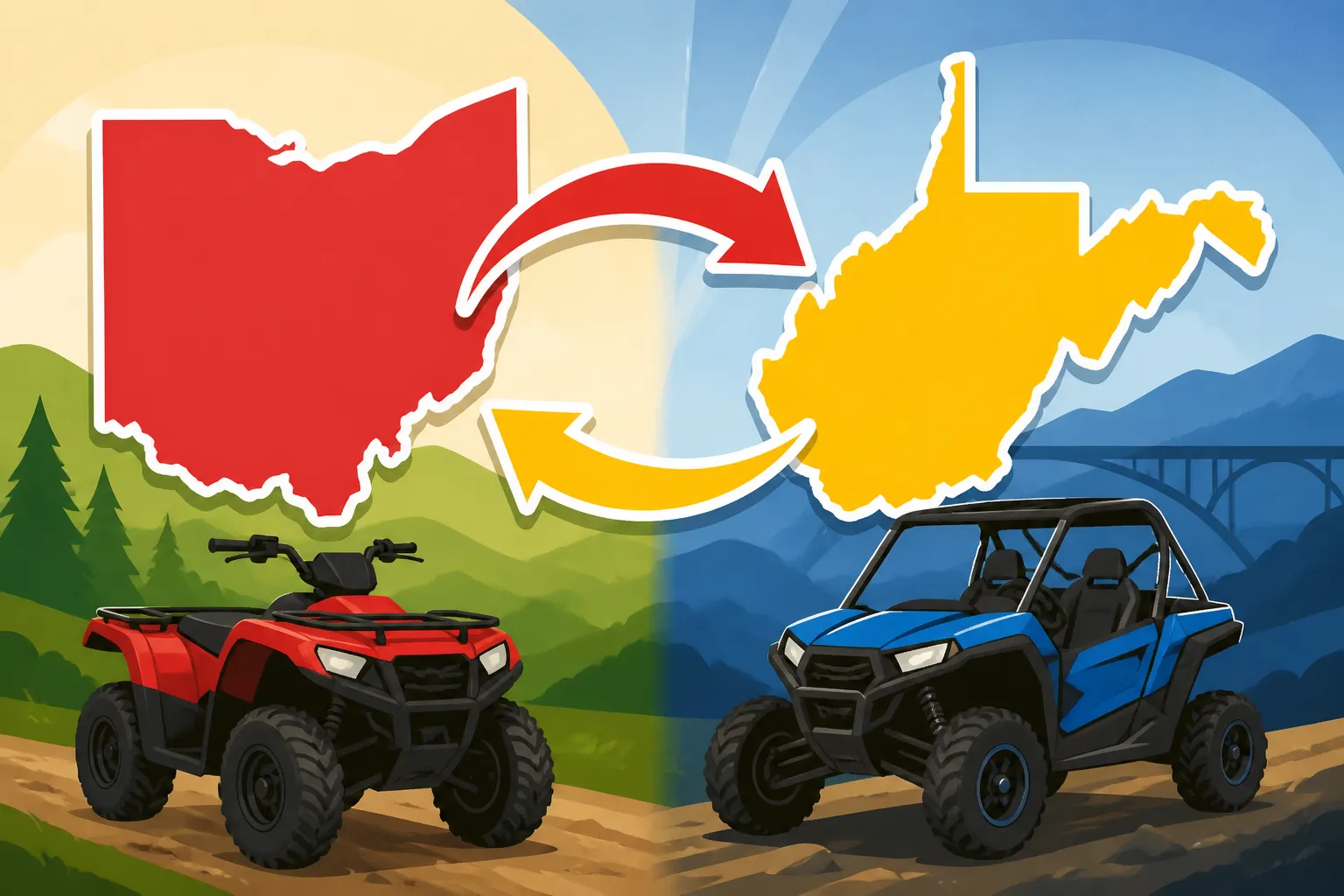
West Virginia riders heading to Ohio trails need to know whether their machine’s paperwork qualifies under Ohio’s reciprocity rules. The key distinction is registration versus ownership: a title or proof of purchase does not automatically count as registration. Here’s how to check what you have, when an Ohio temporary permit may be needed, and why trail-specific rules still matter.
What Ohio reciprocity means for a West Virginia rider
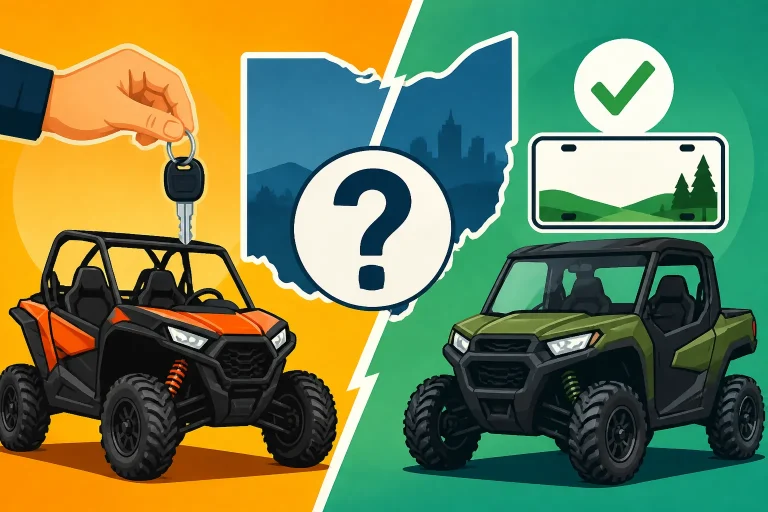
Ohio generally allows a nonresident to operate an all-purpose vehicle with current registration from the rider’s home state, when that registration is recognized for use in Ohio. The practical question is not simply whether the machine is from West Virginia. It is whether the paperwork you carry is a valid registration for that machine, rather than a document that proves ownership or permits a different kind of use.
A title identifies the owner and the machine. A bill of sale records a transaction. Neither document, by itself, substitutes for a current registration. If you have a West Virginia-issued registration document or plate, check that it is current and applies to the machine you plan to ride. Ohio’s reciprocity framework is explained in Ohio Reciprocity for Out-of-State Machines and Which States’ Registrations Ohio Accepts on Its Trails.
Do not assume that a West Virginia title, an insurance card, or a trail pass is enough to satisfy Ohio registration requirements. Similarly, a plate used for a different purpose may not establish that the machine has the off-highway registration Ohio recognizes. If the document’s purpose is unclear, confirm its status with the issuing West Virginia office and Ohio’s relevant agency before traveling.
| What you have | Does it establish Ohio-recognized registration? | What to check |
|---|---|---|
| Current West Virginia registration for the machine | It may, if Ohio recognizes that registration | Confirm it is valid, applies to the machine, and is accepted for Ohio riding |
| West Virginia title only | No, a title proves ownership rather than current registration | Ask whether the machine has a separate registration requirement or document |
| Bill of sale or dealer paperwork | No, these documents do not replace registration | Complete any required registration steps before riding |
| Expired registration | Do not rely on it for reciprocity | Renew it or ask whether an Ohio temporary permit is required |
| Ohio temporary operating permit | It may provide the required Ohio authorization for a qualifying visitor | Confirm eligibility, term, display rules, and permitted use |
The table is a planning aid, not a substitute for checking the documents and rules that apply to your machine. Requirements can depend on how a machine is classified and where you intend to ride. When in doubt, describe the exact document you have to the appropriate Ohio office rather than asking only whether Ohio “takes West Virginia plates.”
Check the paperwork before you leave
Before loading the machine, gather the registration document, title, and any other papers issued for it. Compare the machine’s identifying information, such as its vehicle identification number, with the information on the documents. Make sure the registration is current and that it belongs to the machine you are bringing. A plate attached to a different machine, or paperwork with a mismatch, can create problems during a stop or at a trail access point.
If you have only a title, do not treat it as proof of registration. Contact the West Virginia DMV or other issuing office to confirm whether the machine has a separate, current registration that Ohio may recognize. If it does not, ask Ohio’s registration authority whether a temporary operating permit is the appropriate option for your visit. The requirements and application details are covered in What a Visitor From a Registering State Must Show and The Ohio Temporary Permit for Visitors.
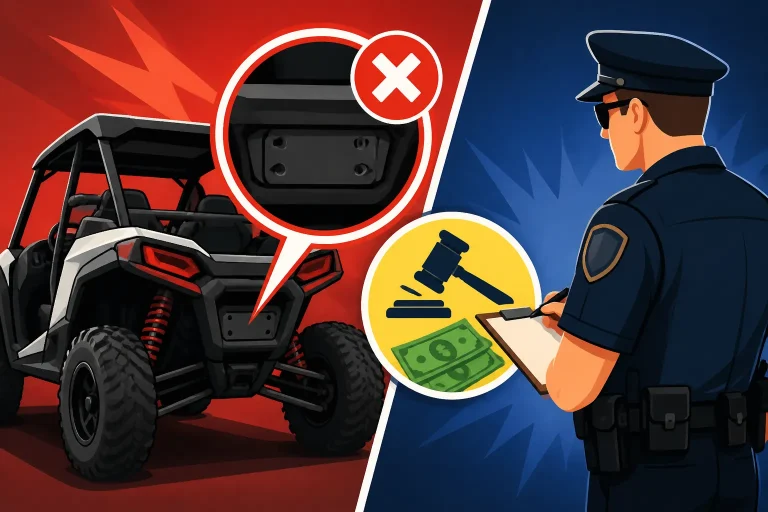
Keep the required registration proof accessible while riding. A clear paper document is useful even if you also keep a photo on your phone. A phone image can serve as a backup, but it may not be accepted in every situation as a replacement for the required document. For more on what to carry, see What Happens If You Ride Without Your Registration Card. Check that the plate is attached and visible as required; Ohio APV Plates and Validation Stickers explains Ohio’s plate and sticker setup.
If you discover a problem shortly before your trip, do not assume that a purchase receipt, a call to an office, or a permit from another place will resolve it at the trailhead. Clarify the requirement before riding. An officer or trail official may need to see the actual registration or permit, and being unable to show it can disrupt a trip even if you own the machine.
When to ask about an Ohio temporary permit
An Ohio temporary operating permit may be relevant when a visitor does not have home-state registration that Ohio recognizes. Whether it applies depends on the machine and the visitor’s circumstances, so confirm eligibility and current instructions through an official Ohio channel. Do not assume that every West Virginia rider needs one—or that no West Virginia rider does. The decision turns on the status and type of the machine’s paperwork.
If you need a permit, check where it must be obtained, when it takes effect, how long it remains valid, and what proof must be carried or displayed. These details can affect whether you can ride on the dates you planned. The process and visitor situations are discussed in What a Visitor From a Non-Registering State Must Buy and Ohio’s Nonresident Temporary Permit.
Registration reciprocity does not open every trail
A valid registration or temporary permit addresses only one part of the trip: whether the machine meets Ohio’s applicable registration requirement. It does not give blanket permission to ride on every trail, forest road, public road, or parcel of land. Each riding area can have its own access rules, operating season, machine limits, and equipment requirements.
For Ohio state forest trails, check the current rules for the specific forest and route. Ohio’s state forest access requirements are separate from the question of whether your West Virginia registration qualifies. Confirm that the trail system is open, that your machine is eligible, and that any applicable rules for riders, helmets, and operating hours are met. Ohio Rules for Riding State Forest Land provides more context on those requirements.
Wayne National Forest is a separate case. Its designated routes may require a federal forest OHV permit in addition to the state registration or authorization needed for the machine. An Ohio temporary operating permit does not automatically replace a Wayne National Forest permit, and a federal permit does not replace required vehicle registration. Check the current rules for the route and the permit that applies to your trip. See How the Wayne National Forest OHV Permit Works before heading to a Wayne trail system.
Public roads are another separate issue. A machine’s registration does not, on its own, make it legal to operate on an Ohio road. Road access depends on the road’s status and local rules, as well as equipment, licensing, insurance, and other requirements that may apply. Do not use trail reciprocity as evidence that a township or county road is open. Start with Where Ohio Law Allows APVs on Roads and check the rules for the specific road before riding or crossing it.
Private property also requires permission. A valid plate does not authorize access to a landowner’s property, and a public trail pass does not give permission to use a private connector or staging area. Confirm land access and parking arrangements rather than relying on a map line or informal trail description.
A practical pre-trip checklist
Use this sequence to reduce uncertainty before crossing from West Virginia into Ohio:
- Identify the machine and its paperwork. Check whether you have a current registration document, not just a title, bill of sale, or insurance card.
- Confirm the registration’s status. Verify that it is current, belongs to the machine, and is the kind Ohio recognizes for reciprocity. If you are unsure what a West Virginia document authorizes, ask the issuing office.
- Ask about an Ohio permit if needed. If the machine has no qualifying home-state registration, confirm whether an Ohio temporary operating permit is available and what steps are required.
- Check the exact riding area. Confirm that it is open to your machine and that any state forest, national forest, road, or private-property restrictions are understood.
- Check for separate trail permits. If you plan to ride in Wayne National Forest, verify whether a federal OHV permit is required for your route and who must carry it.
- Carry the paperwork and display the plate correctly. Bring the required proof in a form you can access, and make sure the plate or other required identification is visible.
- Recheck before departure. Trail openings, access rules, and permit instructions can change. Confirm current details with the relevant official office or trail manager rather than relying on an old post or a friend’s past trip.
This approach is especially useful when buying a used machine in West Virginia or borrowing one for an Ohio trip. Ask the owner what documents accompany the machine and verify them yourself. A seller’s assurance that “it’s registered” is not enough if the document is expired, belongs to another vehicle, or authorizes something other than the riding you plan to do.
The most reliable takeaway is simple: Ohio reciprocity depends on qualifying, current registration—not merely West Virginia ownership paperwork. If you cannot confirm that your registration is accepted, resolve the question before you ride and ask whether an Ohio temporary permit applies. Then check the access and permit rules for each trail system separately. That distinction can prevent a paperwork issue from turning into a trailhead problem or citation.
Disclaimer
This article is for general informational purposes only and does not constitute professional advice. Laws, prices and regulations vary by location and change over time. Consult a qualified professional for guidance on your specific situation.