Riding a Snow-Covered Township Road
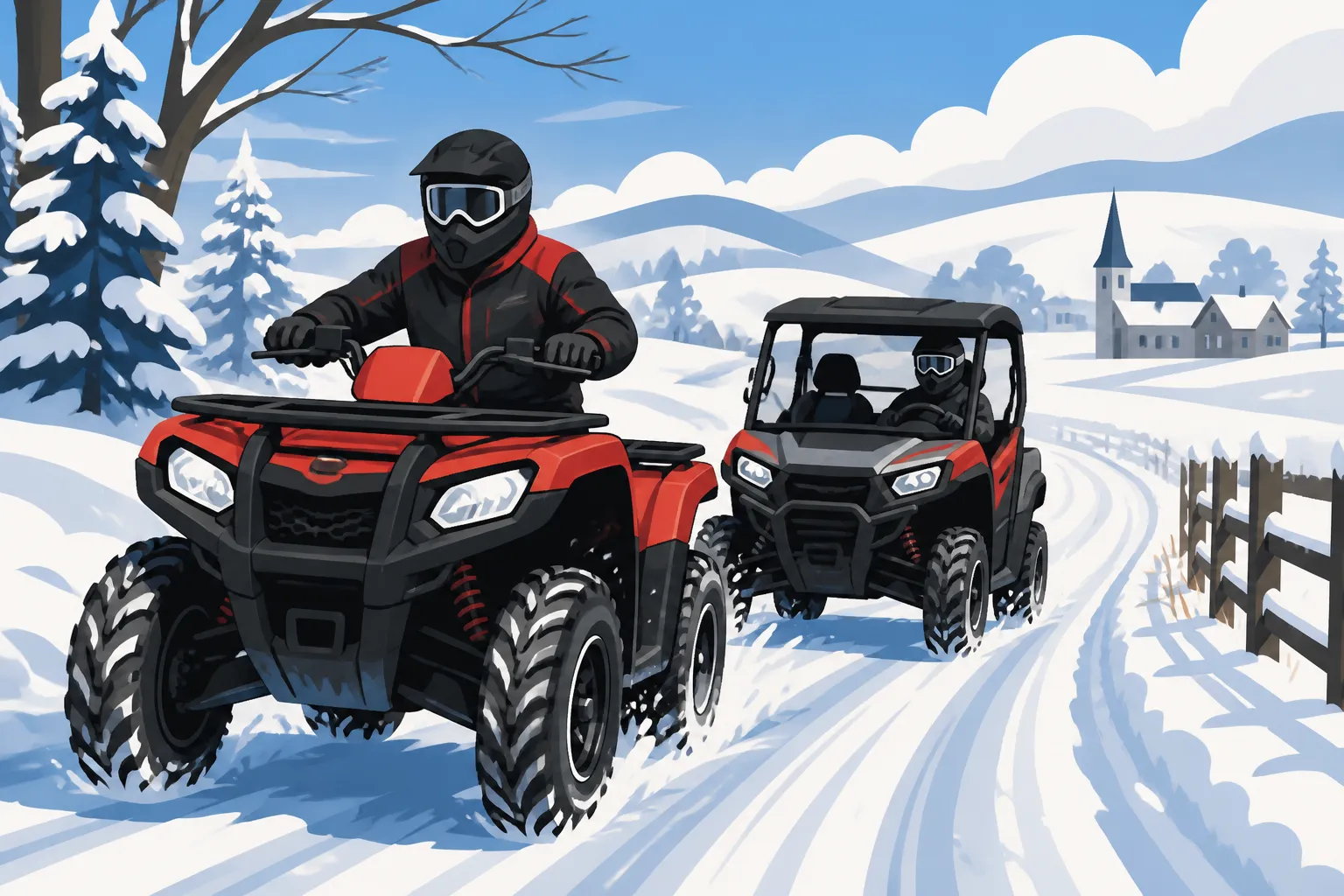
Ohio’s winter wonderland can be incredibly tempting for ATV and UTV enthusiasts. When that first blanket of snow falls, many of us instantly picture ourselves cruising down a quiet, snow-covered township road, feeling the crisp air and the thrill of the ride. But before you fire up your engine and head out, it's absolutely critical to understand the specific rules and safety considerations that come with riding your all-purpose vehicle (APV) on public roads, especially when they're slick with snow and ice. This guide will walk you through the ins and outs of legally and safely enjoying your machine on Ohio’s snow-covered township roads.
The Legal Landscape: Can You Even Ride There?
It’s a common misconception that if a road is snow-covered, it somehow becomes fair game for ATVs and UTVs, as if it magically transforms into an unofficial trail. Unfortunately, that's rarely the case. The legal status of the road remains the same, regardless of the weather conditions. Ohio law has very specific regulations about where and when you can operate an APV on public roads, and these rules are paramount, even when winter paints the landscape white.
Understanding Ohio's APV Road Rules
First and foremost, it's crucial to remember that APVs are generally not street legal in Ohio in the same way a car is. You can't just hop on your quad and cruise down any highway. The state law defines specific conditions under which an APV can be operated on public roads. Primarily, this involves local jurisdictions – townships and counties – actively passing resolutions to open their roads to APV traffic. Without such a resolution, most roads are off-limits. This is why you need to understand [Ohio Rules for Riding a Township Road]. It's not about what feels right when the snow falls; it's about what the law explicitly allows. Your machine also needs to be properly registered and plated, displaying an [Ohio APV Plates and Validation Stickers] clearly. Without that, you're looking at a potential citation before you even get out of your driveway.
Even if a township or county has opened its roads, those permissions often come with restrictions. These can include speed limits, hours of operation, and specific equipment requirements for your machine. Snow doesn't erase these restrictions; it simply adds another layer of complexity to adhering to them safely. So, before you dream of tearing through fresh powder on your local lane, you need to verify that those roads are indeed open to APVs in the first place, and then understand any special rules that apply.
Township Resolutions and Their Impact
The power to open township roads to APVs rests with the township trustees. They can pass a resolution allowing or disallowing APV use on specific roads under their jurisdiction. This is a critical point: just because one township opens its roads doesn't mean the neighboring one has. You need to know [How an Ohio Township Opens Its Roads] and, more importantly, which roads are open. A resolution typically lists the roads or defines criteria (like roads with a certain speed limit) for APV access.
Snow doesn't change the wording or intent of these resolutions. If a road is opened for APV use by resolution, it's open, snow or shine. If it's not, it remains closed. However, winter weather introduces significant safety concerns that even an open road can't mitigate. The trustees might open a road for summer cruising, but that doesn't mean it's inherently safe to ride on it when it's covered in ice and snow. Always assume that the underlying legal rules apply, and then add a heavy dose of common sense and caution for the conditions. Riders often think about the fun of the snow, but forget about the increased risks.
Distinguishing Between County and Township Roads
It’s easy to get county roads and township roads confused, especially when you’re out exploring in rural areas. However, their distinctions are very important when it comes to APV access. Township roads are maintained by the township and are typically the ones most likely to be opened for APV use via local resolution. County roads, on the other hand, are maintained by the county engineer and fall under county commissioners' resolutions. [How an Ohio County Opens Its Roads] outlines this process.
The rules for county roads can be different from township roads, even within the same geographic area. It's not uncommon for a county to keep its roads closed to APVs, while several townships within that county have opened theirs. This means you might be legally riding down one road only to turn onto an adjacent one where APVs are strictly prohibited. When snow obscures road signs and familiar landmarks, knowing which jurisdiction you’re in becomes even more challenging and vital for compliance. Always confirm the specific status of the roads you plan to ride, rather than making assumptions, especially when a pristine blanket of snow might make all roads look the same.
Preparing Your Machine and Yourself for Winter Riding
Riding on snow-covered roads is a completely different beast than dry-weather trail riding. The cold, the reduced traction, and the increased visibility challenges demand specific preparations for both you and your machine. Neglecting these steps isn't just uncomfortable; it can be downright dangerous.
Essential Gear for Rider and Passenger
Your summer riding gear simply won't cut it when you’re out in the snow. Layering is key. Start with a moisture-wicking base layer to keep sweat away from your skin, followed by insulating layers like fleece, and topped with a waterproof and windproof outer shell. Think about snowmobile-specific suits, which are designed for this kind of cold, wet environment. Your hands and feet are particularly vulnerable to frostbite, so invest in heated gloves or mittens, and insulated, waterproof boots.
Don't forget your head. A DOT-approved helmet, like those meeting the [DOT FMVSS218 Helmets in Ohio] standard, is always a must, but in winter, consider one with a full face shield to protect against the biting wind and flying snow. If your helmet doesn't have a shield, or if you prefer goggles, make sure they’re anti-fog and designed for cold weather. [Ohio Eye Protection Requirement] applies year-round, but it's especially critical when snow is being kicked up. Balaclavas or neck gaiters are also excellent for preventing frostbite on exposed skin. Remember, hypothermia can set in quickly if you're not adequately protected, turning a fun ride into a serious emergency.
Machine Modifications for Snow
While your APV is built for off-road adventure, snow-covered roads present unique challenges that can benefit from specific modifications. Tires are a big one. Your standard all-terrain tires might struggle for traction on slick, packed snow or ice. Consider tires with a more aggressive tread pattern designed for mud and snow, or even looking into [Studded Tires on Ohio Ice] if conditions warrant and local regulations allow. Brands like SuperATV offer a range of tires and accessories that can enhance your machine's performance and safety in winter conditions, from specialized tread designs to durable plows.
Speaking of plows, if you’re planning to clear your own driveway or help out a neighbor, an ATV or UTV plow is an invaluable addition. Many companies, including SuperATV, provide robust plow systems that can transform your recreational vehicle into a winter workhorse. Beyond plows, consider a winch. Even on a road, getting stuck in a deep snowdrift is a real possibility, and a reliable winch can be your best friend. For safety, ensure your machine meets the [Ohio APV Road Equipment List] requirements, which includes proper lighting. Consider adding auxiliary LED lights to improve visibility, especially when [Ohio Rules for Riding After Dark] come into play, as snow reflects light differently and can reduce contrast.
Pre-Ride Checks in Cold Weather
Cold weather puts extra strain on your machine, so a thorough pre-ride inspection is more critical than ever. Start with your battery. Cold temperatures significantly reduce battery performance, so ensure yours is fully charged and in good condition. Check all fluid levels – engine oil, coolant, brake fluid – and ensure they are appropriate for winter temperatures. Your coolant should have adequate antifreeze protection.
Inspect your tires for proper inflation, as air pressure can drop in cold weather, affecting handling and traction. Check all lights, including headlights, taillights, and turn signals, to ensure they’re clean and working perfectly. This is vital for being seen by other motorists and for illuminating snow-covered roads. Ensure your brakes are functioning correctly; ice and snow will drastically increase stopping distances. Finally, give your throttle, steering, and clutch (if applicable) a good once-over to confirm they operate smoothly and aren't stiff from the cold. A little preventative maintenance before you hit the snow can prevent a big headache—or worse—out on the road.
Navigating Snow-Covered Roads Safely and Responsibly
Riding an APV on snow-covered township roads requires a heightened sense of awareness and a modified riding style. The risks are amplified, and your responsibility to yourself and others on the road increases exponentially. This isn't the time for aggressive riding; it's the time for thoughtful, controlled operation.
Driving Techniques on Slick Surfaces
The most fundamental change in riding on snow is acknowledging the massive reduction in traction. Aggressive throttle inputs that might be fun on dirt will likely result in a loss of control on snow or ice. Use smooth, gentle throttle application to avoid spinning your tires, which only reduces control. When turning, slow down well in advance and use gradual steering inputs. Sudden turns can cause the machine to slide out from under you. Braking is perhaps the most critical skill to adjust. Slamming on the brakes on a slick surface is a surefire way to lose traction and go into an uncontrolled slide. Instead, use light, progressive braking. If your machine has engine braking, utilize it to help slow down more controllably. Some newer machines, particularly side-by-sides, might feature traction control systems, but even these are not infallible on ice.
Maintain a much greater following distance from any other vehicles, whether they are cars, trucks, or other APVs. Your stopping distance will be significantly longer than on dry pavement, and you need that extra buffer zone. When approaching intersections or blind corners, assume there's ice or an obstacle hidden under the snow. Your vigilance needs to be at an all-time high.
Identifying Winter Hazards
Snow-covered roads aren't just slippery; they conceal a multitude of hazards. Black ice is perhaps the most insidious, as it's nearly invisible. It can form on bridges, in shaded areas, or where melted snow refreezes. Always assume ice might be present, especially in these conditions. Drifting snow can hide potholes, curbs, or even guardrails, turning a seemingly smooth surface into a potential wreck. Be especially cautious of areas where snow has been plowed, as the edges of the plowed area can be uneven and difficult to see.
Other vehicles are also a significant hazard. Cars and trucks have much longer stopping distances on snow and ice, and their drivers might not expect to encounter an APV. Always assume other drivers don’t see you, and ride defensively. Poor visibility from blowing snow or fog can also obscure hazards and other traffic. Remember, even if the township allows you to ride on the berm, you still need to exercise extreme caution, as [Ohio Rules for Riding the Berm] don't negate winter's dangers. The edges of the road can be even more unpredictable with hidden ice or soft shoulders.
Etiquette and Public Perception
When riding on open township roads, you’re sharing the space with residents, other vehicles, and potentially pedestrians. Your behavior directly impacts the public perception of all APV riders. Be a good neighbor. This means keeping your speed appropriate for the conditions – far below the posted limit, even if that limit is technically 55 MPH for an unposted road. As for [Can You Ride an APV on an Unposted Ohio Road?], yes, but [Why Fifty-Five Closes an Unposted Road] if that’s the default, because it's simply too fast and unsafe on snow. Maintain quiet operation, especially in residential areas, and avoid any aggressive maneuvers that might scare residents or drivers.
If you encounter pedestrians, slow down to a crawl and give them a wide berth. If you’re riding past homes, try to minimize kicking up excessive snow or mud onto driveways or mailboxes. Your registration plate will identify you, so a visible [Ohio APV Plates and Validation Stickers] is important for accountability and general law enforcement. Remember that local officials can reverse their decision to open roads if too many complaints arise from reckless riding. Show respect for the community, and help ensure that these riding opportunities remain available for everyone.
Special Considerations for Snow and Ice
Winter riding on public roads adds layers of complexity beyond just traction. Visibility, equipment choices, and understanding the nuances of how Ohio law interacts with these conditions are all crucial for a safe and enjoyable experience.
Studded Tires and Their Legality/Benefits
For serious winter riding, especially on packed snow or ice, studded tires can offer a dramatic increase in traction compared to standard knobby tires. They feature small metal or ceramic studs embedded in the tread that grip into slick surfaces. In Ohio, the legality of [Studded Tires on Ohio Ice] is generally restricted to certain months, typically from November 1st through April 15th, to prevent excessive road wear during warmer months. Always check the current Ohio Revised Code for precise dates.
The benefits of studded tires on icy roads are undeniable, providing better acceleration, braking, and cornering grip. However, they also come with drawbacks. On dry pavement, they can actually reduce traction and make handling feel vague. They also wear down faster on bare asphalt and can be noisy. You’ll need to decide if the increased grip on snow and ice outweighs these disadvantages for your specific riding plans. If you plan to transition frequently between snow-covered roads and sections of bare pavement, studded tires might not be the ideal choice for continuous use.
Visibility in Winter Conditions
Visibility is often severely compromised in winter. Snowfall, fog, and the low angle of the winter sun can make it incredibly difficult for you to see and, more importantly, for other drivers to see you. This makes your machine's lighting system absolutely critical. Ensure your headlights, taillights, and any auxiliary lights are clean, functional, and properly aimed. Consider adding additional amber or white lights, especially to the front, to make your profile more noticeable. Retrofitting some machines with better lighting, perhaps from a brand like SuperATV, can be a game-changer for winter safety.
Wearing bright, high-contrast clothing is also essential. Fluorescent colors like lime green or orange stand out against a snowy backdrop, and reflective materials are vital for riding after dark. Remember that [Ohio Rules for Riding After Dark] require your APV to have specific lighting, but simply meeting the minimum isn't enough when visibility is poor. Consider a reflective vest over your riding jacket. The goal is to make yourself as conspicuous as possible to avoid becoming a hazard to other road users who might not be looking for an APV in the snow.
The Ohio Speed Limit on Snow-Covered Roads
It's tempting to think that since township roads might have a default speed limit of 55 MPH if not otherwise posted, you can operate your APV at that speed. However, as previously mentioned with [Why Fifty-Five Closes an Unposted Road], this is a dangerous misconception, especially in winter. While the legal default might be 55, the safe and responsible speed on a snow-covered or icy road is drastically lower. Ohio law requires you to operate your vehicle at a speed that is reasonable and proper for the conditions. On snow and ice, "reasonable and proper" might mean 10-20 MPH, or even less, depending on the severity of the conditions and your machine's capabilities.
If a deputy pulls you over, they won't care about the technical posted limit if you're riding too fast for the conditions. They'll be looking at whether you are operating safely. A deputy will check your registration, your plate, and potentially your equipment for compliance. Knowing [What an Ohio Deputy Checks Roadside] can help you prepare, but safe speed is paramount. Pushing the speed limit on slick roads not only increases your risk of a crash but also raises the likelihood of getting a citation for reckless operation. Always err on the side of caution; a slow, safe ride through the snow is far better than a fast, risky one that ends in an accident or a ticket under [Ohio Fines for Illegal APV Road Use].
| Aspect | Consideration on Snow-Covered Township Roads | Safety Recommendation |
|---|---|---|
| Legal Access | Requires active township resolution to open roads; snow does not change legal status. | Always confirm specific roads are open via township resolution before riding. Carry proof of registration. [Registering an APV in Ohio] is the first step. |
| Traction | Greatly reduced on snow, slush, and especially black ice; standard tires may struggle. | Use smooth throttle and braking. Consider aggressive mud/snow tires or studded tires if legal and appropriate for conditions. Maintain low speeds. |
| Visibility | Impaired by snowfall, blowing snow, fog, low winter sun, and shorter daylight hours. | Ensure all lights are functional, clean, and use auxiliary lighting. Wear bright, reflective clothing. Be aware of [Ohio Rules for Riding After Dark]. |
| Rider Warmth | Extreme cold, wind chill, and wet conditions can lead to hypothermia and frostbite. | Layer clothing with moisture-wicking base, insulation, and waterproof/windproof outer shell. Insulated boots, heated gloves, and a full-face helmet are crucial. [Ohio Helmet Law for APV Riders] applies here. |
| Machine Health | Cold affects battery life, fluid viscosity, and overall component performance. | Perform thorough pre-ride checks: battery, fluids, tires, brakes, lights. Allow machine to warm up properly. |
| Hidden Hazards | Snow can conceal potholes, curbs, debris, or areas of black ice. | Ride slowly and cautiously. Scan far ahead. Be especially wary of shaded areas, bridges, and plowed snow edges. |
| Other Vehicles | Cars and trucks have reduced braking and maneuverability; drivers may not expect APVs. | Maintain large following distances. Assume other drivers don't see you. Avoid sudden movements. Be prepared to ride [Ohio Rules for Riding Alongside a Road] if necessary and safe. |
| Speed Limits | Posted limits are for ideal conditions; "reasonable and proper" for snow/ice is much lower. | Significantly reduce speed. Operate at a speed safe for the conditions, regardless of the posted limit, to avoid citations and accidents. |
Disclaimer
This article is for general informational purposes only and does not constitute professional advice. Laws, prices and regulations vary by location and change over time. Consult a qualified professional for guidance on your specific situation.