Riding Muskingum Township Roads
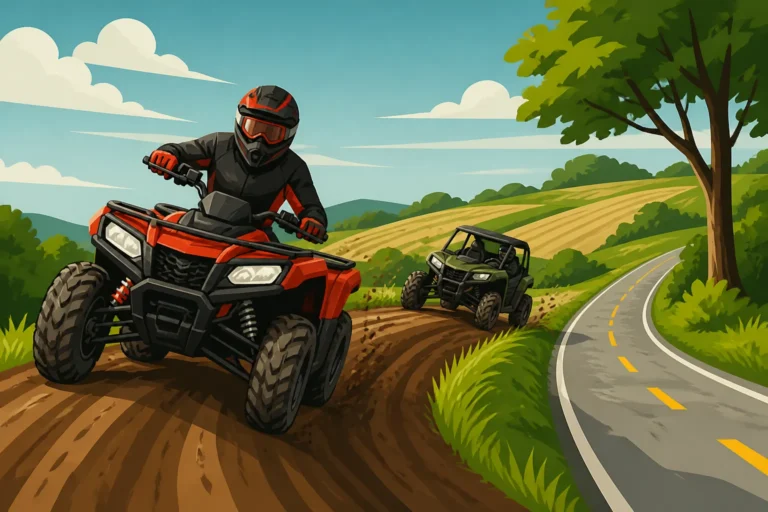
It’s a common dream for many of us who love our ATVs and UTVs in Ohio: being able to hop on our machines right from our driveway and cruise down the local township roads to get to a trail, a friend's house, or even just enjoy a scenic backroad drive. But the reality is, navigating the patchwork of laws and local ordinances can feel like a maze, especially when you're looking at a specific area like Muskingum Township. This guide is here to cut through the confusion and give you a clear understanding of what it takes to legally and safely ride your all-purpose vehicle (APV) on Muskingum Township roads.
Understanding Ohio's Road Use Laws for APVs
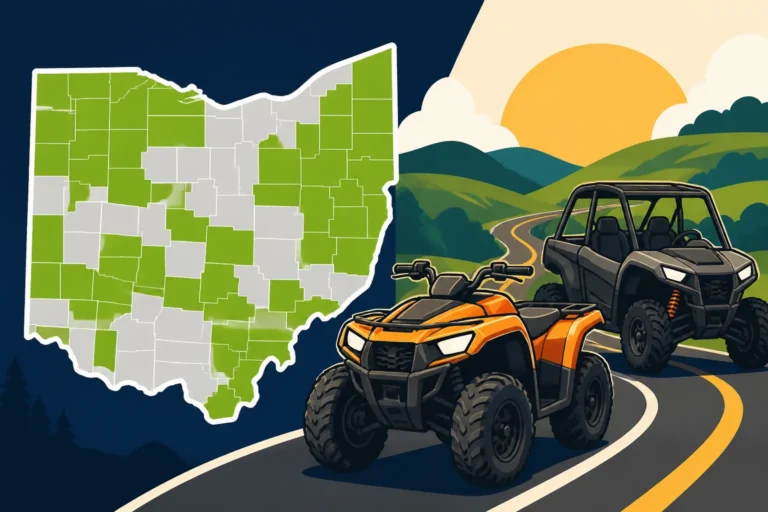
Ohio law can be a bit of a head-scratcher when it comes to riding all-purpose vehicles (that’s the legal term for ATVs, UTVs, and side-by-sides) on public roads. Unlike some states with blanket laws, Ohio takes a more granular approach, handing much of the decision-making down to local jurisdictions. This means that while one township might welcome APVs with open arms on its roads, the very next township over could have a strict "no riding" policy. It's not always intuitive, and it definitely requires some homework on the rider's part.
The state’s general stance is that APVs are not street legal for widespread road use, especially on state routes and interstates. These are considered high-speed thoroughfares meant for traditional motor vehicles. However, Ohio Revised Code (ORC) does carve out specific pathways for local authorities, like county commissioners and township trustees, to permit APV use on roads under their jurisdiction. This is where the local resolutions come into play, and it’s why understanding the state framework is your crucial first step before even looking at Muskingum Township specifically. The authority given to townships and counties allows them to decide what works best for their communities, considering traffic volume, road conditions, and local sentiment. It’s a decentralized approach that requires diligence from riders to know their local rules.
So, when you hear about someone riding their side-by-side down a country road, it's not because they're breaking the law (necessarily!), but because their specific county or township has passed a resolution to open up those roads. This legislative process involves careful consideration, public input, and ultimately, a formal vote by the local governing body. You can learn more about how this process works in detail by checking out [How an Ohio Township Opens Its Roads]. Without such a resolution, APVs are generally restricted to off-road environments, private property, or designated trails. It’s a fundamental distinction that sets the stage for where you can and cannot ride in Ohio, and it’s why your research into Muskingum Township is so important.
What Muskingum Township Riders Need to Know
Alright, let's talk about Muskingum Township specifically. Given Ohio's localized approach to APV road use, the most critical piece of information for you as a rider in Muskingum Township is whether the township trustees have passed a resolution permitting APVs on their roads. This isn't something you can just assume based on what a buddy told you or what you saw in a neighboring area. Every township makes its own rules, and Muskingum is no exception. It's tempting to think that all rural townships will be similar, but that's a mistake that could lead to an unwanted conversation with local law enforcement.
The absolute best way to verify the current status of APV use on Muskingum Township roads is to contact the Muskingum Township Fiscal Officer or the Township Trustees directly. These officials are responsible for maintaining and knowing the local ordinances. You can usually find their contact information on the township's official website or through a quick search of Muskingum County government resources. Don't be shy about reaching out; they are the definitive source for this kind of information. Ask specifically about any resolutions related to "all-purpose vehicles" or "utility vehicles" on township roads. A simple phone call can save you a lot of headache and potential fines.
If Muskingum Township has indeed passed a resolution to open its roads to APVs, it will come with specific conditions and limitations. These resolutions typically outline which roads are open (often only roads with speed limits of 35 MPH or less), what hours riding is permitted, and what equipment your machine must have. For instance, many resolutions will clarify rules around riding on unposted roads or the specific requirements for crossing state routes safely. It’s common for these local laws to mirror many of the state’s general equipment requirements for road-legal use, but they can also add their own nuances. Always get familiar with the specifics of their resolution, because ignorance of the law is never a valid defense.
Mandatory Equipment and Paperwork for Ohio Road Riding
Whether you're planning to ride on Muskingum Township roads or any other legally opened township or county road in Ohio, your APV absolutely must meet certain requirements, and you need to carry specific documentation. Think of it like preparing for a regular road trip, but with a few extra steps specific to your off-road machine. Skimping on these details isn't just risky; it's illegal and can result in significant fines or worse.
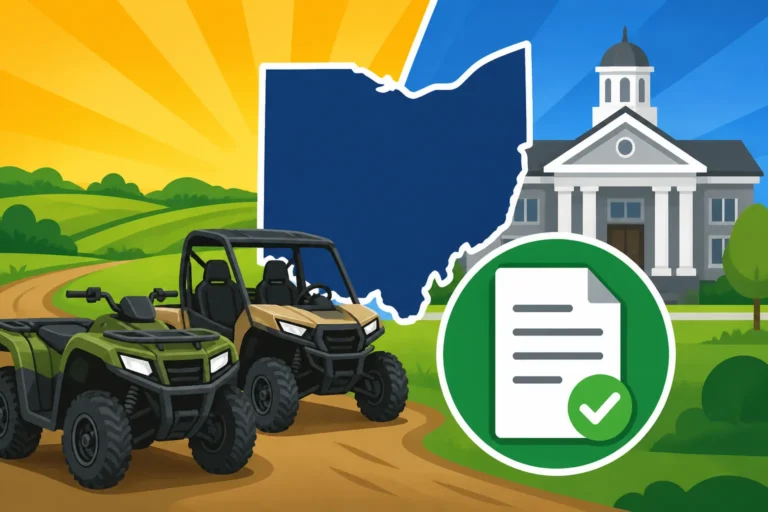
First and foremost, your all-purpose vehicle needs to be properly registered with the state of Ohio and display a valid Ohio APV Plate. This plate acts as your official identification and serves as your trail permit for state forest riding areas that permit APVs. Getting this plate involves a trip to the local Bureau of Motor Vehicles (BMV) deputy registrar's office. Before you can get a plate, however, your machine typically needs to be titled. This process happens at a county clerk of courts title office. If you're buying a used machine, make sure the title is clean and ready for transfer. You can find detailed information on how to handle this by looking up [Titling an APV at an Ohio Clerk of Courts]. The paperwork for titling usually includes your proof of ownership, such as a manufacturer's certificate of origin for a new machine or a properly assigned title from the previous owner for a used one.
Next up, insurance is not optional for road riding. Ohio law generally requires you to carry proof of financial responsibility (i.e., insurance) if you’re operating an APV on any public road. This isn't just a good idea for your own protection in case of an accident; it's a legal mandate. Your off-road policy might need specific endorsements or coverage types to extend to road use, so it's critical to talk to your insurance provider and ensure your policy covers you for riding on township roads. Carrying your insurance card with you while riding is as important as carrying your driver's license. For more on this, check out [Ohio APV Insurance Requirement].
And speaking of a driver's license, yes, you absolutely need one to operate an APV on public roads in Ohio. This isn't a "trail riding" scenario where sometimes younger riders are permitted with supervision; this is road use, and the state treats it much like operating any other motor vehicle. So, keep your valid driver's license in your wallet. Beyond that, your machine itself needs to be equipped to meet state safety standards for road use, which usually includes:
- Headlights and Taillights: These must be operational and visible, especially for riding during dawn, dusk, or in adverse weather. Most APVs come with these, but ensure they are bright enough for road visibility.
- Brake Lights: Essential for signaling your deceleration to other vehicles.
- Horn: A working horn is a safety requirement for alerting others to your presence.
- Muffler and Spark Arrester: Your machine must have a functional muffler to keep noise levels down and a spark arrester to prevent wildfires, especially when riding near wooded areas.
- Rearview Mirror: At least one rearview mirror is typically required to provide a clear view of the road behind you. Many riders opt for a full set of mirrors, sometimes utilizing products from brands like SuperATV, to ensure maximum visibility and compliance.
- Turn Signals (for UTVs and sometimes ATVs): While ATVs might have hand signals as an alternative in some contexts, UTVs generally need proper turn signals for road use. Again, aftermarket kits, such as those offered by SuperATV, are popular for adding these essential safety features to machines not originally equipped for road duty.
- Brakes: Your braking system must be in good working order.
- Tires: Tires must be in good condition, suitable for road use, and not excessively worn or damaged.
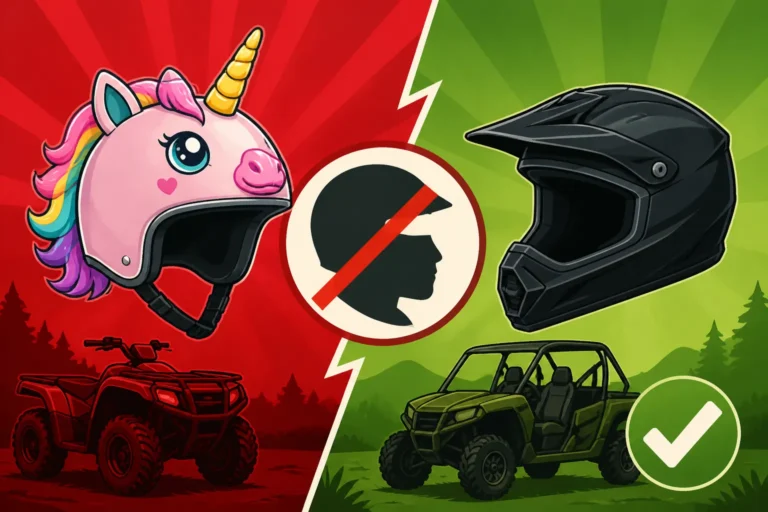
It’s worth noting that while some UTVs might need an inspection to be road-legal in certain scenarios, standard ATVs typically do not. However, meeting the equipment requirements is non-negotiable for all APVs on the road. For a comprehensive list, you can refer to [Ohio Equipment Rules for an APV on a Road] or [Ohio UTV Road Equipment List]. Finally, all riders and passengers must wear a DOT-compliant helmet and appropriate eye protection when operating an APV on Ohio public roads, regardless of age. This critical safety measure is for your own well-being. You can find more details on this in [Ohio Helmet Law for APV Riders] and [Ohio Eye Protection Requirement].
Here's a quick rundown of essential items:
| Item | Purpose | Notes |
|---|---|---|
| Ohio APV Plate | Official registration and trail permit | Obtained at Deputy Registrar after titling. |
| Ohio APV Title | Proof of ownership | Processed at Clerk of Courts Title Office. |
| Valid Driver's License | Legal authorization to operate vehicle | Required for all operators on public roads. |
| Proof of Insurance | Financial responsibility | Must cover APV road use; check with your insurer. |
| DOT-Compliant Helmet | Head protection | Mandatory for all riders and passengers on public roads. |
| Eye Protection | Eye safety | Goggles or face shield; mandatory for all riders and passengers. |
| Headlights | Visibility forward | Must be functional and illuminated. |
| Taillights & Brake Lights | Rear visibility & signaling | Must be functional; essential for safety. |
| Horn | Alerting others | Must be functional and audible. |
| Muffler & Spark Arrester | Noise control & fire prevention | Legal requirement for all APVs. |
| Rearview Mirror | Rearward visibility | At least one, typically left side. |
| Turn Signals (UTVs) | Signaling turns | Often required for UTVs; aftermarket kits available from SuperATV. |
Staying Safe and Responsible on Township Roads
Riding your APV on Muskingum Township roads, or any open public roads, comes with a big responsibility. It's a completely different environment than a dedicated trail or private land, and you need to adapt your mindset and riding style accordingly. The goal isn't just to be legal, but to be safe and considerate of everyone else using the road.
Firstly, visibility is paramount. Your ATV or UTV is smaller than most cars and trucks, and it might not be what other drivers expect to see on the road. Dress in bright colors, especially if your machine isn't already highly visible. Consider adding extra lighting if your stock lights seem dim, and make sure your headlights and taillights are always on. Being seen is your first line of defense. Remember that other drivers might not be looking for an APV, so make eye contact, use your turn signals early, and always assume they haven't seen you. Enhancements like reflective tape or brighter aftermarket lights from companies like SuperATV can significantly improve your presence on the road, making it easier for cars to spot you from a distance.
Obey all traffic laws, just as you would in a car. This includes speed limits (which, for APVs on township roads, are usually capped at 35 MPH, even if the posted limit for cars is higher), stop signs, yield signs, and traffic signals. Don't weave in and out of traffic or drive erratically. Remember that you are sharing the road with vehicles that are much heavier and faster than your machine. Maintain a safe following distance, especially since APVs often have different braking characteristics than cars. Riding on the berm is often allowed where safe and practical, but be aware of the transition areas between the berm and the paved road. Learn more about riding the berm safely by consulting [Riding the Berm Beside an Ohio Lane].
Be mindful of road conditions. Township roads can sometimes be less maintained than state routes, with gravel patches, potholes, or loose shoulders. Your APV handles differently on pavement than it does on dirt, and sudden changes in surface can be hazardous. Take turns slowly, especially on gravel, and be extra cautious in wet conditions. If you encounter a road surface that feels unsafe, slow down, or find an alternative route if possible. The presence of farming equipment, mail carriers, or even children and pets along these roads requires heightened awareness.
Finally, know what to do if you're stopped by law enforcement. Remain calm, pull over safely, and provide your driver's license, registration, and proof of insurance when asked. Be polite and cooperative. If you've done your homework and ensured your machine and paperwork are all in order, you should have nothing to worry about. If you receive a citation, understand your rights and the process for appealing it, if necessary. You can find more information about what to expect in situations like this by researching [What an Ohio Deputy Checks Roadside].
Riding on Muskingum Township roads can be a fantastic way to enjoy your APV and explore the area, but it demands careful preparation, adherence to local and state laws, and a commitment to safe and responsible riding. Do your homework, equip your machine properly, and ride with respect for the road and your fellow travelers.
Disclaimer
This article is for general informational purposes only and does not constitute professional advice. Laws, prices and regulations vary by location and change over time. Consult a qualified professional for guidance on your specific situation.