Does Ohio Require an ATV Safety Course?
Ohio riders often hear that a safety course is needed, but the answer depends on what “needed” means and where you plan to ride. Ohio does not generally require an ATV safety course just to operate an ATV or UTV. Still, land rules, age and supervision requirements, and road-use laws may apply separately.
Does Ohio require an ATV safety course?
In general, Ohio does not require every ATV or UTV rider to complete a safety course before riding. Completing a course is a choice, not a general statewide prerequisite for riding an all-purpose vehicle (APV).
That answer does not mean every ride is unrestricted. A course does not replace registration, permission to use land, age and supervision rules, protective equipment, or any requirements that apply to a particular trail or road. It also does not guarantee access to a private riding park or a specific event.
The most useful distinction is between a statewide course requirement and the rules that apply where you ride. Ohio’s laws and land managers can set other conditions, and a private operator may have its own participation rules. If you are planning a trip, check the rules for that specific place rather than relying on a course certificate to cover every situation.
Ohio’s approach to rider education is separate from its requirements for machine registration. For example, riders using eligible Ohio state forest APV trails generally need the appropriate Ohio registration and must follow trail rules, but a safety course is not a general statewide condition for using those trails. See Ohio Safety Training for Riders and Why Ohio Mandates No Safety Course for more about the distinction.
| Riding situation | Is an Ohio safety course generally required? | What to check instead |
|---|---|---|
| General ATV or UTV riding in Ohio | No general statewide course requirement | Registration, land access, age rules, and protective equipment |
| Ohio state forest APV trails | Not as a general statewide prerequisite | Forest access rules, machine limits, trail conditions, and supervision requirements |
| Wayne National Forest | A course is not a substitute for its operating requirements | Required pass, license rules, route access, and federal land rules |
| Private riding park or organized event | It depends on the operator or organizer | Their rider, waiver, age, and training policies |
| Riding on an authorized road | A course does not replace road requirements | Local authorization, license, insurance, equipment, and inspection rules where applicable |
What rules still apply if no course is required?
A safety course is only one part of riding responsibly. Before unloading, confirm that the machine is properly registered for the riding area, that you are allowed to use the land, and that everyone meets the relevant age and equipment rules.
Registration and trail access
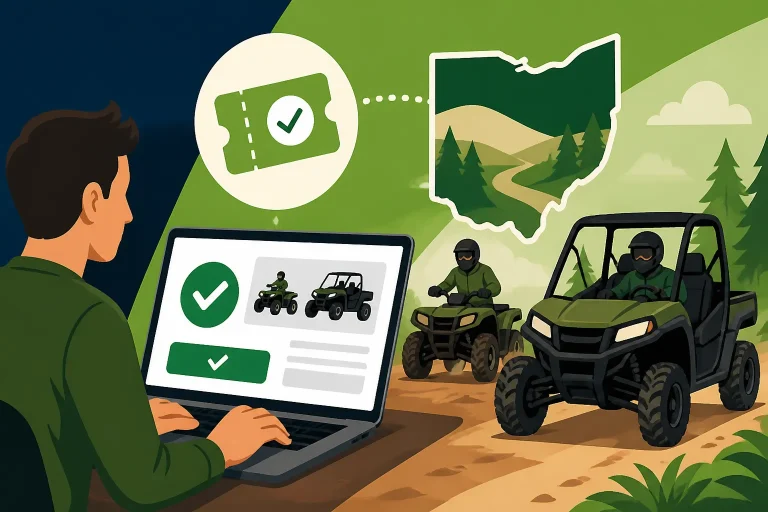
Ohio registration and land access are different questions. Having a plate does not give you permission to ride on every trail, road, or piece of private property. Likewise, a course certificate does not authorize use of land that is closed to APVs.
For Ohio state forest trails, start with Ohio Rules for Riding State Forest Land and Ohio APV Permits Explained. Ohio’s registration can serve as trail authorization in places where that system applies, but other riding areas may have separate permits or access conditions. Trail rules can also limit machine width, operating hours, or the routes you may use.
Wayne National Forest has its own access rules. Do not assume that an Ohio registration or a safety course covers federal forest requirements. Check Ohio Rules for Riding a National Forest and confirm the current permit and operating rules for the area you plan to visit.
Age and supervision
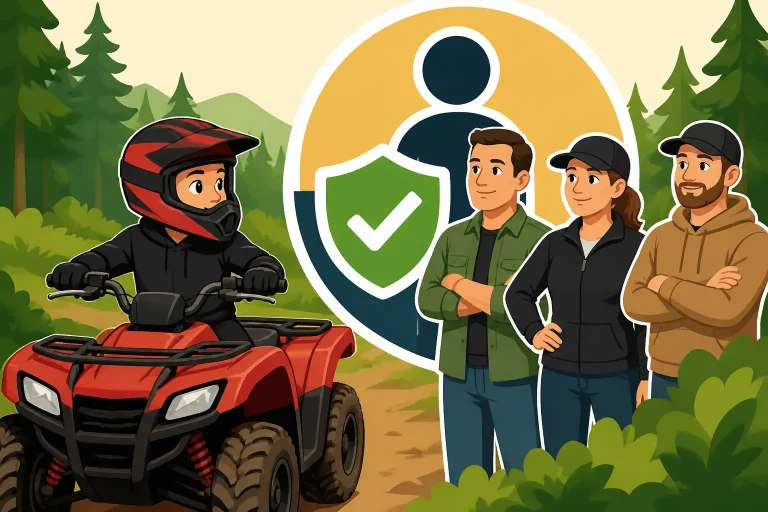
Rules for younger riders are a separate issue from course completion. Ohio has age and supervision requirements for certain riding situations, and a parent or other adult may need to accompany a young rider. A course does not remove those requirements. Review Ohio Minimum Age to Ride an APV and Ohio Supervision Rules on Forest Trails before taking a minor onto public riding land.
Parents should also consider whether the child can operate the machine safely, not just whether the child meets a legal minimum. A rider who can reach the controls and understand basic instructions may still need close supervision, a suitable machine, and a riding area matched to their ability.
Helmets and eye protection
Not being required to take a course does not mean protective equipment is optional. Ohio rules can require helmets and eye protection in particular riding settings, and a trail manager may set additional conditions. Check Ohio Helmet Rules on State Forest Trails for the rules that apply to forest riding.
Use protective gear that fits and is appropriate for the activity. A poorly fitting helmet can shift during a fall, while unprotected eyes are vulnerable to dust, gravel, branches, and insects. A safety course can help riders understand risk, but it does not replace equipment requirements or sound judgment.
Roads are a separate category
A course does not make an ATV or UTV street legal. Whether a machine may use a particular Ohio road depends on state law and local authorization, along with applicable requirements for the machine and its operator. Local road access can vary, so check the rules for the exact township or county route.
For a UTV, road-use requirements may include equipment, inspection, insurance, and licensing conditions. These are separate from an ATV safety course. Start with Street Legal APVs in Ohio: The Short Answer and verify the rules before riding onto a road.
When taking a course is still a good idea
A course can be worthwhile even when Ohio does not require one. New riders may benefit from structured instruction before learning on a busy trail, steep hillside, or muddy route. Experienced riders can also use training to refresh safe habits or learn to handle an unfamiliar machine.
A useful course should cover more than how to start and steer. Look for instruction on:
- Throttle and braking control, including how to stop without losing control.
- Shifting body weight and managing turns on uneven ground.
- Riding on slopes, loose surfaces, and changing terrain.
- Recognizing hazards such as water, drop-offs, ruts, and hidden obstacles.
- Carrying a passenger only when the machine is designed and approved for one.
- Basic pre-ride checks and what to do after a breakdown or rollover.
- Trail etiquette, group spacing, and communicating with other riders.
Hands-on practice matters. Watching a video may introduce important ideas, but it cannot fully show whether a rider can control the machine, use the brakes, or react safely on a slope. When possible, choose training with practical instruction and a machine appropriate for the rider.
Before enrolling, ask who provides the training, what machines and ages it covers, whether there is a practical component, and whether the course is accepted by the organization that requires it, if any. Do not assume that every course certificate will satisfy a park, event, insurer, employer, or land manager. If you are looking for options, Ohio ATV Safety Course Options is a useful starting point.
Training is especially valuable in situations where a rider is new to the machine or the terrain. A familiar yard or field can feel very different from a narrow trail with other riders, changing grades, and limited room to turn around. A course can help riders build a safer foundation before they encounter those conditions.
How to decide what you need before riding
Use a short checklist rather than treating a course certificate as an all-purpose permission slip.
- Identify the exact riding area. State forest, national forest, private park, private land, and public road use can involve different rules.
- Check the machine’s status. Confirm whether it needs Ohio registration, a separate permit, or other documentation for that location. For machines registered elsewhere, see Ohio Reciprocity for Out-of-State Machines.
- Check age and supervision rules. Confirm what applies to each rider, especially if anyone is a minor.
- Review equipment requirements. Look for helmet, eye protection, width, lighting, and other rules relevant to the area or type of riding.
- Ask about local or operator rules. A park, event organizer, rental business, or landowner may set conditions beyond statewide requirements.
- Choose training based on your needs. If a course is required by a specific operator, ask which courses they accept. If it is voluntary, look for practical instruction suited to the rider and machine.
If you are renting, ask the rental business what registration, safety briefing, equipment, and access arrangements are included. A rental does not automatically mean the machine is cleared for every trail or that a forest permit is included. See Ohio Rules for a Rented Machine and confirm details directly with the business and the land manager.
For an out-of-state visitor, the key question is often whether the home-state registration is accepted for the intended riding area—not whether the rider has completed a course. Ohio reciprocity and visitor-permit rules can depend on the registration status of the machine and where you plan to ride. Check Ohio Reciprocity for Out-of-State Machines before traveling.
The practical answer is straightforward: Ohio does not generally require an ATV safety course, but that does not remove the need to follow the rules for the machine, rider, and riding location. Training is a sensible way to reduce risk, particularly for beginners and young riders. Confirm local requirements before the trip, and treat the course as preparation—not as a substitute for permission, registration, protective gear, or legal access.
Disclaimer
This article is for general informational purposes only and does not constitute professional advice. Laws, prices and regulations vary by location and change over time. Consult a qualified professional for guidance on your specific situation.