Carrying Fuel in a Rack Can
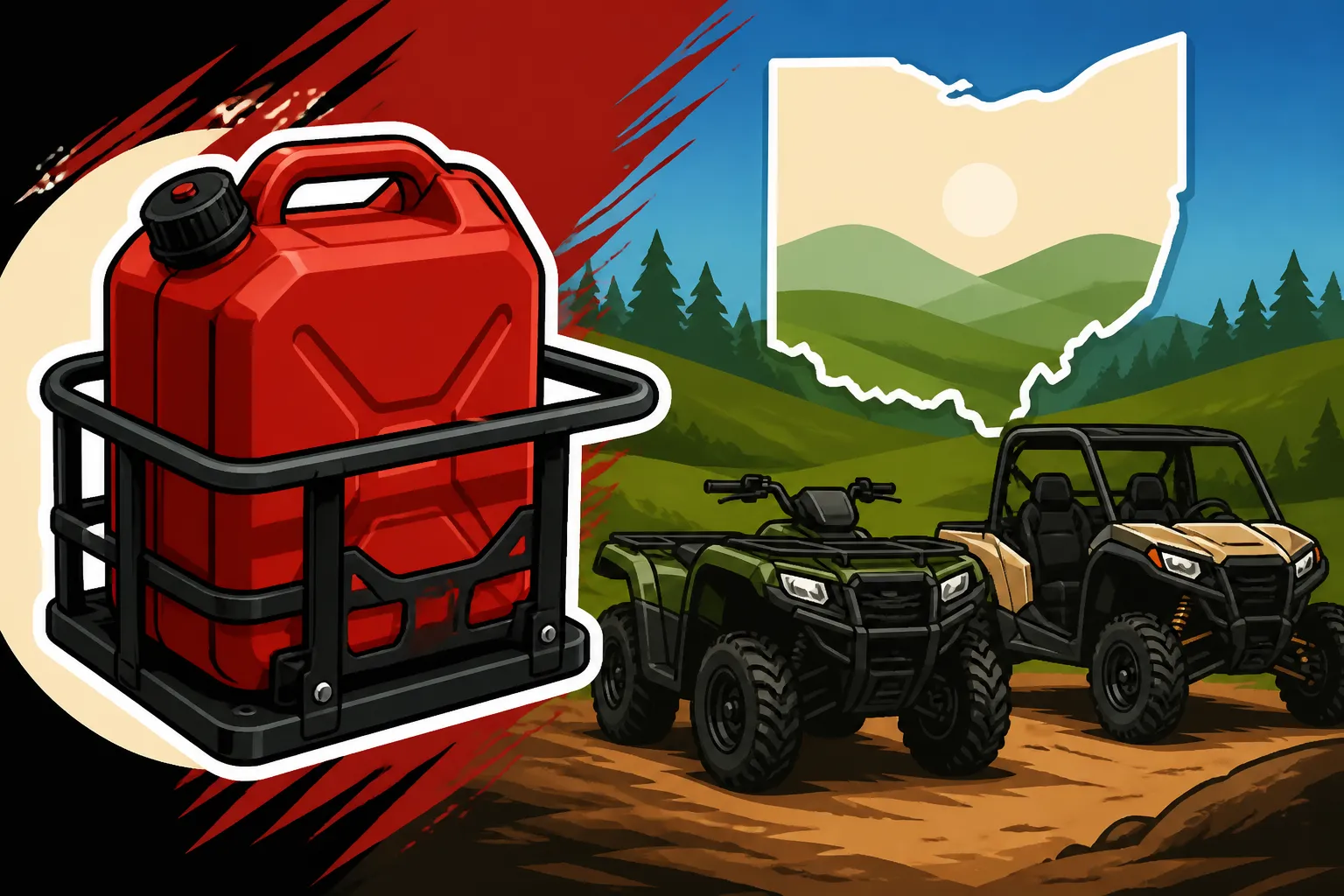
Carrying extra fuel can be useful on a long Ohio ride, but a can that shifts, leaks or sits near a hot exhaust can turn a sensible backup into a serious hazard. The right approach is to check the land manager’s rules, choose a fuel-rated container and mount it securely. Here’s how to plan for spare fuel on an ATV or UTV without overlooking the practical risks.
Check the rules for the place you plan to ride
There isn’t one simple answer that covers every Ohio trail, forest, private park and road. Whether you may bring a spare can, where you may refuel and what fire restrictions apply can depend on the land manager and current conditions. Check the rules for your specific riding area before loading up; don’t assume a practice allowed at one location is allowed everywhere.
A registration plate or trail permit and permission to carry fuel are separate issues. Ohio’s APV registration and reciprocity rules help determine whether you may ride a machine in a particular setting, but they don’t automatically answer questions about fuel storage or fire restrictions. For the difference between a state forest trail permit and national forest access, see Why the Ohio Plate Is the Trail Permit and How the Wayne National Forest OHV Permit Works. If you’re visiting from another state, Ohio APV Reciprocity With Other States can help with the registration side of the trip.
Before leaving, check the trail system’s official information for:
- Whether spare gasoline may be carried on the machine
- Any restrictions on fueling, open flames or fuel storage
- Seasonal or temporary fire restrictions
- Rules for parking, staging and overnight storage
- Whether the route is open and appropriate for your machine
A posted notice, trailhead board or land manager’s office can be more useful than a general rule you found for a different property. Conditions can change, especially during dry weather or other periods when fire precautions are tightened. What the Trailhead Board Tells You Before a Ride offers a useful checklist for information to review before unloading.
Keep a distinction between carrying fuel and using fuel. Permission to bring a sealed, secured container does not necessarily mean you can refuel anywhere you like. Avoid fueling beside a fire ring, campfire, hot equipment or other ignition source. If a location has specific directions for fueling or fuel storage, follow them even if your usual routine is different.
Choose a can and mount it for your machine
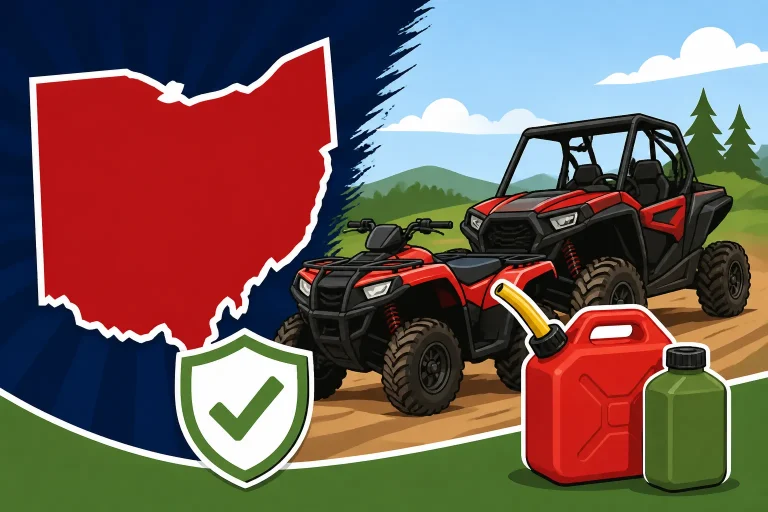
Use a container designed for gasoline, not a water jug, household bottle or repurposed chemical container. A fuel-rated can is made and marked for that purpose, and its cap and closure are intended to help contain vapors and liquid. Check the container’s instructions for filling, transport and storage, and replace it if it is cracked, badly worn or no longer closes securely.
A rack-mounted can needs to stay put over rough ground, but secure mounting alone isn’t enough. The can also needs to be positioned away from hot surfaces, protected from impacts and within the machine’s carrying limits. Review your ATV or UTV owner’s manual and any rack or mounting-hardware instructions before fitting it.
| Check | What to look for |
|---|---|
| Container | Designed and labeled for gasoline, with an intact cap and closure |
| Mount | Made for the can and firmly attached to a suitable rack or approved mounting point |
| Clearance | Away from the exhaust, engine heat, moving parts and sharp edges |
| Load | Can and fuel stay within the machine’s and rack’s load limits |
| Position | Does not block lights, controls, access to equipment or the rider’s view |
| Condition | No cracks, leaks, damaged straps or loose hardware |
Don’t rely on a loose bungee cord or a strap that can slide off as the machine bounces. Use a mount intended for the container and check that the can cannot rock, tip or shift when pushed by hand. A can that seems stable in the garage can move on ruts, side slopes and repeated impacts. Recheck the attachment after the first short stretch of trail and periodically during the ride.
A rack can also change how the machine handles. Added weight high or toward the rear may affect stability, especially on uneven ground or slopes. Keep the load modest, balance it as the manufacturer recommends and avoid letting a full can push the rack beyond its capacity. If the machine becomes harder to steer or feels top-heavy, stop and reassess the load rather than continuing.
Place the can where it will not contact an exhaust component, hot engine area or part that moves during steering or suspension travel. Don’t mount it where a rollover, branch or other impact is likely to crush it. On a UTV, make sure it does not interfere with doors, seat belts, passengers or access to emergency equipment. An enclosed cab is not a good place to improvise a storage spot: gasoline fumes are hazardous, and the machine’s manual and container instructions should guide where fuel may be carried.
If you’re shopping for a can or mount, check the product dimensions and fit against your rack and machine before ordering. Amazon may list options, but a product listing alone does not establish that a can is appropriate for gasoline or compatible with your vehicle. Confirm the container’s intended use, the mount’s instructions and your machine’s load limits.
Fill, transport and refuel with care
A safe setup starts before the ride. Fill the can outdoors in a well-ventilated area, away from smoking, flames, sparks and hot equipment. Follow the can’s instructions and leave the space it calls for rather than filling to the brim. Wipe off any spilled fuel, close the cap fully and check for leaks before placing the can on the machine.
Transporting spare gasoline to the trailhead in a tow vehicle is a different situation from carrying it on an ATV or UTV. In either case, the container should remain upright and secured against movement, with its openings closed. Keep it away from heat and ignition sources, and follow the vehicle and container manufacturers’ guidance. Never leave a fuel can loose where it can roll, tip or be struck by cargo.
At the trailhead, don’t refuel beside a campfire, grill, smoking area or running machine. Shut the ATV or UTV off and allow hot parts to cool before opening a can. Move to a suitable, well-ventilated place and follow the land manager’s directions. Avoid spilling fuel on the ground, the machine or your clothing. If fuel spills, stop, keep ignition sources away and follow the site’s instructions for handling the spill.
During the ride, check the can and its mount at sensible stops. Look for a loose strap, a shifted can, a damaged cap or any sign of fuel on the container or rack. Don’t keep riding with a suspected leak. Move away from ignition sources and address the problem safely; if you cannot make the container secure and leak-free, don’t carry on with it mounted.
A spare can is not a substitute for trip planning. Estimate your range conservatively, taking account of terrain, riding style, stops and any detours. A steep, muddy or slow route can use more fuel than an easy ride. Carrying more fuel than needed adds weight and risk, while carrying too little can leave you stranded. Plan a turnaround point with a reserve rather than assuming that a station or another rider will be nearby.
Keep the can closed when it is not being used, and don’t leave it in direct sun or beside a heat source when parked. At the end of the ride, follow the storage instructions on the container and the requirements of the place where you keep the machine. Do not store fuel in a living area or other place where vapors could accumulate.
Make a practical decision before you load up
For a short ride on a familiar loop, a spare can may add unnecessary weight. For a longer route where fuel access is limited, a properly mounted can may be useful if the land manager permits it and your machine can carry it safely. The best decision depends on the ride, your vehicle and the place you’re visiting—not simply on whether there is room on the rack.
Use this sequence before setting out:
- Confirm the route is open and that spare fuel is allowed at the riding area.
- Check the machine manual, rack limits and fuel-container instructions.
- Choose a gasoline-rated can and a mount designed to hold it.
- Fit the can clear of heat, moving parts and likely impact points.
- Secure it, then test for movement by hand.
- Carry only the amount you reasonably need and plan when and where you might refuel.
- Recheck the can during the trip and stop if it shifts, leaks or becomes damaged.
If the machine’s manual does not support the mounting location, the rack is already near its limit or the can cannot be kept well away from heat and impact, don’t force the setup. Consider carrying the fuel in a properly secured tow vehicle instead, or adjust the route to use less fuel. For rides on public land, review the relevant land-specific guidance as well; Ohio Rules for Riding a National Forest and Ohio Rules for Riding State Forest Land cover access rules that are separate from safe fuel handling.
The main goal is not to carry the biggest can that fits. It is to carry only what makes sense, in a container intended for gasoline, mounted so it stays secure and away from heat, while following the rules for the place you’re riding.
Disclaimer
This article is for general informational purposes only and does not constitute professional advice. Laws, prices and regulations vary by location and change over time. Consult a qualified professional for guidance on your specific situation.