Calling a Ranger District Before You Load
A trail map can show where a route runs, but it may not tell you whether it is open today, whether your machine fits the rules, or which permits you need. A quick call to the right ranger district before loading can prevent a long drive to a closed trailhead or a missing-permit problem. Here’s what to ask and how to turn the answers into a ride plan.
Why a Call Can Save a Trip
Ohio trail information is spread across different land managers and rule systems. A route in Wayne National Forest, for example, is not necessarily governed by the same access rules as a trail in an Ohio state forest or a privately operated riding park. Even within one forest, the trailhead, season, machine type, or a temporary closure may affect what you can ride.
Online maps and notices are useful starting points, but they may not answer a trip-specific question. A call to the ranger district responsible for the area can help you check current access conditions and clarify which office or source handles a question. That matters especially when:
- You are planning a long drive or an overnight trip.
- Your machine is wider than a typical ATV or quad.
- You are visiting from another state.
- You have not ridden the area before.
- Recent rain, maintenance, fire danger, or another temporary issue could affect access.
- You are unsure whether your registration or permit covers the route you plan to ride.
A call is not a substitute for posted signs, official rules, or permits. Conditions can change after you speak with someone, and a verbal answer does not override a closure sign at the trailhead. Think of the call as a way to identify what to verify and prepare, not as permission to ignore restrictions.
It also helps to know which land you intend to ride. The Wayne National Forest is federally managed, while Ohio’s state forests and other public lands have their own rules and contacts. If your plan includes more than one property, ask each relevant manager rather than assuming the same answer applies throughout. Ohio’s Four State Forest APV Areas can help distinguish state forest riding areas from other Ohio destinations.
For riders headed to Wayne National Forest, a federal forest pass and Ohio registration are separate issues to check. Ohio’s plate does not automatically answer every question about access to a national forest trail. Read How the Wayne National Forest OHV Permit Works and Ohio Reciprocity for Out-of-State Machines before you call, so you can ask about your own situation rather than trying to sort out every rule during the conversation.
What to Ask Before You Load
Make the call with a specific ride in mind. “Are the trails open?” is a start, but a useful answer depends on the system, trailhead, date, and machine. Write down the area you want to visit, the machine’s width, where you are coming from, and how many people will ride.
| Topic | Ask the ranger district | Why it matters |
|---|---|---|
| Trail status | Is the area open on my planned date, and are any routes or access points closed? | A general trail system may be open while a particular section is not. |
| Conditions | Are there current weather, maintenance, fire, or surface conditions that could affect access? | Conditions may change after recent rain, storms, or work. |
| Machine eligibility | Do the trails I plan to use allow my machine type and width? | A route can have limits that rule out some side-by-sides. |
| Permits | What permits or passes must each rider carry, and where can they be obtained? | Registration, visitor permits, and forest passes may serve different purposes. |
| Reciprocity | What should an out-of-state rider show at the trailhead or during a check? | The answer may depend on whether the home state requires registration. |
| Riding hours and season | What operating hours and seasonal dates apply to this area? | A trail can be open for the season but closed outside its daily hours. |
| Access and parking | Is the planned staging area open, and are there parking or trailer restrictions? | A ride plan fails if the intended access point is unavailable. |
| Current notices | Where should I check for changes before leaving home? | The district can point you to the latest official updates. |
Confirm the exact trail and machine
Give the staff member the name of the trail system or trailhead, not just a nearby town. If you only know the general area, say so and ask which location or route matches your plan. A vague location can lead to an answer about the wrong property.
Describe your machine accurately: ATV, dirt bike, or side-by-side, and its width if you know it. Do not assume that a machine that is registered as an APV can ride every route. Public-land access can have separate size limits. For Ohio state forests, check the applicable width restriction and measure your machine the way the rules require; Ohio’s 62 Inch State Forest Width Limit explains why width can determine where you can ride.
Ask about the particular trail you plan to use, not only the forest overall. If you want to ride a wide side-by-side, ask whether the route is open to that width and whether any sections have a different restriction. A machine that is permitted on one system may not fit another.
Clarify permits and reciprocity
Tell the ranger whether your machine is registered in Ohio or another state. If it has an out-of-state plate, name the state and ask what proof you need to carry. Reciprocity can depend on the home state’s registration rules, and a visitor from a state that does not register off-road machines may have a different requirement from a visitor whose machine is registered there.
Ask two separate questions:
- What registration or temporary permit does the machine need to operate in this area?
- Does each rider need a separate forest pass, permit, or other access document?
These are not interchangeable. An Ohio registration plate, a temporary visitor permit, and a national forest OHV pass can have different purposes. If you are visiting from a state where off-road machines are not registered, review What a Visitor From a Non-Registering State Must Buy and ask the ranger to confirm what applies to the trail system you intend to use.
Do not rely on a general statement such as “your home-state registration is fine” without confirming what documents to bring. Ask whether you should carry the original registration, a card, proof of purchase, or another record, and whether anything must be displayed on the machine. For a broader overview, Which States’ Registrations Ohio Accepts on Its Trails can help you frame a reciprocity question.
Permit arrangements and sales locations can change. Ask where to get the required pass before you arrive, whether a pass can be purchased in advance, and what to do if the usual seller is closed. Check the current official information before paying or setting out; do not assume an old receipt or an online listing covers the exact day and riding area.
Check conditions, closures, and access
Ask whether any trail sections, roads, bridges, gates, or parking areas are closed. A system may have open routes alongside a closure, and the route you planned could depend on a specific connection. If the district cannot confirm a trail-by-trail status, ask where the latest closure notice is posted and when it was updated.
Recent rainfall can make some surfaces difficult or vulnerable to damage. Instead of asking only whether the area is “muddy,” ask whether conditions have led to restrictions or closures, and whether staff advise against bringing a particular type of machine. Follow closures even when a route looks rideable; riding around a gate or bypassing a blocked section can create safety and resource problems.
Confirm daily hours and seasonal dates rather than relying on what you remember from a previous trip. Ask whether the hours apply to the trail itself, the access road, or the parking area. If you expect to arrive early or return near closing time, ask whether those hours leave enough time for your planned ride.
How to Make the Call Useful
A short, prepared conversation is more likely to produce clear answers than a broad request for “the ATV rules.” The person answering may not know your machine, home-state registration, or planned route unless you explain them.
Before calling, have these details ready:
- The date you expect to ride, including whether it is a weekday or weekend.
- The name of the forest, trail system, trailhead, or access road.
- Your machine type and approximate width.
- The state where the machine is registered, or whether it is not registered.
- The number of riders and whether anyone is under 16.
- Whether you need trailer parking, camping, or an overnight stay.
- Any special question, such as a route connection or a planned return time.
Then use a direct opening: “I’m planning to ride at this trail system on this date. I’ll be bringing this type of machine, about this wide, registered in this state. Could you help me confirm whether the route is open and what documents I need?”
That gives the staff member enough context to route the question. If the issue is outside the district’s responsibility, ask which office or official source can answer it. A ranger district may be able to clarify forest access but may not determine Ohio registration requirements, local road access, or rules for private land. For questions about the state’s registration process, Ohio APV Reciprocity With Other States and The Ohio Temporary Permit for Visitors cover related topics.
Take notes, including the name of the area discussed and any website or office the staff member recommends. Repeat important details back: “So I should check the closure notice again the morning we leave, and each rider needs to confirm their own pass?” That simple recap can catch misunderstandings before you go.
If the phone line is busy or you cannot reach anyone, do not treat silence as confirmation that the trail is open. Check the forest’s official notices and the relevant permit information, and consider delaying the trip if you cannot verify a restriction that could affect access. The district may also direct riders to an official recorded update or another contact method.
Turn the Answer Into a Ride Plan
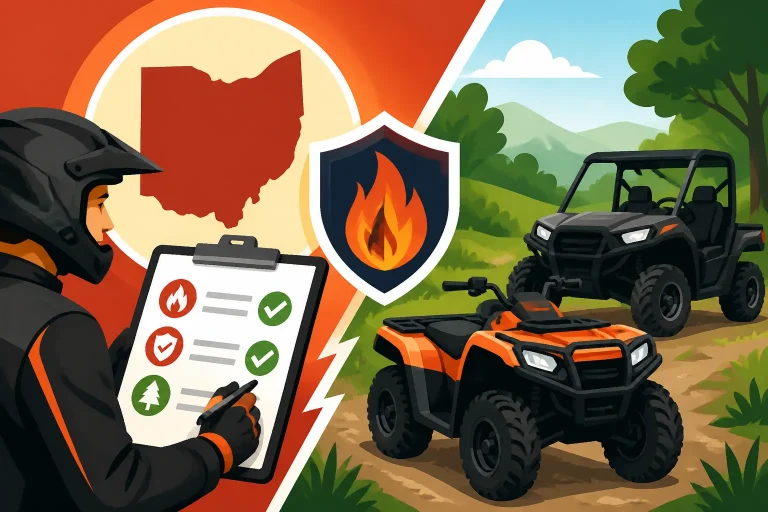
After the call, use the answers to make a short checklist. Keep registration and permits together, make sure each rider has the documents that apply to them, and confirm that the machine meets the rules for the planned trail. If you are riding with a group, share the same trailhead, hours, closure information, and permit instructions with everyone. One rider’s paperwork may not cover the rest of the group.
Check official notices again before loading and on arrival. A closure, storm, or access change can occur after your call. At the trailhead, read the posted information and follow any updated direction. If a sign conflicts with what you understood on the phone, stop and contact the land manager rather than assuming the older information controls.
Keep a backup plan. Choose another permitted riding area or be prepared to postpone the trip if your intended route is closed. Do not improvise by crossing onto another property, using an unmarked route, or riding a road that is not open to your machine. For national forest access, What the Trailhead Board Tells You Before a Ride is a useful reminder to check the posted conditions before starting.
A final pre-departure check can be simple:
- Confirm the correct trail system and access point.
- Recheck current closures and operating hours.
- Verify registration, reciprocity, and any separate pass requirements.
- Confirm that the machine’s type and width are allowed.
- Pack the required documents and make sure the group knows the plan.
- Follow posted directions when you arrive, even if conditions differ from the call.
Calling ahead is most valuable when it helps you identify a question you would otherwise miss. It cannot guarantee that conditions will remain unchanged, but it can help you arrive with the right documents, choose an eligible route, and avoid loading for a trip that is not available.
Disclaimer
This article is for general informational purposes only and does not constitute professional advice. Laws, prices and regulations vary by location and change over time. Consult a qualified professional for guidance on your specific situation.