Ohio UTV Road Equipment List
If you're an Ohio UTV owner, you know the craving to hit the trails, but what about taking your machine beyond the dirt and onto the pavement? Many riders dream of the convenience of riding their UTV right from their driveway to the local gas station, or even to access nearby trails without having to load up a trailer. However, making your UTV truly "street legal" in Ohio isn't as simple as just adding a license plate. It involves a specific list of equipment to ensure it meets state safety standards. This guide is here to walk you through exactly what you'll need to equip your UTV to comply with Ohio's road-use regulations, helping you navigate the requirements without the headache.
Understanding Ohio's UTV Road Use Laws
Riding your UTV on public roads in Ohio isn't a universally granted right; it's a privilege that comes with specific responsibilities and equipment mandates. The state categorizes UTVs as All-Purpose Vehicles (APVs), but when it comes to road use, they're often held to a different standard than their ATV counterparts. It’s a common frustration that what flies on the trails won't necessarily cut it on Main Street.
Why UTVs Need Special Equipment for Roads
Think about it: your UTV is designed for off-road performance, tackling mud, rocks, and uneven terrain. Cars, trucks, and motorcycles, on the other hand, are engineered from the ground up for highway speeds, traffic, and pedestrian safety. When you bring an off-road machine onto public asphalt, it needs to bridge that gap. The standard off-road lights, mirrors, or lack thereof, just aren't sufficient for interacting with other vehicles and road hazards. Ohio law recognizes this fundamental difference, and that's why specific equipment modifications are required. It's not just about getting a plate; it's about making your machine visible, audible, and controllable in a road environment.
This distinction is crucial because while both ATVs and UTVs are APVs in Ohio's eyes, the rules for riding them on public roads can differ significantly. For instance, ATVs generally aren't allowed on paved roads at all, unless it's to cross one or if specific township or county ordinances permit limited access. UTVs, with their larger size, side-by-side seating, and often more car-like controls, have a clearer, though still restricted, path to road legality. This is why you'll find a more extensive [Ohio UTV Road Equipment List] than you would for an ATV.
The Inspection Process for Road Legality
Before your UTV can truly be considered road-ready, it often needs to undergo an inspection to confirm it has all the necessary safety equipment. This isn't a quick once-over; it’s a thorough check to ensure every required component is present and functional. Imagine having everything installed, only to find out during the inspection that a taillight is too dim or a turn signal is positioned incorrectly. It's a common stumbling block for those looking to add road-use capabilities to their machine.
The inspection ensures your UTV complies with the specific requirements laid out by Ohio Revised Code for operating on public roads. This means someone, typically a law enforcement officer or an authorized inspection facility, will go through a checklist to verify your UTV is up to snuff. They're looking for everything from proper lighting to a functional horn. It's the gatekeeper to getting that coveted road plate. Understanding [The Ohio Inspection a UTV Must Pass] beforehand can save you a lot of time and frustration, as it clearly outlines what they'll be scrutinizing.
Essential Road Equipment for Your Ohio UTV
When you decide to equip your UTV for road use in Ohio, you're essentially transforming it from a pure off-road warrior into a dual-purpose machine. This transformation involves adding several critical components that ensure your safety and the safety of others on the road. Don't think of these as optional accessories; they are the bare minimum to stay legal.
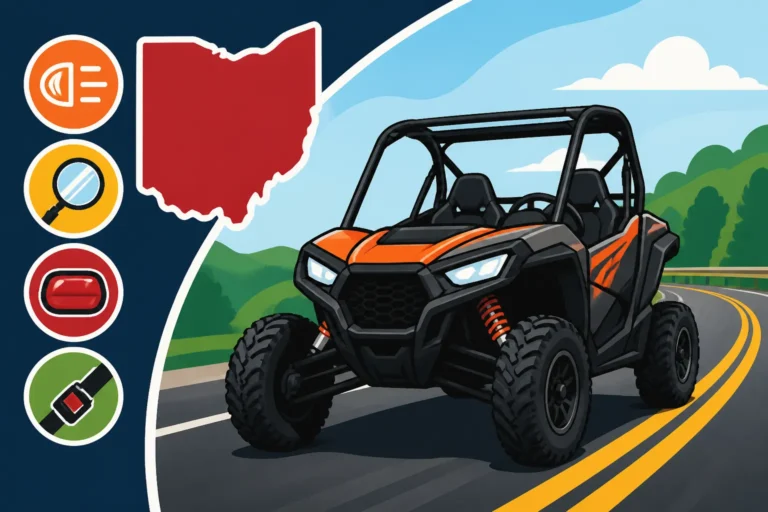
Lighting and Signaling Requirements
Proper lighting and signaling are paramount for any vehicle sharing the road, and your UTV is no exception. Other drivers need to see you, especially at dusk, dawn, or in adverse weather, and they need to know your intentions.
- Headlights: Your UTV must be equipped with at least two white headlights that emit a light visible from 500 feet to the front. These need to include both high and low beam settings, just like a car. This isn't just for seeing where you're going; it's for being seen by oncoming traffic. Many factory UTV headlights are sufficient, but ensure they meet the brightness and beam pattern requirements.
- Taillights and Brake Lights: Your UTV needs at least one red taillight, visible from 500 feet to the rear. This taillight must illuminate whenever your headlights are on. Additionally, you need at least one red brake light, which illuminates when you apply the brakes. It's crucial that these are distinct and bright enough to catch the attention of following vehicles.
- Turn Signals: This is often one of the first additions for many UTV owners. You need front and rear turn signals that flash amber or red (in the rear) to indicate turns. These must be visible from 500 feet. Many aftermarket kits, like those available from SuperATV, bundle everything you need for a complete turn signal system, often integrating into existing wiring. Remember, a hand signal isn't typically considered a legal substitute on a UTV for road use. It's important to have functional [Turn Signals and Mirrors on an Ohio UTV] so other drivers know your next move.
- Horn: A working horn is a must. It needs to be audible from a distance of 200 feet, allowing you to alert other drivers or pedestrians to your presence when necessary. A simple push-button horn that mounts easily is usually all that's required.
Visibility and Safety Features
Beyond lighting, your UTV needs to provide adequate visibility for the driver and protection for occupants, aligning more closely with traditional road vehicles.
- Mirrors: You must have at least one rearview mirror that provides a clear view of the highway to the rear for at least 200 feet. Many UTV owners opt for two side mirrors, similar to a car, for better situational awareness. This is a practical choice, especially if your UTV is wider than average, making it harder to see what's directly behind you with only a center mirror.
- Windshield and Wipers: This is a big one. For road use, your UTV must be equipped with a windshield that meets safety glazing standards, similar to those found in cars. This isn't just about comfort; it's about protecting occupants from debris. If your UTV has an enclosed cab, or if local ordinances require it, you may also need a functional windshield wiper system. Think about trying to see the road ahead in the rain or mud without wipers; it's nearly impossible. Ensuring you have proper [Wipers and Glass on an Ohio UTV] is critical for maintaining clear vision.
- Seatbelts: Your UTV must have a seatbelt or occupant restraint system for every occupant. These must be in good working order and worn by all occupants whenever the UTV is in motion on a public road. This is a fundamental safety feature that shouldn't be overlooked.
- Roll Cage (ROPS): UTVs come standard with a factory-installed Roll-Over Protective Structure (ROPS), commonly called a roll cage. This must be intact and in good condition. While there's been discussion about [What a Roll Cage Requirement Would Change] in proposed legislation, the fundamental safety function of an existing, factory-installed ROPS for occupant protection is already a given. Do not modify or remove any part of the factory ROPS without professional guidance and ensuring it still meets safety standards.
- Tires: Your tires must be DOT-approved for road use. This is a critical distinction, as many aggressive off-road tires are not designed for the stresses of pavement driving, nor do they always offer the necessary traction or wear characteristics for road use. The wrong tires can compromise handling and braking, creating a dangerous situation.
Other Mandatory Items
There are a few other items that, while seemingly minor, are legally required to complete your UTV's road-legal transformation.
- License Plate Holder with Illumination: Once your UTV is titled and registered, you'll receive an APV license plate. This plate needs to be securely mounted to the rear of your UTV and illuminated by a white light when your headlights are on, making it visible at night. This isn't just for law enforcement; it's part of the visual identification of your vehicle.
- Muffler and Spark Arrestor: Your UTV must be equipped with a muffler system that keeps noise emissions within legal limits. Excessive noise can be a nuisance and lead to citations. If you also plan to ride on state-managed trails (like those in Wayne National Forest or Ohio State Forests), your muffler will likely need to incorporate a spark arrestor, which prevents hot exhaust particles from igniting dry vegetation. Understanding [Ohio Muffler Requirements for APVs] is key to avoiding fines and being a responsible rider.
- Speed Restrictions and Display: While not an "equipment" in the traditional sense, understanding Ohio's UTV speed limits on roads is critical. Generally, UTVs are restricted to roads with a posted speed limit of 35 mph or less. This means your UTV must be capable of not exceeding this speed, and you must adhere to it. This regulation is why [Why an Ohio UTV Stops at Thirty-Five] is a common conversation among riders. Some jurisdictions may even require a slow-moving vehicle (SMV) sign if your UTV cannot reach certain speeds, so always check local ordinances.
Beyond the Basics: Recommended Gear for Ohio Road Riding
While meeting the mandatory equipment list gets you on the road legally, smart riders know that a few extra items can significantly enhance safety, comfort, and preparedness. These aren't always required by law, but they are highly recommended for peace of mind.
Documentation and Personal Safety
Beyond the machine itself, your personal preparedness and documentation are just as vital when operating on public roads.
- Driver's License: This seems obvious for road use, but sometimes riders think off-road rules apply everywhere. In Ohio, if you're operating your UTV on a public road, you absolutely need a valid [A Driver's License on an Ohio Road]. Don't leave home without it.
- Proof of Insurance: Ohio law mandates liability insurance for all motor vehicles operating on public roads. Your UTV, once street-legal, falls under this umbrella. Always carry your [Proof of Insurance on an Ohio Road], as you would for your car. This protects you financially in case of an accident.
- Registration Card: Just like your driver's license and insurance, your UTV's registration card is a critical piece of documentation. Keep it with you whenever you ride. Law enforcement will ask for it during any roadside stop. Understanding [What Happens If You Ride Without Your Registration Card] is a good motivator to keep it accessible.
- Helmets: While Ohio's helmet laws for UTVs on public roads aren't as strict as for motorcycles or ATVs in all scenarios, wearing a DOT-compliant helmet is always a smart move. It's the most effective way to protect your head in the event of a rollover or collision. Especially if your UTV doesn't have a full enclosure, a helmet is a no-brainer. Always consider [Ohio Helmet Law for APV Riders] for the specifics, but err on the side of safety.
- Eye Protection: Even with a windshield, dust, bugs, or stray debris can find their way into your eyes. Goggles or safety glasses are inexpensive and provide crucial protection. This is often an overlooked aspect, but just like on the trails, [Eye Protection on an Ohio Trail] is invaluable on the road.
Maintenance and Emergency Preparedness
Being prepared for the unexpected can turn a potential disaster into a minor inconvenience.
- Basic Tool Kit: A small kit with common wrenches, screwdrivers, zip ties, and duct tape can be a lifesaver for minor trailside (or roadside) repairs. A loose bolt or a snapped cable can derail your ride quickly.
- First-Aid Kit: Accidents happen, and having a basic first-aid kit on board for cuts, scrapes, or more serious injuries is always a good idea. Consider one specifically designed for outdoor activities.
- Fire Extinguisher: A small, accessible fire extinguisher can prevent a minor electrical short or fuel leak from becoming a catastrophic loss.
- Tire Repair Kit/Spare Tire: A flat tire is one of the most common issues on any vehicle. A tire plug kit and a portable air compressor can get you back on the road. For longer trips or more remote areas, a full-size spare tire might be worth the investment, especially if you're riding with aftermarket SuperATV wheels.
- GPS/Navigation: While many UTVs have built-in GPS, having a reliable navigation system, whether on your phone or a dedicated device, is helpful when exploring new county or township roads. Cell service can be spotty in some parts of Ohio.
Where to Find and Install Your UTV Road Equipment
Outfitting your UTV for road legality requires quality parts and, in some cases, careful installation. Knowing where to source these components and whether to tackle the job yourself or hire a professional can make a big difference.
Sourcing Quality Components
The market for UTV aftermarket parts is vast, but when it comes to road safety equipment, quality and compliance are key. You want parts that are durable, reliable, and meet any relevant safety standards.
Many reputable aftermarket companies specialize in UTV accessories that are designed to help you meet road-legal requirements. For instance, SuperATV offers a wide range of UTV parts, including DOT-approved windshields, turn signal kits, and mirrors that are specifically engineered for UTVs. When shopping, always look for clear indications of DOT compliance for items like windshields and tires, if required. Your local UTV dealer is also a great resource for OEM (Original Equipment Manufacturer) parts or recommended aftermarket brands that they trust for road conversions. Don't be afraid to ask questions about specific certifications or how well a product holds up to real-world use. Investing in cheaper, non-compliant parts can cost you more in fines or failed inspections down the line.
DIY vs. Professional Installation
The decision to install equipment yourself or have a professional do it often comes down to your mechanical skill, the complexity of the part, and your comfort level with electrical work.
- DIY Installation: Many items, like mirrors, horns, or even some basic turn signal kits (especially those designed for plug-and-play), can be installed by an enthusiastic DIYer with basic tools and a good set of instructions. If you're comfortable with wiring diagrams and have a knack for turning wrenches, you can save money on labor. However, always double-check your work, especially with electrical connections, to prevent shorts or failures. This can be a rewarding process, allowing you to learn more about your machine.
- Professional Installation: For more complex installations, such as integrated windshield wiper systems, sophisticated lighting setups, or if you're not confident in your electrical skills, taking your UTV to a qualified dealer or a UTV accessory shop is a wise choice. Professionals have the right tools, experience, and knowledge to ensure everything is installed correctly and safely, minimizing the risk of issues during an inspection or out on the road. They can also often offer advice on specific products that work best for your UTV model and local Ohio regulations. Remember, getting it right the first time can save you headaches later.
Here's a quick overview of required and highly recommended equipment:
| Category | Mandatory Equipment | Highly Recommended Equipment |
|---|---|---|
| Visibility & Control | Two White Headlights (high/low beam) | Two Side Mirrors (in addition to rearview) |
| One Red Taillight (visible 500 ft rear) | ||
| One Red Brake Light (illuminates on braking) | ||
| Front & Rear Turn Signals (amber/red, visible 500 ft) | ||
| Horn (audible 200 ft) | ||
| Rearview Mirror (clear view 200 ft rear) | ||
| Safety Glass Windshield (if equipped) | Windshield Wipers (especially for enclosed cabs or frequent wet weather) | |
| Safety & Structure | Factory Roll-Over Protective Structure (ROPS) | DOT-Compliant Helmet (for all riders) |
| Seatbelts/Restraints for all occupants | Eye Protection (goggles/glasses) | |
| DOT-Approved Tires for Road Use | ||
| Compliance | Secure License Plate Mount with Illumination | |
| Functional Muffler (meets noise limits) | ||
| Spark Arrestor (if riding on trails) | ||
| Documentation | Valid Driver's License | |
| Proof of Liability Insurance | ||
| Current UTV Registration Card | ||
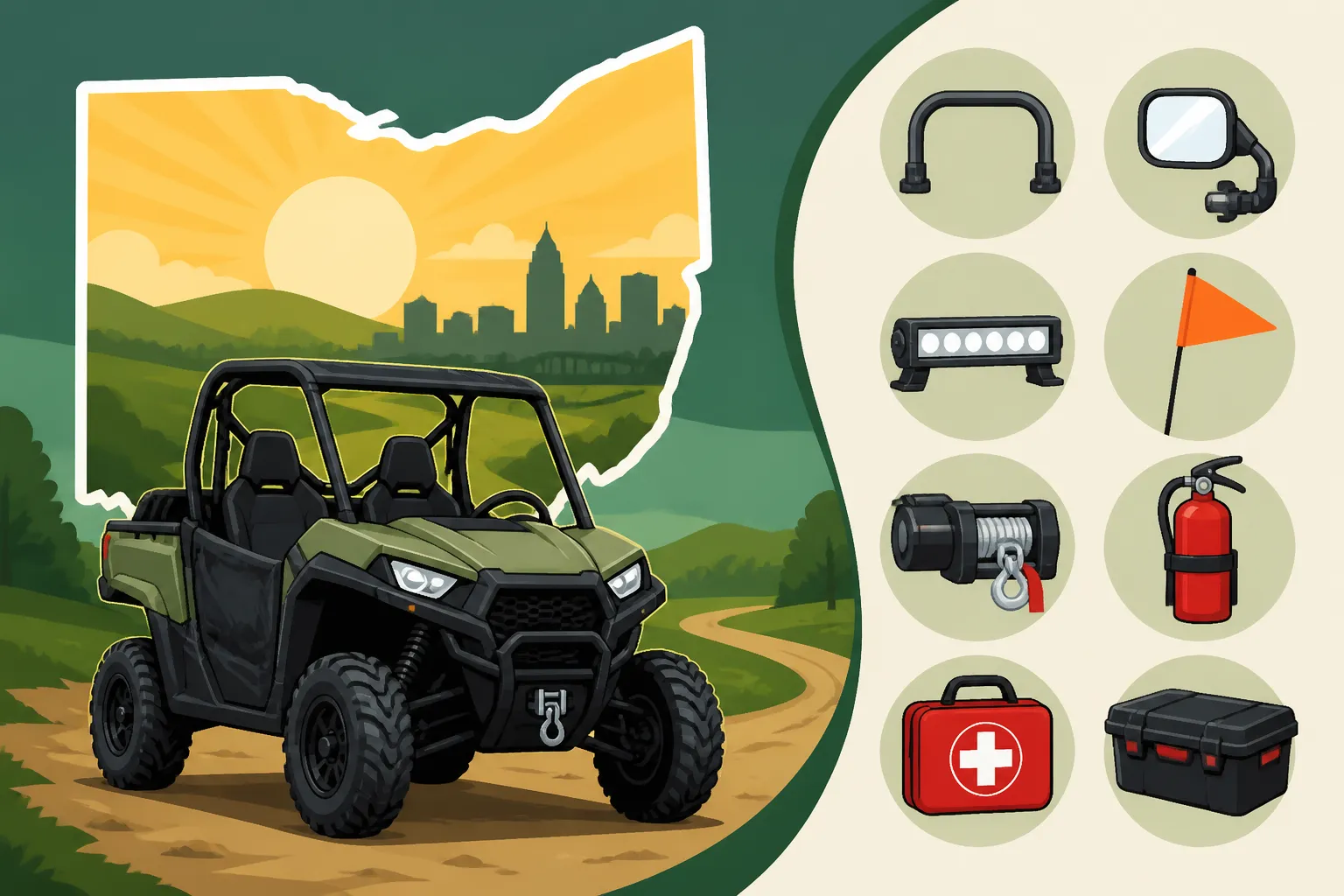
| Emergency Prep | (None legally mandatory) | Basic Tool Kit, First-Aid Kit, Fire Extinguisher, Tire Repair Kit/Compressor, GPS/Navigation, Spare Fuel Can (for long trips) |
Disclaimer
This article is for general informational purposes only and does not constitute professional advice. Laws, prices and regulations vary by location and change over time. Consult a qualified professional for guidance on your specific situation.