Ohio Rules for Riding With a Parent
Riding ATVs and UTVs with your kids in Ohio is an incredible way to bond, explore the outdoors, and create lasting memories. But let's be real: trying to untangle all the rules and regulations, especially when it comes to minors and supervision, can feel like navigating a muddy, unmapped trail in the dark. It's frustrating when you just want to do things by the book and ensure your child's safety, but the information feels scattered or overly legalistic. This guide is here to cut through that confusion, giving you clear, empathetic, and realistic insights into Ohio's rules for riding with your parent or supervising adult, so you can focus on the fun and the memories, not the fear of a ticket.
Navigating Ohio's Age Restrictions for Young Riders
Ohio's approach to all-purpose vehicles (APVs), which include ATVs and UTVs, has specific regulations designed to ensure the safety of younger riders. As a parent, understanding these age limits isn't just about avoiding fines; it's about fostering a safe and responsible riding culture for your children. It can feel like a lot to keep track of, especially when different types of land have different rules, but once you get the hang of it, it becomes second nature.
The Baseline Age for Operating an APV
When it comes to the minimum age for a child to operate an ATV or UTV in Ohio, the general rule of thumb is a common source of confusion. The state doesn't have a blanket "you must be X years old to even touch one" rule. Instead, it often hinges on the type of land and the presence of adult supervision. On private property, for instance, a landowner can set their own rules for who can ride, often allowing younger children to operate machines with direct parental oversight. This is where most kids get their start, learning the ropes in a controlled environment. However, once you step onto public lands, specifically state-managed trails, things become more formalized. This distinction is crucial because what might be perfectly fine in your backyard could lead to a citation on a designated trail.
For context, many parents start their kids on smaller, age-appropriate machines, often referred to as [Youth Machine Sizes and Ohio Rules]. These machines are designed with lower power, speed limiters, and safety features specifically for younger, less experienced riders. The focus at this stage is always on learning control and safety habits. It's not about how fast they can go, but how well they can handle the machine and react to changing terrain.
When Parental Supervision Becomes Non-Negotiable
For riders under a certain age, parental supervision isn't just recommended; it's often legally mandated on public lands. In Ohio, specifically on state forest trails managed by the ODNR (Ohio Department of Natural Resources), the rules are quite clear. If a rider is under 16 years old, they generally need to be accompanied by a licensed adult. This isn't just any adult; it's typically a parent or guardian who is also actively riding and supervising. This ensures that an experienced individual is always nearby, ready to assist or intervene if a situation arises.
Imagine you're out at Monday Creek near Nelsonville, and your 14-year-old is confidently navigating some of the winding trails. Having you right there, perhaps a machine or two behind them, means you can observe their technique, offer pointers, and be a first responder if they encounter an unexpected obstacle or a slight mishap. This direct supervision is about more than just legal compliance; it's a vital safety net. It validates the natural parental instinct to protect their child while allowing them the freedom to explore and develop their riding skills. The law essentially formalizes this protective role when riding on public, managed trails.
Specific Rules for State Forest Trails
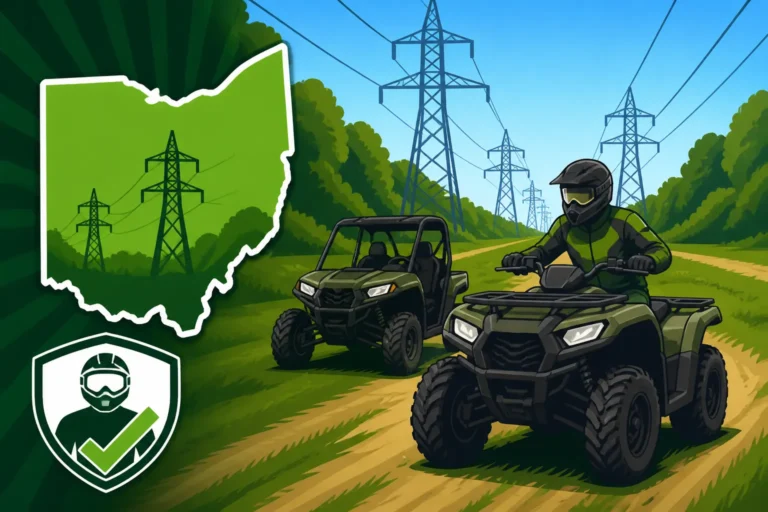
Ohio's state forests, such as Monday Creek, Hanging Rock, and Pine Creek, offer fantastic opportunities for APV riding, but they come with their own set of age-related regulations, particularly concerning minors. The primary rule to remember is that riders must be at least 12 years old to operate an APV on designated state forest trails. This is a hard-and-fast rule, and there's no exception for younger children, even with direct parental supervision. It's a standard many states adopt, designed to ensure a basic level of physical and cognitive development before tackling dynamic trail environments.
Furthermore, for any rider under 16 years old, the supervision rule comes into play. They must be under the direct supervision of a parent or guardian who is also operating an APV and possesses a valid driver's license. This means you can't just drop your 15-year-old off and wait at the trailhead; you need to be out there riding with them. This creates a more controlled and safer environment for everyone on the trails. It's designed to prevent situations where young, inexperienced riders might be out on their own, potentially getting into trouble or causing issues for other trail users. For instance, if your 13-year-old is riding, you, as the licensed parent, must be on another machine, actively supervising them. This close proximity allows for immediate communication and assistance. For more specifics on these areas, you might find [Ohio State Forest Riding Hours] helpful.
| Rider Age Group | Private Land | State Forest Trails | Township/County Roads (if open) |
|---|---|---|---|
| Under 12 | Permitted with adult permission/supervision | Not Permitted | Not Permitted |
| 12-15 | Permitted with adult supervision | Permitted with licensed parent/guardian supervision | Not Permitted (generally) |
| 16-17 | Permitted | Permitted (supervision often recommended, but not always legally mandated like younger ages) | Permitted with valid driver's license and compliance with road rules |
| 18+ | Permitted | Permitted | Permitted with valid driver's license and compliance with road rules |
Note: This table provides general guidance. Always verify specific regulations with local authorities or the ODNR before riding.
Essential Safety Measures and Training for Youth Riders
Beyond the legal age limits and supervision requirements, truly ensuring your child's safety on an ATV or UTV involves a holistic approach. It’s about equipping them not just with the right machine, but with the right gear and, most importantly, the right skills and mindset. As parents, we often feel the weight of responsibility for our children's well-being, and nowhere is that more true than when they're operating powerful machinery.
The Importance of Approved Helmets and Eye Protection
This is non-negotiable, period. Ohio law, like in many other states, is very clear: anyone under 18 years of age operating or riding as a passenger on an APV on public lands must wear a protective helmet. But it's not just any helmet; it needs to be a DOT FMVSS218 approved helmet. This isn't just a suggestion; it's a critical safety requirement that can literally save a life. A helmet designed for off-road use offers crucial protection against head injuries from falls, impacts with obstacles, or even just debris kicked up by other riders. The frustration often comes from finding a helmet that fits correctly, is comfortable enough for long rides, and still meets the safety standards, especially for smaller heads.
Coupled with a helmet, appropriate eye protection is also mandatory for riders under 18. This means goggles or a face shield that protects the eyes from dust, branches, insects, and other airborne particles. Imagine hitting a dusty section of trail at speed, or a low-hanging branch suddenly appearing; proper eye protection prevents serious injury and ensures clear vision, which is paramount for safe riding. You might look for options that integrate well with their helmet, offering a snug fit without hindering breathability. Companies like SuperATV offer a range of accessories, including durable windshields for UTVs, which, while not a substitute for personal eye protection, can certainly enhance comfort and protection from the elements for both adult and young passengers. [Ohio Helmet Rules for APV Riders] provides additional detail.
Understanding the Role of ATV Safety Courses
While Ohio law doesn't explicitly mandate an ATV safety course for all riders, especially for those on private land, it's highly, highly recommended for young riders and their supervising adults. These courses, often offered by certified instructors, cover everything from basic machine controls and proper riding techniques to risk awareness and environmental responsibility. For a child learning to ride, a structured course can instill good habits from the start, far better than just trial and error in the backyard. It teaches them how to respond to emergencies, navigate different terrains safely, and understand the limits of both themselves and their machine.
Think of it as driver's education for off-road vehicles. It builds confidence in a controlled environment and gives parents peace of mind that their child has received professional instruction. Many organizations offer these courses, and they are invaluable for preventing accidents. While you might be an experienced rider yourself, a certified instructor can often spot potential issues or teach techniques that might not occur to you. Plus, taking the course together can be a great bonding experience and reinforce safe practices as a family activity. [Ohio ATV Safety Course Options] can give you an idea of what's available.
Equipping Your Young Rider with the Right Machine
Choosing the right machine for a young rider is paramount, and it's a decision that often causes parents a lot of stress. It's not about getting the biggest or fastest model; it's about matching the machine's size, power, and features to the child's age, size, and experience level. Youth ATVs, for example, come in various engine sizes (e.g., 50cc, 90cc, 125cc) and are often equipped with features like throttle limiters, remote engine cut-offs, and lower top speeds. These features are designed to prevent a child from inadvertently operating a machine that is too powerful or too fast for their skill level.
Putting a small child on an adult-sized ATV or UTV is incredibly dangerous. They won't have the physical strength to control it, the reach for the controls, or the weight to properly shift and balance. This is where researching [Youth Machine Sizes and Ohio Rules] becomes critical. Furthermore, consider adding aftermarket safety accessories. For example, some parents install smaller handlebars, modified footrests, or additional padding to ensure a better fit and more comfortable, controlled ride for their child. Ensuring the machine is in good working order – brakes, tires, lights (if riding near dusk) – is a basic, but often overlooked, safety measure.
Riding Environments and Parental Responsibilities
The rules of the road, or in this case, the trail, can change dramatically depending on where you're riding. This is a huge point of confusion for many parents, who often wonder if the same rules apply to their private farm as they do to a state park or a country road. It's a valid concern, and navigating these nuances is key to responsible riding with your family.
Private Property Versus Public Trails: What Changes?
The fundamental distinction in Ohio APV law often boils down to private versus public land. On your own private property, or land where you have explicit permission from the landowner, the rules regarding age and supervision are generally much more flexible. Here, you, as the parent or landowner, are primarily responsible for setting and enforcing your own safety guidelines. This means you could teach a younger child (under 12) to ride a small ATV in your field, as long as you're directly supervising and feel it's safe. There are no state-mandated age limits or helmet laws for private land use, though wearing helmets and appropriate gear is always advisable, regardless of location. This is often where children gain their initial experience and confidence.
However, once you leave private land and venture onto public trails, such as those found in Ohio's state forests or the Wayne National Forest, the state's official regulations kick in. As discussed, these include strict age minimums (12 years old for state forests) and mandatory adult supervision for minors under 16, along with helmet and eye protection requirements for those under 18. The reason for this difference is simple: public lands involve shared use, and the state has a vested interest in ensuring public safety and minimizing liability. It's crucial to know exactly where you are riding and what rules apply. A simple phone call to the local ODNR office or checking their website before you head out can prevent a lot of headaches. You can also refer to [Ohio Rules for Riding Private Property] for more information.
How Road Riding Rules Affect Minors and Supervision
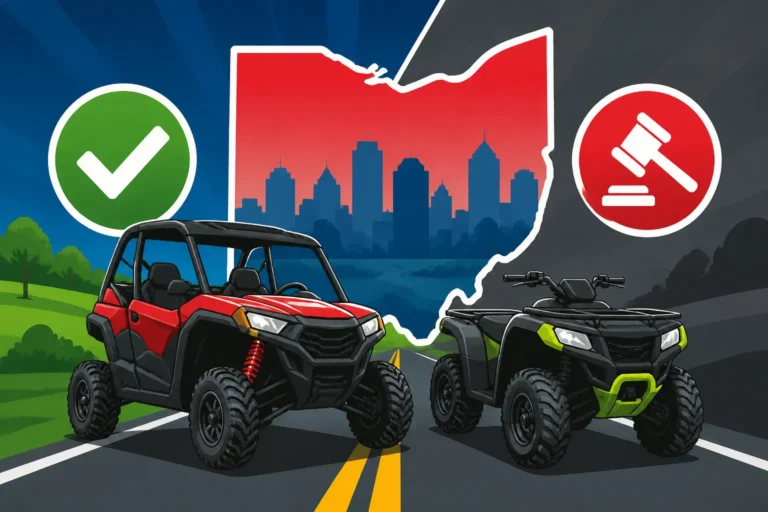
The idea of riding an APV on public roads in Ohio is another area rife with complexity, especially when children are involved. Generally, ATVs are not street legal in Ohio, with very limited exceptions for crossing roads or designated township/county roads where ordinances explicitly allow it. UTVs, however, can be made street legal in certain jurisdictions if they meet specific equipment requirements and undergo an inspection. For a UTV to be considered street legal and ridden on designated roads, the operator must possess a valid driver's license. This immediately sets a high bar for minors.
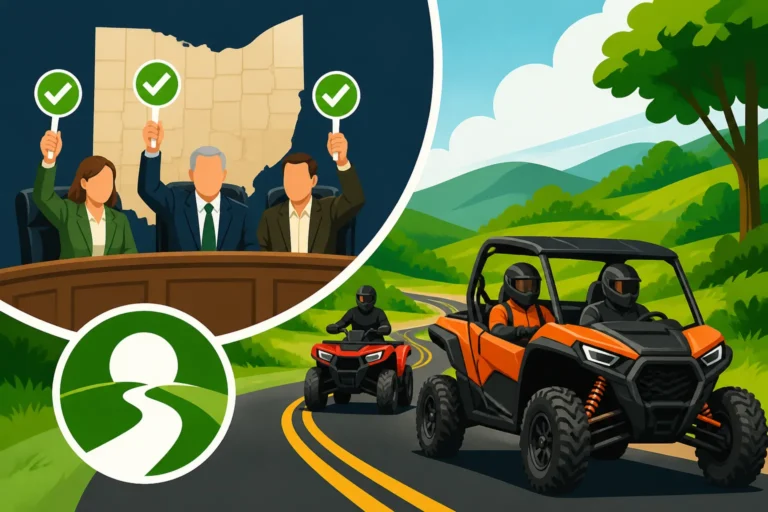
If a township or county has passed an ordinance allowing UTVs on its roads, and your UTV meets all the equipment requirements (like turn signals, mirrors, horn, etc.), a minor cannot legally operate it on those roads unless they are at least 16 years old and possess a valid driver's license. Furthermore, standard traffic laws apply, meaning speed limits, signs, and signals must be obeyed. For children under 16, road riding on APVs, even if the machine is a compliant UTV, is generally not permitted, even with adult supervision. This is a critical distinction, as the risks associated with road riding (interacting with cars, different speeds, hard surfaces) are significantly higher than off-road trail riding. Always check local ordinances and ensure your machine and rider meet all requirements before even considering road use. SuperATV provides many accessories that help make UTVs compliant for road use, from turn signal kits to mirrors and horn kits, but remember, these parts alone don't make a machine street legal; it's about meeting all the requirements and having the proper licensing. [Ohio Rules for Riding a Township Road] delves into this further.
What to Expect When Encountering Law Enforcement
Let's face it: getting stopped by law enforcement while you're out riding with your kids can be nerve-wracking, even if you think you're doing everything right. Knowing what to expect can ease some of that anxiety. Whether it's an Ohio Department of Natural Resources (ODNR) officer on a state trail, a sheriff's deputy on a county road, or a local police officer, their primary concern is safety and compliance with the law. They are often looking for [Ohio Fines for an Unregistered APV], proper safety gear, and adherence to age and supervision rules.
If you are riding with a minor, an officer will likely check for several things:
- Proof of Age: They may ask for identification to verify the child's age, especially if they appear to be close to a minimum age limit (like 12 for state forest trails) or under 18 for helmet requirements.
- Supervision Confirmation: They will confirm that the supervising adult is present, riding an APV, and holds a valid driver's license if the rules mandate it for the specific riding area.
- Safety Gear: They'll check that all riders under 18 are wearing DOT-approved helmets and eye protection.
- Machine Registration: They'll likely ask for proof of registration for your APV. Remember, your Ohio APV plate also serves as your trail permit in state forests.
- Trail Adherence: On public trails, they'll verify that you are on designated trails and not riding off-trail, which is a common violation.
The best approach is always to be polite, cooperative, and have your paperwork (driver's license, APV registration) readily accessible. An officer's goal isn't usually to ruin your family's day, but to enforce laws designed to keep everyone safe. Being prepared and informed about the rules is your best defense against a stressful encounter or a costly citation. A calm and informed approach can turn a potentially negative interaction into a quick check and send you back on your way.
Disclaimer
This article is for general informational purposes only and does not constitute professional advice. Laws, prices and regulations vary by location and change over time. Consult a qualified professional for guidance on your specific situation.