Ohio Reciprocity With Pennsylvania
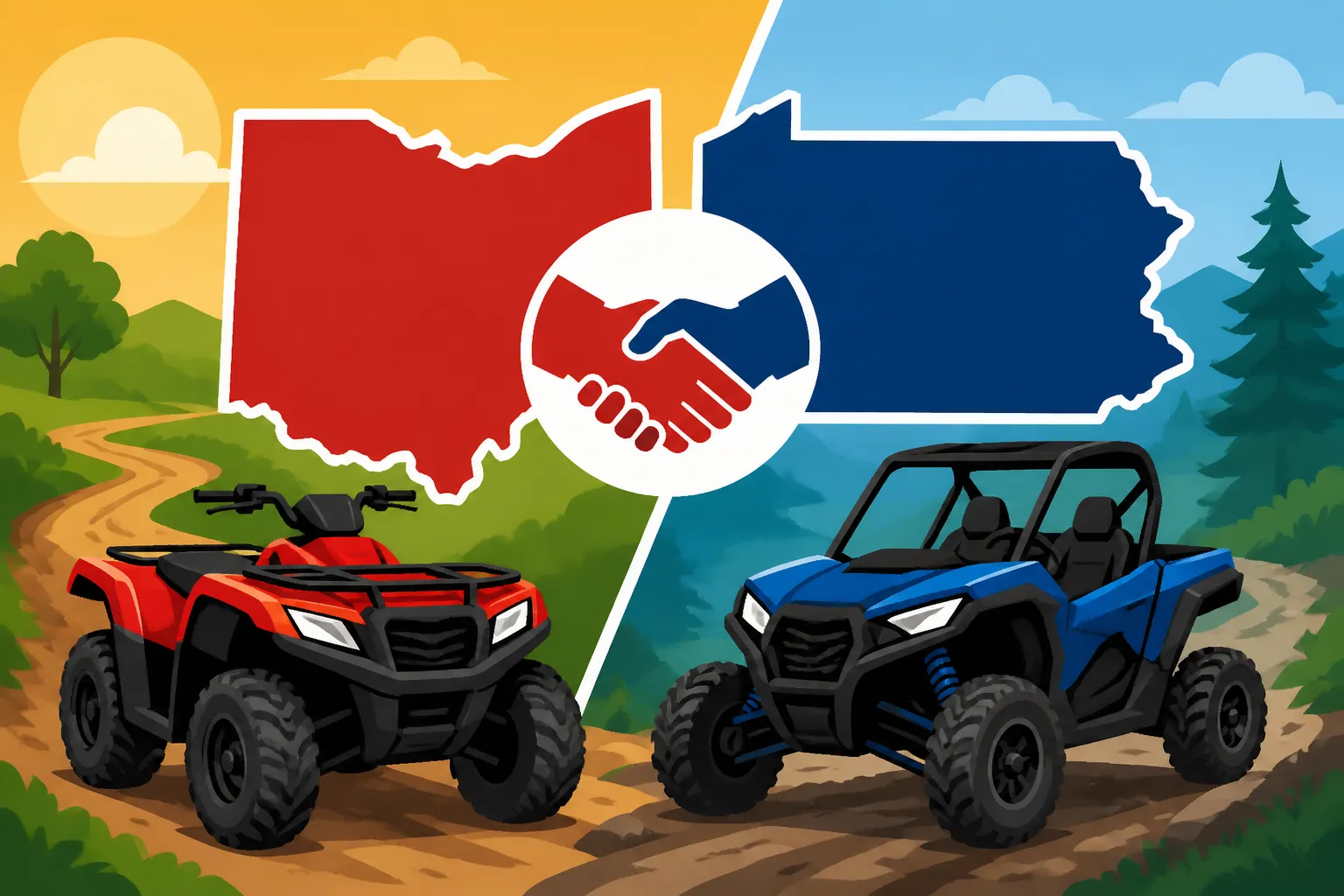
A Pennsylvania ATV or UTV registration can make it possible to ride in Ohio without obtaining Ohio registration, but reciprocity is not permission to ride anywhere. The answer depends on whether the machine is properly registered, where you plan to ride, and whether that location requires an additional permit. Here’s how to sort out those requirements before you haul across the state line.
What Ohio Reciprocity Means for a Pennsylvania Machine
Reciprocity is the recognition of another state’s valid vehicle registration for certain riding purposes. For an eligible Pennsylvania resident bringing a properly registered ATV or UTV into Ohio, Ohio generally recognizes the Pennsylvania registration for trail use where out-of-state registration is accepted. In that situation, an Ohio registration is generally not needed just because the ride crosses the border.
The important word is registered. A Pennsylvania title shows ownership; it is not the same as current registration. A bill of sale, a dealer receipt, or a registration that has expired may not satisfy a trail manager’s requirements. Check that the registration applies to the machine you are bringing and is valid for the type of use you have planned.
Pennsylvania’s registration documents and display requirements may look different from Ohio’s. Do not assume that an Ohio-style plate is required simply because the machine is in Ohio, or that a Pennsylvania decal alone is sufficient proof at every location. Carry the current registration document, keep the required Pennsylvania registration markings displayed as Pennsylvania directs, and confirm what the specific trail manager expects you to show. For a broader overview of how state recognition works, see Ohio Reciprocity for Out-of-State Machines and Which States’ Registrations Ohio Accepts on Its Trails.
| Situation | What to check before riding |
|---|---|
| Pennsylvania machine on an Ohio state forest trail | Current Pennsylvania registration and the forest’s current access rules |
| Pennsylvania machine in Wayne National Forest | State registration plus the separate Wayne OHV permit requirement |
| Pennsylvania machine on an Ohio road | Local road access, vehicle equipment, insurance, and licensing rules |
| Machine not registered in Pennsylvania | Whether Ohio requires a temporary permit for that machine and trip |
| Machine used only on private property | The owner’s permission and any rules that apply to the property |
Reciprocity is about registration recognition. It does not automatically make an ATV or UTV street legal, waive helmet or age rules, or open a trail that is closed to riding. It also does not replace a location-specific permit. Think of it as one part of the paperwork check, not a general pass for Ohio.
Before leaving Pennsylvania, compare your documents with What a Visitor From a Registering State Must Show. If your registration status is uncertain, contact the Ohio office or land manager responsible for the place you plan to ride rather than relying on a seller’s description or an old online discussion.
Where a Pennsylvania Registration Works in Ohio
Ohio has different kinds of riding areas, and their requirements are not interchangeable. State forest trails, Wayne National Forest routes, private riding parks, county lands, and public roads can each have separate rules. A Pennsylvania registration may meet one requirement at a state forest while still leaving you responsible for another permit elsewhere.
Ohio state forest trails
For Ohio state forest riding areas that allow ATVs and UTVs, a valid registration from a state that registers the machine can generally serve in place of Ohio registration. Pennsylvania riders should bring proof that their registration is current and make sure the machine is within the rules for that particular trail system.
Ohio state forest access has additional conditions beyond registration. Trail access can depend on the machine’s dimensions, the forest’s operating season and hours, trail closures, and rider safety requirements. A machine that is registered may still be barred if it is too wide for the area or if its operator does not meet the applicable age or supervision rules. Check Do You Need a Permit for Ohio State Forest Trails? and Ohio Rules for Riding a State Forest before planning a route.
Ohio’s own registration is also tied to trail access in a particular way: the state does not use the same separate state-forest permit system as some other riding areas. That does not mean an out-of-state registration gives access to every public property. The registration recognition applies only where the land manager permits the machine and where the rest of the riding rules are met. Why the Ohio Plate Is the Trail Permit explains the distinction for Ohio-registered machines.
Wayne National Forest
Wayne National Forest is federal land, and its OHV routes have a separate permit requirement. A Pennsylvania registration does not replace the Wayne OHV permit. Plan on meeting both requirements: carry valid state registration, and obtain the required Wayne permit for the machine and use you intend to make of the forest routes.
Permit details, where permits may be purchased, and which trails they cover should be checked with the forest before your trip. The permit system is separate from Ohio state forest registration, so a rider who uses both kinds of areas should not assume that one document covers both. See How the Wayne National Forest OHV Permit Works for the federal permit distinction.
This difference is one of the most common sources of confusion for visitors. A Pennsylvania rider may have valid registration and be properly equipped, yet still be missing the separate Wayne permit. Conversely, having a Wayne permit does not make an expired or otherwise invalid state registration acceptable.
Private parks and other public lands
Private riding parks set their own access conditions within applicable law. A park may require proof of registration, a park pass, a waiver, or other documentation. Check directly with the park before traveling, especially if the machine is unregistered or the park rents machines.
Do not assume that a state forest rule applies to county parks, wildlife areas, reclaimed mine property, or private land. Some lands prohibit motorized riding altogether; others allow it only on designated roads or with permission. Registration does not grant permission to enter land. For private ground, obtain the owner’s permission and stay within the area and routes the owner authorizes.
What Reciprocity Does Not Authorize
A valid Pennsylvania registration does not give a rider a blanket right to operate on Ohio roads. Road access is a separate question, controlled by Ohio law and, in many cases, local decisions about which roads are open. A road that looks suitable for an ATV may still be closed to APVs, and a township’s rules may differ from those of the neighboring township.
Before riding on any road, verify that the specific road is open to the type of machine you are operating. Then check requirements for equipment, insurance, driver licensing, helmet use, and how the machine may travel along or across the road. Those rules can differ from trail requirements. Start with Where Ohio Law Allows APVs on Roads and Ohio Reciprocity With Pennsylvania is not a substitute for researching the local road rule.
A Pennsylvania registration also does not excuse a rider from Ohio’s trail conduct and safety rules. Depending on the land and the rider’s age, requirements may cover helmets, eye protection, supervision, operating hours, and use of designated routes. A machine can meet the registration requirement and still be operated unlawfully if the rider ignores those rules.
The same principle applies to equipment. A street-legal configuration in Pennsylvania does not necessarily establish that the machine meets Ohio requirements for a particular road, and trail equipment rules are not the same as road equipment rules. If a trip includes both trails and roads, check each category separately rather than treating the machine’s registration as proof that it can be used in both places.
Finally, reciprocity does not turn a title into registration. If the machine is newly purchased, has a lapsed registration, or is registered under a category that does not cover the planned use, resolve that issue before riding. If you cannot establish that the Pennsylvania registration is valid and applicable, ask whether an Ohio temporary permit is required. The Ohio Temporary Permit for Visitors covers that alternative.
A Pennsylvania Rider’s Pre-Trip Checklist
A little preparation can prevent a long drive ending at a trailhead where the machine cannot legally ride. Work through these steps before loading the ATV or UTV.
- Confirm the Pennsylvania registration is current. Match the registration to the machine’s identification details and check that it covers the kind of use you are planning. Keep the registration document accessible while riding.
- Identify the exact riding area. Find out whether it is an Ohio state forest, Wayne National Forest, a private park, or another type of property. Do not rely on a broad statement that “Ohio accepts Pennsylvania registration.”
- Check for an extra permit. Wayne National Forest requires a separate OHV permit. A private park may also have its own pass or entry rules. Ask the land manager if you are unsure.
- Verify machine and rider rules. Check limits on vehicle width, trail hours, open routes, helmets, eye protection, minimum ages, and supervision. Requirements can vary by land type.
- Treat road riding as a separate trip plan. Confirm that each road is open to APVs and that your machine and operator meet the applicable road requirements. Trail reciprocity alone is not enough.
- Bring clear proof. Carry the registration document and any separate permit or pass. Keep required state registration markings visible as directed by Pennsylvania, and follow the Ohio location’s instructions for displaying documents or permits.
- Recheck conditions before departure. Trail systems can close or change access. Confirm current openings and permit instructions with the responsible forest, park, or land manager.
If your Pennsylvania machine does not have current registration, do not assume that a title or proof of purchase will let you ride. Ask the relevant Ohio authority whether the machine needs Ohio registration or a temporary visitor permit, and confirm that the permit applies to the particular land you plan to use. A visitor permit, where available, is not a substitute for a Wayne permit or a private park’s admission requirements.
For a Pennsylvania rider with valid registration, the practical takeaway is straightforward: keep the registration current, carry proof, and verify the rules for the specific Ohio destination. Reciprocity can remove the need to obtain Ohio registration for eligible trail use, but it does not replace local permits, grant road access, or override safety and land-use restrictions.
Disclaimer
This article is for general informational purposes only and does not constitute professional advice. Laws, prices and regulations vary by location and change over time. Consult a qualified professional for guidance on your specific situation.