Helmet Rules at an Ohio Forest Gate
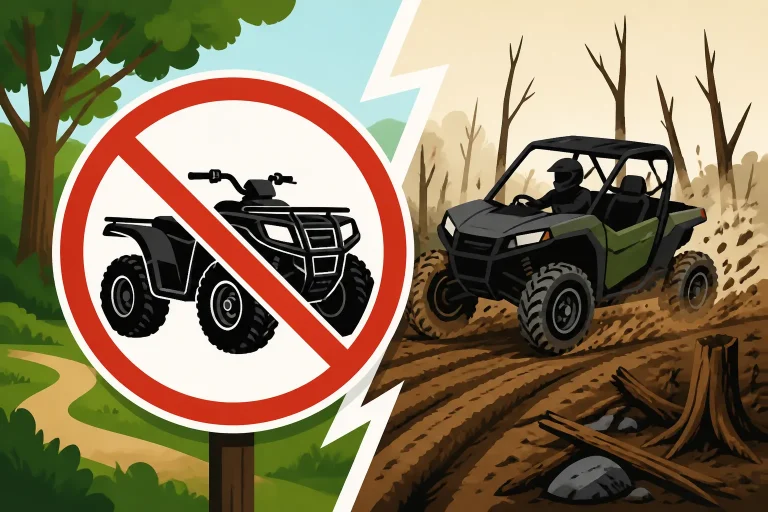
A helmet can be the difference between a smooth check-in and being turned away from an Ohio riding area. The confusing part is that rules can depend on where you ride, and a road rule is not necessarily the same as a forest-trail rule. Here’s what to wear, what a gate check may cover, and how to avoid relying on a helmet that does not meet the requirement.
What to Expect at an Ohio Forest Gate
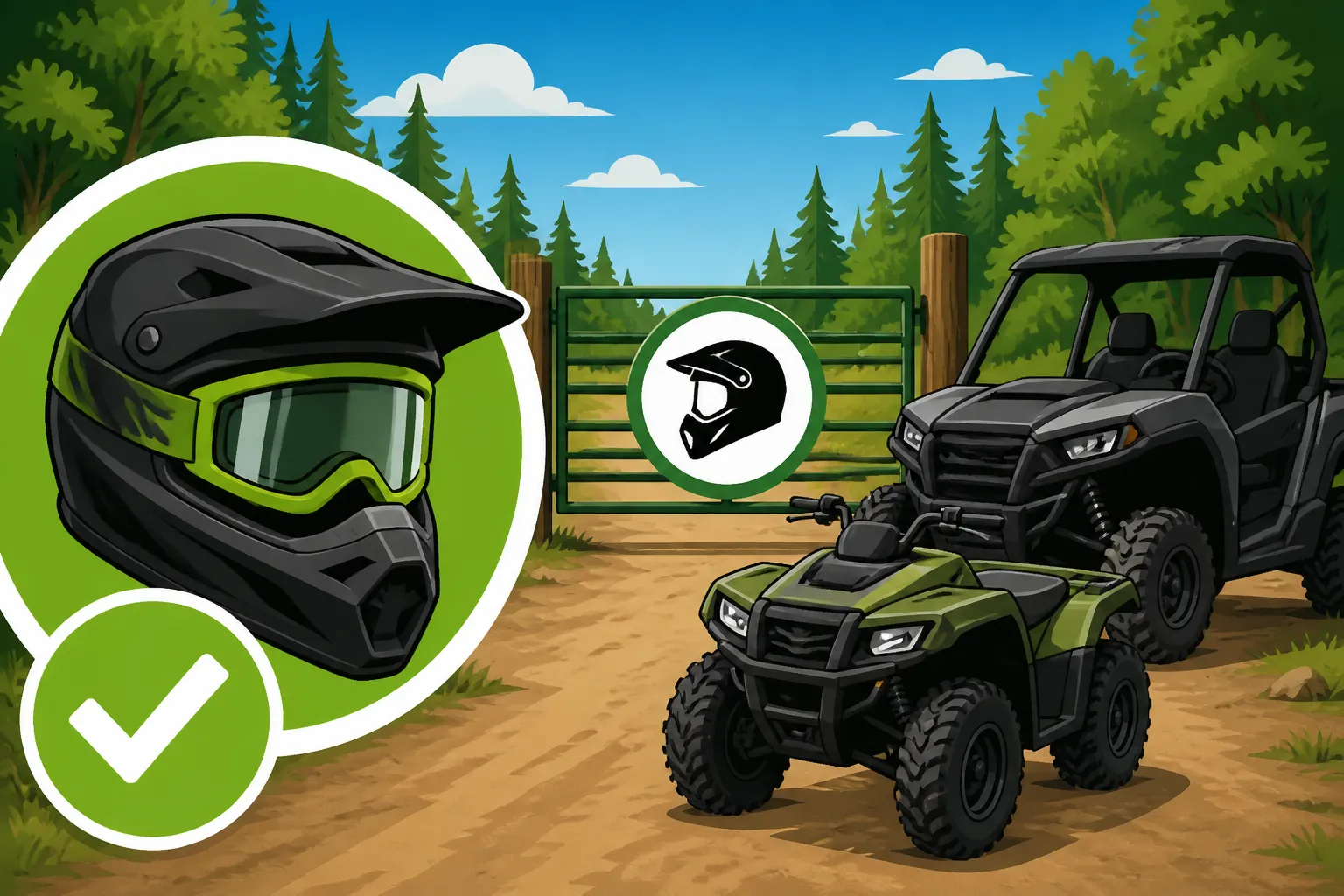
For riding on Ohio state forest trails, plan for every rider to wear a protective helmet and eye protection. Do not assume the rule applies only to children or only to the person driving. If you have passengers, make sure they have their own required gear before you arrive.
A trail rule and a statewide road rule can have different scopes. Ohio’s general APV laws address helmet requirements for certain riders, while forest-land rules may set conditions for anyone using the trail system. For practical planning, treat a forest ride as requiring a helmet and eye protection for every person on a machine, unless the land manager confirms otherwise.
A gate check may be brief, but it is still a check. Staff or an officer could look at whether riders have helmets on, whether straps are fastened, and whether eye protection is available and being used. They may also check other trail conditions, such as registration or access permits. Showing the right paperwork does not excuse missing safety gear, and having the right helmet does not replace required registration or a permit.
| Before you ride | What to prepare |
|---|---|
| Helmet | A properly fitted protective helmet that meets the applicable standard, with the chin strap secured |
| Eye protection | Goggles, a suitable face shield, or other protection accepted for the riding area |
| Passenger gear | A separate helmet and eye protection for each passenger |
| Registration or permit | The documents or pass required for that land and your machine |
| Trail eligibility | Confirmation that the machine is allowed on the specific trail system |
The details may vary between state forest land, national forest land, a private riding park, and a public road. If your route crosses different types of land, check the rules for each part rather than assuming one set of rules covers the whole trip. Ohio Helmet Rules on State Forest Trails and Ohio Rules for Riding a State Forest explain the forest-trail context; Ohio Helmet Law for APV Riders covers the broader riding-law topic.
Forest trails are not the same as public roads
An APV that is legal to operate on a trail may not be legal on a road, and road equipment rules do not determine what protective equipment a forest requires. If your ride includes a road segment, check the rules for that segment too. The requirements for riding on a township road, for example, may involve licensing, insurance, and equipment in addition to any helmet obligation. See Ohio Rules for Riding a Township Road if your plan includes one.
Also pay attention to who manages the land. Ohio state forests and Wayne National Forest are not interchangeable names for the same place. A trail system on federal land may have its own permit and operating conditions. Check the rules for the exact trailhead you plan to use, not just general Ohio riding information.
Permits and reciprocity do not replace safety gear
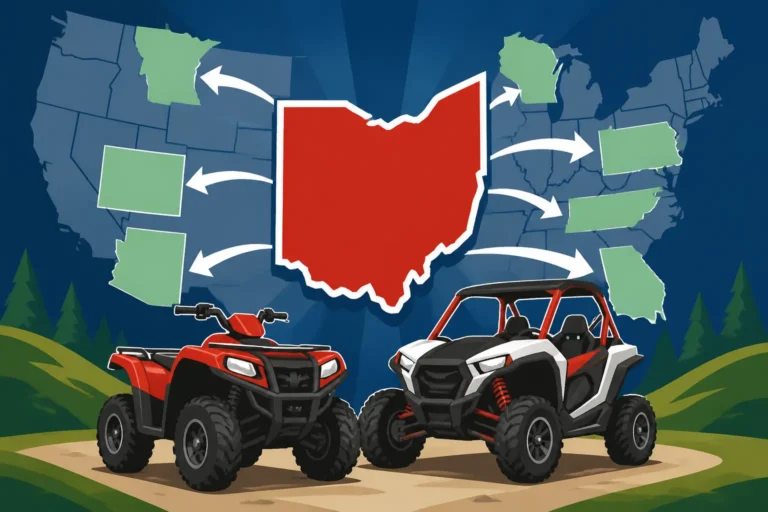
A valid Ohio registration, an accepted out-of-state registration, or a visitor permit deals with access or vehicle requirements. None should be treated as a substitute for a helmet. If you are visiting from another state, confirm both your machine’s registration status and the riding-area safety rules. Ohio Reciprocity for Out-of-State Machines explains the registration question, while Do You Need a Permit for Ohio State Forest Trails? covers access on state forest trails.
Choosing a Helmet That Is Ready for a Gate Check
A helmet can look sturdy without meeting the standard a riding area expects. For an off-road machine, choose a protective helmet that is certified to the applicable Department of Transportation standard, commonly identified as FMVSS 218. Check the helmet itself for its certification label rather than relying only on a product description, a decorative sticker, or a seller’s claim.
The details of labels and markings matter. A novelty helmet or a lightweight open-face product may not offer the protection required for riding. A helmet sold for cycling, construction, or casual use is not automatically suitable for an ATV or UTV. For more on the relevant standard and how to recognize a compliant helmet, see DOT FMVSS218 Helmets in Ohio.
Before leaving home, inspect the helmet:
- Look for the certification marking. Check the inside or back of the helmet for the manufacturer’s permanent certification label. If the label is missing or unreadable, do not assume the helmet qualifies.
- Check the shell and liner. Do not use a helmet with cracks, crushed areas, loose parts, or signs of a serious impact. A helmet can be damaged internally even when the outside looks mostly intact.
- Try it on. It should sit level, feel snug, and stay in place when you gently move it. It should not shift freely around your head.
- Fasten the chin strap. A helmet that is unfastened can come off in a crash. Adjust the strap so the helmet remains secure without making breathing or swallowing uncomfortable.
- Check the visor and face opening. Make sure the helmet does not block your view and can be used with the eye protection you plan to wear.
Correct fit is not a minor comfort issue. A helmet that slides, tilts back, or leaves large gaps can provide less protection and may not satisfy an officer or land manager who is checking whether it is being worn properly. If you are buying for a young rider, fit the helmet to that rider rather than choosing one to grow into. A loose helmet is not a safe shortcut.
A helmet’s age and history also deserve attention. Follow the manufacturer’s replacement guidance, and replace a helmet after an impact that could have damaged it. If you do not know whether a used helmet has been in a crash, its condition is uncertain. A clean exterior does not prove that the impact-absorbing liner is undamaged.
Eye Protection and Passenger Preparation
The helmet is only one part of a forest-trail gear check. Eye protection helps shield riders from dust, grit, branches, insects, and debris kicked up by other machines. A helmet with an open face does not protect your eyes on its own. If you ride with goggles, use a pair that fits the helmet and stays in place when you turn your head or travel over rough ground.
A face shield may provide eye protection when it is designed for the helmet and kept in usable condition. Scratched, cracked, or heavily fogged equipment can make it difficult to see trail obstacles. Carrying eye protection in a cargo box is not the same as having it ready to wear when required. Check the specific land manager’s direction on whether it must be worn whenever you ride.
For goggles, look for a secure fit around the face and a strap that holds them in place. Make sure the lens gives you a clear view in the conditions you expect. A tint that works in bright sunlight may make shaded woods harder to see, especially when the trail alternates between open ground and heavy tree cover. Keep a clean spare lens or a backup pair if your group is riding in dusty or wet conditions.
Passengers need the same attention as operators. Before starting the trip, confirm that each passenger has:
- A helmet that fits and is fastened.
- Eye protection that fits with the helmet.
- A safe seat and handholds for the machine.
- An understanding of how to stay seated and communicate with the operator.
Do not use a passenger’s willingness to ride as proof that the machine is suitable for carrying them. Follow the machine manufacturer’s passenger instructions and the land manager’s rules. A helmet cannot make an unsafe seat or an overloaded machine safe.
Families often need to check age rules separately from helmet rules. A young rider may have additional restrictions on where they can ride, whether an adult must supervise them, and which machine they may operate. Start with Ohio Minimum Age for State Forest Trails and [Ohio Supervision Rules on Forest Trails] if a rider under 16 is in the group. Do not assume that meeting the helmet requirement makes a young rider eligible for every trail.
A Simple Check Before You Load
A few minutes of preparation can prevent a wasted drive. Rules can differ by riding area, and access conditions can change, so confirm them with the land manager before heading out. Use the trailhead’s current posted information as well as any official online guidance, particularly if you have not ridden that system before.
Use this checklist the night before and again at the staging area:
- Identify the land and trail system. Confirm whether you are heading to an Ohio state forest, Wayne National Forest, a private park, or another area.
- Check helmet and eye-protection rules. Plan for every person on the machine to have both, and confirm any specific standard the land manager requires.
- Fit and fasten the equipment. Make sure each helmet fits its rider and each strap is secured. Check goggles or face shields for damage and clear vision.
- Confirm registration and permit needs. Determine what the machine must display and what the operator must carry. Out-of-state riders should verify that their home-state registration is accepted for the particular riding area.
- Check machine eligibility. Width limits, trail closures, and other machine restrictions can affect whether you may ride. For state forest trails, check Ohio’s 62 Inch State Forest Width Limit before bringing a wide side-by-side.
- Review current trail notices. Conditions, operating hours, closures, and local directions can affect access even when your gear and paperwork are in order.
If you reach a gate and are unsure whether your helmet qualifies, ask before entering and be prepared to use another helmet or change your plans. Do not argue that a helmet should count because it looks similar to a compliant one. A missing label, poor fit, or unfastened strap can turn a routine check into a denied entry or enforcement problem.
Keep helmets in good condition between rides. Store them where they will not be crushed under tools or exposed to unnecessary heat, and avoid hanging a helmet by its strap for long periods if the manufacturer advises against it. After a ride, clean goggles and helmet padding according to the manufacturer’s instructions. Mud, dust, and dried sweat can reduce comfort and visibility on the next outing.
The practical rule is simple: arrive ready with a properly fitted, fastened protective helmet and eye protection for every rider, then verify the requirements for the exact trail system. Treat registration, permits, age rules, and machine restrictions as separate checks. That approach is more reliable than trying to interpret the rules at the gate after the trailer is unloaded.
Disclaimer
This article is for general informational purposes only and does not constitute professional advice. Laws, prices and regulations vary by location and change over time. Consult a qualified professional for guidance on your specific situation.