Riding Off and Alongside an Ohio Road
It can be incredibly frustrating for Ohio ATV and UTV enthusiasts when the open road calls, but the law feels like it's constantly putting up barriers. Many riders find themselves looking at connecting stretches of asphalt or wanting to get from one section of private land to another without loading up the trailer. This guide is here to shed light on the often-confusing rules surrounding riding off and alongside an Ohio road, helping you understand where you can legally venture and what precautions you need to take.
Understanding Ohio's APV Road Rules The Big Picture
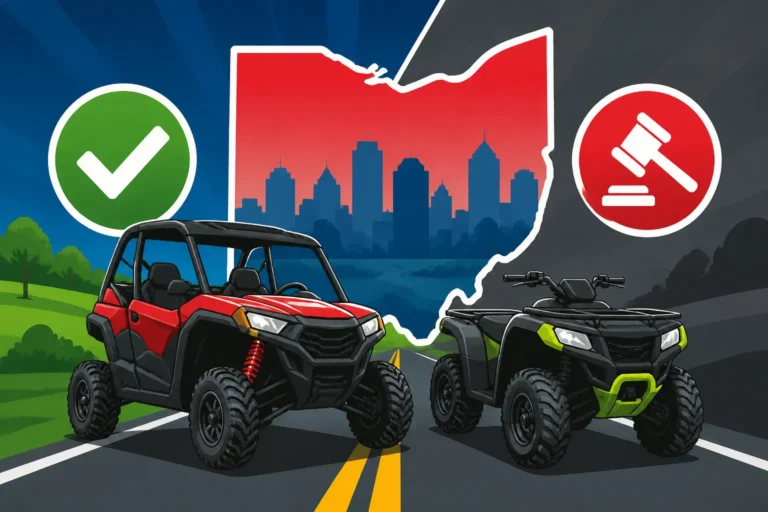
Navigating Ohio's regulations for All-Purpose Vehicles (APVs), which include ATVs and UTVs, can feel like trying to solve a puzzle with half the pieces missing. Many riders initially assume that because they see a sheriff or a farmer on a quad, they can just hop on the road too. But it's rarely that simple. The truth is, statewide, full-fledged street legality for most APVs is an elusive dream, largely due to specific equipment requirements and the state's classification of these machines. This creates a challenging landscape for anyone who wants to extend their ride beyond dedicated trails.
The core issue stems from how Ohio law categorizes APVs. They aren't motor vehicles in the same way your car or truck is, and therefore, they aren't automatically granted the same rights to public roads. Instead, their presence on public ways is highly restricted and often deferred to local authorities, creating a patchwork of rules across the state. This means that what's perfectly acceptable in one township might land you a citation in the next, which is a constant source of bewilderment and aggravation for riders just trying to enjoy their machines.
Why Full Street Legality Is So Rare
For an APV to be considered "street legal" in the traditional sense, capable of operating freely on any public road, it would generally need to meet the same stringent safety and equipment standards as a passenger car. This includes things like advanced braking systems, airbags, crash testing, specific lighting configurations, and emissions standards. Most ATVs and UTVs are simply not designed with these requirements in mind, as their primary purpose is off-road recreation or utility work. While some manufacturers offer UTV models that come closer to meeting certain on-road specifications, a standard ATV will almost never qualify.
Furthermore, Ohio's state statutes regarding APVs are quite clear on their primary domain being off-road. The law focuses on regulating their use on trails, private property, and in specific contexts, rather than preparing them for general road use. This is why you typically won't find a blanket "street legal" certification that applies statewide. Even where local ordinances do open roads to APVs, they often come with specific stipulations and equipment lists that go beyond what's needed for trail riding, which can be an unexpected cost and effort for many riders. For more on what an APV actually is in the eyes of the law, you can check out [How Ohio Law Defines an APV].
The Difference Between Riding On and Alongside
It's crucial to understand the legal distinction between riding on a road and riding alongside a road. Riding on a road implies operating within the travel lanes, much like a car or motorcycle. This is generally prohibited for APVs statewide unless a specific local ordinance explicitly permits it and your machine meets all the necessary equipment requirements, like those detailed for UTVs in some areas. These local permissions are often limited to specific types of roads, typically those with lower speed limits, such as township or county routes.
Riding alongside a road, on the other hand, refers to operating in the right-of-way but outside the paved or graveled travel portion. This could mean riding on the berm, shoulder, or even in a ditch line adjacent to the road. This distinction is vital because while riding on a road is almost always restricted, riding alongside it might be permissible in more situations, provided you're adhering to specific rules about the physical space you occupy and any local prohibitions. It's about minimizing interference with vehicular traffic and prioritizing safety. Later, we'll dive deeper into [Ohio Rules for Riding Alongside a Road].
Who Gets to Decide Where You Ride
The power to open roads to APVs in Ohio largely rests with local governmental entities: county commissioners for county roads and township trustees for township roads. This decentralization of authority is why the rules can vary so dramatically from one locality to the next. A county might pass a resolution allowing APVs on all county roads below a certain speed limit, while an adjacent township might decide against it entirely, or only permit it on a handful of specific routes. This leads to the frustrating reality that riders must do their homework for every area they plan to ride in.
State routes and interstates, however, are a different story. These are under the jurisdiction of the Ohio Department of Transportation (ODOT) and the State of Ohio, and generally, APVs are strictly prohibited from operating on them, whether on or alongside. The primary exception might be a direct, perpendicular crossing at an intersection where it's safe to do so, but even then, careful observation of traffic and local signage is paramount. For detailed information on where such activities might be permitted, you would look for local resolutions such as [How an Ohio Township Opens Its Roads].
Riding the Berm: What Ohio Law Says About the Roadside
Ah, the berm. For many off-road enthusiasts, the berm represents a tantalizing grey area – a strip of ground right next to the paved road that seems like it might offer a legal path forward when trails are unavailable or disconnected. It feels like it's "not really the road," but also "not really off-road" either. And you're right to feel that way; it's a space that comes with its own unique set of rules and interpretations in Ohio. It's often where the desire to connect one riding spot to another without loading up a trailer meets the hard reality of legal limitations and safety concerns.
The challenge with riding the berm is twofold: first, legally defining what constitutes the "berm" versus the actual roadway or private property, and second, understanding when and where it's permissible to operate your APV in this space. While it might seem like a simple solution to avoid road use, the berm is still part of the public right-of-way and is subject to regulations designed to ensure the safety of all road users, including those in cars, cyclists, and pedestrians. Ignoring these nuances can quickly turn a casual ride into a costly citation.
Defining the Berm and Where It Exists
In plain language, the "berm" refers to the shoulder of a road, that unpaved or sometimes gravel portion immediately adjacent to the travel lane. It's typically part of the public right-of-way but is not intended for continuous vehicular traffic. Think of it as the strip of grass, dirt, or gravel that separates the pavement from the ditch, fence line, or private property. However, not every road has a clearly defined berm suitable for APV travel. Some roads might have very narrow shoulders, steep drop-offs, or vegetation that makes riding impractical or unsafe.
The key legal distinction is that while the berm is part of the road's right-of-way, it's generally considered separate from the "roadway" itself, which is the paved or improved surface meant for vehicles. This distinction is critical because many prohibitions against APV road use specifically refer to the "roadway." This opens the door for the possibility of riding the berm, but only if local ordinances don't specifically prohibit it and if doing so can be done safely without impeding other traffic or damaging public property. It's a fine line that often depends on the specific characteristics of the road in question.
Equipment and Safety Considerations for Berm Riding
Even if riding the berm is technically permitted in a specific area, safety should always be your top priority, and that means having the right equipment. You're still in close proximity to moving vehicles, often at higher speeds than you'd encounter on a trail. Therefore, visibility is paramount. Your APV should have functioning headlights, taillights, and ideally, brake lights, even during the day. Brightly colored riding gear can also make a significant difference in how easily you're seen by drivers. Many riders choose to add extra LED lighting or even turn signals, like those available from brands like SuperATV, to increase their presence and signal intentions, even if not strictly required for berm riding.
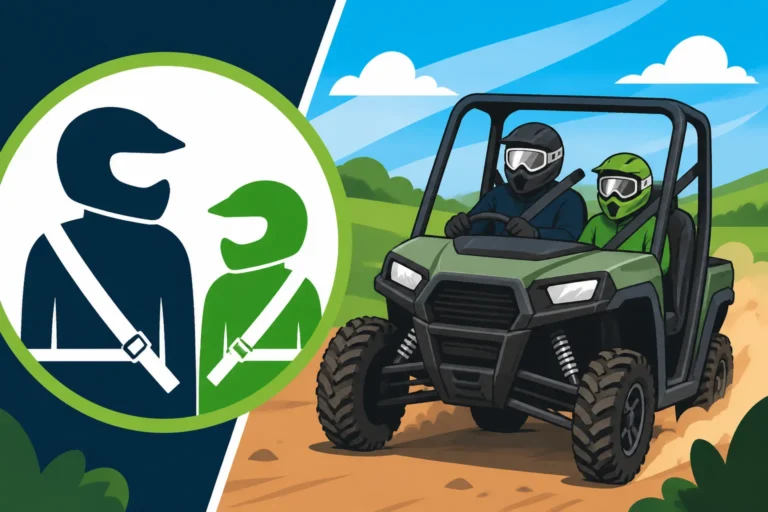
Furthermore, proper personal protective equipment (PPE) is non-negotiable. An approved helmet is essential, and eye protection (goggles or a face shield) is crucial to shield against dust, debris, and glare. Just because you're off the pavement doesn't mean you're immune to the dangers of road-adjacent riding. Drivers might not expect to see an APV on the berm, and quick reactions from both you and them are often necessary. Therefore, riding cautiously, maintaining a safe distance from the travel lane, and being prepared to stop or react to unexpected situations are all critical for safe berm operation. You can learn more about helmet requirements in [Ohio Helmet Law for APV Riders].
Local Ordinances and Berm Access
The question of whether you can actually ride the berm often boils down to specific local ordinances. While state law defines APVs and generally restricts their widespread road use, counties and townships have the authority to create exceptions for the roads under their jurisdiction. This authority extends to defining permissible areas, which might include the berm. Some resolutions from county commissioners or township trustees might specifically mention that APVs are permitted on the "right-of-way" which would encompass the berm, while others might be silent on the matter or explicitly limit APV use to the paved surface only.
This means that before you even think about riding the berm in a particular area, you absolutely must verify the local rules. A quick call to the county engineer's office or the township clerk can often provide the clarity you need. Don't assume that just because you saw someone else doing it, it's legal or safe. What might be allowed in rural Washington County, for example, could be strictly forbidden in a more populated area. Always err on the side of caution and get definitive information to avoid potential fines or accidents. Check out [Ohio Counties That Allow APVs on Roads] for context on local decision-making.
Crossing a Road: The Rules for Getting From Here to There
Even if your intention isn't to cruise down a paved road, you'll inevitably encounter situations where you need to cross one to continue your ride. Perhaps you're moving between two sections of private land, connecting different trail systems, or simply getting from your staging area to an access point. The act of crossing a public road, even for a short distance, brings you directly into traffic and under the purview of road use laws. This is a moment of heightened risk and legal scrutiny, and it's essential to understand the specific rules that apply.
Many riders mistakenly believe that a quick dash across a road doesn't really count as "road use." However, any time your APV's tires are on the paved surface, you are subject to the regulations governing vehicles on that road. This means slowing down, looking both ways, and understanding the specific requirements for APV crossings. Ohio law allows for crossings in certain circumstances, but these are not carte blanche permissions to dart across busy highways. They are carefully regulated maneuvers designed to minimize danger to you and other motorists.
Safe Crossing Practices and Visibility
When preparing to cross any road, your primary concern must be safety and visibility. First and foremost, choose your crossing point wisely. Look for areas with clear sightlines in both directions, away from blind curves, hillcrests, or heavy intersections where traffic flow is complex. Avoid crossing in low-light conditions if possible, but if you must, ensure all your lights are functioning and you're wearing reflective gear. You want to be seen clearly and early by oncoming traffic.
Before you enter the roadway, come to a complete stop. Look left, then right, then left again, making eye contact with any approaching drivers if possible. Wait for a gap in traffic that is ample enough for you to cross completely and safely without rushing or causing other drivers to brake or swerve. Remember, your APV accelerates differently than a car, and you might take longer to clear the lanes. Make your intentions clear with hand signals if you don't have turn signals, and proceed directly across the road at a 90-degree angle, minimizing your time spent in the travel lanes.
Crossing Intersections and State Routes
Crossing at an intersection can sometimes offer a slightly more structured approach, especially if there are traffic signals or stop signs. Here, you're expected to follow the same traffic laws as any other vehicle. If there's a stop sign, stop. If there's a light, obey it. However, always exercise extreme caution; even with the right-of-way, many drivers aren't accustomed to seeing APVs in an intersection. Be prepared for unexpected reactions from other motorists.
When it comes to state routes, the rules are often stricter. While county and township roads might have ordinances allowing APVs to operate on or alongside them, state routes generally remain off-limits, with the sole exception often being a direct, perpendicular crossing where safe. This means you cannot ride down a state route for any distance, even a short one, to get to an intersection or another crossing point. You must approach the state route, stop, cross directly, and immediately exit the roadway. Any deviation from this direct crossing could be considered illegal road use.
When a Crossing is Not Allowed
It's just as important to know when a crossing is not allowed as it is to know when it is. You absolutely cannot cross interstates or limited-access highways. These are high-speed environments where an APV would pose an extreme danger to itself and other traffic. Similarly, if a road is posted with "No APV" signs, or if local ordinances explicitly prohibit any form of APV use on that specific road, then crossing it is likely also prohibited, or at the very least, highly discouraged due to the legal risks.
Furthermore, if the conditions are unsafe – heavy fog, ice, extremely dense traffic, or a blind crossing point – then a crossing is effectively not allowed, regardless of the letter of the law. Your judgment and commitment to safety must always take precedence. Pushing through an unsafe crossing could lead to a serious accident and severe legal consequences. Always choose to find an alternate route or transport your machine by trailer if a safe crossing isn't feasible. For more on the consequences of illegal road use, consider reading [Ohio Fines for Illegal APV Road Use].
Navigating Public Land: Roads You Can Ride
While the general rule of thumb for Ohio's public roads is "no APVs," there are significant exceptions when it comes to roads within specific public land designations, particularly state and national forests. These areas are managed differently, and their internal road networks are often designed with a variety of recreational uses in mind, including off-road vehicle access. However, even here, it's not a free-for-all. Each public land manager has their own set of rules, maps, and designated routes, and understanding these is crucial for a legal and enjoyable ride.
The beauty of these designated riding areas is that they often provide a network of trails and roads that allows for continuous riding without the constant worry of private property lines or public road restrictions. This is where your APV truly shines. But the key is "designated." You can't just assume any dirt road or forest path is open to your machine. Always check official maps and regulations before heading out, as riding off-trail or on closed roads can lead to fines and environmental damage.
State Forest and National Forest Road Access
Ohio is home to several state forests and one national forest (Wayne National Forest) that offer designated APV trails and, in some cases, limited access to specific forest roads. For example, within the [Ohio's Four State Forest APV Areas]—Maumee, Perry, Pike, and Richland Furnace—you'll find networks of trails where APVs are explicitly permitted. While the focus is primarily on dedicated trails, some sections might incorporate or cross forest roads that are open to APV traffic as part of the trail system.
Wayne National Forest, with its three Ohio systems (Monday Creek, Hanging Rock, and Pine Creek), is another prime example. Within these systems, you'll find an extensive network of trails and forest roads specifically marked and managed for OHV use. However, it's critical to understand that not all roads within these forests are open to APVs. Many are designated for administrative use, logging operations, or other recreational activities like hiking or equestrian use, and APV access would be prohibited. Always obtain the latest map from the specific forest district office or their website before you ride to ensure you're on an open, legal route.
Roads in Wildlife Areas and Other Public Lands
Beyond state and national forests, Ohio has numerous wildlife areas, state parks, and other public land holdings managed by the Ohio Department of Natural Resources (ODNR). Generally, APV use on roads within state parks or most wildlife areas is highly restricted or completely prohibited, unless specifically designated for such use. These areas are often managed for conservation, hunting, fishing, or passive recreation, and the motorized traffic of ATVs and UTVs might conflict with these primary objectives.
There might be limited exceptions, such as access roads for specific hunting seasons or utility corridors, but these are rare and typically require special permits or are only open for a very limited time. Never assume that a dirt road within an ODNR-managed property is open to your APV without explicit confirmation. Always check the specific regulations for that particular wildlife area or state park. Ignorance of the rules is not an excuse, and violating them can lead to significant fines and potential revocation of hunting or fishing privileges.
Private Roads and Landowner Permission
This is perhaps the simplest rule: if it's private land, you need permission. This extends to private roads, farm lanes, and any unimproved path on someone else's property. Without express, clear permission from the landowner, you are trespassing, and your APV can be impounded, and you can face legal charges. This applies even if a private road looks like a shortcut or connects to a public trail system. Many riders have learned this lesson the hard way.
Building relationships with landowners is key to expanding your riding opportunities. Always ask, be respectful of their property, and if granted permission, stick to the agreed-upon routes and times. Leave no trace, close any gates you open, and never take shortcuts across fields or through sensitive areas. A simple conversation and a handshake can open up many miles of private roads and trails that might otherwise be inaccessible. For comprehensive advice on this, refer to [Ohio Rules for Riding Private Land].
Equipping Your Machine for Roadside Adventures
Alright, so you've done your homework, you know the local ordinances, and you've found a spot where riding the berm or crossing a road is permissible. That's fantastic! But before you even think about putting your tires on or near pavement, we need to talk about your machine. Trail riding requires one set of equipment, but venturing onto or alongside public roads, even briefly, demands a whole different level of preparation, especially when it comes to safety and visibility.
It's not just about what the law requires; it's about what makes you and your passengers as safe as possible. When you're sharing space with cars, trucks, and even large commercial vehicles, being seen and being able to react quickly are absolutely critical. Investing in the right gear, both for yourself and your APV, isn't just a recommendation; it's a responsible choice that could prevent a serious accident.
Essential Safety Gear Beyond the Trails
Your personal protective equipment (PPE) for any road-adjacent riding should be top-notch. While a helmet is a no-brainer for any off-road activity, ensure yours is DOT-compliant. This means it meets the safety standards set by the Department of Transportation, offering a higher level of protection than novelty helmets. Always wear eye protection – goggles or a face shield – to keep dust, debris, and glare from impairing your vision.
Beyond the basics, consider adding brighter, more visible clothing. Fluorescent colors like lime green or orange are excellent choices, especially when paired with reflective strips for low-light conditions. Gloves, long pants, and sturdy boots are also highly recommended to protect against scrapes, impacts, and road debris. Remember, other drivers are often not looking for an APV, so anything you can do to stand out and protect yourself is a wise investment.
Lights, Mirrors, and Other Visibility Enhancements
When you're near roads, visibility isn't just about what you wear; it's also about how easily your machine can be seen. Standard trail lights might be sufficient for navigating dense woods, but they often fall short on or alongside a public road. Ensure your APV has bright, fully functional headlights, taillights, and brake lights. Consider upgrading your bulbs to brighter LED versions if they're compatible with your machine. Many riders also install additional running lights or auxiliary LED light bars that can be used to increase their daytime presence without blinding oncoming traffic.
Mirrors are another critical piece of equipment. While not always required for purely off-road use, if you're riding anywhere near traffic, you need to be able to see what's coming up behind you. Aftermarket side mirrors are widely available and can be easily installed on most ATVs and UTVs. Brands like SuperATV offer a variety of robust and adjustable mirror options designed to withstand the rigors of off-road use while providing excellent visibility. Turn signals, while often not legally mandated for berm riding, are an invaluable safety feature for communicating your intentions to drivers, especially when crossing roads or making turns. You can read more about specific requirements in [Ohio Equipment Rules for an APV on a Road].
Considering Aftermarket Upgrades for Roadside Use
Beyond lights and mirrors, there are several other aftermarket upgrades that can significantly enhance safety and compliance for roadside operations. A horn, for instance, allows you to alert pedestrians or other riders to your presence, which is a simple but effective safety tool. A windshield, especially on UTVs, can offer protection from wind and debris, making for a more comfortable and safer experience at higher speeds adjacent to traffic.
For UTVs that might be allowed on specific township or county roads, ensuring your tires are appropriate for mixed terrain (not just aggressive mud tires) can improve handling and stability on harder surfaces. Some riders even opt for full cab enclosures, not just for comfort but for added protection against the elements and potential debris from passing vehicles. Always ensure any modifications you make are done safely and don't compromise the structural integrity or original design intent of your APV.
Important Ohio APV Considerations: What Else You Need to Know
Beyond the specifics of where and how you can ride off and alongside Ohio roads, there are several overarching legal and practical considerations that every APV owner in the Buckeye State needs to keep in mind. These cover everything from registration to insurance to what a law enforcement officer might check if you're stopped. Overlooking these details can lead to unexpected expenses, legal trouble, or a premature end to your riding day.
It's easy to get caught up in the excitement of a ride, but being a responsible APV owner means understanding the full scope of your obligations. Ohio's APV laws are designed not only for safety but also to ensure accountability and to fund the very trails that many riders enjoy. So, let's make sure you're fully prepared for any situation you might encounter.
Ohio APV Registration and Plating
First and foremost, virtually all APVs operated in Ohio, even if only on private land, are required to be registered with the Ohio Bureau of Motor Vehicles (BMV). This isn't just for road use; it's a general requirement for ownership. When you register your APV, you'll receive an Ohio APV plate and a validation sticker. This plate acts as your official identification and, in the state forests, effectively serves as your trail permit. For the specifics on how to get registered, check out [Registering an APV in Ohio] and [Ohio APV Plates and Validation Stickers].
It's critical that this plate is securely affixed to your APV and clearly visible from the rear. An unreadable or missing plate is a common reason for a law enforcement stop. The registration process itself involves a title, proof of ownership (like a bill of sale or Manufacturer's Certificate of Origin), and payment of fees. This fee structure typically includes a three-year registration cycle, which helps fund trail maintenance and safety programs across the state.
Insurance Requirements and Proof
While Ohio does not have a statewide mandate for APV insurance for purely off-road use, this changes dramatically if you intend to operate your APV on any public road, even if it's just the berm or for a quick crossing where permitted. If you're riding on roads opened by a county or township resolution, the local ordinance will almost certainly require proof of financial responsibility, which means having a valid insurance policy. This policy must typically cover liability, similar to what's required for cars.
Carrying proof of insurance is just as important as having the policy itself. Keep your insurance card or policy declaration with you, preferably in a waterproof pouch on your machine or in your riding gear. If you are stopped by law enforcement while riding on a public way, they will absolutely ask for proof of registration and insurance. Being unable to provide it can result in citations and fines, sometimes leading to your machine being impounded. Don't let an oversight here spoil your ride; make sure you have [Ohio APV Registration and Insurance Proof] readily available.
What an Ohio Deputy Checks Roadside
If you're stopped by an Ohio Deputy, whether on a trail, forest road, or alongside a public road, they'll typically be checking for a few key things. Their priority is usually safety and compliance. Expect them to verify your:
- APV Registration: They'll look for a current, valid Ohio APV plate and sticker.
- Driver's License: If you're on a public road where APV use is permitted, you'll generally need a valid driver's license. For specific rules regarding age and supervision, especially for minors, consult relevant statutes.
- Insurance: As mentioned, if on a public way, they'll ask for proof of financial responsibility.
- Helmet and Eye Protection: While always recommended, these are often legally mandated in specific areas or for riders under a certain age.
- Equipment: Depending on where you're riding (e.g., a UTV on a county road), they might check for specific equipment like lights, mirrors, or a horn.
- Riding Behavior: They'll observe if you're operating your APV safely, within designated areas, and not under the influence.
Being respectful, cooperative, and having all your documentation in order can make a roadside stop a quick and uneventful process. Trying to argue or being uncooperative can escalate the situation unnecessarily. Knowing [What an Ohio Deputy Checks Roadside] can help you be prepared.
Disclaimer
This article is for general informational purposes only and does not constitute professional advice. Laws, prices and regulations vary by location and change over time. Consult a qualified professional for guidance on your specific situation.