Ohio Permits for a Race
Ohio Permits for a Race
Planning an ATV or UTV race in Ohio takes more than choosing a course and setting a date. The permit process depends on who owns the land, what kind of event you are organizing, and whether machines will use public trails or roads. Start by identifying the land manager, then get written approval before advertising a route or inviting racers.
First, identify the land and the event
There is no single Ohio race permit that automatically authorizes an event anywhere in the state. A race on private property, an organized event on state forest land, and an event involving Wayne National Forest trails can involve different decision-makers and conditions. A permit from one agency does not grant permission on land controlled by another.
“Race” can also mean different things to officials. A timed competition, a marked course, spectators, a large group ride, a practice day, and a casual ride with friends may create different effects on the land. Be precise when you describe your plan. If you call an event a ride but plan to time riders or set up a competitive course, say so when you contact the land manager.
Before you seek permission, write down the basics:
- The proposed date and alternate dates
- The landowner and exact location
- The number of racers, spectators, staff, and support vehicles
- The race format, schedule, and expected hours
- The route or course, including its start and finish
- Whether the event uses existing trails, roads, or newly marked ground
- Plans for parking, registration, waste, first aid, and emergency access
- Whether participants will bring their own machines or use rentals
A simple map helps officials understand what you are proposing. Mark access points, course boundaries, nearby roads, parking, sensitive areas, and places where emergency vehicles could reach the course. Do not assume that a route shown on a recreational trail map is available for a race. Recreational access and competitive events are separate questions.
| Proposed location | Who to contact first | Key issue to resolve |
|---|---|---|
| Private land | Owner or authorized operator | Written permission and any site-specific conditions |
| Ohio state forest | Ohio Department of Natural Resources office responsible for the forest | Whether the activity and proposed course can be authorized there |
| Wayne National Forest | The relevant U.S. Forest Service office | Whether a special-use authorization is required and whether the event is suitable |
| Public road or roadside area | The agency or local government responsible for that road | Whether the activity is allowed there, separately from trail permission |
| Mixed ownership or connected route | Every relevant land manager | Approval for each parcel and each part of the route |
If you are still deciding whether an activity counts as an organized event, Ohio Rules for an Organized Ride can help frame the questions. A competitive race should be described as a race when seeking approval; do not rely on a general group-ride authorization to cover a more demanding event.
Public-land permits and agency approval
Ohio state forests
Ohio state forest land is not interchangeable with a privately operated riding park. Even where off-highway vehicles are allowed on designated routes, that access does not necessarily authorize a race, a closed course, spectators, temporary structures, or a large organized event.
Contact the office responsible for the specific state forest before you publish an event announcement or begin course work. Explain whether the event is timed or competitive, how many people are expected, and whether the proposed route stays on designated trails. Ask whether the activity is allowed, what authorization is required, and whether there are restrictions on dates, route layout, noise, parking, or event size. If the proposed course crosses or borders another ownership, identify that too.
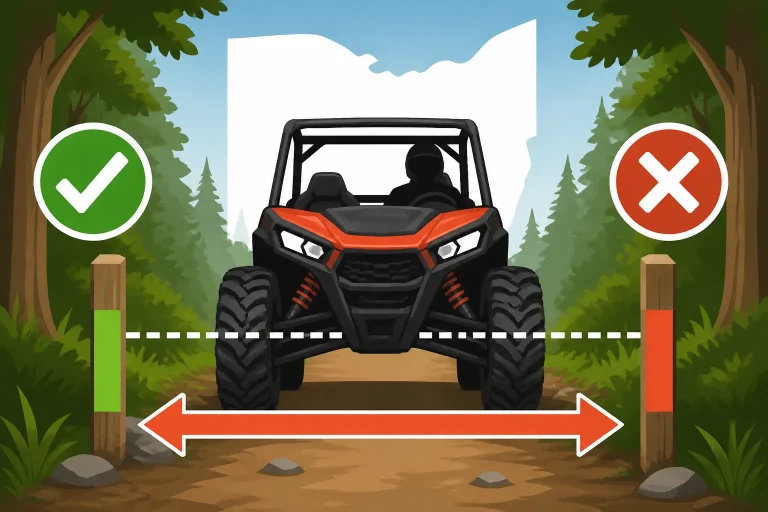
An event approval is not permission to ride anywhere on forest land. The route must follow the conditions set by the land manager, and participants still need to comply with applicable riding rules. Review Ohio Rules for Riding State Forest Land and Ohio’s 62-Inch State Forest Width Limit when relevant to the machines and location. A wide UTV, for example, may be unsuitable for a route that a narrower machine can use.
Wayne National Forest
Wayne National Forest is federal land, so an event there must be discussed with the U.S. Forest Service—not treated as an Ohio state forest event. Organized competitive activity may require a special-use authorization, and the agency decides whether the activity, location, scale, and timing can be accommodated. Do not assume that an existing OHV pass or trail access permit covers a race.
Start with the Forest Service office responsible for the proposed area. Provide a clear event description and ask about the process for the particular site. A proposal can be subject to review of the route, resource effects, public access, safety, and other uses of the forest. An event may be limited, moved, or declined if it conflicts with management requirements or cannot be supported safely.
For the application steps and timing questions, see How to Get a Wayne Forest Special Use Permit and Lead Time on a Forest Event Permit. Those steps are not a guarantee of approval, so avoid accepting nonrefundable commitments until the agency has confirmed the requirements and status of your request. General riding rules still apply; Ohio Rules for Riding a National Forest is useful background, but it is not a race authorization.
Roads, trail connections, and multiple land managers
A course may look continuous on a map but cross several kinds of property. It could include a forest trail, a county road, a township road, or a private access lane. Each part needs the appropriate permission. A forest permit does not open a public road to racing, and road access rules do not authorize a race on a trail.
If a route touches a road, identify who controls it and ask whether the event can use it at all. Local permission to ride an APV on a road, where applicable, is not necessarily permission to close the road, control traffic, or conduct a timed competition. Treat road use as a separate approval issue. For general road-access distinctions, see How an Ohio Township Opens Its Roads and How an Ohio County Opens Its Roads.
A race course should not rely on informal assumptions such as “the road is usually quiet” or “the trail connects here.” Get a written answer for every segment. If an agency says a route is not available, revise the course rather than routing riders around a barrier or onto an unapproved trail.
Private property, parks, and other venues
A private landowner can give permission to use their property, but that permission does not automatically settle every issue. Make the arrangement in writing and define the land, dates, permitted activities, access points, event hours, and who is responsible for cleanup and repairs. Include any limits on the course, parking, spectators, noise, or use of equipment.
If the venue is a commercial riding park, ask the operator whether it hosts competitive events and what approval, insurance, and operating arrangements it requires. A park’s ordinary riding rules may not cover a race. The operator may need to approve the course and event schedule, and may have requirements for participant check-in, waivers, medical coverage, or staff. Confirm who is responsible for those arrangements rather than assuming the venue handles everything.
For privately owned ground that is not already an established riding venue, consider the practical effects of the event. Will the route cross neighboring property? Could spectators park along a public road? Is there a safe way to separate racers from spectators and support vehicles? Does the landowner expect the organizer to restore ruts, remove markers, and haul away litter? These questions are easier to resolve before the event than after damage or complaints.
Also check whether another authority has a role. Depending on the site and activity, local rules may affect parking, temporary structures, sanitation, fire safety, or traffic management. Do not assume that landowner permission replaces approvals that may be required for those separate activities. Ask the responsible local office what applies to the specific venue.
Keep permission documents with the event plan. If a landowner changes, a venue is sold, or the route changes, confirm that approval remains valid. Permission for one date or course should not be treated as permanent authority for future races.
Racer requirements and event operations
A race permit addresses the event on the land; it does not excuse each rider from the rules that apply to the machine and location. Before registration opens, make a checklist of what riders must bring and what the organizer will verify. Requirements can vary by location, land manager, machine, and participant age, so state the rules clearly and confirm them with the relevant agency.
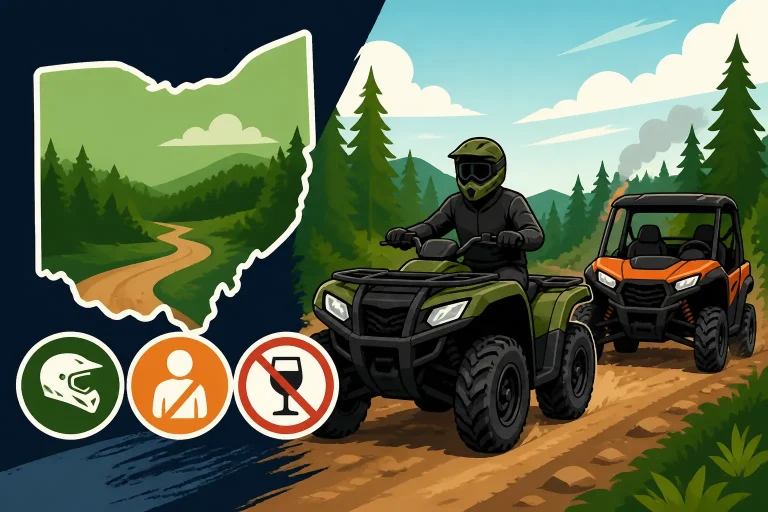
For public-land riding, machines may need the proper registration or plate, and riders may need to meet equipment, helmet, age, or supervision rules. An event waiver or race number does not replace any of these obligations. Review Ohio APV Reciprocity With Other States if participants are bringing machines registered elsewhere, and confirm the current requirements for the specific riding area. For broader background on plates and access, see Why Your APV Plate Is Also Your Trail Permit.
If rentals are involved, establish who is responsible for providing compliant machines and explaining site rules. A rental agreement does not necessarily prove that a machine is properly registered or that the rider meets the event’s requirements. Ohio Rules for a Rented Machine can help organizers identify issues to verify with the rental provider and land manager.
A practical race plan should cover more than the route:
- Set entry conditions. Define eligible machines, rider age requirements, required protective equipment, check-in documents, and any machine inspections.
- Separate racers from spectators. Use clearly marked boundaries and prevent foot traffic from entering the course.
- Plan emergency response. Identify how responders can reach the site, how an incident will be reported, and where participants should go for help.
- Control the schedule. Specify start times, staging, practice, race periods, and when riding must stop.
- Manage traffic and parking. Keep event vehicles and spectators from blocking public roads, gates, or emergency access.
- Protect the site. Use only approved routes, avoid unauthorized ground disturbance, and plan to remove temporary markers and waste.
- Brief participants. Explain course limits, passing or stopping procedures, prohibited areas, and what to do if the course is blocked or conditions change.
These are planning basics, not a substitute for permit conditions. An agency or venue may set additional requirements, such as a different course layout, limits on attendance, or restrictions on equipment. Ask for those conditions in writing and make sure the people running the event can enforce them.
Insurance also deserves early attention. Ask the land manager or venue what coverage or documentation it expects, and ask an insurance professional whether the proposed racing activity is covered. A policy for ordinary recreational riding may not cover a competition, a commercial event, or injury to a spectator. Do not assume that participant waivers eliminate insurance obligations or prevent claims.
Application process, timing, and common mistakes
A race proposal is easier to assess when it is complete, specific, and realistic. Contact the land manager early—before announcing a location as confirmed, taking substantial payments, or building a course. The review may take time, and the agency or owner may need more information or suggest a different site.
Use this sequence:
- Confirm ownership and jurisdiction. Identify every parcel and road the event would touch. If you are not sure, ask the relevant agency or owner to help verify the boundary.
- Ask whether racing is allowed in principle. Describe the competition honestly, including timing, spectators, and expected attendance. This can prevent wasted effort on a site that cannot host the activity.
- Request the correct application or written process. Ask whether the event needs a special-use permit, another authorization, or a venue agreement. Do not rely on an ordinary trail pass as event approval.
- Submit a complete plan. Include the map, schedule, participant estimates, safety arrangements, parking plan, and any requested insurance information.
- Resolve conditions and revisions. Be prepared to change the date, course, attendance, or event format. Get approval for the final version rather than assuming a preliminary conversation is enough.
- Keep written authorization accessible. Give event staff a copy and make sure the approved conditions are communicated to racers and volunteers.
- Reconfirm before event day. Check for closures, changed conditions, or updated instructions. Cancel or relocate if the authorization no longer fits the actual conditions.
Common mistakes include announcing a race before approval, describing a competitive event as a casual ride, assuming a trail permit authorizes an event, and treating an agency’s initial conversation as final permission. Another frequent problem is changing the route after approval without asking. A small adjustment can cross into a different management area or create a new safety or environmental concern.
Do not assume the event permit covers every participant’s legal requirements. Registration, equipment rules, age restrictions, and access permits may still apply. Conversely, having a registered machine does not give the organizer permission to hold a race. If the event includes public roads, a separate road-use process may be necessary, and the local authority may not permit the proposed use.
There is no universally reliable “race fee” or processing time to plan around. Costs and review requirements depend on the site, agency, and event. Ask the responsible office for current forms, charges, insurance specifications, and submission timing. Budget for the possibility of course changes, additional safety measures, or a different venue.
If a request is denied, ask whether the issue is the site, activity, route, timing, or event scale. A smaller event or private venue may be a workable alternative, but it still needs the applicable approvals. Never treat a denial as permission to hold the event without authorization.
Frequently Asked Questions
Does an Ohio ATV race need a permit?
It may need an event-specific authorization, especially on public land. The answer depends on ownership, location, and the activity. Contact the land manager or private venue operator and describe the event as a race.
Does an Ohio APV registration or plate authorize a race?
No. Registration or a plate addresses the machine’s status and may be relevant to riding access, but it does not give an organizer permission to stage a competition. Event approval and rider compliance are separate matters.
Can a Wayne National Forest OHV pass be used for a race?
Do not assume so. A riding pass and an event authorization serve different purposes. Ask the U.S. Forest Service whether the proposed competition requires special-use authorization and whether the location can host it.
Can a private landowner approve a race without any other permits?
A landowner can authorize use of their property, but other requirements may apply to the event, site, or activities around it. Confirm any relevant local requirements, insurance conditions, and rules for roads or neighboring land.
When should an organizer contact the land manager?
As early as possible, before announcing the site as confirmed or making commitments that depend on approval. Review time and application requirements vary, so ask the responsible office what schedule is realistic.
Disclaimer
This article is for general informational purposes only and does not constitute professional advice. Laws, prices and regulations vary by location and change over time. Consult a qualified professional for guidance on your specific situation.