Showing a Plate and a License
When you head out to ride your ATV or UTV in Ohio, whether it's on a designated trail or a legal road, it's easy to get confused about what paperwork you absolutely need to have on hand. Nobody wants to be stopped by a deputy and find themselves scrambling for documents, or worse, facing a citation because they didn't know the rules. This guide will walk you through exactly what you need to show – your plate, your driver's license, and other crucial items – to ensure your ride is smooth and worry-free in the Buckeye State.
Understanding Your Ohio APV Plate as Proof of Registration
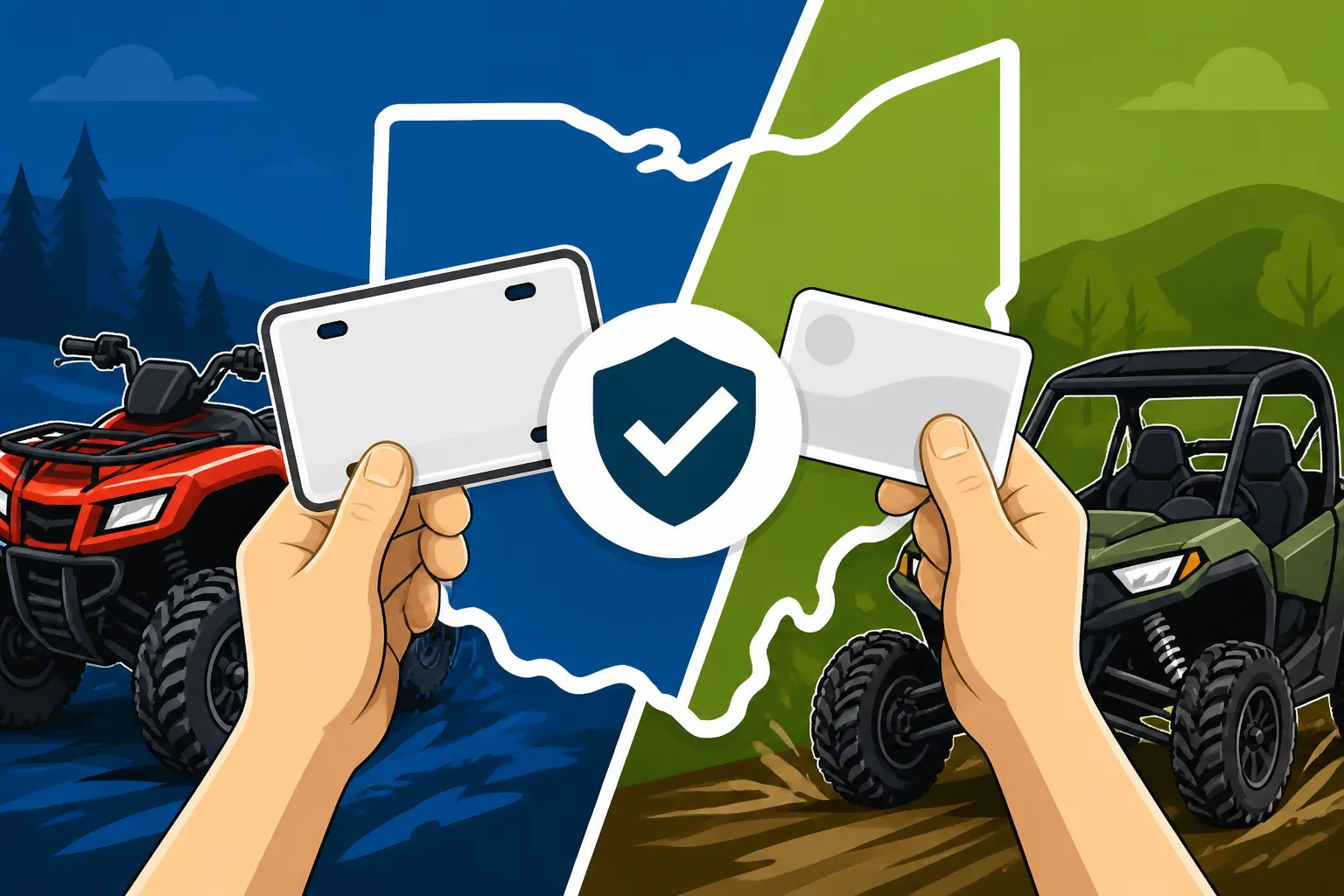
One of the most common points of confusion for Ohio riders revolves around the APV plate itself. For cars, we're used to having a separate registration card that you keep in the glove box. But with an All-Purpose Vehicle (APV), which is how Ohio law defines both ATVs and UTVs, the physical plate mounted on your machine often serves as your primary proof of registration.
When you go through the process of [Registering an APV in Ohio] at a Deputy Registrar's office, you're issued an actual license plate along with a validation sticker. This plate is your official connection to the state's registration system. Unlike a vehicle registration card that shows all the details in print, the plate's number and the accompanying sticker's year are generally what law enforcement looks for to confirm your machine is legally registered. This system is designed to be straightforward: if the plate is on the machine and the sticker is current, it usually signifies that you're good to go from a registration standpoint.
However, just because the plate is the primary visual proof doesn't mean you should leave everything else at home. While not always explicitly demanded for simple registration checks on a trail, it's always a good idea to carry the physical registration card that comes with your plate. This card contains detailed information about your APV and your registration period. If there's any ambiguity or if a deputy needs to verify specific details quickly, having that card makes the process much faster. Think of it as your backup; the plate is your "hello, I'm legal!" sign, and the card is the detailed resume to back it up. If you're ever pulled over, presenting [Ohio APV Plates and Validation Stickers] clearly and having your physical registration card at the ready can prevent unnecessary delays or questions.
The Driver's License Requirement for Ohio Road Riding
This is where things can get a bit more complex, especially for those new to riding their APV on public roads. While you might not need a driver's license to ride on private land or within designated state forest trails (depending on age and supervision rules), the moment your wheels touch an open county or township road in Ohio, the rules change significantly.
If you are operating your APV on any public road where it is legally permitted, you absolutely must possess a valid driver's license. This isn't a suggestion; it's a legal requirement. Just like driving your car down the street, you need to be a licensed operator. This applies whether you're taking your machine to the corner store, riding it to a nearby trail, or simply traversing a county road that has been designated as open to APVs. There's no special "APV license"; your standard Ohio driver's license, or an equivalent valid license from another state, is what's required. You might be surprised how many riders overlook this, assuming that because it's an off-road machine, the standard road rules don't fully apply. But for road use, they certainly do.
This also extends to situations where you might only be crossing a road. Even a quick jaunt across a two-lane highway from one piece of private property to another, if done on a legally open section, would necessitate you having your driver's license. The rationale is simple: public roads are governed by traffic laws, and operating any motor vehicle on them requires a qualified, licensed driver. This is a critical component of [Ohio APV Registration and Insurance Proof] when it comes to riding on those open roads.
What a Deputy Checks Roadside: Beyond Just Your Plate and License
When an Ohio Deputy stops you while you're out riding your APV, especially if you're on a road, they're typically looking for a few key things to ensure you're riding safely and legally. It goes beyond just checking your plate and asking for your driver's license.
First and foremost, they'll verify your registration via the plate and sticker. They'll also check your driver's license to confirm its validity and that you're the person it identifies. But beyond these basic documents, a deputy will often perform a quick visual inspection of your machine, particularly if you're on a public road. This is where [Ohio Equipment Rules for an APV on a Road] come into play. For instance, if you're riding a UTV, they might be looking for essentials like headlights, taillights, brake lights, a horn, mirrors, and even a windshield and wipers if your specific machine and the road conditions require them. For an ATV, the requirements might be slightly less stringent regarding road equipment, but functional lights and a properly displayed plate are always expected. If you've been customizing your machine for road use, perhaps with accessories from a brand like SuperATV, ensure they meet the specific Ohio requirements for road-legal operation. For example, SuperATV offers turn signal kits and mirrors that are crucial for compliance.
Furthermore, deputies are also checking for adherence to riding regulations. This includes helmet use, especially for younger riders or on state forest trails where it's mandatory. They'll also be mindful of the number of passengers, ensuring you're not exceeding the machine's designed capacity, and paying attention to any signs of impaired operation. If you're riding in a county or township that has opened its roads to APVs, the deputy might also verify that you're on a designated open road, as not all roads are accessible. [What an Ohio Deputy Checks Roadside] can vary slightly depending on the situation, but having your documents, ensuring your machine is properly equipped, and knowing the local ordinances will set you up for success.
Here's a quick overview of what to have ready:
| Item | Required for Trail Use (State Forests) | Required for Road Use (Open Counties/Townships) | Notes |
|---|---|---|---|
| Ohio APV Plate | Yes (primary permit) | Yes | Your physical license plate with a current validation sticker is your proof of registration. It acts as your trail permit on Ohio State Forest land. |
| Registration Card | Highly Recommended | Highly Recommended | While the plate is primary proof, the card has detailed information. Always carry it. |
| Driver's License | No (unless road access) | Yes (valid) | Absolutely required for operating an APV on any public road. Not needed for just trail riding unless accessing trails via road or if operating a UTV on a limited access road where a license is required. |
| Proof of Insurance | No (for trails) | Yes (if road-legal) | Required if operating your APV on public roads that are open to APVs. Not generally required for trail-only use. |
| Helmet | Yes (mandatory for all riders/passengers on State Forest lands; under 18 elsewhere) | Yes (for specific ages and scenarios, check local laws) | Always a good idea for safety. Mandatory for all riders/passengers on state forest trails. For road use, Ohio law often mandates helmets for riders under 18. |
| Eye Protection | Yes (mandatory) | Highly Recommended | Mandatory on state forest trails. Crucial for safety on any ride. |
| Road-Legal Equipment | N/A (not for trails) | Yes (for UTVs; check for ATVs) | If riding on public roads, your UTV will need functional headlights, taillights, brake lights, turn signals, mirrors, horn, and potentially a windshield and wipers. Check requirements carefully. Companies like SuperATV offer many of these components. [Ohio UTV Road Equipment List] outlines these in detail. |
Special Considerations for Young Riders and Passengers
Ohio law has specific provisions for minors and passengers when it comes to APV operation, which can also tie into what documentation and supervision might be necessary during a roadside stop. Understanding these rules is essential to keep everyone safe and legal.
For young riders, generally under the age of 16, Ohio law often requires direct adult supervision, especially when riding on private land or in areas not specifically designated for youth machines. When it comes to [Ohio Rules for Riders Under 16] on state forest trails, there are strict age minimums and supervision rules in place, often requiring a licensed adult to accompany them. While the young rider themselves won't have a driver's license (since they are underage), the supervising adult must possess a valid driver's license. If stopped by a deputy, the adult's license will be checked, and they will need to demonstrate that they are actively supervising the minor in accordance with the law. This is about ensuring responsible operation and safety.
Passengers also fall under specific rules. Many ATVs are designed for a single rider, and carrying a passenger on a machine not built for two can lead to a citation. UTVs, designed with multiple seats, are generally fine for carrying passengers as long as they are within the vehicle's capacity and seated properly. If you have passengers, especially younger ones, deputies will be checking for appropriate helmet use and safe riding practices. The rules on [Ohio Rules for a Passenger on an APV] are there for a reason – rider and passenger safety is paramount. Ensure that if you're carrying a passenger, your machine is rated for it and they are adhering to all safety gear requirements. Investing in quality safety gear, including helmets and goggles, is always a wise choice, regardless of age or experience level, and SuperATV offers a range of accessories to enhance overall safety and compliance.
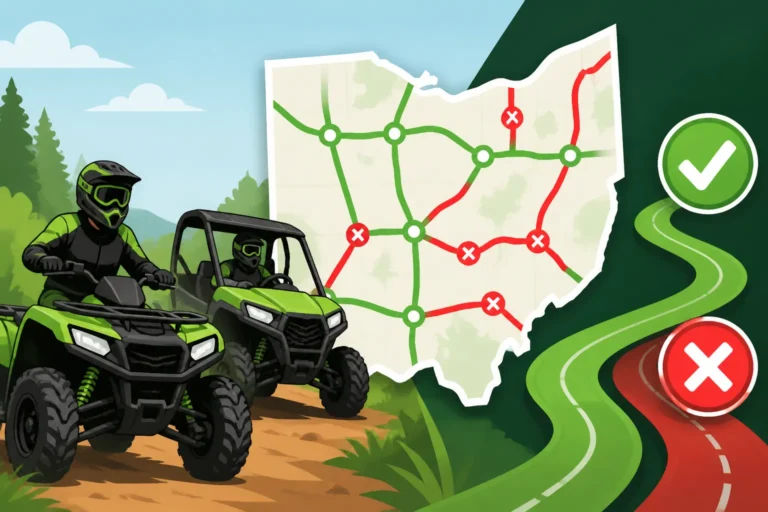
Navigating the rules for APV riding in Ohio doesn't have to be daunting. By understanding that your APV plate is your registration, knowing when and why you need a driver's license, being aware of essential road-legal equipment, and adhering to rules for minors and passengers, you'll be well-prepared for any roadside check. Remember to always ride responsibly and stay informed about the local laws where you plan to ride, whether it's a specific [Ohio County That Allows APVs on Roads] or your favorite state forest trail system like [Monday Creek Near Nelsonville].
Disclaimer
This article is for general informational purposes only and does not constitute professional advice. Laws, prices and regulations vary by location and change over time. Consult a qualified professional for guidance on your specific situation.