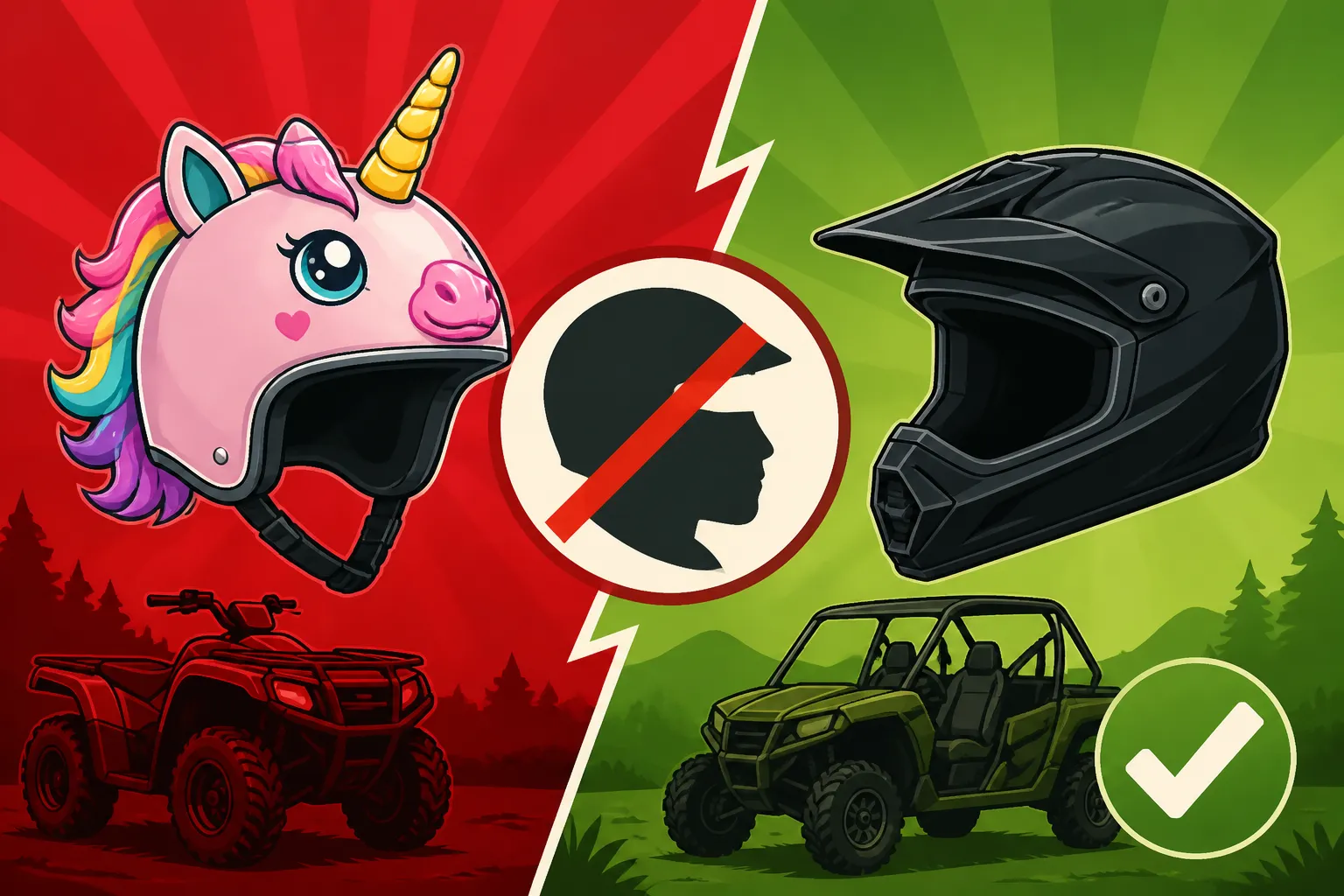
Why a Novelty Helmet Does Not Meet DOT Rules
It's a scene many of us have witnessed on the trails or even just driving through a small Ohio town: someone riding an ATV or UTV, wind in their hair, wearing what looks like a helmet, but something about it just seems… off. Maybe it's super thin, sits too high, or looks more like a prop than a piece of protective gear. The truth is, while these "novelty" helmets might look cool or feel lighter, they offer virtually no real protection in a crash and absolutely do not meet the safety standards required by the Department of Transportation (DOT). This guide is going to break down exactly why these seemingly harmless helmets are a huge risk, how you can spot the difference, and why choosing a properly certified helmet is crucial for your safety and compliance with Ohio law.
The Core Problem with Novelty Helmets on Ohio Roads and Trails
When you're out on an all-purpose vehicle (APV) in Ohio, whether it's an ATV kicking up dust on a state forest trail or a UTV cruising down an approved township road, you're embracing adventure. But with that adventure comes inherent risks. A sudden stop, an unexpected obstacle, or even a simple tip-over can send you flying. In these moments, your head protection is the single most important piece of gear you wear. Novelty helmets simply aren't designed to withstand these forces, leaving your most vital organ critically exposed.
What "DOT Approved" Really Means for Helmet Safety
When we talk about a "DOT approved" helmet, we're not just throwing around a fancy term. We're referring to a helmet that has been manufactured to meet a specific set of rigorous safety standards established by the U.S. Department of Transportation. This standard is called Federal Motor Vehicle Safety Standard (FMVSS) 218, and it's designed to ensure that helmets can actually protect your head in the event of an impact. It's the benchmark for rider safety, providing a baseline level of confidence that your helmet will perform when you need it most.
For a helmet to earn that coveted DOT certification, it undergoes a series of strict tests. These include impact attenuation tests, where the helmet is dropped onto various surfaces to measure how much force is transmitted to a simulated head. There are also penetration tests, where a sharp object is dropped onto the helmet to ensure it won't puncture. Furthermore, the retention system – that's your chin strap – is tested to make sure it won't fail under stress, keeping the helmet securely on your head during an incident. Each of these tests is critical, simulating the kinds of forces and potential hazards you might encounter while riding, and a helmet must pass all of them to be deemed compliant.
The Dangers of Inadequate Protection
Imagine you're riding your quad on a gravel road in the Wayne National Forest and hit an unexpected rut. The machine lurches, you lose your balance, and suddenly you're tumbling off. If you're wearing a thin, uncertified novelty helmet, what happens next can be catastrophic. These helmets often have minimal, if any, energy-absorbing foam (like EPS, or expanded polystyrene) and a flimsy outer shell. Instead of distributing impact forces across a wider area and absorbing kinetic energy, a novelty helmet will likely offer little resistance. This means the full force of the impact can be transmitted directly to your skull and brain, leading to severe injuries such as skull fractures, concussions, or even traumatic brain injury, even in what might seem like a relatively minor fall.
Consider the difference: a DOT-compliant helmet is engineered with multiple layers, including a robust outer shell designed to spread the impact over a larger area, and a thick, crushable EPS foam liner specifically designed to absorb and dissipate energy before it reaches your head. A novelty helmet, on the other hand, often feels like little more than a thin plastic cap. It might prevent superficial scrapes, but it won't protect you from the crushing forces that occur when your head strikes a hard surface at speed. When you're riding an APV, even a low-speed tip-over can result in significant head trauma if your helmet isn't up to the task. It's why seasoned riders and authorities alike are so adamant about proper head protection; it's the difference between walking away from an accident and facing life-altering injuries.
How to Identify a DOT-Compliant Helmet
Navigating the world of helmets can feel a bit overwhelming, especially with so many styles and price points available. However, knowing what to look for can quickly narrow down your options to only those that genuinely offer protection. It's not about the brand name or the flashiest graphics; it's about specific indicators that tell you the helmet meets federal safety standards.
The Critical DOT Sticker and What It Contains
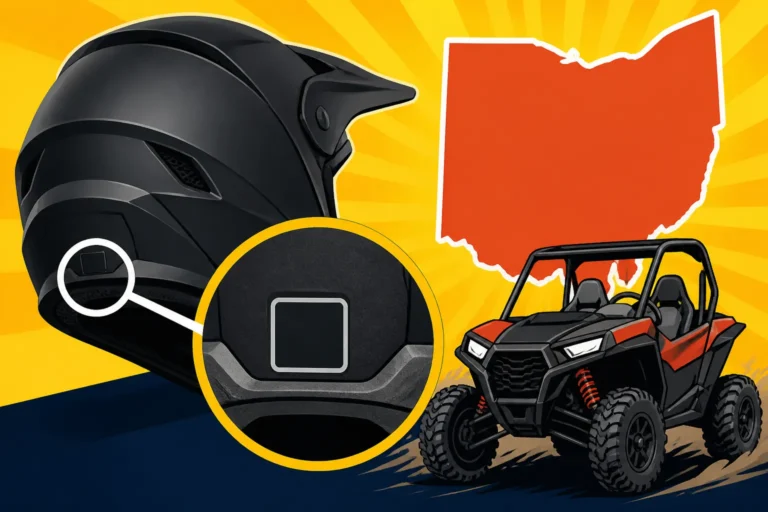
The most straightforward way to identify a DOT-compliant helmet is to look for the Department of Transportation certification sticker. This isn't just a small, decorative label; it's a vital declaration that the helmet has been tested and meets FMVSS 218. You'll typically find this sticker prominently displayed on the back exterior of the helmet. The sticker should clearly state "DOT FMVSS No. 218 Certified." It will often include other information, such as the manufacturer's name or trademark, the model designation, and sometimes the size.
It's crucial to be aware that simply having a sticker doesn't guarantee compliance. Unfortunately, there are unscrupulous manufacturers who will place fake DOT stickers on novelty helmets to deceive consumers. However, these fake stickers often lack the detail or quality of legitimate ones, or they might be on helmets that are clearly too thin and light to pass the actual tests. If a helmet looks suspiciously flimsy, lightweight, or has a minimalist design, even with a "DOT" sticker, it's worth a second, skeptical look. Always examine the overall construction of the helmet in addition to checking for the sticker.
Physical Characteristics of a Safe Helmet
Beyond the sticker, a DOT-compliant helmet has distinct physical characteristics that set it apart from its novelty counterparts. The most obvious difference is the thickness and overall robust feel. A certified helmet will have a significantly thicker outer shell, designed to be rigid enough to resist penetration and spread impact forces. Beneath that shell, you'll find a substantial layer of energy-absorbing material, typically high-density expanded polystyrene (EPS) foam, which is usually at least an inch thick, if not more, providing crucial cushioning. This is the material that crushes upon impact, absorbing kinetic energy and preventing it from reaching your skull. Novelty helmets, by contrast, are often paper-thin, with little more than decorative foam or fabric lining the inside.
Another key feature is the chin strap and retention system. DOT-compliant helmets will have a sturdy chin strap, often with a reliable double D-ring fastener, designed to keep the helmet securely on your head through multiple impacts. These straps are firmly anchored to the helmet's shell. Novelty helmets frequently have thinner, less secure straps or quick-release buckles that aren't designed to withstand significant force, making them prone to failure during an accident. Brands like SuperATV, for instance, offer a wide range of accessories for your APV, but when it comes to helmets, they will typically stock or recommend options that explicitly meet these rigorous safety standards, because they understand the importance of genuine protection for riders out on the trails.
Ohio Law and Helmet Requirements for APV Riders
Ohio's beautiful landscapes offer incredible opportunities for ATV and UTV enthusiasts, from the rolling hills of the Wayne National Forest to local county roads that have been opened for APV use. However, enjoying these opportunities comes with a responsibility to understand and abide by the state's laws, especially concerning safety equipment. When it comes to helmets, Ohio law is quite specific, and it's essential for all riders to be fully aware of the requirements to stay safe and avoid legal trouble.
Ohio's Specific Helmet Laws for ATV and UTV Use
In Ohio, the laws regarding helmet use for APVs are designed to protect riders, especially on public lands and roads. While the requirements can vary slightly depending on where you are riding, the general rule of thumb is clear: if you're operating an APV on any public highway, street, or even a designated public trail system, a DOT-compliant helmet is typically required. For instance, on state forest trails managed by the Ohio Department of Natural Resources (ODNR), the rule is unequivocal: all riders, regardless of age, must wear a helmet that meets federal DOT standards. You can read more about this in [Ohio Helmet Law on State Forest Trails].
Furthermore, if a county or township has passed a resolution to open its roads to APVs, then standard rules for road vehicles often come into play, which means a DOT-compliant helmet is mandatory for all operators and passengers. For riders under the age of 18, the rules are even stricter, often requiring a helmet in almost all riding scenarios, regardless of whether they are on private land or not, unless specific exceptions apply. This is an important distinction, as many young riders may assume private land riding is exempt, but parental supervision and proper gear remain paramount. You'll want to be familiar with [Ohio Rules for Riders Under 16] to ensure everyone in your riding group is compliant. Even if you're just [Riding an Ohio Quad That Lives on a Trailer] to get to the trailhead, any time you touch a public road, those helmet rules kick in.
Consequences of Non-Compliance
Ignoring Ohio's helmet laws can lead to a host of unpleasant consequences, ranging from financial penalties to severe personal injury. The most immediate impact of not wearing a DOT-compliant helmet when required is a citation from law enforcement. An Ohio Deputy, whether on a forest trail or a county road, is trained to check for proper safety gear, and a non-compliant helmet will likely result in a fine. This can be a significant cost that far outweighs the price of a proper helmet. Plus, having to deal with a court appearance and the hassle of a citation is never how you want to end a day of riding.
Beyond the legal ramifications, the human cost of choosing a novelty helmet is immeasurable. In the event of an accident, an uncertified helmet offers negligible protection, significantly increasing the risk of serious head trauma. Imagine the financial burden of extensive medical bills, rehabilitation, and lost income from a severe brain injury, not to mention the emotional toll on you and your loved ones. Furthermore, if you are involved in an accident and found to be riding without proper, DOT-compliant safety gear, your insurance company may deny coverage for medical expenses or vehicle damage, arguing that you were negligent. This can leave you personally liable for astronomical costs. While the cost of a good helmet is an investment, it pales in comparison to the costs associated with severe injury. You can look into [Ohio APV Insurance Requirements] for more information on how safety gear plays into coverage.
Making the Right Choice for Your Safety and Compliance
When you're gearing up for an adventure on your Ohio ATV or UTV, every piece of equipment plays a role in your overall experience and safety. While engine performance or suspension upgrades might get most of the attention, the helmet you choose is arguably the most critical component. It’s the last line of defense for your head, and making an informed decision here is literally a matter of life and death.
Prioritizing Protection Over Style
It's completely understandable to want gear that looks good and reflects your personal style. We all do! There are countless helmet designs, colors, and graphics out there. However, it's imperative to remember that when it comes to head protection, the primary function is safety, not aesthetics. Novelty helmets are often chosen because they are lightweight, less bulky, and sometimes perceived as "cooler" or more fashionable. But this comes at the ultimate cost: they are designed to offer minimal, if any, real impact protection. They might keep bugs out of your hair or provide a token shade, but they won't save you from a severe head injury in a crash.
Think of your helmet as an investment in your well-being. A properly certified helmet might feel a bit heavier or bulkier than a novelty one, but that's because it's built with the robust materials and multi-layer construction necessary to absorb and dissipate impact energy. Many reputable helmet manufacturers today offer DOT-compliant helmets in a vast array of styles, colors, and ventilation options, meaning you absolutely don't have to sacrifice style for safety. You can find a helmet that looks great and protects you effectively. It just requires a bit more discernment in your selection process, ensuring the helmet meets the necessary safety standards first and foremost.
Where to Find and What to Look For in a Compliant Helmet
So, where do you start your search for a genuinely safe helmet? The best places to look are authorized dealerships for motorcycle, ATV, and UTV brands, as well as reputable powersports retailers and dedicated online gear stores. These outlets are much more likely to stock helmets that meet or exceed DOT standards. When you're shopping, always make sure the helmet explicitly states "DOT FMVSS No. 218 Certified" on the product description or packaging. If you're browsing online, verify this information on the manufacturer's official website.
Once you have a few options in mind, it's critical to try the helmet on. Fit is paramount for safety and comfort. A helmet that's too loose can shift during an impact, failing to protect you properly, while one that's too tight can be uncomfortable and distracting. The helmet should feel snug all around your head, without any pressure points, and it shouldn't move when you shake your head side to side. The chin strap should be comfortable and secure. Don't forget to check for other safety certifications like Snell or ECE, which often exceed DOT standards and offer even greater peace of mind. While SuperATV is widely known for a huge range of aftermarket parts and accessories that enhance your machine's performance and utility, they also understand that safety comes first. When considering any gear, including helmets, always prioritize those that clearly bear the DOT certification, ensuring you're ready for whatever the Ohio trails and roads throw your way. Remember, investing in quality protection is always money well spent.
| Feature | Novelty Helmet | DOT-Compliant Helmet |
|---|---|---|
| Primary Purpose | Style, light head covering, aesthetics | Head protection, energy absorption, impact safety |
| Outer Shell | Thin plastic, minimal rigidity | Thick, rigid composite or polycarbonate material |
| Energy Absorption | Little to no EPS (Expanded Polystyrene) foam | Substantial, multi-density EPS foam liner |
| Weight | Very light | Moderate to heavy (due to protective materials) |
| Retention System | Flimsy straps, simple buckles, weak anchors | Strong, wide chin straps, D-rings, secure anchors |
| Impact Testing | None | Required to pass FMVSS 218 standards |
| Penetration Resist. | Poor to none | Designed to resist sharp object penetration |
| Legal Status (OH) | Generally illegal for public road/trail use | Required by law for public road/trail use (most cases) |
| Protection Level | Minimal, offers almost no crash protection | Designed to significantly reduce head injury risk |
Disclaimer
This article is for general informational purposes only and does not constitute professional advice. Laws, prices and regulations vary by location and change over time. Consult a qualified professional for guidance on your specific situation.