Mirrors Before a Road Ride
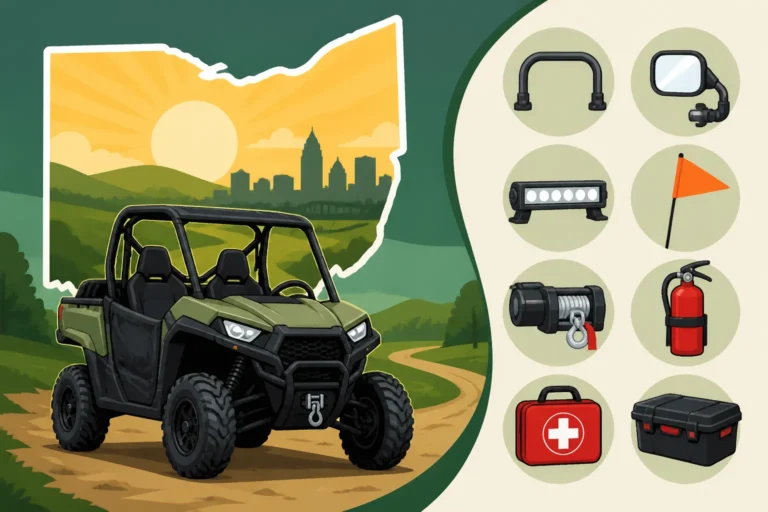
It's a common dream for many Ohio ATV and UTV owners: being able to hop on your machine and simply ride it down the road, whether it's to the local gas station, a friend's house, or directly to a nearby trail system. But the reality often hits hard when you realize Ohio law has specific, sometimes confusing, requirements for taking these off-road vehicles onto public thoroughfares. One of the most frequently asked questions, and a crucial safety component, revolves around mirrors. This guide will walk you through exactly why mirrors are non-negotiable for road-bound riding in Ohio, and what other equipment you'll need to ensure your machine is compliant and safe.
Why Mirrors Are a Must-Have for Ohio Road Riding
When you think about driving any vehicle on a public road, what's one of the first things you use when you're backing up, changing lanes, or just checking your surroundings? Mirrors, right? Our off-road machines are no different when they venture out of the woods and onto the paved or gravel lanes shared with cars and trucks. Ohio law, like most states, recognizes the absolute necessity of being aware of your surroundings, not just what's in front of you.
The Legal Mandate for Visibility
Imagine you're cruising down a quiet county road on your UTV, enjoying the breeze. Suddenly, you need to make a left turn into a field entrance, or maybe pull over for an approaching vehicle. Without mirrors, how do you know if there's a car rapidly approaching from behind, or if another rider is close on your tail? The answer is, you don't – at least not safely. This blind spot is precisely why Ohio law requires mirrors for any "all-purpose vehicle" (APV) or UTV that's legally operating on public roads. It's not just a suggestion; it's a safety imperative written into the regulations to protect you and everyone else sharing the road.
The core idea is to provide the operator with a clear, unobstructed view of the road behind the vehicle. This isn't just about avoiding a citation; it's about preventing accidents. A quick glance in a properly adjusted mirror can show you a car closing in faster than you expect, allowing you to signal your intentions well in advance or decide it's not safe to move. It allows you to track traffic flow, merge safely, and generally behave like any other road-going vehicle. Without that visual aid, you're essentially driving partially blind, which is incredibly dangerous in any road scenario.
Types of Mirrors and Placement
So, what kind of mirrors are we talking about? Generally, Ohio law will expect you to have at least one rearview mirror, and typically two side mirrors, giving you comprehensive visibility. For many ATVs, this might mean adding handlebar-mounted mirrors that extend out to the sides, similar to a motorcycle. These need to be robust enough to hold their position through vibrations and bumps, providing a clear view.
For UTVs, the situation is often a bit simpler since many models come with at least a center rearview mirror from the factory, and roll cage-mounted side mirrors are a very popular and easy addition. Companies like SuperATV offer a wide range of aftermarket mirror kits specifically designed for various UTV models, which makes finding the right fit and ensuring compliance much easier. When choosing mirrors, don't just pick the cheapest option. Look for mirrors that offer a wide field of vision, are easily adjustable, and can withstand the rigors of off-road use, even if you're primarily getting them for road riding. They need to be securely mounted so they don't constantly shift, making them useless. Proper placement is key: you should be able to see clearly behind you with minimal head movement, without the view being obstructed by your own body, the machine's frame, or cargo. Think about how a car's mirrors are positioned; your APV should mimic that functionality for road safety.
Beyond Mirrors: Essential Equipment for Ohio Road Use
While mirrors are a crucial starting point, they are just one piece of the puzzle when it comes to making your APV or UTV street-legal in Ohio. The state demands a suite of equipment to ensure your machine can safely interact with other vehicles on public roads. Ignoring any of these can not only lead to a fine but also significantly jeopardize your safety and the safety of others.
Lighting, Turn Signals, and Horns
Just like any other vehicle, your APV needs to be seen, especially during low-light conditions or after dark. This means having properly functioning headlights that illuminate the road ahead and taillights that signal your presence to those behind you. But visibility isn't just about being seen; it's also about communication. Turn signals are absolutely critical for indicating your intentions to other drivers. Imagine trying to make a left turn on a busy road without any way to signal! This is why adding reliable turn signal kits is usually one of the first modifications UTV owners make for road use. Many ATVs do not come with turn signals from the factory, making them a necessary aftermarket addition.
And let's not forget the horn. A working horn is your immediate warning system. It could be for alerting a pedestrian who steps into the road, a driver who isn't paying attention, or even a deer that darts out. It's a fundamental piece of safety equipment that every road-legal vehicle must possess. For UTVs especially, [Ohio UTV Road Equipment List] outlines these requirements in detail.
Brakes, Tires, and Safety Glass
The ability to stop reliably is paramount. Your APV must have properly functioning brakes on all wheels that are in good repair. This means checking your brake pads, fluid, and lines regularly. Beyond stopping, how your machine grips the road is vital. Aggressive off-road tires designed for mud and rocks might perform poorly on pavement, offering less traction and wearing out quickly, not to mention potentially damaging asphalt. While Ohio law doesn't always specify "street legal" tires, ensuring your tires are in good condition and suitable for the surfaces you'll be riding on is common sense for safety.
For UTVs that have cabs or windshields, the requirements become even more specific. If your UTV has a windshield, it must be made of safety glass. This isn't just about clarity; it's about what happens in an impact. Regular glass can shatter into dangerous shards, whereas safety glass is designed to break in a way that minimizes injury. Furthermore, if you have a windshield, you'll need at least one functioning wiper to maintain visibility in rain or mud. It sounds basic, but these details are what differentiate a trail machine from one ready for the road. [Why a Road-Legal UTV Windshield Must Be Safety Glass] explains this in more detail.
Other Considerations: Seatbelts and Roll Cages
While these aren't typically "add-on" items like mirrors or lights, they are inherent safety features that differentiate many UTVs from ATVs and are integral to their road-legal status. Most UTVs come standard with seatbelts and a sturdy roll cage (ROPS – Rollover Protective Structure). These are designed to protect occupants in the event of a rollover or collision. When riding on public roads, where speeds can be higher and interactions with larger, heavier vehicles are possible, these protective measures become even more critical. While an ATV offers different levels of protection, the robust design of a UTV with its cage and restraints makes it a more viable candidate for conditional road use in Ohio, especially after passing the necessary inspection. Always ensure your seatbelts are in good working order and worn by all occupants, just as you would in a car.
The UTV Inspection Process and What it Means for Your Road Ride
This is where the rubber meets the road, quite literally, for UTV owners in Ohio. If you're planning on taking your Utility Task Vehicle onto public roads, there's a specific hurdle you'll need to clear that most ATV owners don't face in the same context: a formal inspection. This isn't just a suggestion; it's a mandatory step to ensure your UTV meets the safety standards required for road operation.
Why UTVs Face an Inspection (and ATVs Don't)
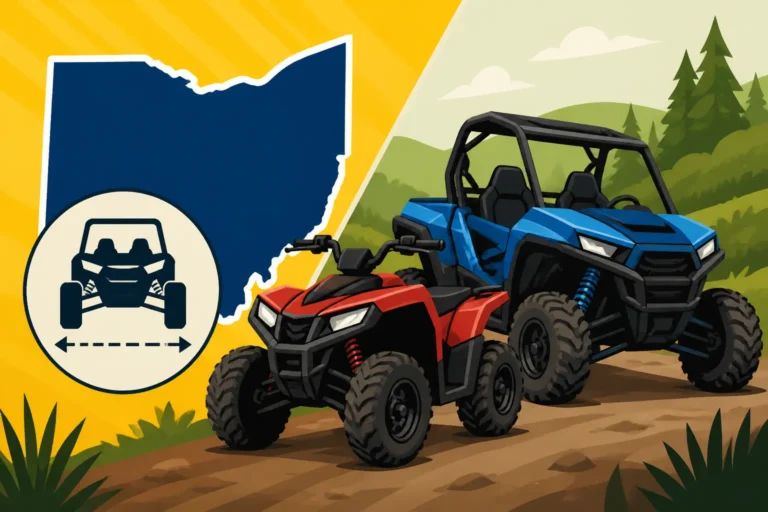
Ohio law makes a clear distinction between ATVs (often referred to simply as "quads") and UTVs (side-by-sides, or "all-purpose vehicles" in the eyes of the law, although legislation may change the terminology). Generally, ATVs are not designed or equipped for road use, and their operation on public roads is severely restricted, often limited to crossing specific roads or very short distances on roads designated by local authorities. They typically don't undergo a formal road-readiness inspection.
UTVs, however, with their more car-like seating, steering wheels, and often larger size, are viewed differently. Because they can be modified to meet certain road-going standards, Ohio law mandates an inspection to verify that they actually have been modified to those standards. This process ensures that when a UTV is granted permission to share county or township roads, it possesses the minimum safety equipment to do so without undue risk. Think of it as a mini vehicle inspection, specifically tailored for these types of machines. [The Ohio Inspection a UTV Must Pass] is a crucial step for many side-by-side owners.
What an Inspector Looks For (Including Mirrors)
During a UTV inspection in Ohio, the inspector will go through a detailed checklist to ensure your machine is equipped and functioning properly for road use. And yes, those mirrors we talked about? They're definitely on the list. The inspector will confirm that your UTV has at least one, and ideally two, mirrors that provide a clear view of the rear.
Beyond mirrors, they'll be checking:
- Headlights and Taillights: Are they working? Are they properly aimed?
- Brake Lights: Do they activate when you press the brakes?
- Turn Signals: Do they flash clearly and on both sides (front and rear)?
- Horn: Does it sound clearly?
- Brakes: Are they effective on all wheels?
- Tires: Are they in good condition with adequate tread?
- Windshield and Wipers (if equipped): Is the windshield safety glass? Does the wiper work?
- Seatbelts: Are they present and functional for all seating positions?
- Muffler: Is it present and effective in reducing noise?
- Spark Arrester: Is it present to prevent fires?
Passing this inspection is non-negotiable for obtaining a road-legal registration for your UTV. It's how the state ensures that a [Registering a Side-by-Side in Ohio] is truly ready for its purpose on the pavement. The inspector is looking for compliance with a host of regulations designed to bring an off-road machine up to a basic road safety standard. [What an Inspector Looks For] goes into more detail about the specific items.
Getting Your UTV Ready for the Road
The key to successfully navigating the UTV inspection is preparation. Don't wait until the last minute. Before you even think about scheduling an inspection, give your UTV a thorough once-over. Imagine you're the inspector:
- Check All Lights: Headlights (high/low beam), taillights, brake lights, and especially any aftermarket turn signal kit you've installed. Make sure every bulb works and that they're clearly visible.
- Verify Mirrors: Ensure they are securely mounted, in good condition, and provide a clear, unobstructed view to the rear and sides. Adjust them for optimal visibility. If you've just installed new mirrors, like those from SuperATV, make sure they're tightened down.
- Test the Horn: Give it a good honk. Is it loud enough to be heard?
- Inspect Brakes: Check your brake pads for wear, ensure the pedal feels firm, and verify that the brake lights illuminate when pressed.
- Examine Tires: Look for excessive wear, cracks, or damage. Make sure they're properly inflated.
- Windshield & Wipers: If applicable, ensure your windshield is safety glass and your wiper operates smoothly.
- Seatbelts: Buckle them up and ensure they retract and latch properly.
It can be a bit of a project, especially if your UTV didn't come with many of these features from the factory. However, taking the time to install the necessary components and perform your own pre-inspection checklist will save you time, money, and frustration down the line. Remember, the goal isn't just to pass the inspection; it's to ensure your safety and the safety of others when you finally hit the open road.
Navigating Ohio's Roads with Your APV/UTV
Once you've done the hard work of outfitting your machine with all the necessary equipment, including those crucial mirrors, and your UTV has successfully passed its inspection, you might feel a rush of excitement to hit every road in Ohio. Hold on a minute! Being "street legal" in Ohio for an APV or UTV comes with its own set of rules and limitations regarding where you can actually ride. It's not a blanket permission slip to drive your machine wherever a car can go.
Where You Can Actually Ride Legally
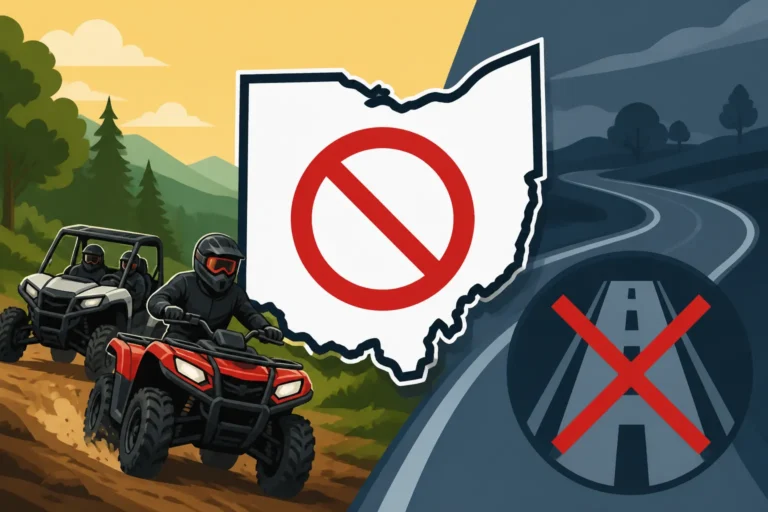
This is perhaps the biggest point of confusion and frustration for many riders. Unlike cars, which can generally traverse any public road unless specifically prohibited, APVs and UTVs in Ohio operate under much stricter guidelines. You absolutely cannot ride your machine on state routes, such as highways marked with an "OH" shield, or on interstate highways. These are off-limits, no exceptions.
So, where can you ride? Your road-legal APV or UTV is typically restricted to county and township roads. But here's the kicker: it's not automatic. County Commissioners and Township Trustees must pass specific resolutions or ordinances to open their roads to APVs. This means that one township might allow them, while the neighboring township does not. It’s vital to do your homework. You might find that [Ohio Counties That Allow APVs on Roads] are limited, and even within those, certain townships might have opted out.
For example, a county might pass a resolution to allow APVs on all county-controlled roads, but then it's up to individual townships within that county to decide whether to open their own township roads. [How an Ohio Township Opens Its Roads] often involves a public meeting and a vote. You might find yourself legally riding on a county road, only to encounter a township line where riding becomes illegal. These local decisions also often come with speed restrictions, commonly limiting APVs to roads with posted speed limits of 35 MPH or less. [An Ohio Road Posted Thirty-Five or Less] is a common sight. Always check local signs and ordinances before you ride to avoid an unpleasant surprise or a costly citation.
Documentation and Personal Requirements
Beyond the physical equipment on your machine, you, as the rider, also have responsibilities. Just like driving a car, you need to carry certain documents and meet personal qualifications. First and foremost, you must possess a valid driver's license. This isn't a state forest trail where a different set of rules might apply; you're operating on public roads, so a driver's license is mandatory. [A Driver's License on an Ohio Road] is non-negotiable.
Secondly, you must have proof of insurance. Ohio law requires liability insurance for any motor vehicle operating on public roads, and your APV or UTV is no exception. This insurance helps protect you financially in case of an accident. Always carry your insurance card with you. [Proof of Insurance on an Ohio Road] is something a law enforcement officer will ask for if you're stopped. Finally, you need to carry your current APV registration card. If you're pulled over and can't provide this, it can lead to problems. [What Happens If You Ride Without Your Registration Card] could be a quick way to spoil your ride. The "street legal" designation means you're operating under the same basic expectations as any other motorist, including having all your paperwork in order.
Safety Best Practices on Public Roads
Even with your machine fully equipped, inspected, and all your paperwork in order, riding an APV or UTV on public roads demands a heightened sense of caution and defensive riding. These machines handle differently than cars, often have a higher center of gravity, and are much lighter, making them more susceptible to the actions of other drivers.
- Be Hyper-Aware: Constantly scan your mirrors (now that you have them!), check your blind spots, and be aware of traffic around you. Assume other drivers might not see you, as APVs are smaller and less common on roads.
- Maintain Safe Speeds: Even on roads where you're legally allowed to ride, don't push the speed limit, especially if it feels too fast for your machine or the road conditions. Respect the limits.
- Signal Clearly: Use your turn signals well in advance of any turns or lane changes.
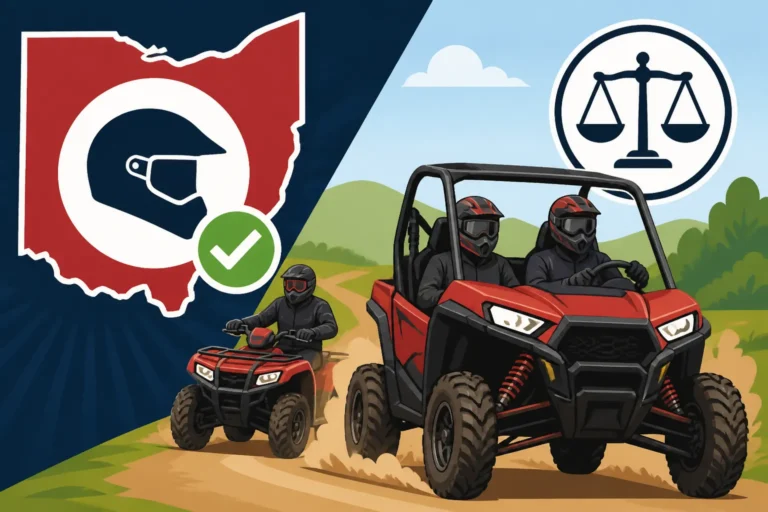
- Wear a Helmet: While Ohio law has specific helmet requirements for state forest trails, wearing a DOT-approved helmet on public roads is always a smart and safe choice, regardless of whether it's legally mandated for your specific age or machine on that particular road. [Ohio Helmet Rules on State Forest Trails] provides guidance.
- Keep Your Distance: Maintain a safe following distance from other vehicles.
- Avoid Distractions: Focus 100% on riding and navigating the road. No cell phones or other distractions.
Riding your APV or UTV on Ohio roads can be a fantastic way to extend your adventures, but it's a privilege that comes with strict responsibilities. By understanding and adhering to the equipment requirements, respecting the local ordinances, and practicing safe, defensive riding, you can enjoy your machine on the pavement and still make it home safe.
| Feature | ATV (All-Terrain Vehicle) | UTV (Utility Task Vehicle / APV) |
|---|---|---|
| Mirrors | Required for road use (typically aftermarket) | Required for road use (often factory center mirror, side mirrors aftermarket) |
| Headlights | Required for road use (often factory, may need aiming) | Required for road use (often factory, may need aiming) |
| Taillights | Required for road use (often factory) | Required for road use (often factory) |
| Brake Lights | Required for road use (often aftermarket) | Required for road use (often factory) |
| Turn Signals | Required for road use (typically aftermarket) | Required for road use (typically aftermarket) |
| Horn | Required for road use (typically aftermarket) | Required for road use (typically aftermarket) |
| Brakes | Required for road use (must be functional on all wheels) | Required for road use (must be functional on all wheels) |
| Tires | In good condition, appropriate tread for road use | In good condition, appropriate tread for road use |
| Windshield | Not typically applicable | If equipped, must be safety glass; wiper needed |
| Inspection | Generally not required for conditional road use | Mandatory inspection for road legality |
| Driver's License | Required for road use | Required for road use |
| Insurance | Required for road use | Required for road use |
| Roads Allowed On | County/Township roads if permitted by local ordinance | County/Township roads if permitted by local ordinance |
| State Routes/Interstates | Prohibited | Prohibited |
Disclaimer
This article is for general informational purposes only and does not constitute professional advice. Laws, prices and regulations vary by location and change over time. Consult a qualified professional for guidance on your specific situation.