Fitting Wipers to a Cab Machine
Riding an all-purpose vehicle (APV) or a utility terrain vehicle (UTV) in Ohio, especially one with a full cab enclosure, offers a fantastic layer of comfort and protection from the elements. However, that very enclosure can become a significant frustration when rain, mud, or snow hit, quickly turning your clear view into an opaque mess. This guide dives deep into the world of fitting wipers to your cab machine, helping you maintain clear visibility and ensure safer, more enjoyable rides on Ohio's diverse trails and roads.
Why Wipers Are More Than Just a Convenience in Ohio
When you invest in a cab enclosure for your side-by-side or other APV, you're looking for comfort and protection. But without a proper wiper system, that protective windshield can quickly become a liability, especially when navigating Ohio's dynamic weather conditions or kicking up trail dust. Wipers aren't just about avoiding a little discomfort; they're fundamentally about safety and, for some machines, meeting road-use expectations.
Safety First: Visibility in Inclement Weather
Imagine you're deep in the Wayne National Forest on a Monday Creek trail, the rain suddenly starts to pour, turning the dirt into a slick, muddy track. Or perhaps you're crossing a [Township Trustees' Resolution in Ohio] road on a brisk November morning, and the mist is thick enough to obscure your view. Without wipers, your only option is to stop and wipe the windshield by hand, or worse, lean out the window, which is far from ideal when you're trying to concentrate on the terrain or traffic.
Reduced visibility is a leading cause of accidents, whether you're on a challenging trail or a paved road. Mud, rain, snow, and even heavy dust can quickly coat your windshield, making it impossible to see obstacles, other riders, or oncoming vehicles. Wipers offer continuous clearing, allowing you to maintain focus and react appropriately to changing conditions. They keep your line of sight clear, which is paramount for preventing rollovers, collisions, or veering off course. For riders who enjoy year-round adventures, especially during the wetter spring and autumn months or snowy Ohio winters, a reliable wiper system is an absolute game-changer.
Meeting Potential Road-Use Requirements for UTVs
While Ohio's definition of an APV is broad and covers everything from dirt bikes to side-by-sides, the requirements for legal road use often differentiate between smaller ATVs and the larger, cab-equipped UTVs. If you plan to use your UTV on designated [Ohio Counties That Allow APVs on Roads] or [Ohio Townships That Allow APVs on Roads], you'll encounter specific equipment rules.
For UTVs to be considered road-legal in Ohio, they typically need to undergo an inspection to ensure they meet certain standards. A key part of this inspection, especially for machines with full windshields, is having functional wipers. Just like a car, a UTV needs to provide adequate visibility for its operator when sharing public thoroughfares. Without them, you might find your vehicle doesn't pass the necessary checks, limiting where you can legally ride. Even if a wiper isn't explicitly listed in every single line of Ohio's general [Ohio APV Road Equipment List], it's almost always a practical necessity for any enclosed machine intended for road use, especially when you consider the broader [Ohio UTV Road Equipment List] and [Ohio UTV Inspection Requirements]. An inspector will certainly be looking for a clear line of sight through your windshield.
Types of Wiper Systems for Your Enclosed APV
When it comes to outfitting your cab machine with wipers, you've got a few different avenues to explore, each with its own set of advantages and considerations. Understanding these options will help you pick the best system for your riding style and budget.
Manual vs. Electric Wipers: Pros and Cons
The most fundamental choice you'll face is between manual and electric wiper systems.
Manual Wipers: These are typically simpler and more budget-friendly. They consist of a blade attached to an arm, which is then connected to a handle or knob inside the cab. You operate them by hand, pushing or pulling the handle to sweep the blade across the windshield.
- Pros:
- Cost-Effective: Generally much cheaper to purchase and install.
- No Electrical Draw: Great for machines with limited electrical capacity, as they don't require battery power.
- Simple Design: Fewer moving parts mean less can go wrong.
- Direct Control: You control the speed and frequency of the wipes directly.
- Cons:
- Fatigue: Constantly wiping by hand can be tiring, especially on long, wet rides.
- Distraction: Takes a hand off the steering wheel, which can be dangerous in challenging terrain or traffic.
- Limited Effectiveness: Hard to maintain a consistent wipe during heavy rain or mud.
Electric Wipers: These systems utilize a small motor to automatically sweep the blade(s) across the windshield. They can range from basic on/off switches to multi-speed and intermittent settings, just like a car.
- Pros:
- Convenience: Hands-free operation allows you to focus on driving.
- Consistent Performance: Maintains a steady wiping action, crucial in heavy precipitation.
- Variable Speeds: Many systems offer different speeds or intermittent settings for various conditions.
- Enhanced Safety: Both hands on the wheel improve control and reaction time.
- Cons:
- Higher Cost: More expensive to buy and install due to the motor and wiring.
- Electrical Draw: Requires battery power, which could be a concern for some machines or long rides without charging.
- More Complex Installation: Involves wiring to the battery or fuse box, and potentially drilling for the motor.
- Potential for Motor Failure: While generally reliable, motors can burn out or malfunction.
Many riders, especially those with full enclosures who frequent wet or muddy trails, find the investment in electric wipers well worth the convenience and safety they provide. Companies like SuperATV offer a range of electric wiper kits designed specifically for UTV windshields.
Single vs. Dual Systems
Once you've decided between manual and electric, you'll often have a choice between single and dual wiper configurations.
-
Single Wiper: As the name suggests, this system uses one wiper arm and blade, typically mounted centrally on the windshield.
- Pros: Simpler installation, often more affordable. Adequate for smaller windshields or those who don't need absolute maximum coverage.
- Cons: May leave a significant unwiped area on larger or wider windshields, especially on the passenger side or in the corners, potentially obstructing vision.
-
Dual Wiper: This setup features two wiper arms and blades, usually positioned to cover a broader area of the windshield, similar to a car.
- Pros: Superior coverage, clearing a much larger portion of the windshield for improved visibility for both driver and passenger. Essential for wider UTV windshields.
- Cons: More complex installation (two motors or a linkage system), higher cost, and potentially more electrical draw if it's an electric system.
For larger side-by-side windshields, a dual wiper system often provides the best visibility. However, for a smaller UTV, a single, well-placed electric wiper might be perfectly sufficient.
Heater and Washer Options
Taking your wiper system to the next level involves adding features that enhance clarity and comfort, especially in more extreme Ohio weather.
- Washer Systems: These typically involve a small reservoir for washer fluid, a pump, and nozzles that spray fluid onto the windshield. This is incredibly useful for clearing off stubborn mud, dust, or insect splatters that a dry wiper alone can't handle. Imagine getting covered in thick, clay-like mud on a trail near Hocking Hills; a washer system lets you clear that grime without stopping.
- Heated Wiper Blades or Elements: For those who ride in freezing temperatures or heavy snow, heated wiper blades can prevent ice buildup, keeping the blades flexible and effective. Some high-end windshields even feature integrated heating elements to prevent fogging and ice on the glass itself. These are less common but offer ultimate cold-weather performance.
While these additional features add to the complexity and cost, they significantly improve the overall utility of your cab machine, making it more capable and comfortable across a wider range of conditions.
Installation Considerations and Tips for a Clean Fit
Installing a wiper system on your cab machine isn't usually a plug-and-play operation. It often involves some drilling, wiring, and careful planning to ensure it functions correctly and looks good. Taking your time during installation can prevent headaches down the trail.
Windshield Compatibility and Mounting
Not all windshields are created equal, and this is a critical factor when installing wipers.
- Material: Most UTV windshields are made from polycarbonate or acrylic. While durable, these materials can scratch more easily than glass, so using the correct wiper blades and cleaning techniques is essential. Glass windshields, often used for [Why a Road-Legal UTV Windshield Must Be Safety Glass] applications, are more resistant to scratching but are heavier and can shatter. Always check if your wiper kit is compatible with your windshield material.
- Flatness vs. Curve: Flatter windshields are generally easier for wipers to cover effectively. Heavily curved windshields might require specific wiper arm lengths or a dual system to ensure good contact across the entire sweep.
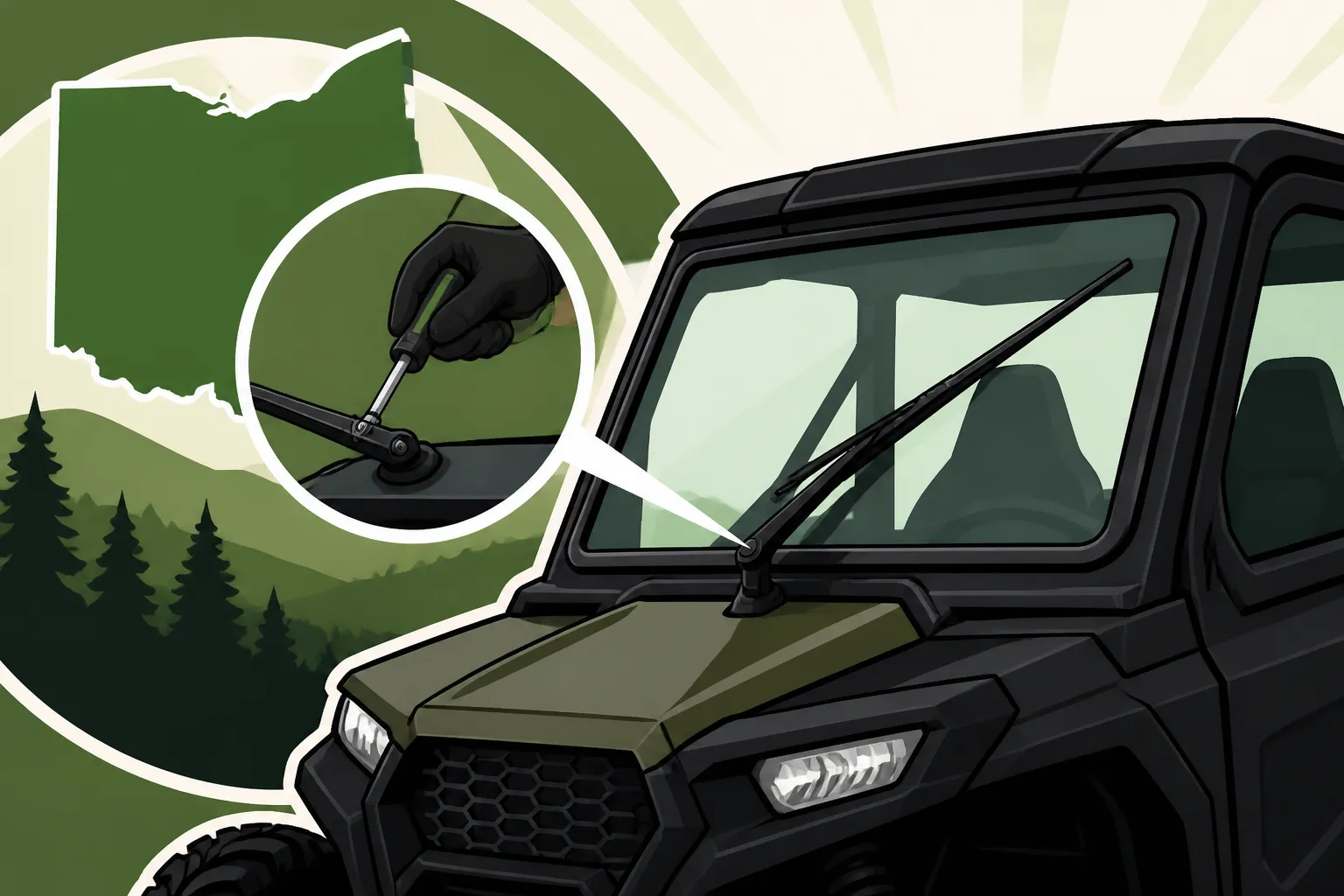
- Mounting Location: For electric wipers, you'll typically need to drill a hole through the windshield frame or the windshield itself (if it's a specific type designed for it) to mount the wiper motor shaft. Measure twice, drill once! Ensure the motor is mounted securely and in a position that allows the wiper arm to sweep effectively across the desired area without hitting the frame or other obstructions. Some full cab enclosures, including certain designs from SuperATV, might have pre-marked or even pre-drilled locations for wiper installation, simplifying the process.
For a manual wiper, the mounting is often simpler, usually involving a clamp-on mechanism to the windshield frame or a smaller hole for the hand-operated shaft. Always ensure the mounting is rigid enough to withstand the forces of wiping, especially on bumpy trails.
Wiring and Power Sources for Electric Wipers
This is where things can get a little intimidating for some, but a methodical approach will ensure a safe and reliable electrical connection.
- Power Source: Electric wipers need 12V DC power. The easiest way to get this is directly from your machine's battery, or even better, from an accessory fuse panel if you have one. Connecting directly to the battery requires an inline fuse close to the battery to protect the circuit from shorts. If you're tapping into an existing accessory circuit, make sure it has enough capacity for the wiper motor's draw without overloading.
- Switching: You'll need a switch to turn the wipers on and off, and potentially control their speed (if applicable). Many kits come with a simple rocker switch. Find a convenient, weather-protected spot on your dashboard or console to mount it.
- Wiring Route: Plan your wiring path carefully. Route the wires away from hot engine components, sharp edges, and moving parts. Use zip ties or cable clamps to secure the wires neatly along the frame or inside the cab. Consider using weatherproof connectors or heat-shrink tubing on any splices to protect against moisture, especially crucial when riding through wet Ohio trails. Always follow the manufacturer's wiring diagram that comes with your specific wiper kit.
Blade Selection and Sweep Angle
The wiper blade is the part that actually cleans your windshield, so choosing the right one and setting it up correctly is vital.
- Blade Length: Select a blade length that provides the maximum possible clear area without hitting the windshield frame or another wiper arm (if you have a dual system). Too long, and it binds; too short, and you have unnecessary blind spots.
- Blade Type: Standard rubber blades are common, but silicone blades can offer better performance and longevity in some conditions. For heavy mud or snow, some riders opt for specialized "winter" blades designed to resist ice buildup.
- Sweep Angle: This refers to how far the wiper arm swings across the windshield. Most electric wiper motors allow for adjustable sweep angles. You'll want to adjust this during installation to maximize coverage while ensuring the blade doesn't over-sweep and hit the frame or cowl. It's often a trial-and-error process, making small adjustments until you get the perfect arc. A properly adjusted sweep angle ensures that the majority of your line of sight is clear, which is crucial whether you're riding [Ohio Trails After Heavy Rain] or crossing a local township road.
Useful Installation Table: Common Wiper Options
Here's a quick look at the main wiper types and their typical considerations:
| Wiper Type | Operation | Installation Complexity | Electrical Need | Best For | Price Range |
|---|---|---|---|---|---|
| Manual | Hand-Operated | Low | None | Occasional use, budget-conscious riders | Lower |
| Electric Single | Motorized | Medium | Yes | Mid-sized windshields, regular use | Mid-range |
| Electric Dual | Motorized | High | Yes | Wide windshields, heavy use, UTVs for road | Higher |
| With Washer | Motorized + Pump | High | Yes | Muddy conditions, year-round use | Higher |
Maintaining Your Wiper System for Optimal Performance
Once your wiper system is installed, a little routine maintenance goes a long way in ensuring it's always ready to tackle whatever Ohio's weather throws at it. Neglecting your wipers can lead to poor visibility and costly repairs down the line.
Routine Checks and Replacements
Just like the wipers on your car, the blades and motor on your APV's system need attention.
- Blade Condition: This is the most frequent wear item. Over time, rubber or silicone blades can crack, tear, or harden, leading to streaking or inefficient clearing. A good rule of thumb is to inspect your blades regularly and replace them at least once a year, or more frequently if you ride in harsh conditions like heavy mud or abrasive dust. Worn blades can also scratch polycarbonate windshields, causing permanent damage. When you're replacing them, you might find compatible blades from brands like SuperATV or even automotive stores.
- Motor Function: For electric wipers, periodically check that the motor operates smoothly across all speeds. Listen for any unusual grinding noises, which could indicate a motor issue. If the motor stops working, check the fuse first – it's a simple fix. If the fuse is fine, the motor itself might be failing, which usually means replacement.
- Electrical Connections: Inspect all wiring for fraying, loose connections, or corrosion, especially around the battery and switch. Corroded terminals can lead to intermittent operation or complete failure. A little dielectric grease can go a long way in preventing future corrosion.
- Mounting Hardware: Vibration from riding can loosen mounting bolts over time. Periodically check that the wiper motor and arm are still securely fastened to the windshield or frame. A loose mount can lead to excessive play and poor wiping performance.
Troubleshooting Common Issues
Even with the best installation and maintenance, sometimes issues pop up. Knowing how to troubleshoot can save you a trip to the repair shop.
- Wipers Don't Move:
- Check the Fuse: This is the most common culprit for electric wipers. Locate your fuse box (or the inline fuse near the battery) and check if the wiper fuse is blown. Replace it with a fuse of the correct amperage.
- Loose Connection: Trace the wiring from the motor to the switch and to the power source. Jiggle connections to see if power momentarily returns. Tighten any loose terminals.
- Faulty Switch: If power is reaching the switch but not the motor, the switch itself might be bad. You can test this with a multimeter.
- Dead Motor: If all else fails, the motor might have burned out. This usually requires replacing the entire motor assembly.
- Wipers Streak or Skip:
- Worn Blades: The most likely cause. Replace the wiper blades.
- Dirty Windshield/Blades: Clean both thoroughly with appropriate cleaners. Mud or road grime can build up on the blades, reducing their effectiveness.
- Improper Blade Angle: The wiper arm might be bent or the blade isn't sitting at the correct angle against the glass. Carefully bend the arm slightly to ensure the blade is perpendicular to the windshield surface when wiping.
- Weak Spring Tension: The spring in the wiper arm might be weakened, not pressing the blade firmly enough against the windshield. This can sometimes be adjusted or requires arm replacement.
- Wipers Move Slowly or Intermittently:
- Low Voltage: Check your battery charge. A weak battery can't supply enough power for the motor to operate at full speed.
- Corrosion: As mentioned, corrosion on electrical connections can impede current flow.
- Motor Getting Stuck: There might be debris in the motor mechanism, or the motor itself is starting to fail.
By understanding the basics of your wiper system and performing regular checks, you can ensure your cab machine remains a joy to ride, with clear visibility no matter what the Ohio weather brings. This commitment to maintenance is part of responsible riding, allowing you to confidently tackle everything from [Riding Ohio Trails After Heavy Rain] to a dusty summer day.
Disclaimer
This article is for general informational purposes only and does not constitute professional advice. Laws, prices and regulations vary by location and change over time. Consult a qualified professional for guidance on your specific situation.