Crossing at an Intersection
Navigating Ohio's vast network of roads on your ATV or UTV can feel like a maze, especially when you encounter an intersection. It's a common frustration: you're legally riding on an approved township road, feeling the wind in your hair, only to be confronted with a major highway or an unfamiliar crossroad, leaving you wondering, "Can I even cross this, and if so, how?" This guide aims to clear up that confusion, explaining Ohio's specific rules for safely and legally crossing intersections with your all-purpose vehicle.
The Complicated Reality of Ohio's Road Laws for ATVs and UTVs
Let's be honest, Ohio's laws surrounding ATVs and UTVs on public roads aren't always straightforward. Unlike some states that have embraced comprehensive "street legal" programs, Ohio maintains a more restrictive stance. Generally, you cannot simply ride your all-purpose vehicle (APV), which includes ATVs and UTVs, on just any public road. This isn't to say it's impossible, but it requires understanding the specific nuances that allow for limited road access, particularly when it comes to crossing.
The core of the issue lies in the definition and categorization of these machines and the authority that governs the roads. Most of the time, state and federal routes are off-limits, which can make connecting trails or even getting from one side of a small town to another a real headache. But there are crucial exceptions, and understanding these is the first step toward knowing when and how you can legally approach an intersection.
Why State and Federal Routes Remain Closed
It’s a common misconception that if some roads are open to APVs, then all roads might be fair game. Unfortunately, that's just not the case, especially for state routes (like those marked with a "SR" or a shield number) and federal highways (like US routes and interstates). These roads are designed for high-speed, multi-lane traffic, and the slower speeds and different handling characteristics of ATVs and UTVs pose significant safety risks.
Ohio state law, reflecting these safety concerns, generally prohibits APVs from operating on state and federal routes. This isn't just about speed; it's about the fundamental design of these machines and the expectations of other drivers. A semi-truck coming around a blind curve on a state route isn't anticipating an ATV, and that's a recipe for disaster. This blanket prohibition is largely in place to protect riders and other motorists alike, even if it does create inconvenient gaps in your riding routes. You can delve deeper into this topic by reading [Why State Routes Stay Closed in Ohio] and [Why Interstates Stay Closed in Ohio].
The Local Option: Township and County Roads
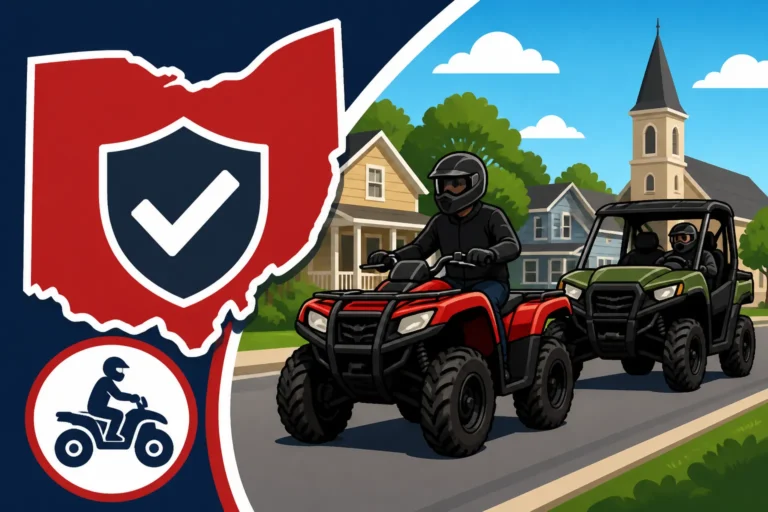
Here's where things get a bit more interesting, and where the possibility of crossing an intersection truly emerges. While the state keeps a tight grip on its main arteries, it allows local jurisdictions—specifically counties and townships—to make their own decisions regarding APV access on roads under their control. This "local option" means that a county's board of commissioners or a township's board of trustees can pass a resolution or ordinance to open certain roads within their boundaries to ATVs and UTVs.
This is why you might hear tales of riders legally cruising down a gravel township road in one county, only to find similar roads closed just across the county line. These local resolutions are the golden ticket for APV road use in Ohio. If a township or county has opened its roads, then you're generally allowed to ride on those specific roads, and by extension, you might encounter intersections with other open roads or even state routes that you're permitted to cross. Learning [How an Ohio Township Opens Its Roads] and [How an Ohio County Opens Its Roads] can help you understand this process.
It's absolutely vital to confirm which specific roads are open. Simply seeing another APV on a road doesn't mean it's legal. Always check with the local county engineer's office or the township clerk for current ordinances and maps. Riding on an unauthorized road, even briefly, can lead to fines and citations, which nobody wants after a fun day out.
Navigating Intersections on Open Local Roads
So, you've done your homework, and you're riding on a legitimately open township or county road. Suddenly, you're approaching an intersection. This is the moment of truth. The key here is understanding what you're crossing and how you're expected to do it. Ohio law is quite specific about making these crossings as direct and safe as possible, aiming to minimize your time spent in higher-risk traffic situations.
The general principle is that if you are legally operating on an approved road, you can cross other roads to continue your journey on another approved road or to access a trail. However, this is not an invitation to ride on the intersecting road if it’s otherwise closed to APVs. It’s a privilege for crossing only, and it comes with strict safety expectations.
Identifying What You're Crossing
Before you even think about putting a tire on that intersecting pavement, you need to understand what kind of road it is. This distinction is paramount, as it dictates your actions and the legality of your maneuver.
- Crossing Another Open Local Road: This is the ideal scenario. If you're on an approved township road and crossing another approved township road (or a county road, if both are open), then you essentially treat it like any other vehicle at an intersection. You obey traffic signals, stop signs, and yield rules. The biggest difference is your machine's slower acceleration and less protection, so heightened caution is always needed.
- Crossing a Closed State or Federal Route: This is where the specific "crossing" provision of Ohio law truly comes into play. You cannot ride on a state or federal route. Period. However, if you are legally operating on an adjacent, open local road, you are permitted to cross a state or federal route at an intersection to reach another legal road or trail on the other side. This is not for pleasure riding on the state route; it's strictly for traversing it from one legal point to another. The goal is to get from point A (approved local road) to point B (approved local road) by going directly over the prohibited road, minimizing the time spent on it. For more details, consider [Crossing a Highway on an APV in Ohio]. It's about minimizing risk and exposure, not extending your ride.
Always be aware of road signs and markings. Know the route numbers. If you're unsure, it's always safer to find an alternate route than to risk a citation or, worse, an accident. This might mean having to turn around and find a different path, but peace of mind (and avoiding legal trouble) is worth it. For details on how to safely navigate these intersections, check out [Crossing a Two-Lane Safely].
The "Quickest Way Across": Safety and Legality
Ohio law explicitly states that if you are crossing a highway or road that is not otherwise open for APV use, you must do so by the "most direct route available" to get to another legal road or trail. This isn't just a suggestion; it's a legal requirement designed for safety.
What does "most direct route" mean in practice? It means no turning onto the state route and riding a quarter-mile before turning off. It means no meandering through a complex intersection. You must proceed straight across or make the necessary turn as quickly and directly as possible to continue on an approved path.
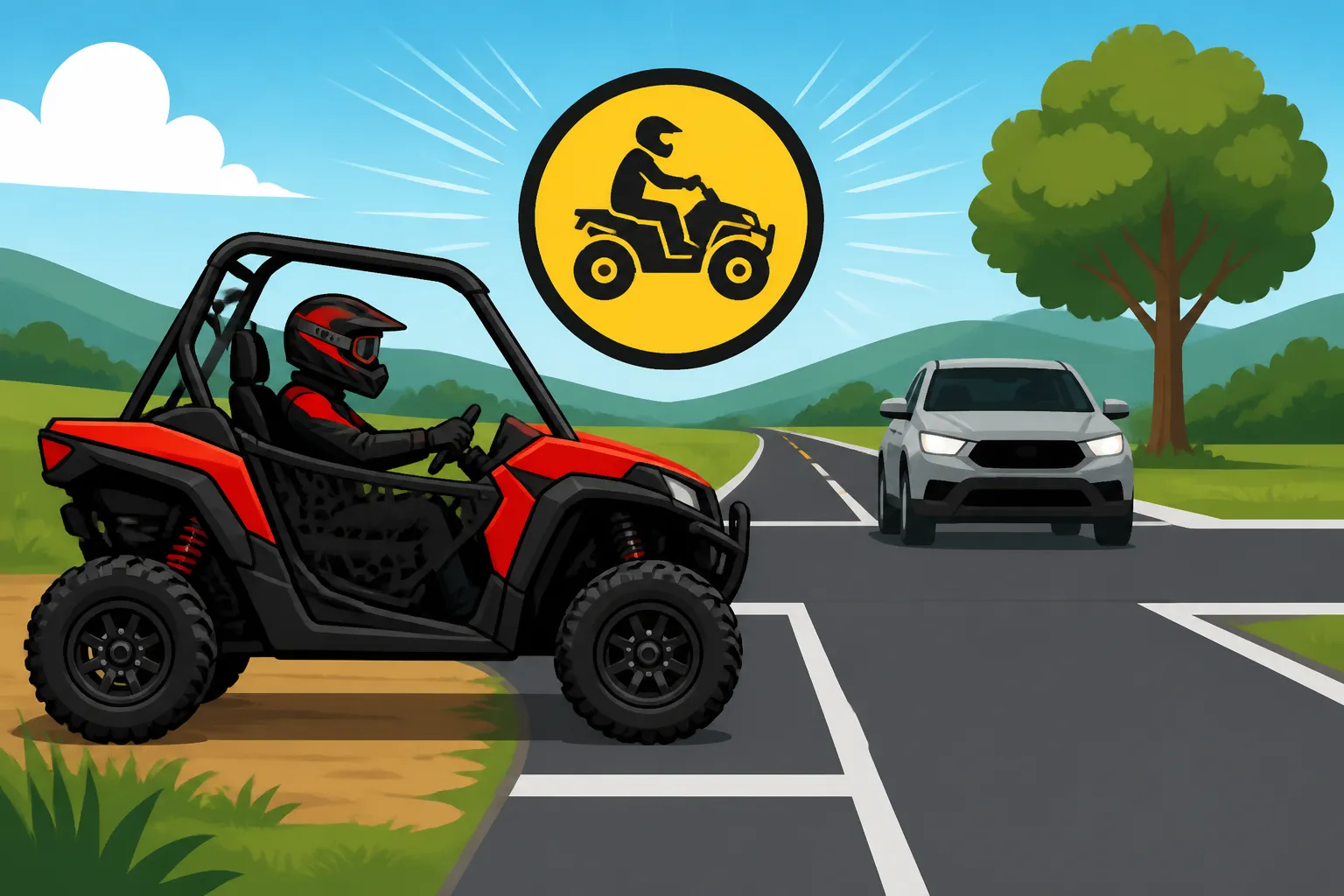
Imagine you're on an approved county road, and you need to get to another approved county road directly opposite across a busy state route. You pull up to the intersection, wait for a break in traffic, and proceed straight across, never deviating from the path of travel required to get to the other side. You don't take a quick detour on the state road shoulder, even for a few feet, unless absolutely necessary to complete the crossing safely. This direct approach reduces your exposure to fast-moving traffic and clearly signals your intent to other drivers. Any deviation could be interpreted as illegal operation on the state route, leading to a ticket.
Essential Rules and Equipment for Intersection Crossings
Successfully and safely navigating an intersection on your APV, especially when crossing a road otherwise closed to you, demands more than just knowing the law. It requires preparation, proper equipment, and a heightened sense of awareness. You are operating a vehicle that is often smaller, slower, and less visible than typical road traffic, so you need to compensate for those differences.
Just because a township has opened its roads doesn't mean you can throw caution to the wind. In fact, it means you need to be more cautious and diligent.
Visibility and Signaling
Visibility is your best friend when on any public road. Because ATVs and UTVs are smaller, they can be harder for other drivers to spot, especially at intersections where attention is divided.
- Lighting: Ensure all your lights are functional: headlights, taillights, and brake lights. Consider adding auxiliary lighting, especially if you anticipate riding near dusk or dawn. Bright, working lights make a world of difference.
- Turn Signals: While not all ATVs come standard with turn signals, many UTVs do, and if yours does, they are critical for road use. Use them! Clearly signal your intentions well in advance of a turn or crossing. For UTVs, [Ohio UTV Equipment Rules Explained] covers what's needed. Aftermarket turn signal kits, like those offered by SuperATV, can be a fantastic investment for UTV owners looking to enhance safety and meet potential road-use requirements, even if only for crossings. For ATVs, hand signals become your primary method of communication with other drivers. Learn the standard hand signals for turning and stopping, and use them clearly and emphatically.
- Reflectors/Reflective Gear: Boost your visibility with reflective tape on your machine, or wear a high-visibility vest or jacket. Every little bit helps you stand out, especially in low light conditions or when obscured by other vehicles.
- Mirrors: Ensure your machine has at least one rear-view mirror. Many UTVs come with side mirrors, and these are invaluable for checking traffic before merging or crossing.
Remember, drivers in cars and trucks aren't always looking for you. It's your responsibility to make yourself seen and your intentions known. For a broader overview of what's expected, look into [Ohio Equipment Rules for an APV on a Road].
Right-of-Way and Defensive Riding
Intersections are chaos even for cars, and adding an APV to the mix requires extra vigilance. Always operate with a defensive mindset.
- Yield to the Right: Understand basic right-of-way rules. If there's no stop sign or traffic signal, the vehicle to your right generally has the right-of-way. However, don't assume other drivers see you or will yield.
- Stop Completely: At stop signs, come to a complete stop. Look both ways, then look again. Wait for a clear, wide gap in traffic before proceeding, especially when crossing a busy road. Don't try to "beat" oncoming traffic.
- Eye Contact: Try to make eye contact with other drivers if possible. A brief nod or wave can confirm that they see you and acknowledge your presence.
- Anticipate: Assume other drivers might not see you, might make unexpected turns, or might be distracted. Be ready to react. This means keeping your speed appropriate for the conditions and being prepared to brake or swerve if necessary.
- One Machine at a Time: If you're riding in a group, cross intersections one machine at a time, allowing plenty of space between riders. Don't try to cross as a pack. This spreads out the risk and makes it easier for other drivers to account for each individual machine.
The goal isn't to assert your right-of-way, but to safely execute your crossing. Your safety is paramount, and sometimes that means yielding even when you technically have the right-of-way.
What to Do (and Not Do) When Crossing
When it comes down to the actual moment of crossing an intersection, especially one that involves a state route you're only allowed to traverse, every second counts. Your actions here will determine your safety and legality. Think of it as a well-practiced routine, executed with precision.
The moment you pull up to that intersection, your focus needs to be 100% on the task at hand. Distractions can be deadly here.
The Stop, Look, and Listen Approach
This isn't just for railroad tracks; it's fundamental for any potentially hazardous crossing.
- Stop Completely: Even if it's a yield sign, treat it like a stop. Bring your machine to a full, controlled stop at the white line or before the crosswalk.
- Look Left, Then Right, Then Left Again: Systematically scan for traffic. Check far down the road in both directions. Remember, APVs accelerate slower than cars, so you'll need a larger gap in traffic than you might think.
- Listen: Modern vehicles are quieter, but listen for the sound of approaching engines. If you're wearing a helmet, ensure it doesn't significantly impair your hearing of ambient traffic.
- Signal: If you have turn signals, activate them well in advance. If not, use clear, deliberate hand signals.
- Cross Directly: Once the path is clear, proceed immediately and directly across the intersection. Do not hesitate in the middle of the road. Maintain a steady, safe speed. Avoid sudden stops or accelerations unless absolutely necessary for safety.
- Stay in Your Lane: If crossing a multi-lane road, stay within a single lane during your traverse. Do not weave between lanes or drift into adjacent traffic.
This systematic approach minimizes guesswork and maximizes your awareness, giving you the best chance to cross safely.
Avoiding Unauthorized Road Use
It's tempting, when you're almost at your destination or see a quick shortcut, to bend the rules a little. Maybe just a few hundred feet down that state route shoulder, or a quick zip through a neighborhood that isn't officially open. Don't do it.
Ohio law is very clear: if a road is not opened by local resolution, you cannot operate your APV on it. The "crossing at an intersection" provision is not a loophole for extended road use. Riding illegally, even for a short distance, carries significant risks:
- Safety Hazards: You put yourself and others at extreme risk on roads not designed for your machine, where drivers aren't expecting you.
- Legal Penalties: Law enforcement is aware of these rules. Getting caught operating an APV on a closed road can result in fines, potential impoundment of your machine, and other legal consequences. This is covered in [Ohio Fines for an Unregistered APV] and [Ohio Fines for Illegal APV Road Use]. Even if your machine is registered, you can still be cited for operating it where it's not permitted.
- Insurance Issues: If you're involved in an accident while riding on a closed road, your insurance policy might not cover damages or injuries, leaving you with substantial financial burden. For information on insurance, refer to [Ohio APV Insurance Requirements].
The rule of thumb is simple: If you're not on a designated trail or an officially opened local road, and you're not in the act of making a direct crossing to another legal path, you shouldn't be riding there. Respect the law, respect other drivers, and protect your own safety and investment.
| Crossing Scenario | Legal Status (Ohio) | Recommended Equipment/Action | Key Considerations |
|---|---|---|---|
| Open Local Road (to Open Local Road) | Permitted, assuming both roads are opened by local resolution. | Full working lights, turn signals (UTV, required for road use), hand signals (ATV), rear-view mirrors, reflective gear. Yield right-of-way, obey traffic signals/signs. | Treat as a regular vehicle but with heightened caution due to APV characteristics. Communicate intentions clearly. |
| Open Local Road (to Closed State/Federal Route, for Crossing Only) | Permitted only to cross directly and by the most direct route to reach another legal road or trail on the opposite side. Cannot ride on the state/federal route. | Same as above. Absolute vigilance. Stop fully, look multiple times, ensure a wide traffic gap. Actively signal intentions. | Minimal time on closed route. No deviation from direct crossing path. Extreme caution due to high-speed traffic. Assume other drivers don't see you. |
| Operating on Closed Road (beyond crossing) | Prohibited. | Not applicable. | High risk of citation, fines, impoundment. Significant safety hazard. Insurance may not cover accidents. |
| UTV on Open Local Roads | Permitted if local resolution exists and UTV meets specific road-legal equipment requirements (e.g., windshield, wipers, turn signals, mirrors). | All standard road-legal equipment (check [Ohio UTV Road Equipment List]), plus defensive riding, clear signaling. | UTVs have more equipment for road use but still require high situational awareness. May require a specific inspection for road legality. |
| ATV on Open Local Roads | Permitted if local resolution exists. Less equipment required than UTV for general road crossing, but always needs lights. | Full working lights, hand signals, rear-view mirror. Defensive riding, clear communication. | ATVs are often less visible; rely heavily on rider action for safety. Hand signals are critical. Be mindful of exposed riding position. |
Disclaimer
This article is for general informational purposes only and does not constitute professional advice. Laws, prices and regulations vary by location and change over time. Consult a qualified professional for guidance on your specific situation.