Riding the Berm to the Next Trail
It's a familiar scenario for so many of us who love hitting the trails in Ohio: you've just finished a fantastic section of trail, but the next trailhead is just a short distance down a county road. The problem? Riding your ATV or UTV directly on the pavement might be against the rules, leaving you to wonder if "riding the berm" – that gravelly, grassy shoulder – is a safe and legal workaround. This guide will dive deep into the nuances of Ohio law regarding riding alongside public roads, helping you understand where you can and can't use the berm to connect your adventures.
Understanding Ohio's Stance on Riding the Berm
Let's face it, nobody wants to load their machine back onto a trailer, drive five minutes down the road, and unload it again just to reach the next segment of an amazing trail system. This frustration often leads riders to eye that strip of land beside the asphalt—the berm—as a viable option. But the rules in Ohio aren't always clear-cut, and what might seem like common sense can often lead to a citation if you're not careful.
What "Riding the Berm" Really Means in Ohio
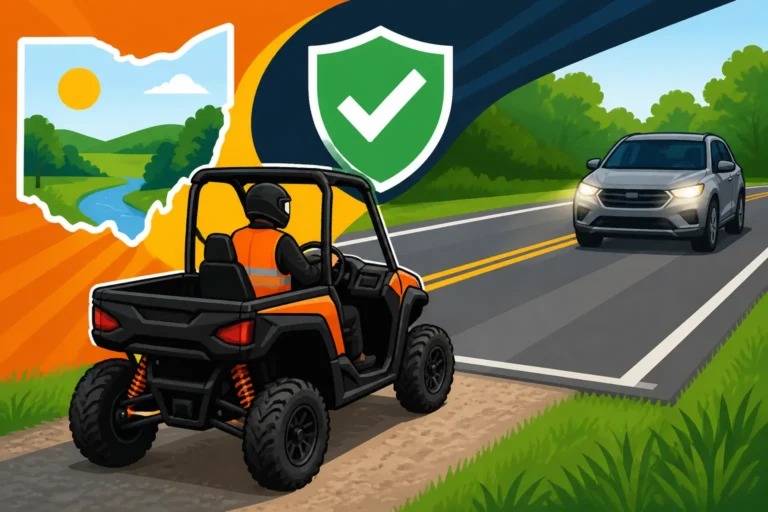
When we talk about "riding the berm," we're generally referring to operating your all-purpose vehicle (APV), whether it's an ATV, a side-by-side, or even a dirt bike, on the unpaved shoulder of a public road. This isn't about flying down the highway at full speed; it's usually about traveling slowly, safely, and often for short distances, to get from one section of an off-road trail to another. The appeal is obvious: it keeps your knobby tires off the pavement, which is better for them and often feels safer than riding in traffic. Many riders instinctively feel that if they're not on the "road" itself, they're not breaking the rules. However, Ohio law often views the berm as part of the public right-of-way, meaning it falls under many of the same regulations as the paved surface. It's a critical distinction that can save you a lot of headache and potential fines.
For many riders, the berm represents a practical bridge between the natural terrain they seek and the necessary infrastructure of public roads. Imagine finishing up a thrilling run at Monday Creek in the Wayne National Forest, only to realize the access point for another loop is a mile down a quiet township road. It’s exactly these situations where the question of [Ohio Rules for Riding the Berm] becomes paramount. Is it an acceptable way to travel, or a shortcut to trouble? The answer, unfortunately, is often "it depends," which is precisely why understanding the specifics is so important.
The Fine Line Between Legal and Illegal Berm Riding
The core issue here is that Ohio law primarily defines where APVs can operate, rather than where they can't. Generally speaking, state routes and interstates are a definite no-go for APVs, both on the pavement and on their shoulders. These high-speed thoroughfares are simply not designed for off-road vehicles, and attempting to ride the berm on such roads is incredibly dangerous and highly illegal. This is where you absolutely do not want to push your luck. You need to know that [Ohio Rules for Crossing a State Route] do not extend to riding alongside one.
However, when we move to county and township roads, the situation becomes more nuanced. Ohio Revised Code grants local authorities, specifically county commissioners and township trustees, the power to pass resolutions that open their roads (and often their berms) to APV use. This means that what's legal in one township might be strictly prohibited in the next. Without such a resolution, the default is typically that APVs are not permitted to travel on or alongside public roads. This creates a patchwork of rules across the state, making it crucial for riders to do their homework before venturing out. It's not enough to assume; you must verify.
Where Ohio Law Allows Riding the Berm
Navigating the legal landscape of riding your APV on public roads, even just the berm, can feel like a maze. It’s truly a situation where local control dictates much of what you can and cannot do. Understanding how these local decisions are made is key to staying within the bounds of the law.
County and Township Roads: A Patchwork of Rules
The critical distinction in Ohio when it comes to riding the berm, or even the road itself, lies with county and township governance. Unlike state routes or interstates, which are universally off-limits, county commissioners and township trustees have the authority to enact resolutions that allow APVs on certain public roads under their jurisdiction. This means that if you're planning a ride that involves connecting trails via a road, your first step absolutely has to be to research the specific county and township you'll be traversing.
For instance, [How an Ohio County Opens Its Roads] involves a formal vote by the county commissioners, often in response to local demand or to support recreational tourism. Similarly, [How an Ohio Township Opens Its Roads] requires a resolution passed by the township trustees. These resolutions will often specify which roads, or types of roads, are open, and what conditions apply (e.g., speed limits, times of day, equipment requirements). It's not uncommon for these resolutions to also address the use of the berm. If a road is "open" to APVs, it often implies that the berm is also fair game for connection, as long as it's safe and doesn't interfere with traffic or property. However, it's never a guarantee. You need to specifically look for language that includes "berm" or "shoulder" if you're relying on this method. Without such a resolution, riding the berm on these roads can lead to a citation for illegal road use, which can carry significant fines under [Ohio Fines for Illegal APV Road Use]. This regional variation means your knowledge of local ordinances is your best defense.
The "Crossing a Road" Exception and Its Limits
Beyond riding alongside a road, Ohio law does provide a specific, albeit limited, exception for crossing. You are generally permitted to cross a public road, including state routes, at a ninety-degree angle, provided it's done safely and doesn't impede traffic. This is a crucial distinction: crossing is not the same as riding the berm to travel a distance. The intent of this exception is to allow riders to move from one trail segment to another that might be directly across a road, not to use the road or its shoulder as a thoroughfare.
The practical application of this means you can pull up to the edge of a road, look both ways, and proceed directly across to the opposite shoulder or trail access. What you cannot do is use this "crossing" exception as an excuse to ride down the berm for hundreds of feet or even miles. The key here is the "ninety-degree angle" and the emphasis on safety and directness. You're not supposed to meander or travel parallel to the road for any significant distance. This exception is a lifeline for connecting trails, but it’s not an invitation to extend your ride on the public right-of-way. Always remember that even when crossing, you need to exercise extreme caution, especially on busy roads. Visibility is key, and if you've got upgraded lighting from a brand like SuperATV, it can make a real difference in how well other drivers see you.
Practical Considerations for Berm Riding in Ohio
Even if you've done your homework and confirmed that a specific county or township allows APV use on its roads, including the berm, there are still crucial practical considerations. Safety, common sense, and respecting other road users should always be your top priorities.
Equipment and Safety for Roadside Riding
When you're operating your APV anywhere near public roads, even on the berm, certain safety standards become even more critical. First and foremost, helmets and eye protection are non-negotiable. Ohio has specific [Ohio Helmet Rules for APV Riders], and these rules apply regardless of whether you're on a trail, a private field, or skirting a public road. A DOT-approved helmet isn't just a recommendation; it's a legal requirement and a life-saver. Eye protection, too, is essential to guard against dust, debris, and low-hanging branches that might be more prevalent on a berm.
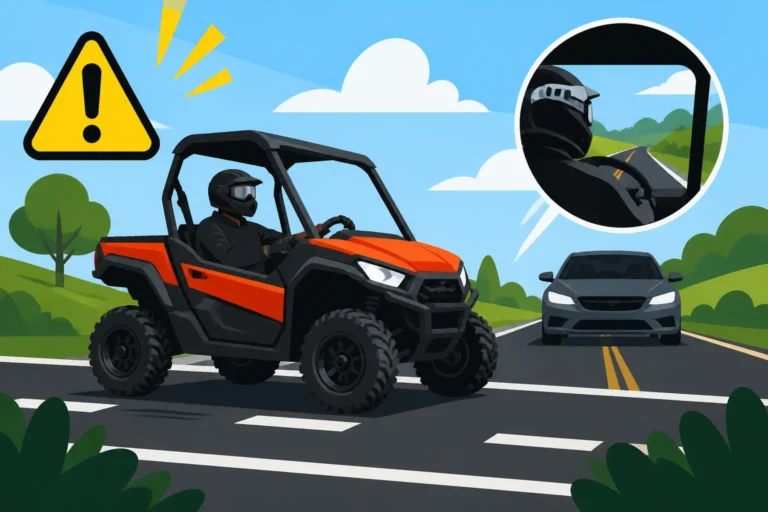
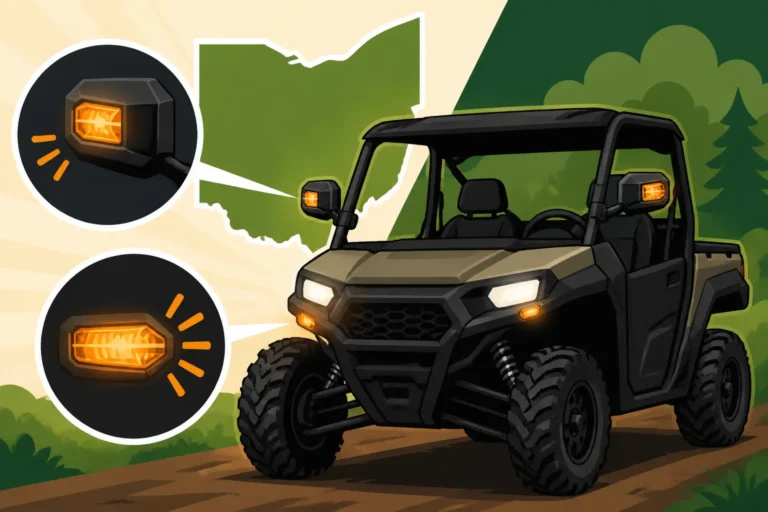
Visibility is another huge factor. While your machine might be perfectly equipped for the trail, riding alongside a road means interacting with vehicle traffic. Are your headlights and taillights fully functional and bright? Aftermarket lighting kits, like those offered by SuperATV, can significantly improve your visibility to other motorists, especially during dusk or dawn, or on overcast days. Turn signals, while not always required for all APVs on trails, become incredibly important if you need to signal a turn or an intention to cross a road. Many riders opt to install mirrors to have a better awareness of traffic approaching from behind, a small investment that offers a big safety boost. Always ensure your machine meets the [Ohio Equipment Rules for an APV on a Road] if you anticipate even momentary road use or berm riding. Being prepared ensures you're not only legal but also safe.
When the Berm Ends and the Lane Begins
One of the trickiest aspects of riding the berm is navigating the transitions. Berms aren't always continuous; they can narrow, disappear completely, or merge with a paved surface. It's crucial to pay constant attention to the terrain and the boundary between the shoulder and the active roadway. [Where the Berm Ends and the Lane Begins] is not always clearly marked with a sign. Sometimes, it's a gradual change, and other times it's an abrupt drop-off or a drainage ditch.
If the berm narrows to the point where you're effectively forced onto the paved lane, you must be prepared to either safely re-enter the road (if legal for that specific road) or stop and find an alternative route. Never assume you have the right-of-way over motor vehicle traffic when operating an APV on or alongside a public road. Be prepared to yield, slow down, and even pull over if necessary to allow traffic to pass safely. Road hazards are also different on a berm than on a trail; you might encounter debris, broken glass, or even pedestrians. Defensive riding and constant vigilance are your best friends in these situations, ensuring you can react quickly and safely to unexpected changes in the environment.
Avoiding Fines and Staying Safe
Nobody wants their adventure cut short by a law enforcement officer or, worse, by an accident. Staying on the right side of the law and ensuring your safety when riding the berm requires diligence and a proactive approach.
Checking Local Ordinances Before You Ride
This cannot be stressed enough: do your homework before you load up your machine and hit the road. The patchwork nature of Ohio's APV road laws means that what's permissible in Muskingum County might be illegal in Washington County, and even within the same county, one township might have open roads while its neighbor does not. [Finding Out Which Roads Are Open] requires specific research.
Your best resources are the county auditor's office website for county road resolutions and the township clerk for township road resolutions. Many of these government entities now post their resolutions online, making it easier than ever to check. Look for language that explicitly opens roads or describes APV use on shoulders. If you can't find clear information online, a friendly call to the appropriate office can often provide the answers you need. Remember, "I didn't know" is not a valid defense if you're cited. Having proof, even a printout of the resolution, can sometimes help if you're stopped by an officer who might not be fully up-to-date on every local ordinance. This diligence is particularly important if you're exploring new areas or traveling across county lines.
What to Expect from Law Enforcement
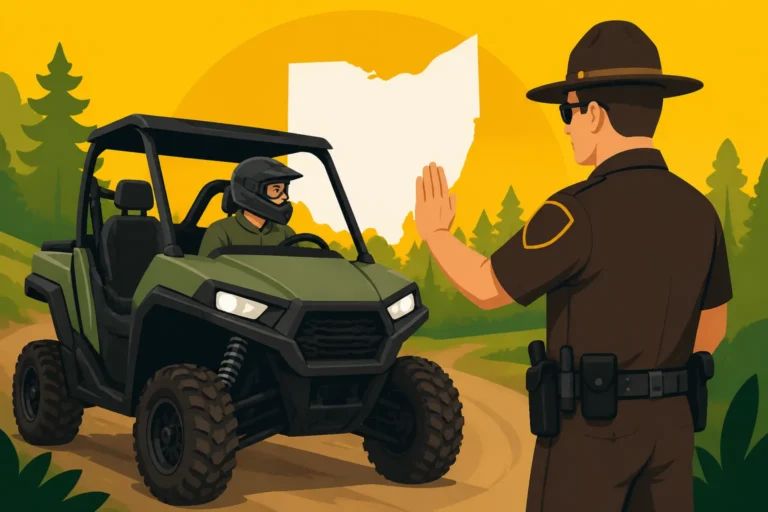
If you're stopped by a deputy or other law enforcement officer while riding on or alongside a public road, stay calm and be respectful. Just as you want to be safe, they are primarily concerned with public safety and enforcing local ordinances. [What an Ohio Deputy Checks Roadside] typically includes your registration, proof of ownership (title), and potentially your driver's license, especially if you're on a road designated for APV use. They will also verify that your machine meets any required equipment standards for road use, such as proper lighting or a spark arrester.
Be ready to present your [Ohio APV Registration and Insurance Proof] without hesitation. Even if you believe you are riding legally on a berm, an officer might have a different interpretation or might not be aware of a specific local resolution. This is where your prior research can come in handy. Politely explain the local ordinance you are following and, if you have it, offer to show a copy of the resolution. If you receive a citation and believe it's in error, document everything, remain courteous, and consult legal counsel afterwards to understand your options. Ultimately, avoiding the interaction altogether by knowing and following the rules is always the best strategy.
Comparison of Berm Riding Scenarios in Ohio
| Scenario | Legality | Key Considerations |
|---|---|---|
| From a trusted friend's private property to an adjacent county trail system via a short stretch of township road with a gravel shoulder. | Potentially legal, with conditions. | Crucial: The specific township must have passed a resolution opening its roads (and by extension, likely its berms) to APV traffic. Check the township clerk's office for the official resolution. If the road is open, treat the berm as an extension, prioritizing safety and awareness. |
| — | — | — |
| From a private farm field to a nearby state forest APV trail, traveling over a road controlled by the Ohio Department of Transportation (ODOT). | Illegal. | ODOT roads are generally off-limits. State routes and interstates are typically not opened by resolution for APV use. Attempting to ride the berm on an ODOT road is a direct violation and poses a serious safety risk due to higher traffic speeds. You would need to trailer your machine to the trail access point. |
| Traveling a short distance on a state route's berm to connect a state forest trail with a private riding park. | Illegal. | State routes are generally off-limits for APV travel. Even if the intention is to only use the berm for a very short duration, any sustained parallel travel on a state route's shoulder is prohibited. You must trailer your machine or find an alternate route that uses locally approved roads. |
Disclaimer
This article is for general informational purposes only and does not constitute professional advice. Laws, prices and regulations vary by location and change over time. Consult a qualified professional for guidance on your specific situation.