Ohio Minimum Age to Ride an APV
Figuring out the exact rules for when your kids can ride an all-purpose vehicle (APV), like an ATV or a side-by-side, in Ohio can feel like navigating a legal maze. It’s not just about getting them a machine and hitting the dirt; there are specific age requirements, supervision mandates, and different rules depending on where you plan to ride. This guide is here to untangle those complexities, so you can understand Ohio's minimum age requirements for APV riders and ensure your family's adventures are both fun and fully compliant with the law.
What Ohio Law Says About Minors on an APV
Ohio law is quite clear when it comes to who can operate an APV, especially concerning minors. The primary goal of these regulations is rider safety, acknowledging that operating these powerful machines requires a certain level of maturity, judgment, and physical capability that younger individuals might not yet possess. The rules are designed to prevent accidents and ensure everyone on the trails or private land can enjoy their ride safely.
The General Rule: Under 16 Requires Supervision
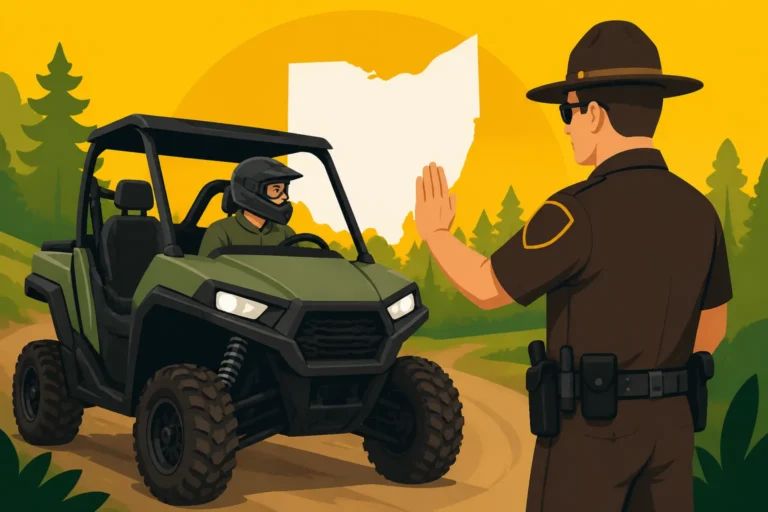
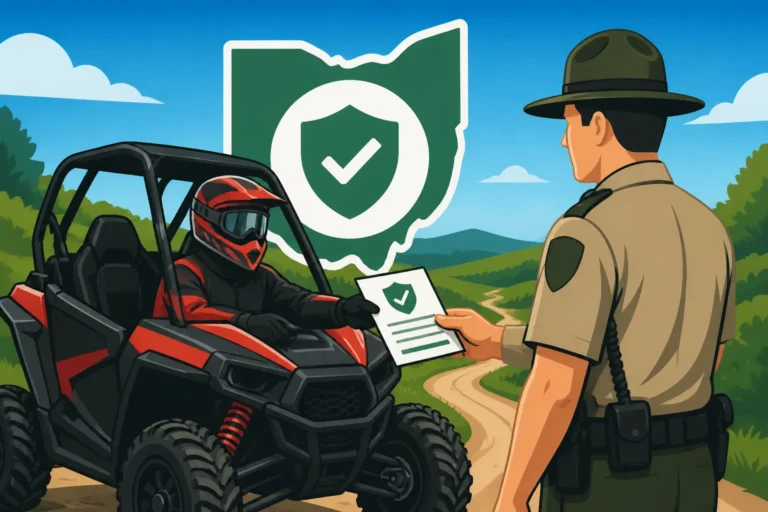
In Ohio, the core principle is that anyone under the age of 16 cannot operate an APV on any public land or road that is open to APVs without direct supervision from a licensed adult. This means if your child is under 16, they can't just hop on their quad and ride off into the sunset alone, even if you’re at a riding park. They need an adult who is actively overseeing their operation of the machine. This rule extends to county and township roads where APVs are legally permitted. Even on private property, while enforcement might be different, the spirit of the law, and certainly the safety recommendation, is for proper supervision.
This isn't just a suggestion; it's a legal requirement that carries consequences if ignored. Imagine a scenario where a group of teenagers decides to ride their ATVs on a public trail system. If one of them, who is 15 years old, is riding unsupervised, they could face a citation. The law aims to prevent situations where a minor, still developing their decision-making skills and reaction times, might encounter a dangerous situation without an experienced adult to guide them or intervene. Parents or guardians who allow unsupervised riding by minors could also face legal repercussions, emphasizing the serious nature of this regulation.
Why the Age Limits Exist
The age limits aren't arbitrary; they're rooted in safety data and an understanding of cognitive and physical development. Operating an APV demands quick reflexes, sound judgment, the ability to assess terrain, and the strength to control a heavy machine that can accelerate rapidly. These are skills that mature with age and experience. A child’s perception of risk, for example, is often different from an adult’s, and they might be more prone to taking chances or underestimating hazards.
Consider the physical demands: turning the handlebars, shifting weight, and managing throttle and brake inputs can be physically taxing, especially over uneven terrain. A machine designed for an adult rider might be too large or too powerful for a younger child to control effectively, leading to loss of control or rollovers. The law essentially sets a baseline, recognizing that below a certain age, most individuals haven't yet developed the necessary attributes to safely operate an APV without significant adult oversight. While some children might be exceptionally mature or skilled, the law creates a universal standard to protect the broadest population of young riders.
Supervision Rules for Minors
The concept of "supervision" isn't just about being in the general vicinity. Ohio law, like many states, defines specific parameters for what constitutes adequate supervision of a minor operating an APV. It's about active oversight, ensuring the adult can effectively monitor and respond to the minor's riding.
When a Licensed Adult Must Ride With a Minor
For minors under 16 operating an APV, especially when on public lands or roads, the law generally requires supervision by a licensed adult. This means the adult providing supervision should typically hold a valid driver's license, demonstrating their own competence to operate a motor vehicle. This requirement ensures that the supervising adult not only has the legal standing but also the assumed skill and knowledge to guide a younger rider. It’s not enough for just any adult to be nearby; they need to be someone capable of setting a good example and understanding the rules of the road or trail.
Imagine a father taking his 14-year-old son out for a ride on an open township road. The son is on his youth ATV, and the father is riding his own side-by-side right behind him, constantly watching. This scenario meets the spirit of supervision. However, if the father drops his son off at the trailhead and then goes to set up camp a mile away, leaving the son to ride alone, that would clearly not be considered supervision. The supervising adult needs to be readily available to provide instruction, intervene if necessary, or assist in an emergency. This is particularly important when the riding environment presents dynamic challenges, like changing terrain, other riders, or potential hazards. You can find more details on [Ohio Rules for Riding With a Parent] to understand this dynamic.
Defining "Direct Supervision"
"Direct supervision" goes beyond mere presence. It implies that the supervising adult is close enough to the minor to observe their riding behavior, communicate with them, and provide immediate assistance if needed. While the law doesn't specify an exact distance, it generally means being within visual and auditory range, often riding alongside or directly behind the minor. The idea is that the adult should be able to spot an impending problem, like the minor losing control or heading towards an obstacle, and be able to shout a warning or physically get to them quickly.
Consider a riding session where a parent is teaching their child how to navigate a tricky section of trail. The parent is riding directly in front, demonstrating the line, or perhaps just behind, offering real-time coaching. This is direct supervision. It's about being actively engaged in the minor's riding experience, not just passively watching from a distance while engrossed in something else. For example, some APV accessories from brands like SuperATV can help with communication on the trails, making direct supervision even more effective by allowing the adult to give clear, audible instructions to the younger rider over engine noise or distance. This direct, engaged presence is critical for both the minor's learning and their safety, helping them build confidence and skills under watchful eyes.
Age Restrictions on Specific Ohio Riding Areas
While the general state law provides a baseline for APV age restrictions, specific riding areas often have their own, sometimes stricter, rules. These variations are important to understand, as what might be permissible on private land could be a violation in a state forest or national park.
Ohio State Forest Trails: The 12-Year-Old Rule
A crucial distinction for anyone planning to ride in Ohio's State Forests, such as Monday Creek or Hanging Rock, is the minimum age requirement set by the Ohio Department of Natural Resources (ODNR). On these state-managed APV trail systems, the minimum age to operate an APV is 12 years old. This rule applies even if the minor is under the direct supervision of a licensed adult. So, if you have a 10-year-old who is an experienced rider, they are generally not permitted to operate an APV on Ohio State Forest trails, regardless of parental supervision.
This specific age floor for state forest trails reflects the unique challenges and regulations of these environments. State forest trails can be rugged, featuring steep climbs, rocky sections, and unpredictable conditions, which require a higher level of physical stamina and decision-making than a flatter, more open riding area. The 12-year-old minimum helps ensure that riders have a foundational level of development to safely navigate these demanding trails. Before heading out, always check the specific rules for the state forest you plan to visit, as conditions or regulations might be updated. Understanding [Ohio Minimum Age for State Forest Trails] is key for planning your trips.
Wayne National Forest Rules
The Wayne National Forest, Ohio's only national forest, operates under federal regulations, which can sometimes differ from state laws or ODNR rules. For APV riding in the Wayne National Forest (like the Monday Creek, Hanging Rock, or Pine Creek trail systems), all operators and passengers aged 16 and older are required to possess a valid state driver's license. For those under 16, they must be under the direct supervision of an adult who possesses a valid driver's license. While there isn't an explicit "minimum age" like the state forest's 12-year-old rule, the emphasis is heavily on the supervision of a licensed adult for younger riders.
Additionally, every rider and passenger, regardless of age, needs to purchase a Wayne National Forest OHV permit to access the trails. These permits are crucial for funding trail maintenance and operation. While federal rules tend to focus on the presence of a licensed supervisor for minors, ensuring the minor themselves is physically capable of controlling the machine is still paramount. It's always best to check the Wayne National Forest's official website or contact a ranger district office directly to confirm current age and permit requirements before planning your trip. For general federal rules, you can consult [Ohio Rules for Riding a National Forest].
Private Parks and Their Own Policies
Beyond public lands, Ohio is home to several private riding parks and clubs that offer dedicated APV trails. These private entities have the flexibility to set their own rules and age requirements, which can vary significantly from one park to another. Some private parks might mirror state forest age limits, while others might allow younger riders with very strict supervision or even require completion of a safety course.
For instance, one private park might allow riders as young as six or eight years old on designated youth tracks or beginner trails, provided they are on appropriately sized machines and under direct, one-on-one supervision. Another park might enforce a blanket 16-and-up rule for all trails due to the difficulty level of their terrain. When planning a visit to a private park, it is absolutely essential to call ahead or check their official website for their specific age policies, machine restrictions, and supervision requirements. Do not assume that what's allowed in a state forest or on private property is acceptable at a commercial park. These venues often have waivers that parents must sign for minors, further emphasizing their specific regulations. Information on [Ohio Private Trail Parks] can help you find and research these options.
Safety Training and Gear for Young Riders
Beyond legal requirements, ensuring a young rider is safe and competent involves practical steps like proper training and equipping them with the right gear. These elements significantly reduce risk and enhance the overall riding experience.
Why Take a Safety Course Ohio Does Not Require
While Ohio law does not currently mandate an APV safety course for riders of any age, completing one is highly recommended, especially for young or new riders. Organizations like the ATV Safety Institute (ASI) offer comprehensive, hands-on courses that teach fundamental riding techniques, safe operating practices, hazard awareness, and responsible riding etiquette. These courses are designed by experts and cover critical skills that go far beyond what a parent might be able to teach on their own.
Think of it this way: riding an APV is a skill, much like driving a car. While a parent can teach a teenager to drive, formal driving instruction provides a structured, comprehensive curriculum that covers rules, defensive driving, and advanced techniques. Similarly, an APV safety course can instill confidence, improve control, and teach evasive maneuvers that could be life-saving. For a young rider, learning from a certified instructor in a controlled environment can make them a much safer and more responsible operator from the start. Many parents find that after their child completes such a course, they exhibit greater respect for the machine and the risks involved, which is invaluable. You can explore [Ohio ATV Safety Course Options] for more details on available programs.
Essential Gear for Young Riders
Proper safety gear is non-negotiable for all APV riders, but it is especially critical for minors whose bodies are still developing and who may be more susceptible to serious injuries in an accident. The right gear acts as a vital layer of protection, absorbing impacts and preventing abrasions.
Here's the essential list:
- DOT-Compliant Helmet: This is the most crucial piece of gear. It must be a U.S. Department of Transportation (DOT)-approved helmet, meaning it meets federal safety standards (FMVSS 218). A novelty helmet simply won't cut it. For information on what makes a helmet safe, refer to [DOT FMVSS218 Helmets in Ohio].
- Eye Protection: Goggles or a helmet with a face shield are necessary to protect against dust, mud, branches, and insects. Clear vision is critical for safe riding.
- Gloves: Protect hands from blisters, impacts, and abrasions. They also improve grip on the handlebars.
- Long-Sleeved Shirt and Pants: Durable, long clothing helps protect skin from scrapes, sun exposure, and minor impacts.
- Over-the-Ankle Boots: Sturdy boots with good ankle support are essential to protect feet and ankles from impacts, hot engine parts, and shifting terrain. Avoid sneakers or open-toed shoes.
Investing in quality gear is an investment in your child's safety. While it can seem like a significant upfront cost, it's far less than the cost of medical care for a preventable injury. Companies like SuperATV offer a range of protective accessories and components for APVs, from sturdy bumpers to full skid plates, which, while not direct personal gear, contribute to the overall safety of the machine itself, providing an added layer of protection for both the machine and its rider. Always ensure the gear fits properly – especially the helmet – as ill-fitting gear can be more of a hazard than a help.
Ohio APV Age & Supervision Summary
Understanding the nuances of Ohio's APV age and supervision requirements is crucial for a safe and legal riding experience. Here’s a quick overview of the key points:
| Rider Age Category | General State Law (Public Roads/Land) | Ohio State Forest Trails (ODNR) | Wayne National Forest (Federal) | Private Riding Parks (Variable) |
|---|---|---|---|---|
| Under 12 years old | Requires direct supervision by a licensed adult. | Not permitted to operate an APV. | Requires direct supervision by an adult with a valid driver's license. | Highly variable; check specific park rules. Often restricted or limited to youth tracks. |
| 12-15 years old | Requires direct supervision by a licensed adult. | Permitted to operate, but only with direct supervision by a licensed adult. | Requires direct supervision by an adult with a valid driver's license. | Highly variable; check specific park rules. Supervision always recommended. |
| 16 years and older | No specific state supervision requirement. Must have a valid driver's license for road use. | No specific state supervision requirement. | All operators and passengers require a valid state driver's license. | Generally permitted without specific age-based supervision. |
Remember, these are general guidelines, and specific situations or local ordinances might have additional rules. Always confirm with the authority managing the land you plan to ride on.
Disclaimer
This article is for general informational purposes only and does not constitute professional advice. Laws, prices and regulations vary by location and change over time. Consult a qualified professional for guidance on your specific situation.