Ohio UTV Equipment Rules Explained
There's nothing quite like the dream of taking your UTV from the muddy trails to the local ice cream shop, or just down the road to a neighbor's place. But when you start looking into what it takes to make that dream a reality in Ohio, it can feel like you've stumbled into a bureaucratic maze. The state's rules about what equipment your Utility Terrain Vehicle needs to be considered "road-legal" are specific, and frankly, they can be a bit overwhelming. This guide is here to untangle those requirements, walking you through every piece of gear, every light, and every inspection step you need to understand to get your UTV ready for the asphalt.
Understanding Ohio's APV Categories and Road Rules
Before we dive deep into the nuts and bolts of what your UTV needs, it's crucial to understand the legal framework Ohio uses for these machines. It's not as simple as just "UTV," and getting the terminology straight can save you a lot of confusion down the line. The state has a particular way of categorizing these off-road vehicles, and that classification directly impacts what you'll need to do to get yours street-ready.
The Distinction Between APVs and UTVs in Ohio Law
In Ohio, the term you'll encounter most often when talking about ATVs, UTVs, and similar vehicles is "All-Purpose Vehicle," or APV. This is the big umbrella term that covers a whole range of off-highway machines, from your classic four-wheeler to your side-by-side. While your UTV is definitely an APV in the eyes of Ohio law, not all APVs are created equal when it comes to hitting public roads. This distinction is vital because while all UTVs are APVs, only certain APVs (specifically UTVs and sometimes "under-speeds" or "mini-trucks" if they meet certain criteria) can even begin the journey toward road legality. The state's choice to use [Why Ohio Says All-Purpose Vehicle] as its primary identifier for these machines can sometimes muddy the waters, making it seem like all machines are treated the same.
However, the laws that govern UTVs specifically for road use often carve out unique requirements that don't apply to, say, a traditional ATV. For instance, the safety equipment a UTV must have is much more extensive than what's needed for an ATV that's only ridden off-road. This is largely because UTVs are designed with features like roll cages and multiple seats, making them more akin to small cars in their design, and thus, held to a higher standard when they venture onto the same roads as cars. It's a key legal nuance that impacts everything from registration to what modifications you might need to make. We've seen some discussions about [The New Vocabulary Ohio Law Uses for UTVs], but for now, "All-Purpose Vehicle" is the legal term to focus on, with UTVs having their own special category of road-use rules underneath that umbrella.
When UTVs Can Even Be Considered for Ohio Roads
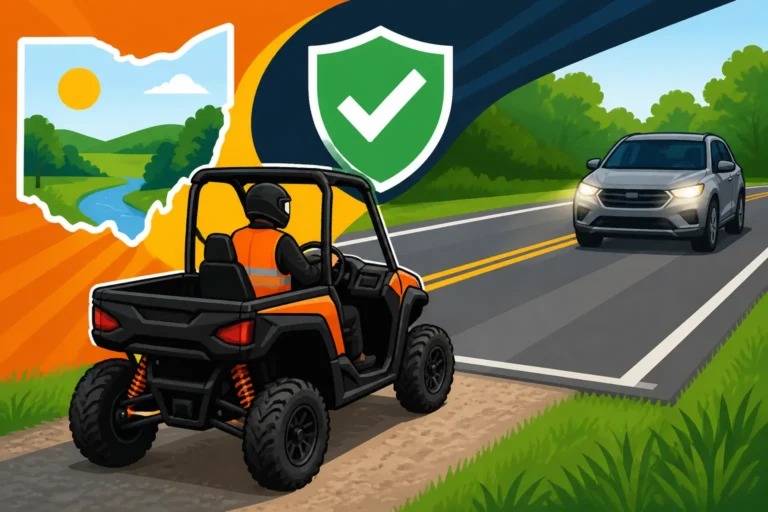
Now, here's where it gets a little tricky: simply having all the right equipment doesn't automatically mean you can drive your UTV on every public road in Ohio. The state has a general prohibition against APVs (including UTVs) on public roadways. This means there's no blanket "street-legal" status across Ohio. You can't just slap a license plate on your UTV and hit the highway like you would a car.
The good news is that local jurisdictions—specifically counties and townships—have the authority to pass their own resolutions or ordinances to open their roads to UTVs. This creates a patchwork of rules across the state. One township might welcome UTVs on all its roads with a speed limit of 35 mph or less, while the very next township over might forbid them entirely. That's why it's absolutely crucial to check with your specific county and township clerk's offices to understand their local laws. Information on [How an Ohio Township Opens Its Roads] and [How an Ohio County Opens Its Roads] can provide more context on this process. Without a local ordinance in place, no amount of fancy equipment will make your UTV legal on those roads.
This local decision-making process means that the equipment rules we're about to discuss only become relevant if you plan to operate your UTV in an area that has explicitly permitted road use. If you only ever ride on private land or designated off-road trails (like those in the state forests or Wayne National Forest), these street-legal equipment requirements typically don't apply to you. It's a chicken-and-egg situation: first, the road must be open, then you need the equipment to use it. Many riders have been caught off guard, spending time and money outfitting their UTVs, only to find the local roads they wanted to use were still closed to APVs.
Mandatory Safety Equipment for Ohio Road-Legal UTVs
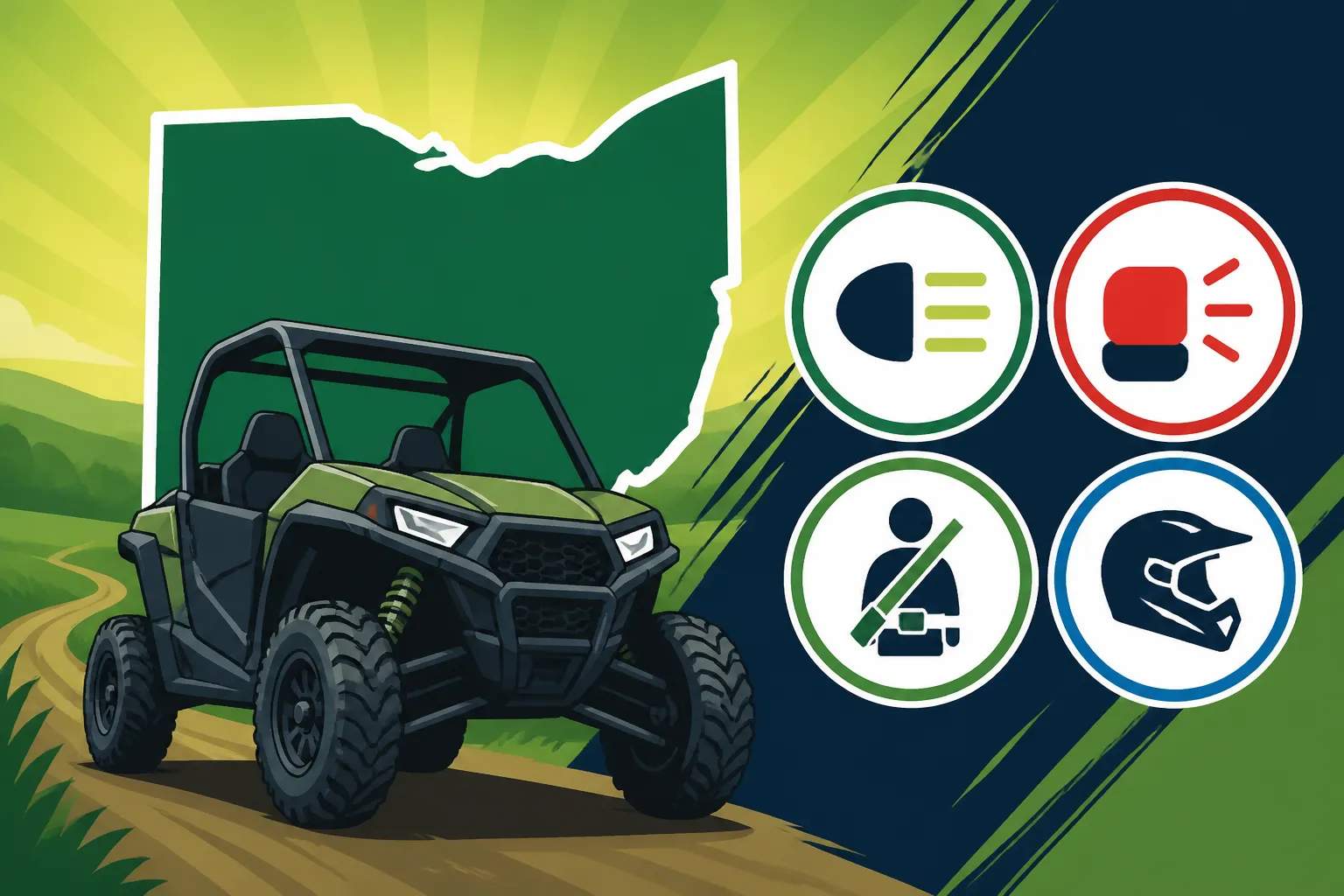
Once you've confirmed that the roads you want to ride on are indeed open to UTVs, it's time to focus on the equipment. Ohio law is quite specific about what your UTV must have to be considered safe and legal for road travel. This isn't just about looking the part; it's about ensuring visibility, control, and occupant safety, which are paramount when sharing the road with other vehicles.
Essential Lighting and Signaling for Road Use
When your UTV is on public roads, it needs to be seen and understood by other drivers, just like any other vehicle. This means having a comprehensive set of lights and signaling devices. First and foremost, you'll need functional headlights capable of both low and high beams. These aren't just for seeing where you're going after dark; they also make you visible to oncoming traffic during the day. Following that, taillights and brake lights are critical for letting drivers behind you know your presence and when you're slowing down or stopping. They need to be bright enough to be seen from a considerable distance, typically 500 feet.
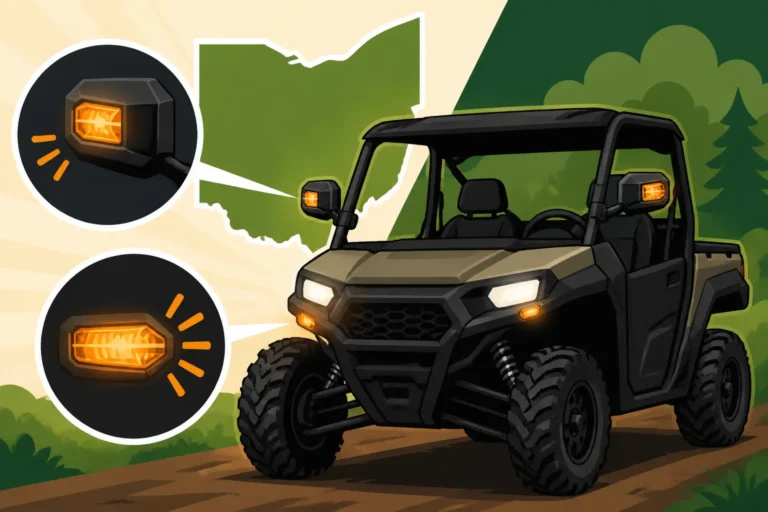
Perhaps one of the most common additions UTV owners have to make is the installation of proper turn signals. Many factory UTVs come without these, as they're not always needed for off-road use. You'll need amber turn signals on both the front and rear of your machine, clearly visible to indicate your intended direction of travel. Along with lights, a UTV on the road must also be equipped with reflectors—at least one red reflector on the rear to enhance visibility, especially if your lights fail. Finally, a small but often overlooked item is a license plate light, which must illuminate your rear plate, making it legible from 50 feet away. These [Ohio Lighting Requirements for APVs] are non-negotiable for road legality.
Beyond just visibility, communication is key. Your UTV must also have a functional horn that's audible from at least 200 feet away. This isn't for honking at slow drivers on the trail, but for warning pedestrians or other vehicles of your presence in a potentially dangerous situation. Many aftermarket kits, like those from SuperATV, offer comprehensive lighting and signaling solutions that can help you meet these requirements efficiently, often bundling turn signals, horns, and even license plate lights into one package. Ensuring all these components are correctly installed and wired is a crucial step towards passing any inspection and staying safe on the road.
Mirrors, Windshields, and Wipers
Visibility from your UTV is just as important as your UTV's visibility to others. This is where mirrors, a windshield, and wipers come into play. Ohio law mandates that a road-legal UTV must be equipped with at least one rearview mirror, providing a clear view of the road behind the vehicle. In many cases, adding side mirrors (one on each side) is also required or highly recommended to maximize your field of vision and eliminate blind spots, especially if your UTV configuration doesn't allow for a central rearview mirror to give adequate perspective. [Turn Signals and Mirrors on an Ohio UTV] are often upgraded together, as many UTVs are not factory-equipped with either.
A significant hurdle for many UTV owners is the windshield requirement. For road use, Ohio demands a windshield made of safety glass that is approved by the Registrar of Motor Vehicles. This isn't just any plexiglass or polycarbonate off-road windshield. It needs to be a specific type of durable, shatter-resistant glass designed for highway speeds and impacts. This often means upgrading your UTV's stock windshield to a certified, automotive-grade version. To complement the windshield, functional wipers are also required. Imagine getting caught in a sudden Ohio downpour on a paved road without a way to clear your windshield – it's incredibly dangerous. The requirement for [Wipers and Glass on an Ohio UTV] ensures you maintain clear forward visibility regardless of weather conditions, something that many off-road-focused UTVs do not come with from the factory.
These components directly contribute to your ability to safely operate your UTV on public roads. Without a clear view, free from rain, mud, or fog, and without the ability to see what's happening around and behind you, you're putting yourself and others at risk. Investing in high-quality, road-legal mirrors, a certified safety-glass windshield, and reliable wipers isn't just about ticking boxes for an inspection; it's about practical safety for every mile you travel.
Seatbelts and Occupant Protection
The robust design of UTVs, with their roll cages and multiple seats, lends itself well to occupant protection, but Ohio law reinforces this with specific requirements for road use. Every designated seating position in your UTV must be equipped with a functional seatbelt. This means if your UTV is designed to carry two, three, or even four passengers, each person must have their own operational seatbelt. These should ideally be the factory-installed seatbelts, or aftermarket replacements that meet safety standards. They need to be in good condition, properly secured, and capable of restraining an occupant in the event of a sudden stop or collision.
Additionally, virtually all UTVs come standard with a Roll-over Protective Structure (ROPS). This is the steel cage framework that surrounds the passenger compartment, designed to protect occupants if the vehicle tips or rolls. For road legality, this ROPS must be intact and in good repair. Any damage or modifications that compromise its structural integrity could lead to a failed inspection or a citation. The ROPS and seatbelts work in tandem: the ROPS provides the foundational protection, while the seatbelts keep occupants securely within that protective zone. Without both, the risks associated with road travel dramatically increase.
These safety features are non-negotiable because they directly address the potential for injury in an accident. While you might feel secure on a slow trail ride without always buckling up, the dynamics of road travel—higher speeds, traffic, and unexpected maneuvers—demand the full complement of safety restraints. Ensuring all seatbelts are present, functional, and used by every occupant is not just a legal requirement but a fundamental aspect of responsible UTV operation on public roads.
Engine, Exhaust, and Tire Requirements
Beyond the visible safety features, Ohio also has regulations concerning the more mechanical aspects of your UTV, particularly its noise emissions and ability to maintain traction and stop safely. These elements are crucial not just for compliance but for being a good neighbor on the roads and ensuring your machine can perform reliably under different conditions.
Muffler and Spark Arrester Rules
Noise pollution is a common concern with off-road vehicles, and Ohio law addresses this directly for UTVs operating on public roads. Your UTV must be equipped with a functional muffler that effectively prevents excessive or unusual noise. This means no straight pipes, no intentionally loud exhaust systems designed purely for sound, and no missing components that would allow your engine to be louder than its factory design. The intent is to keep the noise levels reasonable, blending in more with typical road traffic rather than standing out as an excessively loud off-road machine. A well-maintained, stock exhaust system with a working muffler is usually sufficient to meet this requirement. [Ohio Muffler Requirements for APVs] are in place to ensure a peaceful coexistence between UTV riders and the communities they ride through.
In addition to noise control, fire prevention is also a significant concern, especially when operating in rural or forested areas. Therefore, your UTV must also have a functional spark arrester that has been approved by the U.S. Forest Service or an equivalent recognized agency. A spark arrester is a device within the exhaust system that prevents hot carbon particles (sparks) from exiting the exhaust pipe, which could otherwise ignite dry vegetation or debris. This is a critical component for preventing wildfires, particularly if you're riding near fields, forests, or other combustible materials. Most modern UTVs come equipped with a spark arrester from the factory, but it’s important to ensure it’s intact and hasn't been removed or damaged. If you've modified your exhaust, double-check that the new system still includes a certified spark arrester. [Ohio Spark Arrester Requirement] applies to all APVs, but it takes on added significance when considering road use, where an unexpected fire could cause wider damage.
Tires and Braking Systems
Your UTV's interaction with the road surface primarily comes down to its tires. While aggressive off-road knobbies are fantastic for mud and rocky trails, they might not always be ideal for pavement. For road legality in Ohio, your tires must be in good condition with adequate tread. There isn't a specific rule against knobby tires, but they shouldn't be excessively aggressive to the point where they could damage road surfaces or compromise safe handling at road speeds. The key is that they are road-worthy, meaning they provide sufficient traction on paved and gravel surfaces, and are not worn down to the point of being unsafe. Bald or severely damaged tires are a clear no-go.
Equally important are your UTV's braking systems. A road-legal UTV must have a functional service brake system that can safely bring the vehicle to a stop. This includes front and rear brakes that operate effectively and are well-maintained. Beyond the service brakes, a functional parking brake is also required. This brake must be capable of holding the vehicle stationary on an incline, preventing it from rolling away when parked. Just like with cars, regular inspection and maintenance of your brake pads, rotors, lines, and fluid are essential for safe operation on public roads. If your brakes feel spongy, make unusual noises, or don't seem to have their usual stopping power, they need immediate attention. These braking requirements are fundamental to preventing accidents and ensuring you have full control over your UTV in all road conditions.
Ohio's UTV Inspection Before Registration
Here's a step that often catches UTV owners by surprise and is a critical hurdle for road legality: the physical inspection. Unlike ATVs, which generally don't get this level of scrutiny, a UTV destined for Ohio's roads must first pass a thorough inspection to ensure it meets all the equipment requirements we've just discussed. Skipping this step means no road-legal registration for your UTV.
The Inspection Process and What an Inspector Looks For
So, you've equipped your UTV with all the necessary lights, mirrors, windshield, and safety gear. What's next? You need to take your UTV to a certified inspection station. In Ohio, this typically means visiting your local sheriff's office or another law enforcement agency that is authorized to perform these inspections. It's not usually a quick stop; it's a dedicated appointment where an officer will go through a checklist, verifying every single piece of required equipment. This is where [The Ohio Inspection a UTV Must Pass] truly comes into play.
During the inspection, the officer will meticulously check everything. They’ll test your headlights (high and low beam), taillights, brake lights, and turn signals to ensure they all work correctly and are properly aimed. They'll verify that your horn is audible, your mirrors provide a clear view, and your safety-glass windshield is intact and paired with functional wipers. Your seatbelts will be checked for condition and operation, and they'll confirm your muffler and spark arrester are in place. The condition of your tires and the functionality of both your service and parking brakes will also be scrutinized. Essentially, they're looking for proof that your UTV is as safe as possible for road use and that it complies with every letter of the law. You'll want to ensure all these elements are ready for the examination, as the inspector is thorough, and missing even a minor component can lead to a failed inspection. This whole process explains [Why a UTV Needs an Inspection Before Its Plate].
Common Reasons for Failing the Inspection
Many UTV owners, despite their best efforts, still find themselves failing the initial inspection. It's frustrating, especially when you think you've covered all your bases, but there are some common pitfalls. One of the biggest reasons for failure is often inadequate or missing turn signals. People install them, but they might not be bright enough, or they might be wired incorrectly, or perhaps a bulb is out. Another frequent issue is the windshield – many aftermarket UTV windshields are made from polycarbonate for off-road durability, but they don't meet the safety glass requirement for road use. This is a crucial distinction that can often be overlooked.
Non-functional wipers or a missing horn are also common culprits. Sometimes, an owner might install a basic horn, but it's not loud enough to meet the 200-foot audibility standard. Similarly, mirrors might be too small, poorly positioned, or simply not present in the required configuration (e.g., only a rearview mirror when side mirrors are also needed for proper visibility). Even seemingly minor details like a non-illuminated license plate can lead to a failed inspection. Ultimately, any component that is either missing, non-functional, or not up to the specific Ohio standard for road vehicles will prevent your UTV from passing. This is why many riders turn to comprehensive aftermarket kits, like those offered by SuperATV, that are specifically designed to help UTVs pass these stringent inspections by including all the necessary, compliant components in one package. It's much easier to install a pre-designed kit than to try and source individual components and hope they meet the exact specifications.
Additional Requirements and Rider Responsibilities
Even with all your equipment in order and your inspection passed, there are still a few more responsibilities that fall on you, the rider, to ensure your UTV is truly road-legal and that you're operating it safely and lawfully on Ohio's public roads. These aren't about the machine itself, but about the person behind the wheel and what they carry with them.
Driver's License and Insurance Proof
Just like driving any other vehicle on a public road in Ohio, operating a road-legal UTV requires you to have a valid driver's license. This isn't a special "APV license" or anything unique; it's your standard Class D (operator's) driver's license. If you don't have a valid license, you simply cannot legally drive your UTV on public roads, even if the UTV itself is fully equipped and registered. This ensures that anyone operating a UTV on public roads has met the basic competency and legal requirements to drive. Failing to carry a valid driver's license is a surefire way to get a citation, even if your UTV is otherwise perfectly compliant. [A Driver's License on an Ohio Road] is a fundamental requirement that cannot be overlooked.
Alongside your license, you must also carry proof of financial responsibility, which in most cases means carrying your UTV's insurance card. Ohio law mandates that all vehicles operating on public roads must be insured to certain minimum liability limits. This protects you and others in the event of an accident. Your insurance policy specifically needs to cover the operation of your UTV on public roads, not just for off-road trail use. Some standard ATV/UTV insurance policies might only cover off-road use, so it's critical to verify with your insurance provider that your coverage extends to road operation as well. Always keep a physical or digital copy of your current insurance card with you when riding. Without [Proof of Insurance on an Ohio Road], you could face significant penalties, including fines and license suspension, should you be stopped or involved in an incident.
Helmet and Eye Protection Rules on Roads
While helmets are always a smart choice for any off-road riding, Ohio's laws regarding helmets for APV road use can sometimes be a little nuanced, and it’s always safest to err on the side of caution. Generally speaking, if you are operating an APV (including a UTV) on a public road, helmets are often required, especially for riders and passengers under the age of 18. Some exceptions may exist for certain enclosed vehicles or specific local ordinances, but for most open-air UTVs, wearing a DOT-compliant helmet is the safest and most legally sound approach. Even if not strictly mandated for adults in every single scenario, the protection a helmet offers against head injuries is invaluable, particularly when sharing the road with heavier, faster traffic. [Ohio Helmet Law for APV Riders] emphasizes the importance of head protection.
Beyond helmets, eye protection is almost universally required when operating an open-air APV on public roads in Ohio. Whether it's a full-face helmet with a visor, goggles, or safety glasses, you need something to shield your eyes from debris, wind, insects, and other hazards that can impair your vision. Losing sight of the road for even a split second can have serious consequences. This requirement applies to both the driver and any passengers. Many riders opt for goggles that integrate well with their helmets, providing comprehensive protection. Ensuring you and all your passengers have proper eye protection is not just a legal obligation; it's a critical safety measure for maintaining clear vision and preventing distracting or dangerous eye injuries. Neglecting [Ohio Eye Protection Requirement] could lead to a citation and, more importantly, put you at risk of an accident.
UTV Road Equipment Checklist
To help you keep track of everything, here’s a quick checklist of the mandatory equipment for a road-legal UTV in Ohio. Make sure you check off every item before you even think about an inspection!
| Equipment Category | Required Item | Notes / Details |
|---|---|---|
| Visibility & Signaling | Headlights | Must have both high and low beams, visible from at least 500 feet. |
| Taillights | Must be visible from 500 feet to the rear. | |
| Brake Lights | Must illuminate when brakes are applied. | |
| Turn Signals (Front & Rear) | Functional signals on both front and rear, indicating turns. | |
| Reflectors | At least one red reflector on the rear. | |
| License Plate Light | Must illuminate the rear license plate to make it visible from 50 feet. | |
| Horn | Audible from at least 200 feet, not excessively loud. | |
| Vision & Control | Windshield | Safety glass, approved by the Registrar of Motor Vehicles. Many UTVs require aftermarket upgrades. |
| Wipers | Must be functional and able to clear the windshield in inclement weather. | |
| Mirrors (Rearview & Side) | At least one rearview mirror and one mirror on each side of the vehicle, or a central rearview mirror providing a clear view to the rear. | |
| Braking System | Functional service brakes and a parking brake capable of holding the vehicle. | |
| Safety & Occupant | Seatbelts | For every designated seating position, factory-installed or equivalent. |
| Roll-over Protective Structure (ROPS) | Standard on most UTVs, designed to protect occupants in a rollover. | |
| Engine & Exhaust | Muffler | Functional and in good working order, preventing excessive noise. |
| Spark Arrester | Certified and in good working order to prevent the escape of sparks. | |
| Tires | Road-worthy Tires | Adequate tread and condition for safe road use. Off-road knobbies are generally fine if not excessively aggressive for pavement. |
| Documents | Valid Driver's License | Required for the operator. |
| Proof of Financial Responsibility | Typically an insurance card, covering road use. | |
| Personal Safety | DOT-Compliant Helmet | Required for operators and passengers under 18; highly recommended for all. |
| Eye Protection | Required for all operators and passengers. |
Getting your UTV road-legal in Ohio is a multi-step process that demands attention to detail, but it’s entirely achievable with the right preparation. The key is understanding that your UTV isn't automatically street-ready; it needs to be properly equipped, inspected, registered, and you, as the operator, must meet specific licensing and insurance requirements. Always remember to check with your local county and township offices to confirm which roads are open to UTVs, as local ordinances are the first and most crucial hurdle to clear. By following these guidelines, you'll be well on your way to enjoying the freedom of taking your UTV on the trails and on the roads, safely and legally.
Disclaimer
This article is for general informational purposes only and does not constitute professional advice. Laws, prices and regulations vary by location and change over time. Consult a qualified professional for guidance on your specific situation.