Crossing a Road Where It Is Safe
We’ve all been there: you’re out enjoying a fantastic ride on your ATV or UTV, cruising along a beautiful trail or making your way across private property, and suddenly, a road appears, separating you from the next stretch of adventure. It’s a common frustration for riders in Ohio, leaving many scratching their heads about what’s legal, what’s safe, and how to get to the other side without breaking the law or, worse, getting into an accident. This comprehensive guide is here to untangle the complexities of crossing roads in Ohio, providing clear, actionable advice to keep your rides smooth and compliant.
Understanding Ohio's Road Crossing Laws for APVs
One of the biggest areas of confusion for off-road enthusiasts in Ohio is the distinction between legally riding on a road and legally crossing one. It often feels like a minefield of regulations, with different rules applying to various types of roads and machines. The good news is that, generally speaking, Ohio law does make provisions for crossing, but it's vital to understand the nuances to avoid trouble. It's not a free pass to cruise down the highway, but rather a narrow allowance for specific situations.
The Distinction Between Riding and Crossing
Think of it this way: riding an All-Purpose Vehicle (APV), which includes your ATVs and UTVs, on a public road for any significant distance is almost universally restricted in Ohio, with a few exceptions like specific township or county roads that have been officially opened up. When those roads are open, they often come with their own set of rules regarding speed, equipment, and rider age. But crossing? That's a different animal entirely. The law recognizes that trails and private lands aren't always continuous and sometimes require a brief interaction with public roadways to connect segments.
The legal intent behind allowing crossings is purely functional: to facilitate access from one legitimate riding area to another. This means you shouldn't be using a road crossing as an excuse to ride your machine down to the corner store, or to take a scenic detour through a residential neighborhood. It's about minimizing the time your tires spend on asphalt, making the most direct path from point A (off-road) to point B (off-road). Misinterpreting this distinction can lead to citations and even impoundment of your machine, which is a headache no one wants after a fun day out.
This concept is crucial because it informs every decision you make when a paved surface looms ahead. Are you merely traversing from one field to another, or from the end of one forest trail to the start of another? That's typically what the "crossing" allowance is designed for. It’s not a loophole for enjoying the pavement but a practical necessity for connecting the dots on your off-road adventures. Understanding this core principle sets the stage for everything else you need to know about navigating roads safely and legally in the Buckeye State.
What Ohio Law Says About Crossing Highways
When it comes to major thoroughfares, specifically state routes and interstates, the rules become much stricter, and for good reason—safety. Interstates are almost entirely off-limits to APVs, even for crossing. Their high speeds, heavy traffic, and limited access points make them incredibly dangerous environments for off-road machines. Attempting to cross an interstate is not only illegal but also incredibly risky and should be avoided at all costs.
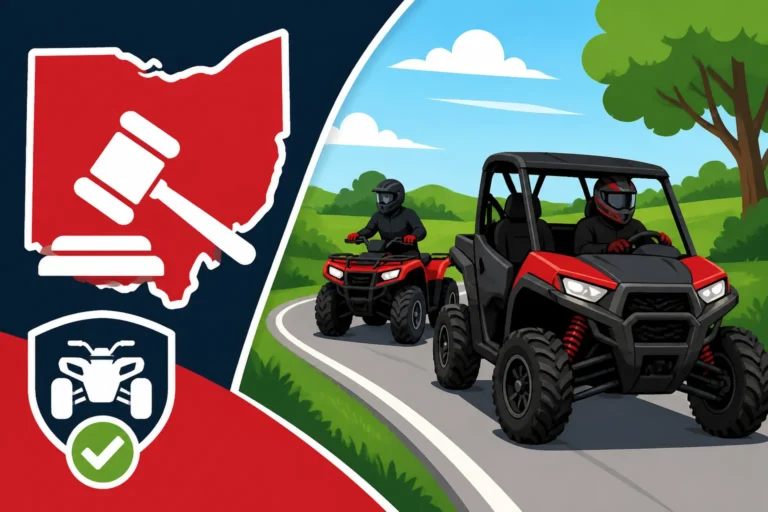
State routes (designated by a shield with "OHIO" at the top and a route number), however, have a slightly different—though still very limited—set of rules. In most cases, you cannot ride on a state route in Ohio unless that specific road has been designated for APV use by state law, which is extremely rare and typically involves agricultural exemptions or specific purpose vehicles with additional equipment. For crossing, however, [Ohio Rules for Crossing a Highway on an APV in Ohio] generally stipulate that you may cross a state route, but only at an angle of approximately 90 degrees to the roadway, and only when safe to do so. This means you must come to a complete stop, look both ways, and proceed quickly and directly across. You cannot ride along the shoulder or berm of a state route to get to a safer crossing point; the crossing must be as immediate and perpendicular as possible.
The emphasis on safety when crossing [Ohio Rules for Crossing a State Route] cannot be overstated. These roads carry faster traffic, and drivers may not be expecting an off-road vehicle to appear. Always choose crossing points with excellent visibility for both you and oncoming traffic. If you're on a country road or a less-trafficked area, the risk might feel lower, but the rules are still the same. Never assume a driver sees you, and always be prepared to yield. Planning your route to avoid state routes entirely, if possible, is often the safest bet, but if you must cross, do so with extreme caution and full adherence to the law.
Safe Practices for Crossing Any Ohio Road
Legalities aside, the fundamental goal of any road crossing is safety. Even if you’re perfectly within the bounds of Ohio law, a momentary lapse in judgment or an unexpected driver can turn a quick crossing into a serious incident. Developing solid, consistent safe practices for every road encounter is crucial for ensuring you and your riding partners make it to the other side without a hitch. These practices apply whether you’re crossing a quiet township road or a busier state route.
Identifying Safe Crossing Points
Not all road crossings are created equal. The most critical step in crossing any road safely is choosing the right spot. You want maximum visibility in both directions—for yourself to see oncoming traffic and for drivers to see you. This means avoiding blind curves, crests of hills, or dips in the road where visibility is limited. A good crossing point will allow you to see far down the road in both directions, giving you ample time to assess traffic flow and make a decision. Look for straight sections of road, preferably where the speed limit is lower, and traffic is naturally slower.
Intersections, surprisingly, can sometimes be safer crossing points, especially if they are well-marked and controlled by stop signs or traffic lights. At a stop sign, drivers expect cross-traffic, and at a light, you might have a dedicated signal. However, be mindful of turning vehicles, which might not be looking for an APV. A simple, unobstructed stretch of road where you can get a clear view is often ideal. Never assume that just because a road is less traveled, it's automatically safe. Always be on high alert, as it's the unexpected vehicle that often causes problems.
It's also worth considering the terrain on either side of the road. Is there a safe, stable surface to enter and exit the road, or will you be struggling up a steep, muddy bank? A smooth transition onto and off the pavement reduces the chance of losing control or getting stuck, which would unnecessarily prolong your time on the road. Taking a moment to scope out the ideal entry and exit points before even approaching the pavement can make a huge difference in the safety and ease of your crossing.
Communication and Signaling
When you're operating an APV, especially one that might not be equipped with full road-legal lighting and signaling (like many ATVs), clear communication with other road users is paramount. You need to make your intentions unmistakably clear to any approaching drivers. The first step is to slow down significantly as you approach the road and come to a complete stop at the edge of the pavement. This signals to drivers that you are aware of the road and are preparing to interact with it.
Once stopped, make eye contact with drivers whenever possible. A simple nod or wave can go a long way in acknowledging their presence and showing your intent. If you have passengers, ensure they also understand the plan and are prepared. For machines that lack turn signals, clear hand signals indicating your intention to cross or the direction you're headed are essential. Point in the direction you plan to cross, even if it's straight ahead. This may seem basic, but in a world where drivers are accustomed to cars and trucks, an APV rider using clear, unambiguous signals helps bridge that communication gap.
While many ATVs might not have them, some UTVs, especially those that are equipped for occasional road use, might have functioning turn signals and mirrors. Even if [Ohio Equipment Rules for an APV on a Road] don't strictly require these for a brief crossing, using them enhances your visibility and communication. For instance, if you have turn signals, activating them before your crossing makes your intent obvious. Remember, you're responsible for making sure other drivers know what you're about to do; leave no room for guesswork.
The Quick and Direct Approach
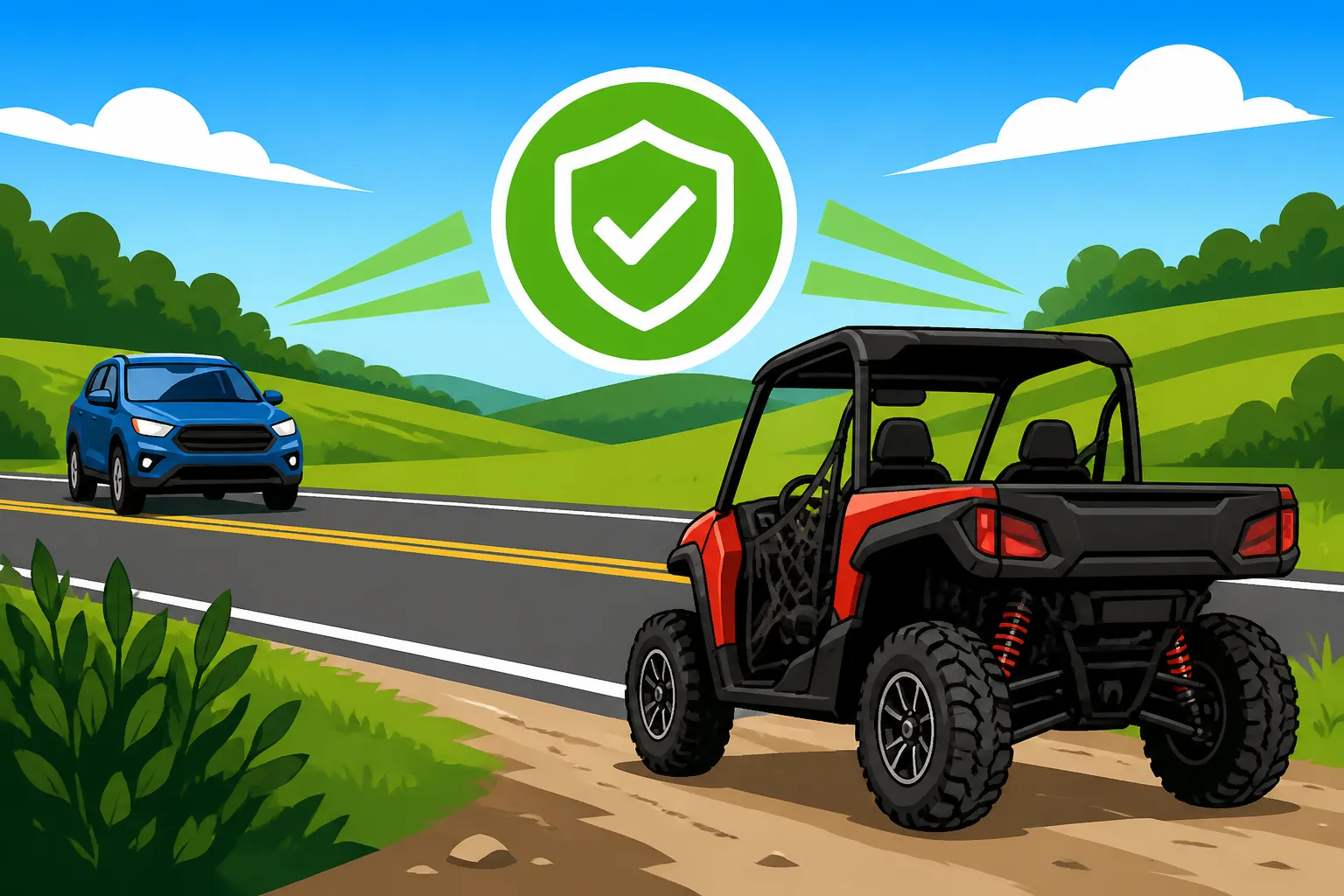
Ohio law and common sense both dictate that when crossing a road with an APV, your time on the pavement should be as brief and direct as possible. This means no riding along the shoulder, no zig-zagging, and certainly no taking a scenic route across. The goal is to traverse the road quickly and perpendicularly to the flow of traffic. Think of it like crossing a stream—you want to get from one bank to the other in the straightest, most efficient line possible.
Before you even pull onto the pavement, ensure your path is clear in both directions. Once you've determined it's safe to proceed, accelerate smoothly but decisively across the road. Don't dally, but don't perform a reckless sprint either. The idea is to move with purpose, minimizing the time you are a potential obstruction or hazard to other traffic. If you're riding with a group, ensure each rider crosses individually after confirming a clear path, rather than attempting to cross as a pack.
It’s also crucial to remember that this "quick and direct" approach applies from the very edge of the road surface. You should not be riding down the berm or shoulder to line up a better crossing angle. The crossing starts as soon as your tires touch the paved or graveled surface of the roadway. Any riding along the roadside, even for a short distance, can be considered illegal road use, potentially leading to a citation. The philosophy is simple: get on, get across, get off, with minimal fuss and maximum safety.
Equipment and Readiness for Road Crossings
Riding an APV, whether on trails or crossing roads, demands a certain level of preparedness, both from the machine and the rider. While your machine might be perfectly set up for mud or rocky trails, ensuring it's visible and reliable for those brief moments on pavement is a different consideration. Similarly, the rider needs to be in the right mindset, focused and ready to react quickly. This readiness is a cornerstone of safe riding and is especially critical during road crossings.
Visibility Enhancements
When you're on a public road, even for a moment, visibility is your best friend. APVs are smaller than most vehicles and often have less reflective surface area, making them harder to spot, especially in less-than-ideal lighting conditions. Your standard headlights and taillights are a good start, but consider supplementing them. For instance, wearing brightly colored gear—fluorescent yellow or orange—significantly increases your conspicuity during the day. Reflective strips on your helmet, jacket, or machine also make a huge difference after dark or in low-light conditions like dusk, dawn, or fog.
Even if you’re only planning daytime rides, having your [Ohio Lighting Requirements for APVs] in good working order is non-negotiable. Headlights should be clean and functional, and taillights bright. If you have a UTV, consider adding additional lighting, like LED light bars, but be mindful of blinding oncoming traffic if you activate them on a road. For those seeking extra visibility, aftermarket accessories from brands like SuperATV can offer options like LED whip lights or reflective flags that stand tall above your machine, grabbing the attention of drivers from a greater distance. These add-ons are not just for aesthetics; they are functional safety enhancements that could prevent an accident during a crucial road crossing.
Think about the conditions. A dusty trail ride that ends at a paved road might mean your lights are obscured by dirt. Take a moment to wipe them clean before crossing. If weather conditions like rain or fog are present, your visibility, and that of other drivers, is significantly reduced. In such situations, extra caution, brighter clothing, and ensuring all available lights are on are not just good ideas—they are essential.
Driver and Machine Preparedness
Beyond just being seen, being truly ready to cross a road involves both the mechanical state of your APV and your own mental state. First, give your machine a quick once-over. Are your brakes responsive? Are your tires properly inflated and in good condition? A sudden mechanical issue, like a soft brake pedal or a flat tire, at the moment you're trying to cross traffic, could be disastrous. Even a small, nagging issue on the trail can become a major liability on the pavement.
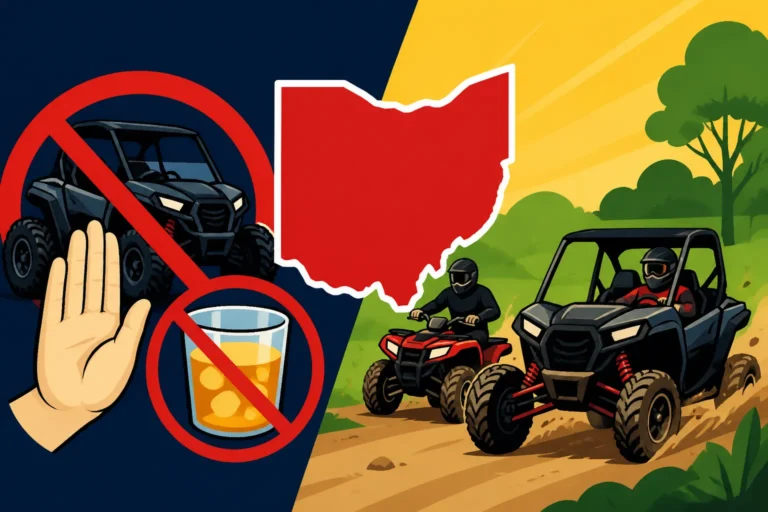
Equally important is the rider's preparedness. You should be focused, alert, and free from distractions. This means no fiddling with your GPS, adjusting your helmet, or chatting animatedly with passengers right before you attempt a crossing. Your full attention needs to be on the road, traffic, and your machine. And, of course, absolutely no alcohol or drugs. Operating an APV under the influence is not only illegal—[Ohio DUI Rules for APV Riders] are clear on this—but it severely impairs your judgment and reaction time, turning any road crossing into an extreme hazard.
It’s also wise to have your essential documents readily accessible. While you might not be stopped every time you cross a road, if a deputy does pull you over to check on your compliance, having your registration and insurance proof handy will make the encounter much smoother. [Ohio Registration and Insurance Proof] should always be carried with you when riding, whether on the trail or just making a quick hop across a road. This level of readiness, both mechanical and mental, ensures that when it’s time to cross, you’re doing so with the highest degree of confidence and safety.
Distinctions for UTVs and Wider Machines
While the general principles of road crossing apply to all APVs, UTVs and wider machines often present unique considerations. Their size and sometimes more car-like features can influence how they are perceived by other drivers and how they legally interact with public roads. It's important to understand these differences to ensure compliance and maximize safety, as what might be acceptable for a narrow ATV could be problematic for a wide side-by-side.
Understanding Width Limitations
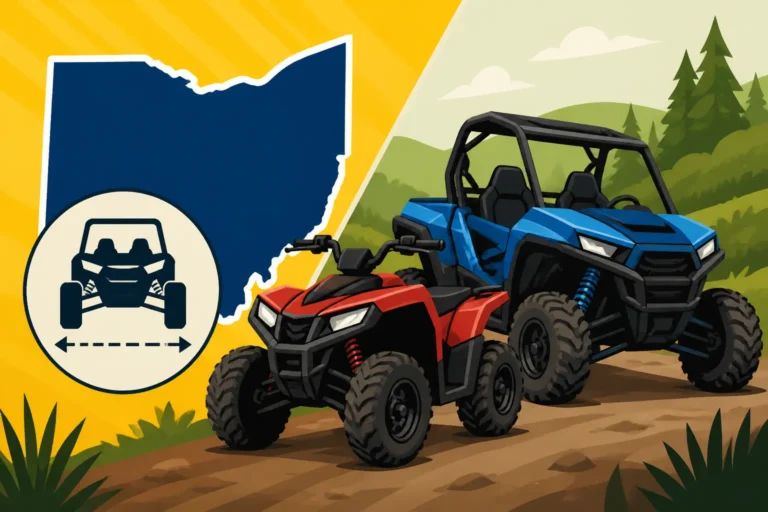
Ohio's public land trails, particularly within its State Forests and the Wayne National Forest, have clear [Ohio's 62-Inch State Forest Width Limit]. This means many wider UTVs simply cannot legally operate on these specific trail systems. While this limitation primarily impacts where you can ride, it indirectly affects road crossings. If your machine is over 62 inches wide, you might find yourself needing to cross roads more frequently to access private lands or private riding parks, as many public trails are off-limits to you. This might lead you to seek out areas where road use is more common, or where landowners have granted permission to cross their fields.
The width of your machine can also affect how drivers perceive you on the road. A wide side-by-side takes up more of a lane, even in a perpendicular crossing, potentially causing drivers to misjudge your speed or intent. This isn't a legal restriction on crossing itself, but a practical safety consideration. When you're crossing a two-lane road in a wider UTV, you are on that pavement for a slightly longer duration and occupying more space. This emphasizes the need for even greater vigilance, choosing wide-open crossing points, and ensuring your movements are predictable and clear.
Some townships and counties that do open their roads to APV use might also have specific rules regarding machine width, especially on narrower rural roads. While these rules typically apply to riding on the road, rather than just crossing, it's always worth being aware of local ordinances. If your UTV is particularly wide, it might even limit the types of roads you can safely and legally cross due to factors like shoulder width or limited sightlines, making proactive route planning even more critical.
The Role of Road-Legal Equipment on UTVs
One significant difference between many ATVs and UTVs, especially newer models, is the increasing presence of road-oriented equipment on UTVs. Many UTVs come standard with features like turn signals, rearview mirrors, and sometimes even horns. While these might not be strictly mandated for crossing in all situations, they are incredibly valuable safety tools when you're interacting with public roads. Even if your UTV isn't fully street-legal for continuous road travel, utilizing these features during a crossing can significantly improve your safety.
For example, using your turn signals before and during a crossing clearly indicates your intention to drivers. Rearview mirrors allow you to monitor traffic approaching from behind without twisting your body, keeping your focus forward. [Ohio UTV Road Equipment List] outlines what’s needed for a UTV to be considered street-legal for sustained road use in permitted areas, and while crossing doesn't require all of these, having some of them definitely helps. A working horn can be invaluable for alerting distracted drivers to your presence, especially if they're not seeing your lights or signals.
Some UTV riders choose to install additional road-legal equipment, even if they don't plan on extensively riding on roads. Items like a full DOT-approved windshield, wiper blades, or even a specialized license plate bracket can be beneficial. While you won't need to pass a full [Ohio UTV Inspection Before Registration] just to cross a road, equipping your UTV with a few extra safety features can provide peace of mind and enhance visibility, making your brief encounters with traffic much safer for everyone involved. It's an investment in safety that goes beyond mere compliance.
What to Do If You Encounter Law Enforcement
Even when you're diligently following all the rules and crossing a road safely and legally, there's always a chance you might encounter law enforcement. Deputies, state troopers, or local police officers are often on patrol and might stop you, especially if they're unfamiliar with APV laws or if your crossing appeared risky. Knowing how to handle such a situation calmly and correctly can make all the difference, potentially saving you from an unnecessary citation or prolonged stop.
Knowing Your Rights and Responsibilities
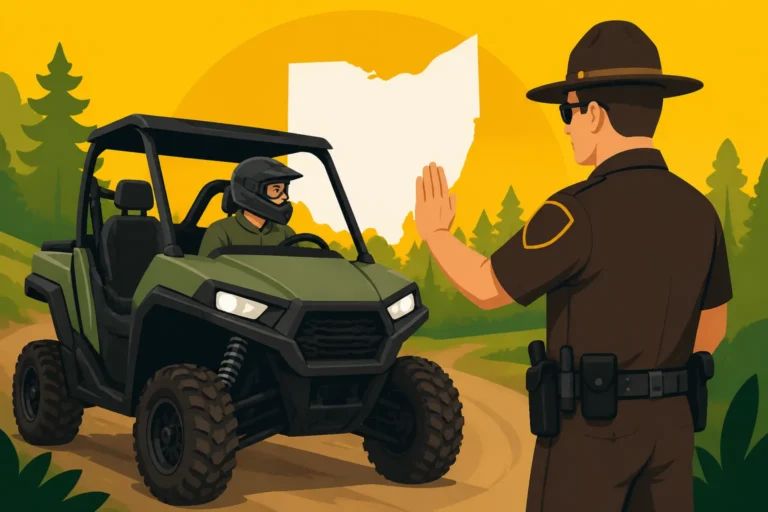
If a law enforcement officer signals you to stop while you're riding your APV or immediately after a road crossing, pull over safely and turn off your engine. Keep your hands visible, typically on the handlebars or steering wheel. It’s natural to feel a little nervous, but maintaining a respectful and cooperative demeanor is key. The officer will likely ask for your identification, vehicle registration, and proof of insurance. Having these documents readily accessible, as discussed earlier, will make the process much smoother.
Clearly and politely explain that you were making a legal road crossing to access another trail or private property. If you know the specific Ohio Revised Code section that allows for crossings (often related to operating on private property and using roads for direct access), you can mention it, but don't argue or lecture. Just state your intent and provide the requested documentation. The officer may want to verify the specific details of your situation, such as the exact location you were coming from and where you were headed. Be honest and factual. They might check your machine's VIN or look at your license plate. This is part of [What an Ohio Deputy Checks Roadside].
Remember, you have a responsibility to comply with lawful orders, but you also have the right to understand why you've been stopped. Ask politely if you are being cited or if there is a specific violation the officer believes you committed. Sometimes, it might just be a warning or an educational stop, especially if APV road crossing laws are less common in that particular jurisdiction. Your calm and clear explanation can help clarify any misunderstanding.
Avoiding Unnecessary Risk
The best way to handle an encounter with law enforcement regarding a road crossing is to avoid any situations that might invite one in the first place. This means always prioritizing safety and legality in your crossing decisions. If you're ever in doubt about whether a particular crossing is legal, safe, or permissible, err on the side of caution. Look for an alternative route, even if it means a longer journey through trails or private land. Sometimes, that extra effort can save you a significant headache and potential legal trouble.
Never attempt to cross a road where you suspect APVs are absolutely forbidden, or where your visibility is severely compromised. Running stop signs, blowing through traffic lights, or making reckless dashes across busy highways are not only dangerous but guaranteed ways to draw the attention of law enforcement and earn you a citation. The potential fines for illegal road use, as outlined in [Ohio Fines for Illegal APV Road Use], can be substantial, not to mention the risk of having your machine impounded.
Ultimately, preventing an unnecessary stop or citation comes down to being a responsible and informed rider. Know the laws, practice safe crossing techniques, ensure your machine is well-maintained and visible, and always be prepared to explain your actions respectfully. By taking these precautions, you significantly reduce the likelihood of a negative interaction with law enforcement, allowing you to focus on the enjoyment of your Ohio off-road adventures.
Disclaimer
This article is for general informational purposes only and does not constitute professional advice. Laws, prices and regulations vary by location and change over time. Consult a qualified professional for guidance on your specific situation.