Fire Ring Rules at a Wayne Forest Campsite
A campsite fire ring may look like a simple place to cook or warm up, but using it on Wayne National Forest land still depends on the site’s rules and current fire restrictions. For ATV and UTV riders, the practical approach is to use only an approved ring, keep the fire small and attended, and make sure it is completely out before leaving.
Start With the Site and Its Current Rules
A fire ring is a clear sign that a site is set up for fires, but it is not a guarantee that fires are allowed at every moment. Temporary restrictions, fire danger, maintenance work, or a campground’s own rules may change what is permitted. Check posted notices at the campsite and follow any current direction from Forest Service staff or the campground operator.
First, confirm that you are at a campsite where fires are allowed. A developed campground and a dispersed camping location can have different requirements. Don’t assume that an existing circle of stones or an old ash pile is an approved fire ring. If there is no clearly designated ring, don’t create one by moving rocks or burning directly on the ground. If you are unsure, ask the campground operator or the appropriate ranger district before lighting anything.
A Wayne National Forest OHV permit or an Ohio registration plate relates to riding access; it does not, by itself, authorize a fire or establish that a site is open for camping. Check the campsite rules separately. For riding access, How the Wayne National Forest OHV Permit Works and Which Trails a Wayne Forest Pass Opens explain what a forest permit covers. For campground planning, Camping Near Ohio OHV Trails can help you think through where to stay in relation to a riding area.
| Situation | Practical response |
|---|---|
| A designated ring is at an approved campsite and no restriction is posted | Follow the site rules and use the ring as intended |
| A restriction or closure notice is posted | Follow it, even if the ring is present |
| The ring’s status or the site’s rules are unclear | Don’t light a fire until you confirm what is allowed |
| There is no designated ring | Don’t build one or burn on the ground |
| Wind, dry vegetation, or nearby fuel makes a fire unsafe | Skip the fire, even if it is otherwise allowed |
Rules can differ between Forest Service land, a developed campground, and nearby private or state land. A site close to a trail system is not necessarily managed under the same rules as the trail itself. If you are unsure which agency or operator controls the campsite, use posted contact information or ask before setting up. Calling a Ranger District Before You Load offers a useful way to resolve questions before arriving with a trailer and a planned itinerary.
Use the Ring Carefully
Once you have confirmed that a fire is allowed, keep it inside the designated ring. Don’t expand the ring, move it, or pile material around it. A small, controlled fire is easier to supervise and extinguish than a tall one, and it reduces the chance of sparks reaching dry leaves, grass, or nearby gear.
Use only fuel permitted by the campsite rules. Don’t burn household rubbish, plastic, cans, treated wood, or other materials that can produce hazardous smoke or leave debris behind. Whether you may gather downed wood or need to bring your own can depend on local rules and conditions. Check before collecting anything, and don’t cut live trees or branches for firewood.
Wind deserves extra attention. A few sparks can travel beyond a ring, especially when conditions are dry. Avoid lighting a fire when gusts are carrying sparks, and don’t leave burning material piled high. Keep tents, chairs, fuel containers, vehicles, and other flammable items well away from the fire. A fire ring is not a place to burn brush or dispose of camp waste.
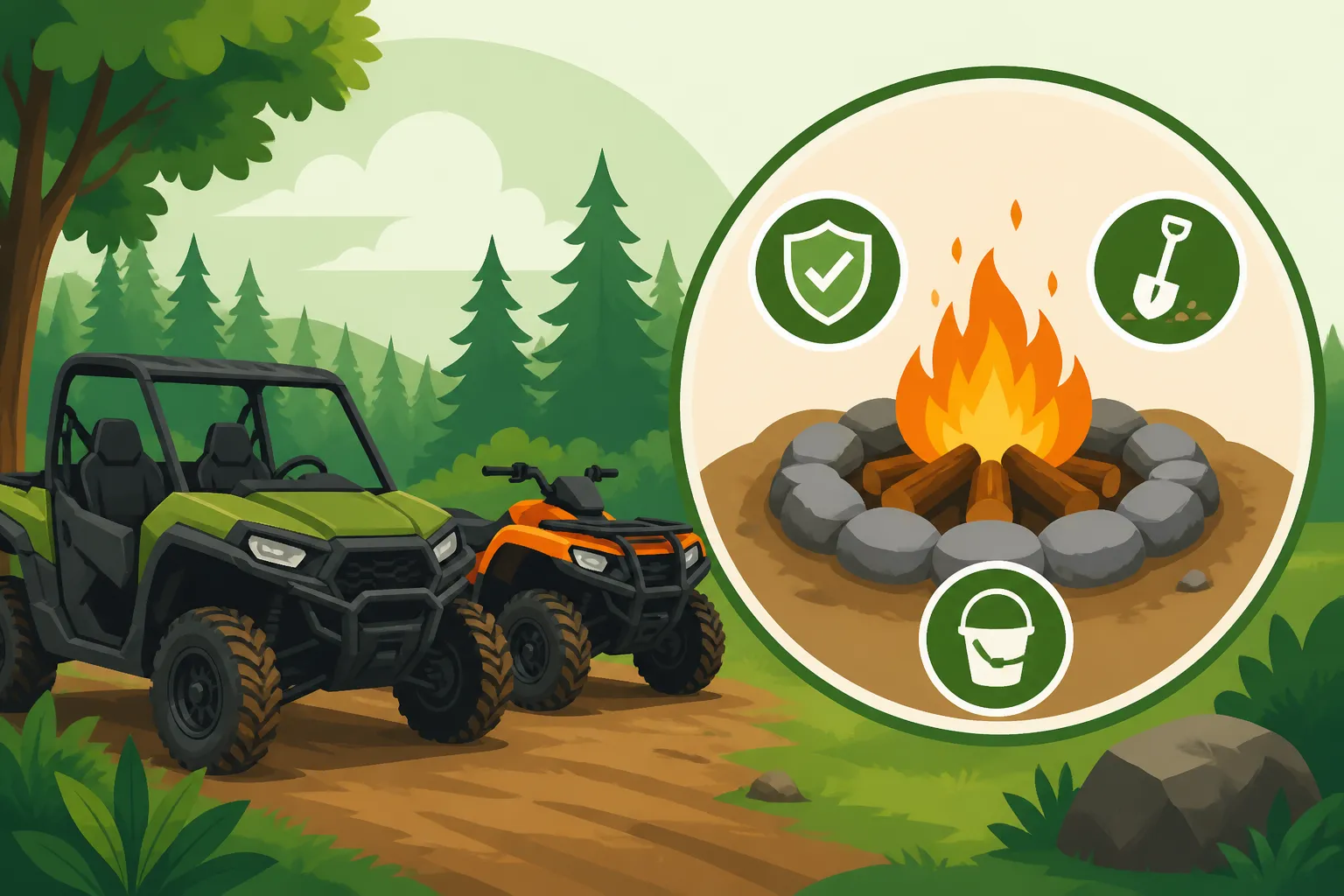
Keep water and a shovel within reach while the fire is burning. They are useful for controlling a small fire and for putting it out, but they do not make a fire safe during a closure or restriction. A compact shovel and a dedicated water container can fit well in a camping kit; if you source gear through Amazon or another retailer, choose equipment that is sturdy, easy to carry, and suitable for outdoor use.
An unattended fire is a risk even when it looks nearly burned out. Have one responsible adult keep an eye on it, including when others in the group are cooking or preparing to ride. Don’t leave the campsite, go to bed, or load a machine while flames or hot embers remain. If you need to step away, extinguish the fire first.
Keep riding equipment and fuel separate
Set up the campsite so the fire ring is separated from machines, trailers, fuel cans, and riding gear. A hot exhaust or recently used machine can ignite dry material, and gasoline or other fuel should never be stored beside a fire. Let machines cool in a safe place away from the ring before covering or loading them.
This separation matters when a group is staging machines for an early ride or returning to camp after dark. Keep a clear route around the ring, and make sure children and pets cannot wander into it. A fire that is safe for cooking can still cause serious burns if people have to squeeze past it to reach a tent or vehicle.
Put the Fire Out Completely
A fire is not out just because the flames have disappeared. Hot coals can remain beneath ash and reignite when stirred by wind or left exposed. Before leaving the campsite or turning in for the night, extinguish the fire completely.
- Stop adding fuel and let the fire burn down only while you can supervise it safely.
- Pour water over the coals and ash, taking care not to splash yourself or others.
- Stir the material with a shovel so water reaches the embers underneath.
- Add more water and stir again until there is no visible smoke, steam, or glowing material.
- Check the ring and nearby ground for stray embers.
- If any part remains hot, repeat the process. Don’t leave until the fire and its contents are cold.
Don’t bury a fire to put it out. Soil can insulate embers, leaving heat that may later reach roots or other combustible material. If water is limited, avoid starting a fire in the first place; don’t count on a small bottle or a distant water source to extinguish a campsite fire.
After putting it out, leave the ring and surrounding area tidy. Pack out rubbish and any materials that are not allowed to remain. Don’t scatter ashes beyond the ring or put hot ash into a trash container. The goal is to leave the campsite ready for the next visitor, without hidden embers or loose debris.
The same care applies when you are packing up to ride. Don’t assume that a fire is safe to leave just because the group is in a hurry to reach the trail. Assign one person to manage the fire while the rest of the group handles machines and gear. Keep to the designated routes and campsite boundaries; Ohio Rules for Riding a National Forest covers the separate rules that apply to riding on national forest land.
Check Restrictions Before Each Trip
Fire conditions can change between trips, and a rule that applied on an earlier visit may not apply now. Before travelling, check for current fire notices and campsite instructions. Once there, read the information board and any signs at the individual site. A posted restriction takes priority over the fact that a fire ring is available.
This extra check is particularly important during dry, windy weather or when an area has recently experienced fires. If restrictions are unclear, don’t try to interpret a ring, ash pile, or other campsite feature as permission. Ask the campground operator or ranger district, or choose a meal that does not require a fire. Checking Ohio Fire Rules Before a Ride and Fire Restrictions in a Dry Autumn provide more context on checking conditions before heading out.
A compact pre-trip checklist helps avoid last-minute uncertainty:
- Confirm that your campsite allows fires and find out whether it has additional rules.
- Check for current restrictions before departure and again at the site.
- Bring water and a shovel, and keep them close while the fire is burning.
- Store fuel and riding equipment away from the ring.
- Make sure someone is responsible for watching the fire.
- Leave enough time to extinguish it fully before packing up or going to bed.
A fire ring makes a campsite more convenient, but it does not remove the need to check conditions or supervise a fire. Use a designated ring only when fires are allowed, keep flames controlled, and drown and stir the contents until they are cold. When restrictions or site rules are uncertain, the safest choice is to leave the fire unlit.
Disclaimer
This article is for general informational purposes only and does not constitute professional advice. Laws, prices and regulations vary by location and change over time. Consult a qualified professional for guidance on your specific situation.