Fire Restrictions in a Dry Autumn
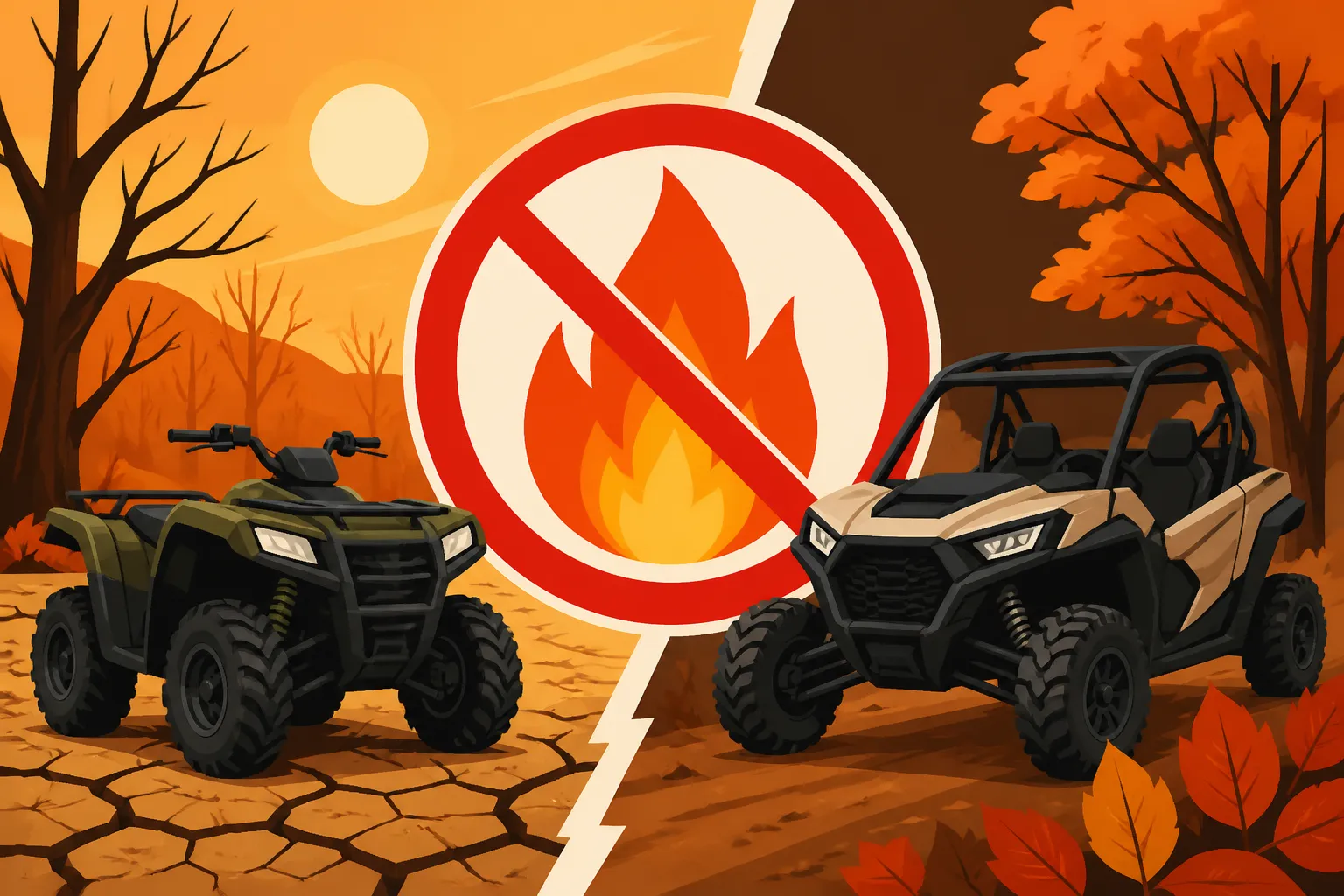
Dry autumn weather can turn a routine Ohio ATV or UTV outing into a fire-risk question: Are trails open, and are campfires or other flames allowed? Restrictions depend on the land manager and current conditions, so a rule at one riding area may not apply at another. Check before you travel, then adjust your ride and camp setup to match the posted rules.
What fire restrictions can mean for Ohio riders
A fire restriction is not automatically a trail closure. It may limit campfires or other activities while riding remains allowed; in more severe conditions, a land manager may close an area or specific roads and trails. The details matter. A sign that says fires are prohibited may not answer whether a gas stove is allowed, for example, and rules can differ between public land, a private park and a campground.
Restrictions may also change quickly as conditions worsen or improve. A dry spell, low humidity, wind and dead leaves can raise fire danger, but the decision to restrict an activity belongs to the agency or property owner responsible for that land. Do not assume that a restriction posted at one trailhead covers every nearby riding area.
On Ohio public land, start by identifying who manages the place you plan to ride. State forests and Wayne National Forest are managed by different agencies, and private parks set their own rules. A state forest notice does not automatically set the rules for a neighboring national forest, campground or privately operated trail system.
It helps to separate three questions:
| Question | What to check |
|---|---|
| Is riding allowed? | Trail or road closures, seasonal access and any area-specific notices |
| Are flames allowed? | Rules for campfires, charcoal, smoking and portable stoves |
| Are machines subject to extra limits? | Any posted restrictions, equipment requirements or directions from the land manager |
The same property can allow trail riding but restrict fires at campsites. Or it can close a trail even if campfires are still permitted in an established fire ring. Treat each rule as its own instruction rather than guessing that one answer covers everything. For a broader overview of land-specific requirements, see Ohio Rules for Riding a State Forest and Ohio Rules for Riding a National Forest.
Restrictions are also different from ordinary fire-safe behavior. A notice may ban certain activities outright, while basic precautions still make sense when no formal restriction is posted. Dry leaves and grass can catch from a flame or hot equipment, and wind can carry embers beyond a fire ring. Follow the posted rule first; use extra caution regardless of whether a formal ban is in place.
How to check before loading your ATV or UTV
Do not rely on a photo of a sign from last season, an old social media post or a general weather forecast. Those can be useful clues, but they may not reflect current trail access or fire rules. Confirm the status with the agency or property operator responsible for your destination, preferably close to departure and again when you arrive.
- Name the exact riding area. “Southern Ohio” or “near Wayne National Forest” is not specific enough. Identify the trail system, forest, park or campground you intend to use.
- Find the land manager’s current notices. Look for closures, fire restrictions, alerts or posted visitor information from the responsible agency or park operator. If details are unclear, call the relevant office rather than interpreting a short notice on your own.
- Check both riding and fire rules. Confirm that your planned trails are open and whether the rules cover campfires, charcoal, smoking, portable stoves or other open flames. Do not assume a restriction applies only to campfires.
- Review the trailhead information. Read signs and notices when you arrive. A newer notice at the entrance may give instructions that differ from what you saw earlier. What the Trailhead Board Tells You Before a Ride explains why that last check matters.
- Check again if conditions change. A windy, dry day can make a fire restriction more consequential than the conditions when you first planned the trip. If the notice is ambiguous, ask before lighting anything or entering a closed area.
For a national forest trip, a ranger district office is a useful place to ask about current conditions and local rules. For a state forest, contact the appropriate land manager; for a private riding area, ask the operator. Calling a Ranger District Before You Load can help you prepare the right questions. You can also review Checking Ohio Fire Rules Before a Ride and Ohio Rules for Riding During Fire Restrictions.
When you ask, be precise. Give the name of the riding area and ask whether the trail system is open, whether there are fire restrictions, and whether those restrictions apply to cooking devices or only to open fires. If you plan to camp, ask whether the campground has separate rules. Keep the answer with your trip notes, but remember that a phone call does not override a sign or later closure notice.
A fire restriction does not replace ordinary access requirements. A rider still needs to meet the applicable registration, permit and land-use rules. Likewise, having an Ohio plate or other required riding credential does not give permission to ignore a closure or light a prohibited fire. For campfire rules specifically, see Ohio Rules for Campfires on Forest Land.
What to bring and how to make a backup plan
If campfires are prohibited, plan meals that do not depend on one. Do not assume a portable stove is allowed as an alternative; check the wording of the restriction. Some notices may distinguish between open flames and certain contained devices, while others may not. When the rule is unclear, skip the device until you have confirmation.
Pack water, a charged phone and a way to navigate if service is limited. A fire can disrupt access routes, and you may need to leave promptly if officials close an area. Keep your machine registration and any required permits available, but do not delay an evacuation to collect gear.
If the trail system closes or your planned campsite cannot be used, have a backup destination or be ready to cancel. A nearby property may have different rules, but verify them directly rather than treating the next trailhead as an automatic substitute. If the only available route crosses a closed area, do not ride through it.
Riding and camping more carefully in dry conditions
Even when trails remain open, dry autumn conditions call for choices that reduce the chance of starting a fire. Stay on marked routes and use established parking or staging areas. Avoid driving or parking over dry grass, leaves or brush when you can choose a bare, firm surface. A hot exhaust component or other heated part can be a hazard in dry vegetation, particularly when the machine is stopped.
When you stop, choose a clear area away from leaves and brush. Do not leave an idling ATV or UTV unattended. Before walking away, shut the machine off and look around it for dry material touching hot components. If the machine has been used hard, give it time to cool in a suitable spot rather than parking it in tall grass or on a pile of leaves.
Keep exhaust equipment in good condition and do not remove or bypass a spark arrester where one is required. Follow the rules for the specific land and machine. A restriction may impose additional requirements, and standard equipment rules still apply. Avoid unnecessary engine revving or riding where the trail is closed, both because restrictions can be area-specific and because dry conditions leave less room for error.
For camp, use only the locations and devices allowed by the current notice. If a fire is permitted, keep it within an established fire ring where required, stay with it, and make sure it is fully out before leaving. Do not burn trash. Wind can carry sparks, so a fire that looks contained may still pose a risk. If the rules prohibit fires, do not make a small fire, use a charcoal grill or switch to another flame-producing device unless the restriction clearly allows it.
Carry fuel only as permitted and secure it properly. Keep fuel containers away from hot exhaust and open flames, and avoid refueling near a fire or other ignition source. Review Carrying a Spare Can on an Ohio Trail if you plan to bring extra fuel. A compact fire extinguisher can be an additional safety item, but it is not a substitute for obeying a ban or leaving an area when directed. If you shop for one through Amazon or another retailer, choose a model suitable for the hazards you may encounter and follow its instructions for mounting and use.
If you see smoke or flames, leave the immediate area and contact emergency services when there is an active fire or immediate danger. Give the clearest location you can: trail name, nearby intersection, mile marker, landmark or trailhead. Notify a ranger, park operator or other land manager as well, but do not delay an emergency call to find an office number. Do not ride toward a fire to investigate, block access routes, or try to fight a spreading fire. Follow directions from responders and leave by an open route.
Dry weather can also make a trail less forgiving even when fire is not the main concern. Dust may reduce visibility, and loose leaves can hide ruts, rocks or branches. Leave more space between machines, reduce speed where sightlines are limited and make sure the group knows where to meet if it separates. These habits do not replace fire restrictions; they make a dry-weather ride safer overall.
Before setting out, make the decision simple: verify that the area is open, understand the current fire rules, and be willing to change plans. If you cannot confirm whether a flame or device is allowed, do not use it. Restrictions can change, and a cautious plan is easier than trying to resolve uncertainty at a campsite or trailhead.
Disclaimer
This article is for general informational purposes only and does not constitute professional advice. Laws, prices and regulations vary by location and change over time. Consult a qualified professional for guidance on your specific situation.