Trails That Shut the Second Monday of December
Ohio’s state forest ATV trails do not all stay open through winter. The main seasonal closure begins on the second Monday in December, which can catch riders who planned one last weekend without checking the calendar. This guide explains which trails the date affects, what the closure means, how to plan around it, and where to confirm conditions before unloading.
What the second Monday in December closure means
Which Ohio trails follow the seasonal schedule
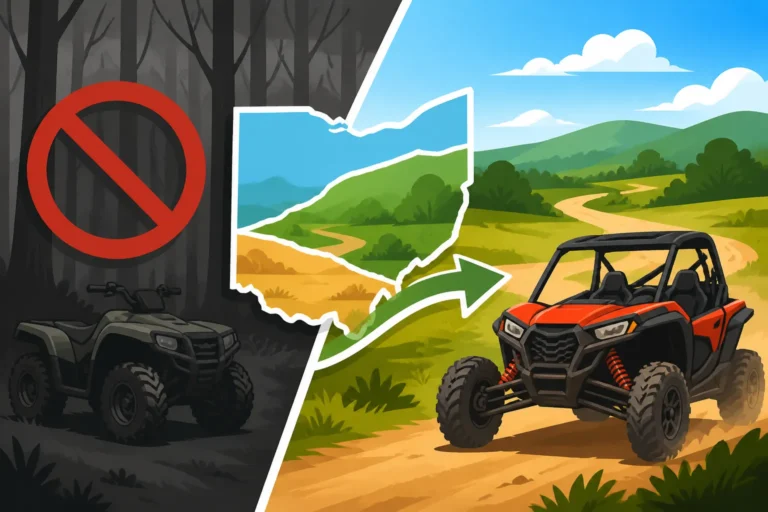
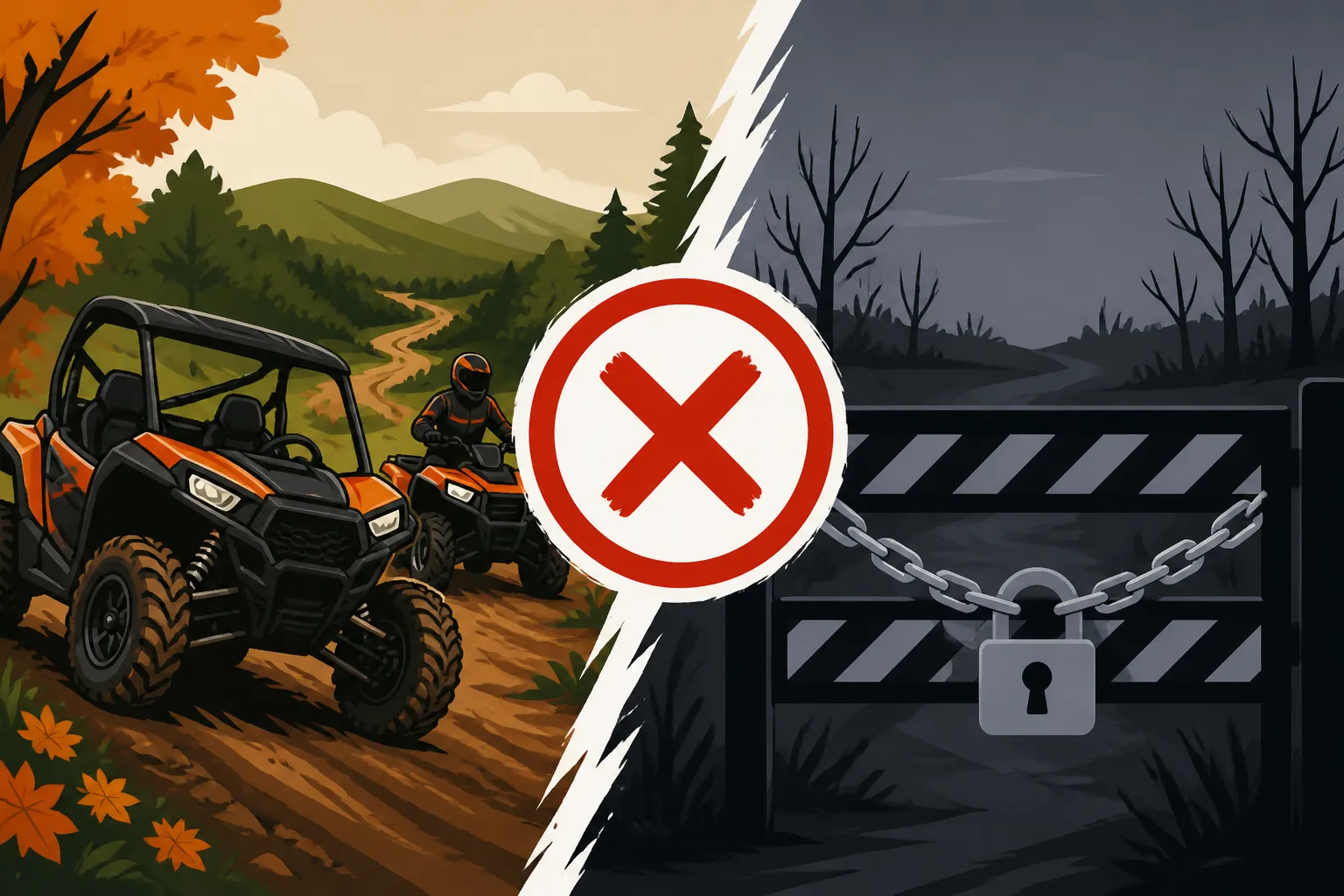
The second Monday in December marks the scheduled winter closure for Ohio’s seasonal state forest off-highway vehicle trails. The trails generally reopen on the first Friday in April, but riders should check for current notices before planning around either date. Trail work, weather, or other conditions can affect access.
This schedule is especially relevant when you’re choosing among Ohio’s state forest riding areas. Perry, Pike, and Richland Furnace are examples of state forest trail destinations where the seasonal schedule matters. Maumee State Forest is a notable exception: its short riding area is listed as open year-round, though access and trail conditions can still change.
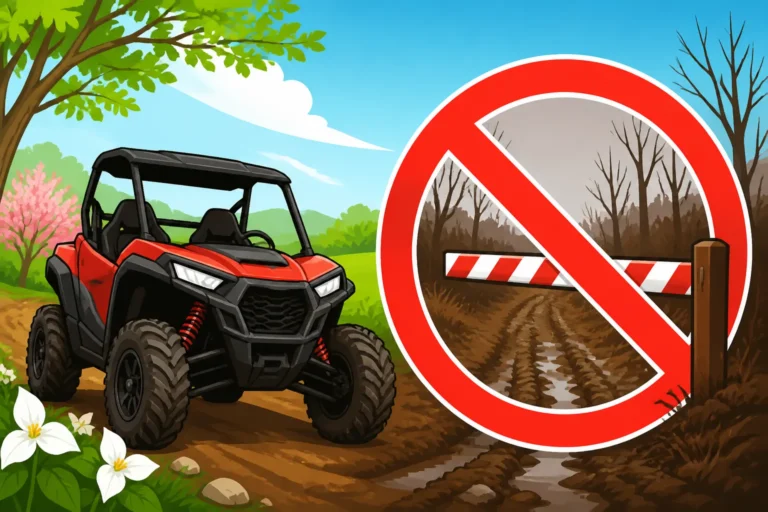
A closure is not the same as a trail being quiet, muddy, or difficult. It means the designated riding area is closed to riding for the seasonal period. A machine that is registered and properly equipped is still not allowed on a closed trail. Before loading up, review [Ohio's Trail Season by Forest] and [Ohio State Forest Riding Hours] to understand how seasonal dates and daily riding hours fit together.
| Riding area type | What to expect around the winter closure | What to check before leaving |
|---|---|---|
| Seasonal Ohio state forest trail systems | Scheduled closure begins on the second Monday in December; reopening is generally on the first Friday in April | Current forest notices, trail status, and permitted riding hours |
| Maumee State Forest | Its riding area is an exception to the seasonal winter closure and is listed as open year-round | Current access notices, weather, and trail conditions |
| Wayne National Forest OHV systems | Operate under their own access rules and seasonal information, not automatically the state forest schedule | Wayne National Forest notices and the requirements for the specific trail system |
| Private riding parks | Set their own calendars, hours, and closure decisions | The park’s current operating information and admission requirements |
The important distinction is that Ohio’s state forest trails, national forest routes, and privately operated parks are not one single system. A closure date that applies to one type of riding area should not be assumed to apply to every trail in the state. For a broader look at the state forest areas, see [Ohio's Four State Forest APV Areas].
Why the reopening date matters too
The winter closure has a beginning and an expected reopening. Ohio’s seasonal state forest trails generally reopen on the first Friday in April, but that date is a planning point rather than a promise that every route will be ready for every machine under every condition. A trail may be closed temporarily for maintenance, unsafe ground, storm damage, or another posted reason.
That can be frustrating if you’ve already booked a cabin or arranged a group weekend. It’s worth treating the opening date as the earliest point to check for access, not as a guarantee that the exact trail loop you want will be open. A last-minute notice can change where you can ride, or whether a particular area is suitable after a wet spring.
Before committing to a trip, look for [Reopening the First Friday in April] and [Ohio Trail Closures to Check First]. The two details to confirm are whether the riding area is open and whether the route you intend to use is available. If the trail is open but the ground is soft, choosing a shorter ride or postponing can help avoid damaging the trail and getting stuck.
How to plan around the winter trail closure
Work backward from the closing date
Because the closure falls on a weekday, the final open weekend is not necessarily the weekend immediately before it. The second Monday changes date from year to year, and a Saturday or Sunday ride can fall just ahead of the closure. Check the calendar rather than relying on a familiar date from a previous season.
A practical planning routine is simple:
- Find the second Monday in December on the calendar for the season you’re planning.
- Check the official trail information for the specific forest or riding area.
- Confirm whether the area has announced an earlier temporary closure.
- Check the weather and recent trail notices before loading.
- Plan to finish riding before the posted closure takes effect.
This is especially useful for riders coming from a distance. If you’re driving from Columbus, Cleveland, Cincinnati, or out of state, a quick calendar check and status check can prevent an expensive trip to a closed gate. If you use a mapping app such as onX Offroad to plan routes, treat it as a navigation aid rather than proof that a trail is open. Verify access with the land manager’s current information.
Do not assume that a trail shown on a map is available for riding on a particular day. Maps can help with orientation and trip planning, but seasonal access notices and signs at the trailhead are more important when they conflict with an app or an older map. This is true whether you use onX Offroad, a printed map, or a route saved from a previous visit.
Check conditions as well as the calendar
A trail can be open on paper and still be a poor choice after heavy rain, snow, or a freeze-thaw cycle. Clay and churned soil can become slick, while frozen ruts may be difficult to navigate and can become hazardous as temperatures change. If the trailhead notice or forest update reports a closure, follow it even if the route looks passable from the parking area.
Build flexibility into the outing. If the weather turns or a route is temporarily closed, have another legal riding destination in mind rather than trying to find an unofficial way around a gate. Do not ride around barriers, use an unmarked route, or assume that a nearby road or forest track is an approved substitute. [Ohio Rules for Riding State Forest Land] explains why staying on designated routes matters.
For navigation, onX Offroad can help you keep track of planned routes and nearby features, but it should sit alongside official notices, not replace them. Save the forest’s contact details before you lose cell service, and check the trailhead board when you arrive. For a broader checklist, see [Ohio Trail Conditions Before You Ride] and [Ohio Trail Maps From ODNR].
What to do when seasonal trails are closed
Choose a different legal riding option
When a seasonal state forest trail is closed, look for another place that is open to your type of machine and riding activity. Options may include a private riding park or a different public riding system, but each has its own access rules, operating calendar, and requirements. Verify the status for the specific destination instead of assuming that another area follows the same winter schedule.
The Wayne National Forest OHV systems, for example, have their own information and requirements. Check [Wayne National Forest's Three Ohio Systems] and [How the Wayne National Forest OHV Permit Works] before setting out. Do not treat a state forest closure date as the schedule for the Wayne system, or treat an open state forest area as automatically available to a visitor who has not met the applicable permit rules.
Private parks can be another possibility, but their hours and winter access vary. A park may close for weather, maintenance, or its own seasonal schedule. Contact the park or check its official operating information before you tow a machine across the state. If you’re comparing options, [Ohio Private Riding Parks] can help you understand the difference between riding a managed private park and using public forest trails.
Avoid riding closed trails or nearby land without permission
A closed trail is not an invitation to use a forest road, an unmarked path, or a neighboring property instead. Public land has boundaries and designated uses. Private land requires the owner’s permission, even when it looks like an extension of a trail system or a route you used in the past.
If a gate is closed, a sign says the trail is shut, or an official notice lists a temporary closure, turn around and choose another legal activity. Do not move a barricade or ride around it. Apart from the safety and property concerns, riding while a route is closed can damage the surface when it is especially vulnerable.
It also helps to plan a winter alternative that does not depend on riding. You might use the trip for camping, sightseeing, or scouting a future route from public access points where stopping is allowed. When the trails reopen, check the notices again rather than relying on what you saw during the winter. The schedule provides a useful framework, but posted closures and access rules determine what you can do on the day of your visit.
A practical pre-trip checklist
Confirm the exact trail system
Before your trip, identify whether your destination is an Ohio state forest, Wayne National Forest, or a private park. The second-Monday-in-December schedule is useful for seasonal state forest riding, but it does not replace the rules for other land managers. Keep the name of the specific riding area handy so you can find the right calendar and closure notices.
Check the planned dates against the seasonal schedule, then look for any area-specific updates. A general guide may explain the usual pattern, but a local notice can announce a temporary closure or a change in access. If you are coordinating several riders, share the official status information with the group so nobody assumes a trail is open based on an old conversation or a saved route.
Prepare for changing conditions
For a late-season ride, prepare for cold weather, shorter daylight, and changing traction. Wear suitable layers, bring water and basic recovery gear, and make sure your machine is in good working order. Tell someone where you plan to ride and when you expect to return, especially if the trail system has areas with limited cell coverage.
A route app can help you keep your bearings, but download or save the information you need before you leave home. If you use onX Offroad, check your route plan in advance and keep the official trail map or notice available as a separate reference. At the trailhead, follow posted signs even if they differ from what an app displays.
When the seasonal closure is near, allow time to finish before the posted closing date and avoid making the final open weekend a last-minute gamble. A quick check of the calendar, trail status, and weather can save a long drive and help protect the trails for the next riding season.
Disclaimer
This article is for general informational purposes only and does not constitute professional advice. Laws, prices and regulations vary by location and change over time. Consult a qualified professional for guidance on your specific situation.