Sharing a Forest With Hunters
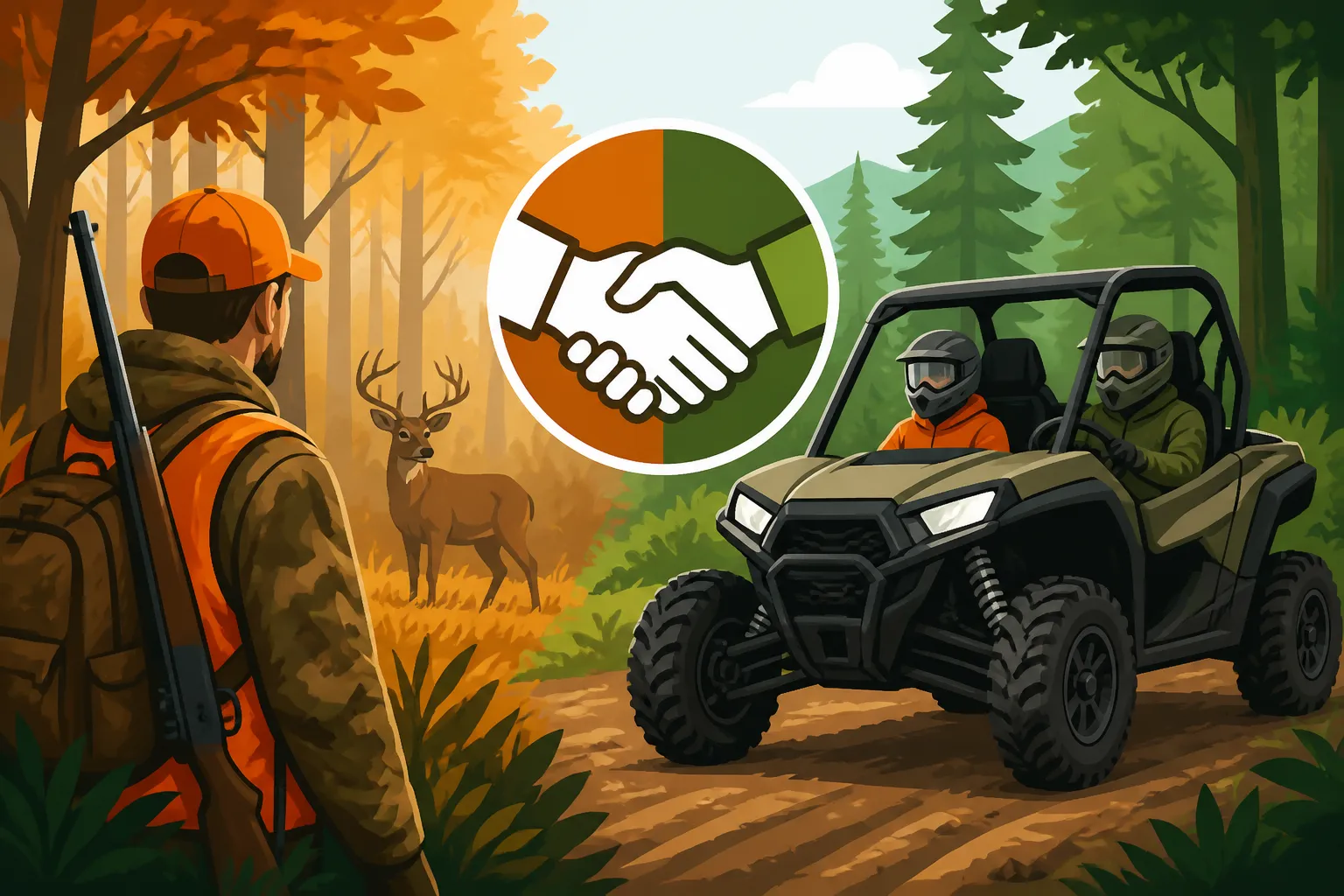
A fall ride through an Ohio forest can put ATV and UTV riders on the same roads and trails used by hunters, especially when leaves are down and visibility is shorter. That does not mean you have to cancel every autumn outing. This guide explains how to plan a safer ride, recognize hunting activity, stay on permitted routes, and avoid surprising someone in the woods.
Plan an Ohio forest ride around hunting activity
Check the land rules and trail status first
Before loading your ATV or UTV, confirm what kind of land you plan to ride on. Ohio state forests, Wayne National Forest, wildlife areas, county parks, and private property can have different access rules. Even where hunting is allowed, off-road riding may be restricted to specific designated routes. A public forest is not automatically open to ATVs everywhere.
Start with the official land manager’s information for the specific riding area. Look for current riding seasons, operating hours, access restrictions, and temporary closures. A trail that appears on an older map may be closed, and a forest road that looks rideable may not be an authorized ATV route. For a broader overview, see [Ohio Rules for Riding State Forest Land] and Ohio Trail Closures to Check First.
If you use a mapping app such as onX Offroad to plan your route, treat it as a planning aid rather than permission to ride. Check that the route is open with the relevant land manager, and do not assume a line on a map overrides a gate, sign, or closure notice. Download maps before leaving areas with reliable cell service, and carry a backup way to navigate if your phone loses signal or battery.
Check for seasonal closures and local notices
Hunting seasons vary by species, and dates can change from one season to another. Fall weekends may be busy in some woods, while other periods may see little hunting activity. Rather than guessing from the calendar, check the Ohio Department of Natural Resources and the specific forest or ranger district before you go. The details can matter: an area may remain open to riding while a particular route, lot, or section is temporarily restricted.
Pay close attention to signs at the trailhead and along the route. A gate, temporary notice, or posted closure takes priority over a route you planned at home. If you are uncertain whether a road or trail is open to machines, call the land manager before unloading. Ohio Trail Conditions Before You Ride and Calling a Ranger District Before You Load are useful topics to review before a trip.
It is also worth checking the forecast and recent trail conditions. Wet leaves can hide rocks, ruts, and branches, while rain can make clay especially slippery. A route that is manageable in dry weather may become a slow, noisy recovery job after heavy rain. If you are riding with a group, agree on a shorter alternate route in case a trail is closed or conditions deteriorate.
Choose a route and schedule that reduce surprises
A useful hunting-season plan is to keep your route simple. Choose a known, authorized trail system, stay on marked routes, and avoid exploring unmarked spurs. A wandering route increases the chance of crossing into a closed area, a hunting location, or private land. Before leaving the staging area, tell someone where you expect to ride and when you plan to return.
Consider riding during the middle of the day when practical. Hunters may be active at different times, and no schedule makes a rider invisible, but a predictable daytime outing is generally easier to manage than pushing into low light. Ohio riding hours and land-specific rules still apply, so check those limits rather than assuming you can ride whenever hunting activity is lower. See Ohio Rules for Riding After Dark for more on the risks and restrictions around low-light riding.
If your group includes newcomers, set expectations before starting the engines: no racing, no cutting across woods, and no splitting up without a plan. A rider who takes an unmarked shortcut can create risk for the whole group. If someone needs to stop, have the group pull over together at a safe, visible spot rather than scattering along a narrow trail.
Make your machine and group easier to notice
Use visible clothing and ride predictably
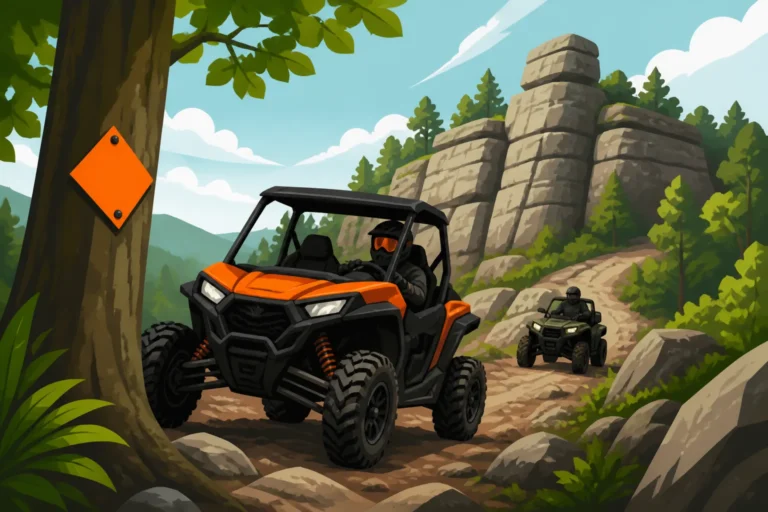
A hunter may be focused on a quiet patch of woods, while a rider is concentrating on ruts and trail markers. Both people can be surprised if visibility is poor. Wearing a highly visible outer layer, such as blaze orange where appropriate, can help distinguish you from the background. Do not rely on camouflage, dark clothing, or the color of your machine to make you noticeable.
Visibility is especially important when leaves are down, the trail curves sharply, or brush blocks sightlines. Bright clothing cannot guarantee that someone will see you, so pair it with predictable riding: stay on the authorized route, keep a controlled pace, and be ready to stop where sight distance is short. Blaze Orange on an Ohio November Ride covers this seasonal visibility concern in more detail.
Make sure your machine’s lights and reflectors are in usable condition, even if you expect to finish well before dark. A headlight does not give you permission to ride after permitted hours, but working lights can help other trail users recognize your machine in shaded areas or changing weather. Avoid adding lights that could dazzle someone at close range, and do not point auxiliary lights into nearby woods.
Keep noise under control without assuming silence is possible
ATVs and UTVs are not quiet, and a forest ride will not sound like a hunter’s walk. That is one reason to stay on designated routes and avoid unnecessary throttle, revving, or repeated passes near active areas. A loud, sudden approach can startle another person even when you are legally on an open trail.
If you hear a shot, do not try to locate the hunter by riding toward the sound. Stop in a safe place, keep the group together, and assess whether your route remains appropriate. If the trail is narrow or visibility is poor, wait until you can move carefully and make yourself visible. Do not assume the sound came from far away or from a direction that is easy to judge in the woods.
Regular machine maintenance matters too. A loose exhaust component or a machine that backfires can add avoidable noise and may draw attention in an unpleasant way. Before a hunting-season ride, check your machine for obvious problems and make sure your muffler and other required equipment are in place. Being courteous does not mean you need to ride silently; it means avoiding unnecessary disturbance and staying within the rules.
Brief the group before the first mile
A quick pre-ride talk can prevent confusion when someone spots a hunter or hears a shot. Agree that the lead rider will slow down at blind corners, the group will not spread out beyond clear communication, and everyone will stop together if the route becomes uncertain. Make sure each rider knows the planned turnaround point and what to do if they lose sight of the group.
For families, make the instructions simple and concrete. Tell younger riders to stay behind the adult leading the group, not to leave the trail, and to stop when the group stops. If a child is anxious after hearing a gunshot, do not dismiss the concern. Pause, explain what you know, and decide calmly whether to continue or return to the staging area.
A group leader should also carry a charged phone, know the area’s emergency access points, and have a way to communicate where cell service is weak. An offline map in onX Offroad can help you keep track of the planned route when reception drops, but it should not replace checking land rules or following official signs. A paper map or written trailhead details can be a useful backup.
| Situation | Safer response |
|---|---|
| You see a hunter near the route | Slow down, stay on the marked trail, and pass only when you can do so safely |
| You hear gunfire nearby | Stop somewhere safe, keep the group together, and do not ride toward the sound |
| A trail sign conflicts with your planned map route | Follow the sign and turn back or use a confirmed open route |
| Someone in the group gets separated | Stop at the agreed meeting point and use your communication plan |
| Visibility drops near dusk | End the ride within the land manager’s permitted hours; do not rely on headlights to extend your ride |
Share trails and roads with care
Give hunters room and avoid off-route detours
When you encounter a person hunting near an authorized trail, slow down well before reaching them. Keep the machine under control, avoid sudden turns, and pass only if the route is wide enough to do so safely. If the trail is too narrow or the situation feels unclear, stop at a safe distance and give the other person time to respond.
Do not leave the trail to get around a hunter, a parked vehicle, or a blocked section. A detour can take you into restricted forest, sensitive ground, or private property. If the route cannot be passed safely, turn around or wait for a clear option. The same principle applies if you see a tree stand, hunting blind, or other equipment: do not touch it, approach it unnecessarily, or use it as a reason to explore off-route.
Riders and hunters may have different expectations about how a shared forest should sound or feel. A calm greeting, a respectful distance, and a controlled pass go a long way. If there is a dispute about access, do not argue on the trail or attempt to settle it by pushing ahead. Leave the area and contact the land manager for clarification.
Treat every crossing and blind corner as a possible meeting
A narrow forest trail can hide another person until the last moment. Approach blind corners at a pace that lets you stop within the visible distance. Stay to the appropriate side of the route where the trail allows, and avoid drifting wide on curves. This is good practice whether the person around the corner is a hunter, hiker, another rider, or a maintenance worker.
At trail-road crossings, stop and look carefully in every direction. A hunter may be walking between a parking area and a hunting location, and another vehicle may be using the road. Do not block gates, trail access, or pull-offs when stopping. If you need to regroup, choose a place where other users can see and pass your group safely.
Also keep an eye out for parked trucks and trailers near trail access points. Do not park so close that someone cannot use the road or reach a trailhead. If you are unsure whether an informal pull-off is allowed, use a designated staging area instead. These small choices reduce tension and make the forest more usable for everyone.
Handle an unexpected encounter calmly
If you come upon a hunter at close range, stop rather than trying to squeeze past. Keep your hands visible and your machine pointed in a safe direction. Speak calmly and give the person room. If they indicate that you should not continue, do not escalate the encounter; move back along the open route when it is safe and contact the appropriate land manager later if you need help understanding access rules.
If a shot sounds unusually close or you believe someone may be injured, prioritize safety. Do not rush toward the sound through the woods. Use your phone or other communication method to contact emergency services when appropriate, and share the trailhead or route information you prepared before the ride. If you are in an area with poor reception, move only as far as needed to reach a safer place with service.
For further context on riding during hunting periods, review Ohio Riding in Hunting Season. When you plan to ride with others, it can also help to discuss how to respond to shared-road encounters in advance, including Meeting a Horse on a Shared Road. The same basic habits apply: slow down, make your presence clear, and give other people room.
Prepare before leaving home
Build a practical pre-ride checklist
A hunting-season checklist does not need to be complicated. Confirm that the riding area is open to your machine, check current trail notices, and make sure your route stays on permitted trails. Then check the forecast, fuel, tires, brakes, lights, and communications gear. Pack water, basic first-aid supplies, and clothing that remains visible against the woods.
Before you depart, share your plan with someone who is not riding: where you are staging, the general route, and when you expect to be back. If your group changes plans, send an update when you have service. This is particularly useful in forested areas where cell reception can be unreliable and trail junctions can look alike.
Use this short checklist as a starting point:
- Confirm the land manager allows your machine on the planned route.
- Check current closures, operating hours, and seasonal notices.
- Download a map and identify a backup route or turnaround point.
- Wear visible clothing and make sure required machine equipment is working.
- Brief the group on spacing, stopping, and regrouping.
- Tell someone at home where you are going and when you expect to return.
Decide when to turn around
Sometimes the best decision is to end the ride early. Turn back if you encounter a closure, cannot confirm that a route is open, see signs of active work or restricted access, or find conditions too poor to control your machine. Do the same if a group member is uncomfortable or if visibility is deteriorating. Finishing a route is never more important than getting home safely.
A map app can be helpful when choosing a turnaround point. For example, onX Offroad may help you follow a planned route without relying on constant cell reception, but it cannot tell you that every real-world condition is safe or that a route remains open. Cross-check with official notices and obey what you find on the ground. Keep the app, signs, and land-manager information in their proper roles: navigation support, immediate direction, and official access guidance.
Above all, treat hunters as fellow forest users rather than obstacles to your ride. A little planning, visible clothing, controlled speed, and respect for closures can make an autumn outing safer and less stressful for everyone. If anything about access is unclear, choose a confirmed route or reschedule rather than taking a chance.
Disclaimer
This article is for general informational purposes only and does not constitute professional advice. Laws, prices and regulations vary by location and change over time. Consult a qualified professional for guidance on your specific situation.