Riding Pike State Forest in April
April can be an appealing time to ride Pike State Forest: the woods are waking up, the hills are still mostly open, and the trails may feel quieter than they do later in the season. But spring weather can turn clay into slick mud, and trail access can change with conditions. This guide covers what to check, what to bring, and how to plan a safer ride.
What to Know Before Riding Pike State Forest in April
Check that the trails are open
Pike State Forest is in southern Ohio’s Pike County, where spring weather can change quickly. Ohio’s state forest riding season generally reopens on the first Friday in April, but that seasonal date is not a promise that every trail will be open or in good condition. Wet ground, maintenance, or a temporary closure can affect access.
Before loading your ATV or UTV, check the Ohio Department of Natural Resources’ current state forest information and trail notices. Look for updates close to your departure date, not just when you first start planning. A warm, dry forecast early in the week does not necessarily mean a trail has recovered from heavy rain the previous weekend.
For a broader explanation of the seasonal schedule, see [Reopening the First Friday in April]. It also helps to review [Ohio Trail Conditions Before You Ride] and [Ohio Trails Closed in Spring] so you know what can affect access even when the riding season has begun.
Know the rules for state forest trails
A machine that is registered for Ohio off-road riding needs to meet the applicable requirements for state forest use. Ohio’s APV plate serves as the trail permit for Ohio state forest riding; it is not the same as a permit for every riding area in the state. Visitors may have different requirements depending on where their machine is registered and where they plan to ride.
Helmet and eye protection rules matter, too. Bring properly fitted protective gear for every rider, and check the rules for children and supervised riders before the trip. Don’t assume that a short loop or a low-speed ride makes protective equipment optional. The details are covered in [Ohio Rules for Riding State Forest Land] and [Helmets and Eye Protection on Ohio Forest Trails].
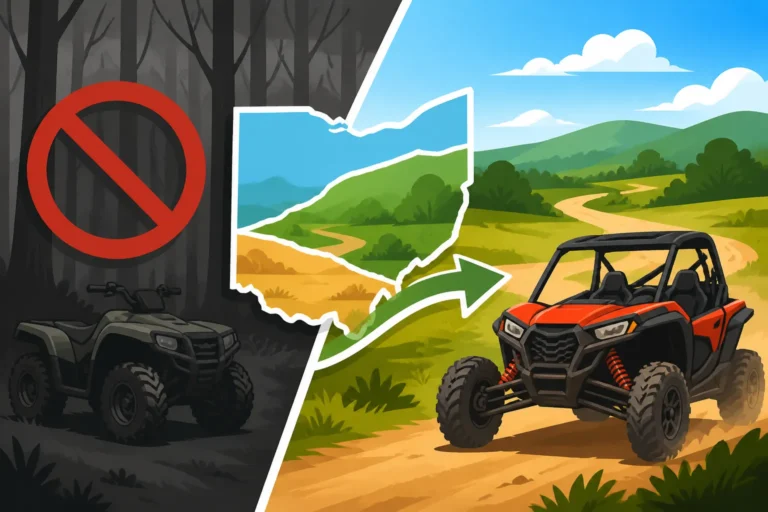
Ohio’s state forest trails also have a 62-inch width limit. That can rule out some side-by-sides, even if they are registered and otherwise trail-ready. Measure the machine at its widest point rather than relying on the model name or advertised category. See [Ohio's 62-Inch State Forest Width Limit] for more on why width can determine where you’re allowed to ride.
Use an official map as your starting point
Review the official trail map before you leave home. It can help you understand the approved riding area, trail connections, access points, and any marked restrictions. Save a copy on your phone and consider carrying a paper version as backup, especially if you expect weak cell service.
A mapping app such as onX Offroad can be useful for planning and for seeing your position while riding, but treat it as a navigation aid rather than proof that a route is open or legal. Compare the app’s information with the official map and posted notices. If a line on a screen seems to lead beyond the signed route, don’t follow it just because it appears rideable.
Download maps or save the information you need before reaching the forest. Mobile coverage can be unreliable in hilly, wooded areas, and a phone that cannot load a map at the trailhead is not much help once you are already out on the trail. [Ohio Trail Maps From ODNR] is a useful place to start your planning.
| Before you ride | Why it matters in April | What to do |
|---|---|---|
| Trail status | Seasonal opening does not guarantee every route is open | Check official notices shortly before leaving |
| Recent rain | Soft ground can rut easily and become difficult to ride | Reassess after substantial rain and follow closures |
| Machine width | State forest trails have a width limit | Measure the machine at its widest point |
| Registration and gear | Riders and machines must meet applicable requirements | Check the rules and pack required protective gear |
| Navigation | Cell coverage and trail conditions can vary | Save official maps and bring a backup |
What April Riding Conditions Can Feel Like
Expect a mix of firm ground and slick patches
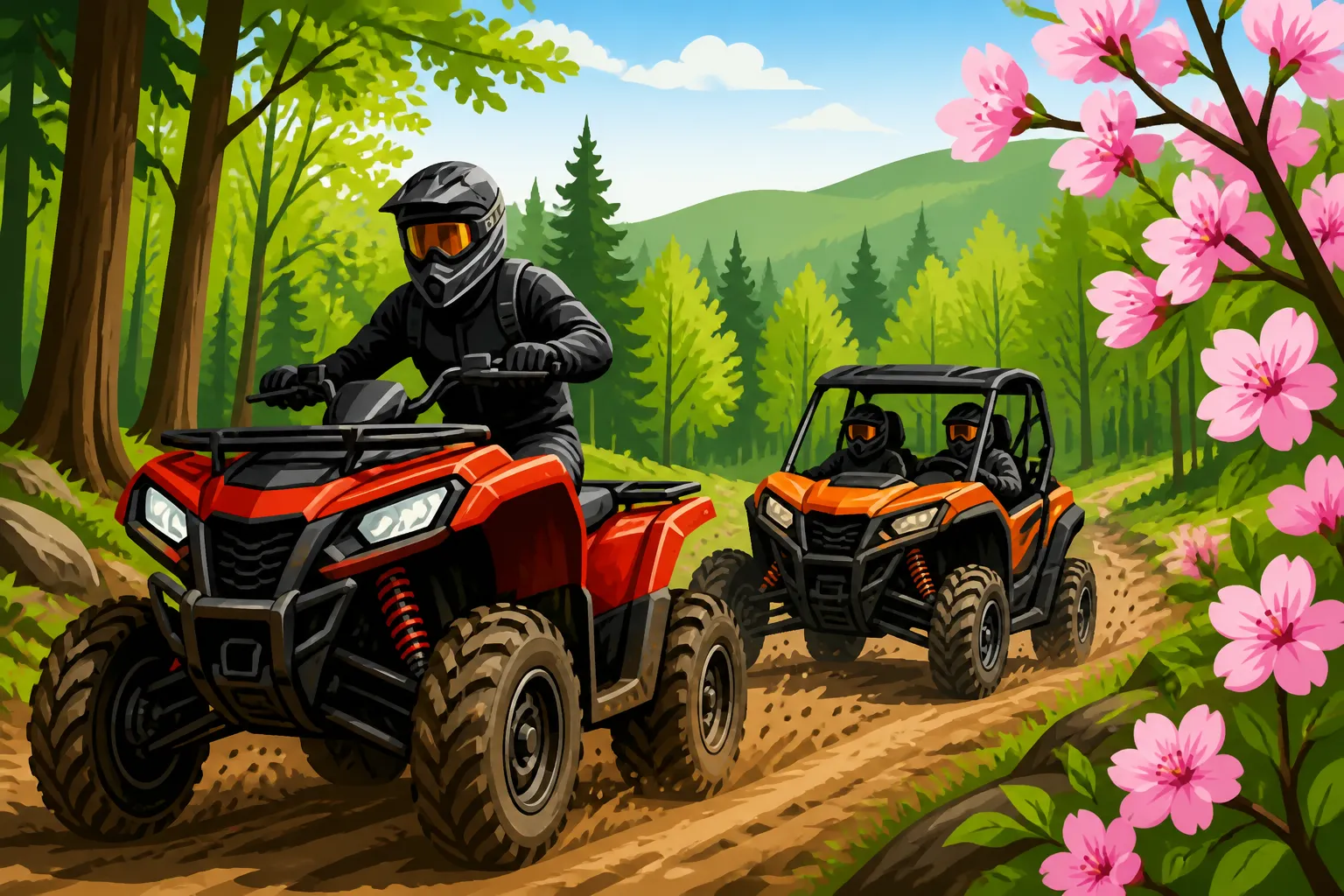
Spring trails rarely behave the same way from one section to the next. A shaded stretch may remain wet while an exposed hill has started to dry. The surface can shift from firm gravel or packed earth to slick clay, loose leaves, and muddy ruts within a short distance.
That variety can make Pike State Forest engaging, but it also calls for a more measured pace. A mud patch that looks shallow may hide a rut, a rock, or a slippery edge. If you are riding with a group, leave more room between machines than you might on dry ground. A rider ahead can throw mud, lose traction, or need extra space to turn around.
Take care not to spin tires repeatedly when a section is soft. Spinning can deepen ruts and damage the trail surface, making the route worse for everyone who follows. If the ground is deteriorating, turn around or choose a firmer route rather than trying to force a machine through. For more context on how wet Ohio surfaces behave, see [Ohio Trails After Heavy Rain].
Hills can be harder when the ground is wet
Pike County’s wooded, rolling landscape means a ride can include climbs, descents, and uneven ground. In April, a slope that feels manageable in dry weather can become slippery under wet leaves or loose soil. A machine may climb less steadily, and braking downhill may take longer than expected.
On an uphill section, avoid rushing into a climb without looking at the surface and the route ahead. If you cannot see the top, don’t assume the trail stays smooth beyond the crest. On a descent, use a controlled pace and leave enough distance to stop without sliding into the rider in front. Passengers should follow the machine manufacturer’s guidance and remain seated and positioned as instructed.
If a hill looks beyond your group’s comfort or ability, choosing another route is a sound decision, not a failed ride. Keep the group together and make sure every rider knows the plan before starting a more demanding section. [Ohio Trails With Hills] offers more ideas for thinking through terrain and rider experience.
Mud can change the whole day
Mud is not just a question of whether a machine can get through. It affects traction, visibility, braking, and the amount of time a ride takes. Deep mud can also conceal obstacles, and a machine that becomes stuck may need help in a spot where turning around is difficult.
In early spring, it is sensible to plan a shorter route than you might attempt in summer. Give yourself extra time for careful riding, breaks, and a possible return along the same trail. If conditions are worsening, don’t treat the original route plan as a commitment. A good ride is one that ends with everyone and every machine safely back at the staging area.
Avoid riding around a muddy or closed section by cutting into vegetation or creating a new line. Stay on marked routes, and follow any barriers or posted closure signs. If you need to stop, move out of the travel path where it is safe to do so, and make sure the rest of your group can see you.
How to Plan a Comfortable April Ride
Prepare for changing weather
A spring forecast can be misleading if you only think about the temperature at midday. The ride may start in chilly morning air, warm up while you are moving, and feel cold again when the sun drops behind the trees. Rain can also arrive quickly, making clothing and trail conditions less comfortable at the same time.
Dress in layers that can handle damp conditions. A waterproof outer layer, gloves, and spare dry clothing can make a big difference after an unexpected shower or a muddy stop. Keep a change of clothes in the tow vehicle, sealed against water and mud. If you are bringing children or newer riders, plan more frequent breaks so they can warm up, drink water, and check their gear.
Check the forecast for Pike County and the area around your intended trail access, but remember that local conditions can differ from what a general forecast suggests. If rain is expected, think carefully about whether the trip is worth making. A postponement can prevent a long drive to a closed or badly churned trail.
Build a simple ride plan
Before setting out, agree on a meeting point, a turnaround time, and what the group should do if it becomes separated. Keep the group’s route and pace suitable for its least experienced rider. A confident rider may be comfortable with a muddy climb that feels intimidating to someone who has only ridden on dry, flat ground.
A practical plan might look like this:
- Check official trail status and weather shortly before departure.
- Confirm that every machine meets the access and width requirements.
- Save a trail map and tell someone outside the group where you expect to ride.
- Start with a conservative loop and reassess conditions at a safe stopping point.
- Turn back if the trail is deteriorating, a rider is uncomfortable, or the group is running behind schedule.
Apps can make it easier to follow your position, but they should not replace communication. If your group uses onX Offroad or another mapping tool, make sure everyone knows how to access the route and what to do if the group gets separated. Keep phones charged and protected from water, and carry a backup navigation option if you can.
Pack for delays, not just the planned route
Even a day ride can take longer than expected when a machine gets stuck, a rider needs a rest, or weather slows the group. Bring water, snacks, a basic first-aid kit, and a charged phone. Pack tools and recovery equipment appropriate for your machines and your experience, and know how to use them before you need them.
Think about what you would need if you had to wait at the trailhead or return later than planned. A warm layer, a flashlight, and a way to contact your group can be valuable even if you expect to finish well before dark. Check your machine before leaving: tires, brakes, lights, fuel, and basic controls should be in good shape. Muddy conditions make reliable brakes and clear visibility especially important.
If you are hauling a machine, plan where you will park and unload, and keep the access area clear. Avoid blocking gates, signs, or other visitors. These details are covered in [Parking a Trailer at a Forest Lot].
Ride Responsibly and Adjust to the Trail
Stay on marked routes
When a trail looks muddy, it can be tempting to ride around the softest section. In a forest, that shortcut can damage plants and soil, spread the trail wider, or lead into an area that is not open to riding. Stay on the marked route and respect closures, gates, and signs even if the ground beyond them looks inviting.
Use extra care when approaching other trail users. Slow down, keep control of your machine, and give people room. On narrow routes, be ready to stop and work out who has the safer place to pass. [Ohio Trail Etiquette on Narrow Trails] offers useful guidance for sharing limited space respectfully.
Protect the trail for the rest of the season
A few careful choices in April can help preserve access for later rides. Avoid riding when the surface is so saturated that tires leave deep, continuous ruts. Do not dig new trenches by spinning in place, and don’t ride around a barrier to reach a route that has been closed.
If conditions are too wet, there is still value in making a different plan: visit another open riding area, do a machine check at home, or reschedule for firmer conditions. The goal is not to make every trip happen at any cost. It is to enjoy the forest while leaving the trail in a condition that can withstand the rest of the riding season.
Decide when to call it
Turn around if you encounter a closure, a section that is unsafe for your group, or ground that is deteriorating under repeated traffic. Do the same if a machine develops a problem, a rider is cold or tired, or the weather becomes more severe than expected. The farther you push into a ride, the more important it becomes to preserve enough time and energy to get back.
A satisfying April outing does not need to cover every mile. A shorter ride on suitable ground is often more enjoyable than a long route that becomes a struggle in mud. Check the trail status, ride within your group’s ability, and be willing to change the plan when the forest tells you conditions are not right.
Disclaimer
This article is for general informational purposes only and does not constitute professional advice. Laws, prices and regulations vary by location and change over time. Consult a qualified professional for guidance on your specific situation.