Riding Maumee in January
Maumee State Forest is unusual among Ohio riding areas because its off-highway vehicle trail is generally open year-round, making a January ride possible. But “open” does not mean every winter day will be comfortable or even rideable: snow, ice, thawing ground, and temporary closures can change the experience quickly. This guide covers what to check, what to bring, and how to plan a safer cold-weather ride.
What to expect from Maumee State Forest in January
A short trail system with a year-round riding season
Maumee State Forest is in northwest Ohio near Swanton, in the Oak Openings region. Its marked off-highway vehicle trail is about eight miles long. That is a manageable distance for a winter outing, but it is worth setting expectations: this is not a sprawling trail network where you can keep adding miles all day. You may spend as much time preparing, checking conditions, and taking breaks as you do riding.
Maumee’s year-round season sets it apart from Ohio state forest trail systems that close during part of the year. Still, year-round access is not a promise that the trail is open in every condition. Weather damage, maintenance, or a temporary management decision can affect access. Before loading your machine, check [Ohio Trail Conditions Before You Ride] and confirm that the Maumee route is available for the day you plan to go.
It can also help to look at [Maumee State Forest's 8 Miles] and [Why Maumee Stays Open Year Round in Ohio] before you plan. The first gives useful context about the limited mileage; the second explains why Maumee is an exception to the usual seasonal pattern. If you are making a longer trip, build your plan around the actual trail rather than assuming you will find additional marked riding nearby.
Winter conditions can change from one section to the next
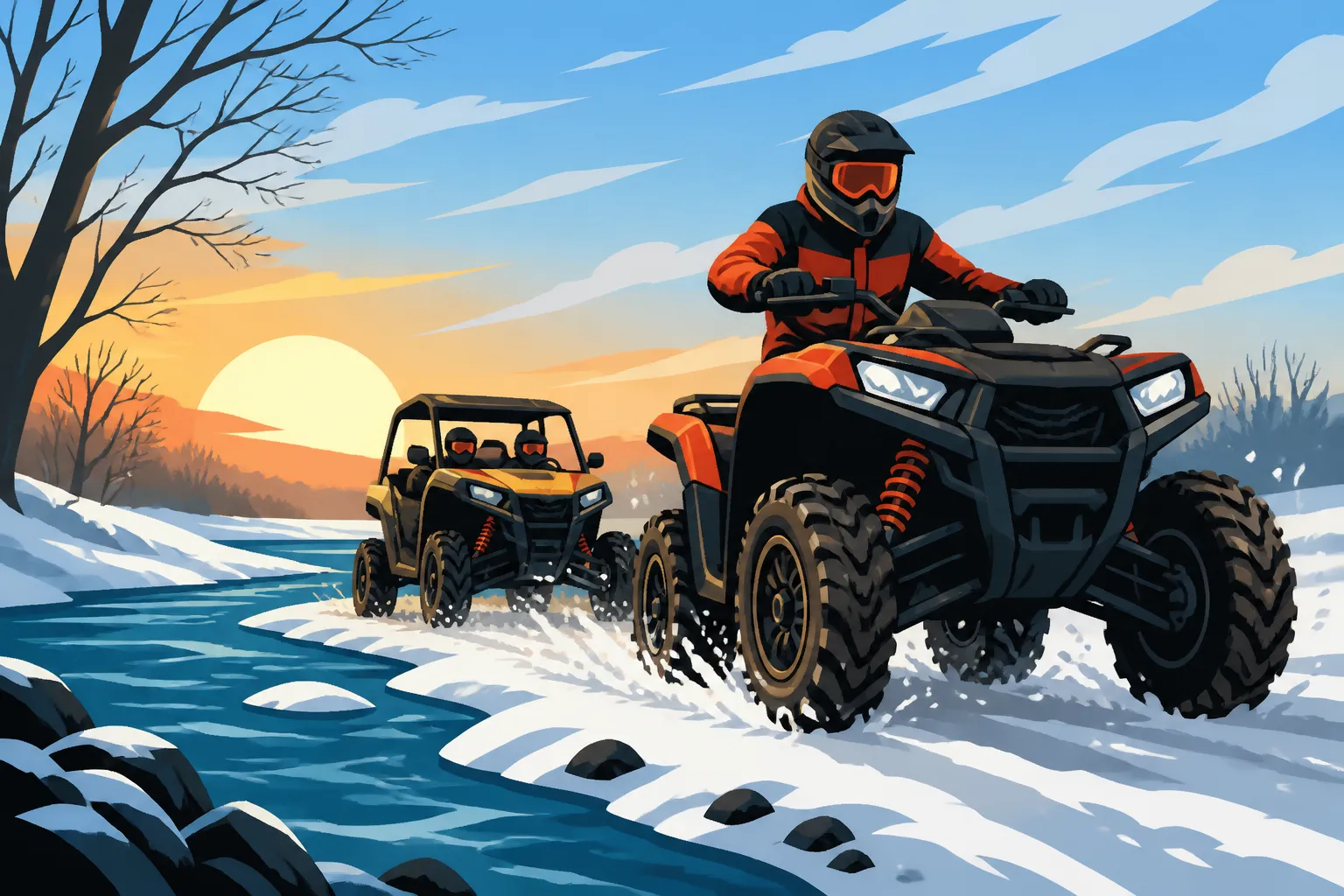
January in northwest Ohio can bring anything from a hard freeze to a mild, wet spell. A trail that feels firm early in the morning may soften later if temperatures rise. After a thaw, sections can become slick or churned, and repeated wheel spin can deepen ruts. A thin layer of snow can hide uneven ground, slick spots, or existing ruts rather than making the route smoother.
Local soil and drainage matter as much as the temperature. Some stretches may hold up better than others, and shaded areas can remain icy after exposed ground starts to melt. Do not assume that the trail is uniformly frozen because the parking area is hard, or uniformly clear because the main access looks dry. Conditions can change over a relatively short ride.
If the area has had substantial rain or a warm spell, use the same caution you would after a wet weekend in other Ohio riding areas. [Ohio Trails After Heavy Rain] explains why soft ground deserves care: spinning tires can damage the trail and make a difficult route worse for everyone. If the trail is muddy enough that you cannot ride without digging deep ruts, turning around is the better choice.
How to prepare for a cold-weather ride
Check access, route details, and machine rules before leaving
Start with the official trail information, not a social post or an old saved route. Check for closures or notices, confirm where the riding area begins, and make sure you understand the permitted route. [Ohio Trail Maps From ODNR] is a useful place to start for official trail-map information. A third-party navigation app such as onX Offroad can also help you follow a route, but treat it as a navigation aid, not proof that a road or trail is currently open to ATVs or UTVs.
Offline access is especially helpful in winter. Cell service can be unreliable in rural areas, and cold weather drains a phone battery faster. If you use onX Offroad, download the map area before leaving home and bring a separate charging option. Keep a paper or saved official map as a backup, and check trail markers as you ride. If an app route conflicts with posted signs or an official closure, follow the signs.
Check machine width as well as the route. Ohio state forest riding areas have a width limit, and a wide side-by-side may not be suitable for the trail. Read [Ohio's 62-Inch State Forest Width Limit] and measure your machine at its widest point, including accessories that extend beyond the tires. Do not estimate based on a brochure or model name; aftermarket wheels, mirrors, or other additions can affect the actual width.
Dress for wind chill and plan for a slower pace
Cold-weather riding is hard on hands, feet, and exposed skin. A machine moving at low speed can still create a strong wind chill, and stopping for a trail check can leave you cooling down quickly. Wear layered clothing that lets you adjust without removing essential protective gear. A warm base layer, wind-resistant outer layer, insulated gloves, and dry socks can make the difference between an enjoyable outing and one cut short by numb fingers.
Protect your face and eyes from cold air, blowing debris, and snow. A helmet that fits properly and eye protection suited to the conditions help reduce distraction and discomfort. For Ohio state forest trail requirements and practical gear considerations, see [Ohio Helmet Rules on State Forest Trails]. Do not trade a proper fit or required protection for a warmer but poorly secured setup.
Plan a shorter first loop than you might in summer. Winter conditions can make a familiar route slower, and a machine that starts easily at home may be more difficult to restart after sitting in the cold. Let someone know where you are going and when you expect to be back. Carry water, a small first-aid kit, a flashlight, a basic tool kit, and a way to contact help. Keep your phone warm and protected from moisture, rather than leaving it exposed in an outer pocket.
Registration, hours, and riding etiquette
Make sure your machine and paperwork are ready
Before a Maumee ride, check that your machine has the required Ohio APV registration and that its plate is properly displayed. Ohio’s registration plate is important for legal trail use; do not assume that a plate from another state automatically answers every Ohio requirement. If you are visiting from outside Ohio, review [Ohio APV Reciprocity With Other States] and confirm what documentation applies to your machine.
A useful pre-trip check is to keep your registration information accessible, make sure the plate is visible, and verify that the vehicle is in good working order. Cold can expose a weak battery, low tire pressure, or a stiff control that went unnoticed in warmer weather. Check tires, brakes, lights, throttle movement, and fluid levels before unloading. If the machine has been sitting for a while, a quick inspection at home is easier than troubleshooting in a cold parking area.
Know the riding hours, too. Ohio state forest trails generally have defined daily operating hours, and winter daylight is limited. Check [Ohio State Forest Riding Hours] before you set a departure time. Leaving late can turn a relaxed ride into a rushed one, especially if you need to warm up, check the route, or stop for a minor repair. Give yourself enough daylight to finish comfortably and return to your vehicle without hurrying.
Keep the ride considerate and within the marked trail
Winter can make a narrow trail feel even tighter. Stay on the marked route, avoid widening corners, and do not cut around muddy or icy patches into vegetation. If you meet another rider, slow down and pass carefully where there is enough room and visibility. Be especially alert for hikers, maintenance activity, or other permitted users, and follow any posted instructions.
A practical decision table can help you judge whether the day still makes sense once you reach the area:
| What you find | A sensible response |
|---|---|
| Trail is open, firm, and clearly marked | Ride at a controlled pace and keep checking conditions |
| Snow covers the trail but markers remain visible | Proceed only if you can see the route and identify hazards |
| Ice makes steering or braking unpredictable | Turn around or wait for safer conditions |
| Thawing mud is creating deep ruts | Avoid further damage and leave the trail |
| A closure notice or blocked access is posted | Do not ride past it; follow the official notice |
| Your machine is wider than the allowed limit | Choose a suitable riding area instead |
Do not let the effort of hauling your machine make the decision for you. If conditions are poor, postponing the ride protects both your safety and the trail. A short drive home is frustrating; getting stuck, damaging the route, or needing assistance in cold weather is worse.
A practical January ride plan
Use a simple checklist before loading
The day before your ride, confirm that the trail is open, check the forecast, and review the official map. Then inspect your machine and gear while you have time to fix small problems. If you use onX Offroad, download the relevant map in advance and make sure you know how to use it without cell service. Keep the official trail information available as a separate reference.
On ride day, check the conditions again before you leave. A forecast is not a trail report, and a trail report from an earlier day may not reflect a fresh snowfall or thaw. Once you arrive, look for current notices at the access point and make a final judgment about snow cover, ice, mud, and visibility. If the signs, conditions, or route do not match your plan, adjust the plan rather than pushing ahead.
Pack for a ride that might take longer than expected. Bring warm layers, dry gloves, water, food, a basic repair kit, and a charged phone. Keep essential items where you can reach them without unpacking the whole machine. If you ride with others, agree on a regrouping point and make sure nobody is left behind when the group stops or changes direction.
Keep expectations realistic and leave room to turn back
Maumee works well for riders who want a winter outing without expecting a full-day network of trails. Its relatively short route can be appealing when daylight is limited, but the same limited mileage means there may be little reason to continue if conditions are unpleasant. Plan for a modest ride, take breaks before you are chilled through, and be willing to end early.
For riders coming from another state, check registration requirements before the trip rather than assuming reciprocity applies in every situation. For local riders, make sure your machine’s plate and registration are current and that you have checked the route’s hours and restrictions. A little planning saves the aggravation of arriving with the wrong machine, missing paperwork, or an outdated route plan.
Most of all, treat “open year-round” as a seasonal opportunity, not a guarantee of ideal winter conditions. Check official information, ride within your ability, and leave the trail in good shape. With realistic expectations and a careful weather check, a January visit to Maumee can be a worthwhile cold-weather ride.
Disclaimer
This article is for general informational purposes only and does not constitute professional advice. Laws, prices and regulations vary by location and change over time. Consult a qualified professional for guidance on your specific situation.